What Dinh Co Is — and Why It Matters
Dinh Co Long Hai is a temple complex built into the granite hillside above Long Hai beach, roughly 120 km southeast of central Saigon. It's dedicated to Co, a young woman whose body reportedly washed ashore here in the early 1800s. Local fishing communities built a shrine, then a proper temple, and over two centuries it grew into one of southern Vietnam (베트남 / 越南 / ベトナム)'s most visited coastal worship sites.
The temple isn't grand in the way that Hue's imperial tombs are grand. It's layered — a series of altars, incense halls, and covered walkways that climb the hillside through old trees and weathered rock. The setting does the heavy lifting: open views over the East Sea, fishing boats below, frangipani everywhere. For travelers, it's a worthwhile stop that pairs naturally with Long Hai beach and the wider coastline east of Vung Tau.
Following Vietnam's 2025 administrative reorganization, Long Hai now falls within the expanded boundaries of Ho Chi Minh City (호치민시 / 胡志明市 / ホーチミン市), though on the ground nothing has changed — it still feels like a small coastal town, not a district of a megacity.
Why Travelers Go
Most foreign visitors end up here by accident, passing through on a coastal drive between Saigon and Vung Tau or heading to Ho Tram. That's a missed opportunity. Dinh Co is one of the few temples in the south where the architecture actually responds to its landscape — stone steps cut into rock, shrines tucked into natural overhangs, roots growing through walls. It's the kind of place that rewards 45 minutes of slow walking.
Vietnamese visitors come in large numbers during the annual Dinh Co festival, held on the 10th–12th of the second lunar month (usually March). Outside festival season, weekday mornings are quiet enough that you'll mostly share the grounds with temple caretakers and a few locals burning incense.
Best Time to Visit
The dry season — November through April — is ideal. Skies are clear, humidity is manageable, and the stone steps aren't slippery. The Dinh Co festival in the second lunar month is worth timing if you want to see the temple at full intensity: processions, traditional music, and fishing boats decorated with flags along the shore.
Avoid weekends during Tet or public holidays. The temple and surrounding beach get packed, parking becomes chaotic, and the contemplative atmosphere disappears entirely. A Tuesday morning in December? Perfect.
How to Get There from Saigon
From central Saigon (District 1), Long Hai is about 120 km — roughly 2.5 hours by car or motorbike depending on traffic getting out of the city.
- Motorbike: The most flexible option. Take the Long Thanh - Dau Giay Expressway, then cut south through Phuoc Hai toward Long Hai. Fuel and tolls run about 150,000 VND round trip.
- Bus: Catch a bus from Ben xe Mien Dong (Eastern Bus Station) toward Long Hai or Ba Ria. Tickets cost 80,000–120,000 VND. From Long Hai town, the temple is a 2 km walk or quick xe om ride (20,000–30,000 VND).
- Grab car: Around 800,000–1,000,000 VND one way. Practical if you're splitting with others, but you'll want to arrange the return in advance — Grab availability thins out here.
The temple is right on the coastal road (Duong Dinh Co), impossible to miss. There's a parking area at the base.

Photo by Sóc Năng Động on Pexels
What to Do
Walk the Full Temple Complex
Don't just hit the main altar and leave. The complex extends up the hillside through multiple levels. Follow the stone steps all the way to the upper shrines — the higher you climb, the better the coastal views. The whole circuit takes 30–40 minutes at a relaxed pace.
Sit at the Clifftop Overlook
Above the highest shrine, there's an open area where the rocks flatten out. Bring water, sit for a bit. On clear mornings, you can see fishing boats working the coast toward Phuoc Hai. It's a good spot to just be still for ten minutes.
Visit Long Hai Beach
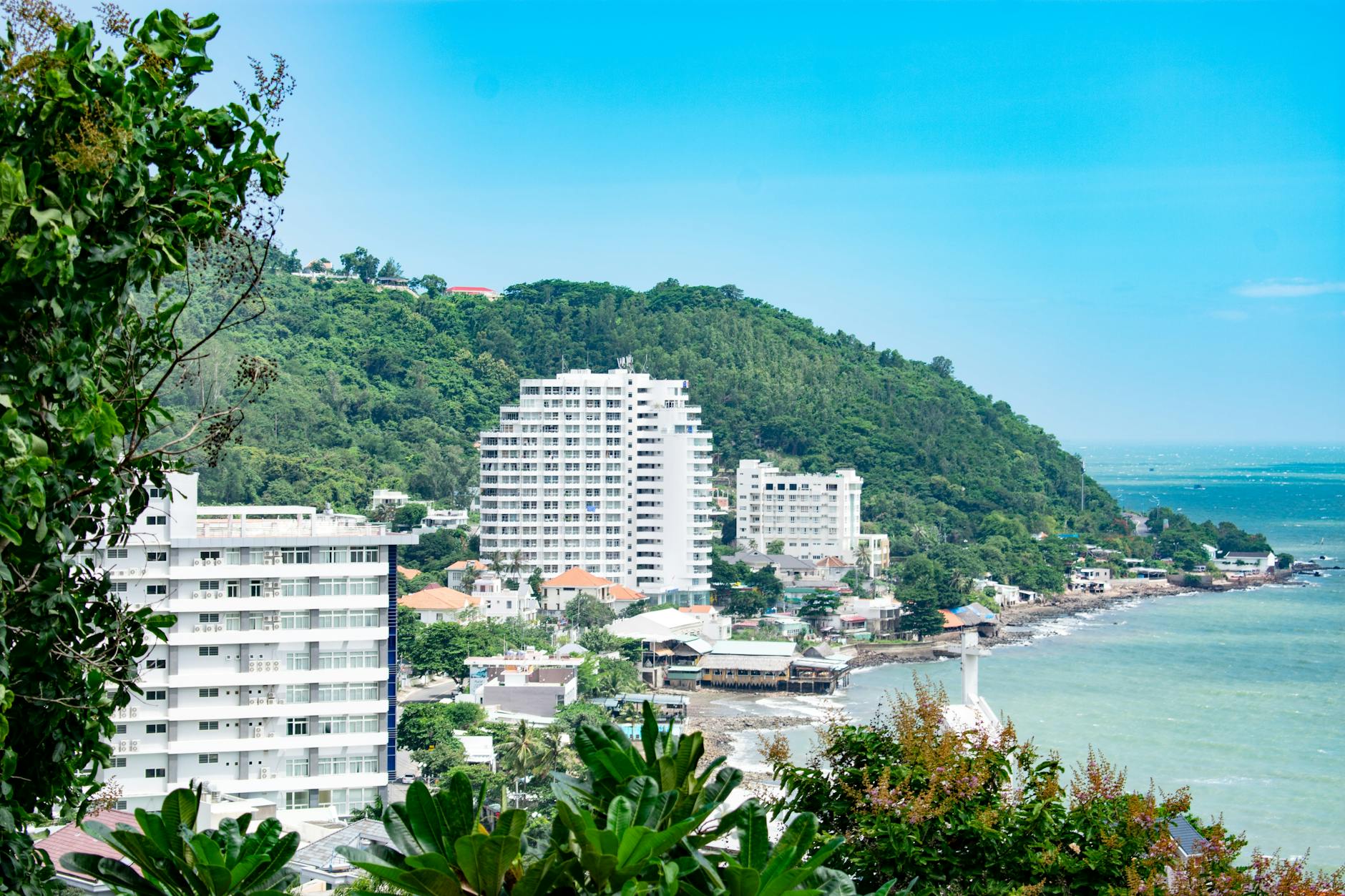
The beach directly below the temple is Long Hai's main strip — a wide, slightly coarse sand beach that's functional rather than photogenic. Good for a quick swim or a walk. The seafood shacks lining the road behind the beach sell grilled squid and clams for 50,000–100,000 VND a plate.
Drive the Coastal Road Toward Ho Tram
If you have your own wheels, the stretch of road from Long Hai southeast toward Ho Tram is one of the better coastal drives in the south. About 20 km of relatively quiet road with ocean views, small fishing villages, and a handful of quieter beaches.
Catch the Morning Fish Market at Phuoc Hai
Phuoc Hai village, about 5 km west of Dinh Co, has a fish market that peaks around 5:30–7:00 AM. Boats come in, fish gets sorted on the sand, and the whole operation runs with the kind of organized chaos that's worth waking up early for.
Where to Eat Nearby
Long Hai's food scene is seafood, full stop. Look for the open-air restaurants along the beach road — the ones with tanks out front and Vietnamese families eating at plastic tables.
"Banh khot" — small crispy turmeric pancakes topped with shrimp — is the regional specialty here and across the former Ba Ria - Vung Tau coast. You'll find vendors near the market and along the main road. A plate of 10–12 runs about 40,000–60,000 VND. Pair it with fresh "goi cuon" if available.
For a proper seafood spread (grilled fish, steamed clams, morning glory), expect to pay 200,000–400,000 VND per person at the beachside places. Not cheap by Vietnamese standards, but portions are generous and the fish is genuinely fresh.
Where to Stay
Long Hai has limited accommodation compared to nearby Vung Tau or Ho Tram.
- Budget: Basic guesthouses (nha nghi) along the main road run 250,000–400,000 VND/night. Clean enough, don't expect frills.
- Mid-range: A few small hotels near the beach offer air-con rooms with sea views for 500,000–900,000 VND/night.
- Upscale: For anything with a pool or resort feel, you'll need to head to Ho Tram (15–20 km southeast), where options range from 1,500,000 to 4,000,000 VND/night.
Most travelers treat Long Hai as a day trip from Saigon or a stop on a Vung Tau loop, which honestly makes the most sense unless you're here for the festival.

Photo by Theodore Nguyen on Pexels
Tips Locals Would Tell You
- Dress modestly at the temple. Shoulders and knees covered. This is actively enforced — there's usually someone at the entrance who will say something.
- Bring cash. There are no ATMs right at the temple, and the beachside restaurants don't take cards.
- Wear proper shoes for the temple steps. Sandals work but flip-flops on wet stone are asking for trouble.
- Buy incense at the base if you want to make offerings. Sets cost 10,000–20,000 VND from the vendors near the parking area.
Common Mistakes to Avoid
- Rushing through. People give Dinh Co 15 minutes, snap a photo of the main altar, and leave. The upper levels are the whole point.
- Coming on a weekend or holiday expecting peace and quiet. You won't get it.
- Skipping Phuoc Hai. The fish market and "banh khot" vendors there are better than what's immediately around the temple.
- Not combining it with other stops. On its own, Dinh Co is a 45-minute visit. Pair it with Long Hai beach, the coastal drive to Ho Tram, or a side trip to Vung Tau to make a full day.
Practical Notes
Dinh Co Long Hai is open daily from roughly 6:00 AM to 6:00 PM. Entry is free, though donation boxes are everywhere and contributions are appreciated. The temple is best visited as part of a longer coastal day trip from Saigon rather than as a standalone destination — combine it with the beach, the fish market, and the drive, and you've got a solid day outside the city.
Last updated · May 29, 2026 · independently researched, never sponsored.