Why Ha Tien
Most travelers pass through Ha Tien in under an hour — long enough to board a speedboat to Phu Quoc and nothing more. That's a shame, because this compact town on the Cambodian border has a quiet character that the island has long since traded away for resort developments. Limestone karsts rise directly out of the flat delta, Khmer temples sit alongside Vietnamese shrines, and the seafood is cheap in a way that reminds you you're a long way from tourist pricing.
Ha Tien is the seat of Kien Giang province's western coast, roughly 90 km from Rach Gia and about 8 km from the Cambodian border crossing at Xa Xia. It's small enough to cover on foot or by rented motorbike in a day or two.
Mui Nai Beach
About 7 km west of the town center, Mui Nai is Ha Tien's main beach — a crescent of grey-brown sand backed by casuarina trees and a cluster of seafood restaurants with plastic chairs on the sand. It won't replace Phu Quoc (푸꾸옥 / 富国岛 / フーコック) on your screensaver, but it's genuinely uncrowded on weekday mornings, the water is calm, and sunsets over the Gulf of Thailand here are reliably good.
Local families and weekend visitors from Rach Gia fill the place on Saturdays, but outside of that it's quiet. Grab a seafood lunch at one of the beachfront stalls — grilled squid and steamed clams run around 80,000–120,000 VND per dish — and stay for the afternoon light. There are a handful of guesthouses along the road if you want to sleep closer to the water than the town center.
Thach Dong Cave
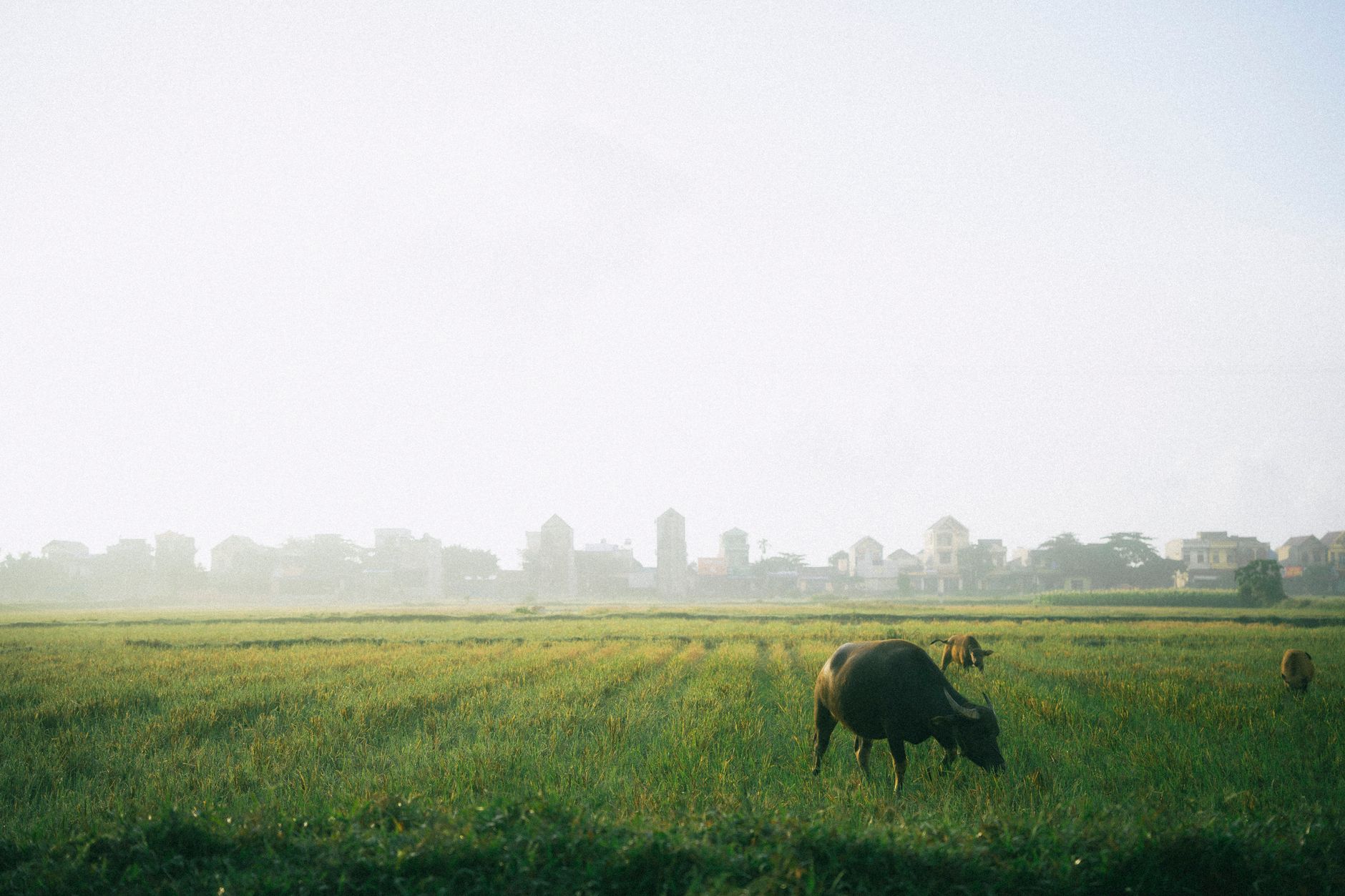
About 4 km from Ha Tien town heading toward the Cambodian border, Thach Dong is a limestone cave temple set inside a low karst hill surrounded by rice paddies. It's a working religious site rather than a tourist attraction — expect incense smoke, Buddhist and Taoist shrines built into the rock chambers, and the occasional group of locals making offerings rather than taking selfies.
The cave itself is large enough to walk through comfortably, with multiple chambers that open to natural skylights. Entry is around 20,000 VND. Go in the morning when light filters through the upper openings. The surrounding countryside — flat green fields against the abrupt limestone outcrops — is worth pausing for on the way in or out. A motorbike from town gets you there in ten minutes.

Photo by Quang Nguyen Vinh on Pexels
Khmer Culinary Influence
Ha Tien's position at the edge of the Mekong Delta (메콩 델타 / 湄公河三角洲 / メコンデルタ), close to the Cambodian border, shows up in the food. "Hu tieu" here leans toward the Khmer-influenced style — lighter broth, fresh herbs, often served dry with broth on the side. Markets sell fermented shrimp paste and palm sugar alongside the standard Vietnamese pantry items, and you'll find "banh canh" variations that use thicker noodles common in this part of the delta.
For breakfast, follow the locals to the morning market on Tran Hau Street near the waterfront. A bowl of noodles runs 25,000–35,000 VND. The market also sells dried seafood — squid, shrimp, fish — at prices that make decent souvenirs if you're heading somewhere with a kitchen.
The broader Kien Giang seafood tradition is well-represented here too: "goi cuon" with local river prawns, grilled fish wrapped in rice paper, and fresh coconut water from roadside vendors.
The Ferry to Phu Quoc
This is what most people come for, and it works well. Superdong and Phu Quoc Express both run multiple daily departures from Ha Tien pier to Phu Quoc (Duong Dong). The crossing takes around 1 hour 15 minutes in normal conditions, and tickets run 230,000–280,000 VND one way depending on the operator and season.
The first boats leave around 7:30–8:00 AM; the last departure back from Phu Quoc to Ha Tien is typically 4:30–5:00 PM. Book tickets the day before during peak months (December–February, July–August) — the boats do sell out, particularly the morning departures. Both companies have offices at or near the pier, and most Ha Tien guesthouses can arrange tickets for a small fee.
If you're coming overland from Can Tho or Ho Chi Minh City, Ha Tien is about 4.5 hours by bus from Can Tho and roughly 7 hours from Saigon. The Ha Tien bus station is a short xe om ride from the pier. Sleeping one night in Ha Tien and taking an early ferry makes more sense than trying to connect everything in a single day.

Photo by Tuan Vy on Pexels
Where to Stay
Guesthouses cluster along the waterfront and around the market area. Budget rooms start at 200,000–300,000 VND per night; mid-range options with air conditioning and hot water run 450,000–700,000 VND. Ha Tien doesn't have the resort infrastructure of Phu Quoc, which is the point — this is a functional, pleasant small town, not a beach destination in its own right.
Practical Notes
Ha Tien has ATMs (Vietcombank and Agribank near the market) but carry enough cash if you're heading to Phu Quoc, as ferry ticket booths sometimes prefer cash. The town is compact and safe to walk at night; the waterfront promenade along Bach Dang Street is the local evening gathering spot. If you have an extra afternoon, the road north along the coast toward Hon Chong passes more karst scenery worth a slow motorbike loop.
Last updated · May 29, 2026 · independently researched, never sponsored.