Hai Hoa Beach sits about 35 km east of Thanh Hoa city, stretched along the coast of Tinh Gia district (now Nghi Son). It's one of those beaches that nearly every northern Vietnamese family has been to at least once, yet it barely registers with international travelers. That gap between local popularity and foreign obscurity is exactly what makes it worth a detour.
What Hai Hoa Beach actually is
Hai Hoa is a roughly 3 km arc of sand facing the Gulf of Tonkin, backed by casuarina trees and a strip of seafood restaurants. The beach has been a domestic holiday spot since the 1990s, popular with families from Thanh Hoa, Hanoi, and the surrounding provinces. It's not a resort beach — think plastic chairs on the sand, karaoke drifting from guesthouses, and vendors selling grilled squid from portable charcoal stoves. The water is calm, shallow for a good distance out, and the sand is firm enough to walk on without sinking. It's an honest, no-frills Vietnamese beach town.
The area around Nghi Son has seen industrial development in recent years, with a refinery complex further south along the coast. Hai Hoa itself remains focused on tourism, but it's worth knowing the broader context — this isn't a pristine, untouched coastline. It's a working stretch of coast where fishing, industry, and holidays coexist.
Why travelers go
Most foreign visitors skip Thanh Hoa entirely on the Hanoi-to-Hue run. That's a mistake if you want to see how Vietnamese domestic tourism actually works. Hai Hoa gives you cheap seafood, warm water, and a pace of life that hasn't been reformatted for Instagram. There are no cocktail bars, no boutique hotels with infinity pools. You eat well, you swim, you sit under a casuarina tree, and you watch families having a genuinely good time. If you're traveling through central Vietnam (베트남 / 越南 / ベトナム) and want a beach day without the scene of Da Nang or the prices of Phu Quoc, Hai Hoa fits.
Best time to visit
Aim for May through September. June to August is peak season — water temperatures hover around 28-30°C, and the sea is usually calm. Weekends in July and August get packed with domestic visitors, so weekdays are noticeably quieter. April and October are shoulder months: pleasant enough for swimming, but you might catch some grey days. November through March brings cooler weather and occasional drizzle; the beach empties out and many guesthouses drop their rates or close entirely.
Avoid national holidays (especially the week around Tet and the April 30 / May 1 long weekend) unless you enjoy competition for deck chairs.
How to get there
From Hanoi (하노이 / 河内 / ハノイ), the most common route is by bus or car south on the expressway to Thanh Hoa city (about 150 km, roughly 2.5 hours by car). From Thanh Hoa city, it's another 35 km east to Hai Hoa — around 45 minutes by taxi or motorbike. A Grab car from Thanh Hoa city center to the beach runs approximately 250,000-350,000 VND one way.
If you're coming by train, Thanh Hoa station is on the main north-south Reunification Express line. Hanoi to Thanh Hoa takes about 3-4 hours depending on the service, with tickets from around 80,000 VND for a hard seat to 250,000 VND for soft seat. From the station, you'll need a taxi or xe om to the coast.
There's also a bus from Thanh Hoa's bus station to Tinh Gia / Nghi Son that passes near Hai Hoa, costing about 30,000-50,000 VND, but schedules are irregular and the ride takes over an hour with stops.

Photo by Marcus Luu on Pexels
What to do
Swim and sit
The beach slopes gently and the water stays shallow for 50-100 meters out, which is why families with small children favor it. Morning before 9 AM is the best window — the sand hasn't baked yet and local fishermen are still pulling boats in.
Eat seafood on the sand
The strip of restaurants behind the beach is the main attraction after the water itself. Order by pointing at the tanks — clams, mantis shrimp, crab, and whatever the boats brought in that morning. Grilled scallops with peanut and spring onion are a staple. A full seafood spread for two runs 300,000-500,000 VND, which is hard to beat.
Walk to the fishing village
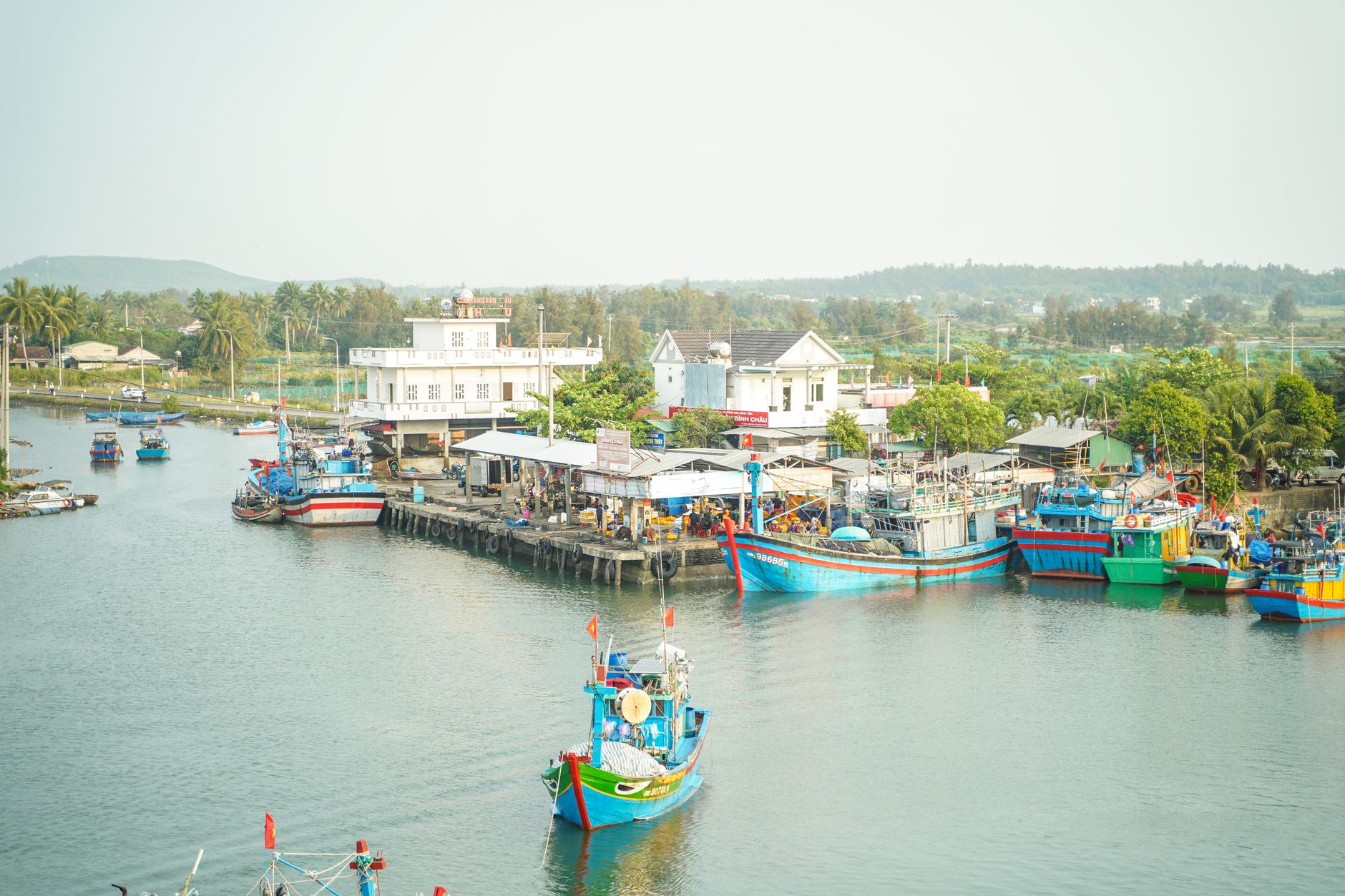
Head south along the beach past the main tourist strip and you'll reach a working fishing area where boats anchor in the shallows. Early morning is best. Nobody minds if you wander through, but stay out of the way when they're hauling nets.
Visit Nghi Son island
A bridge now connects the mainland to Nghi Son island, about 15 km south of Hai Hoa. The island has a quieter coastline, a few pagodas, and far fewer tourists. It's an easy half-day trip by motorbike.
Try the local nem chua
Thanh Hoa province is famous across Vietnam for "nem chua" — fermented pork wrapped in banana leaves. You'll find it sold everywhere, from market stalls to roadside vendors. Buy a few rolls (about 5,000-10,000 VND each) and eat them with cold beer. It's sour, funky, slightly spicy, and completely addictive.
Where to eat nearby
Beyond the beachfront seafood row, look for "banh canh" — thick tapioca-flour noodle soup, often served with crab or fish cake. Thanh Hoa's version is heavier and more rustic than what you'd find in Hue. A bowl costs 25,000-40,000 VND. If you're heading back through Thanh Hoa city, stop for "pho" — the northern-style broth here is clean and good, served with a plate of herbs and a squeeze of lime.
Where to stay
Hai Hoa's accommodation is almost entirely guesthouses and mini-hotels. Budget rooms with fan and cold water start around 200,000-300,000 VND per night. Air-conditioned rooms with hot water and a sea-facing balcony go for 400,000-700,000 VND. A few newer hotels have pushed into the 800,000-1,200,000 VND range with slightly better furnishings. Don't expect international-standard amenities — this is domestic tourism infrastructure. Rooms are clean but basic, and English is rarely spoken.
Book ahead if visiting on summer weekends. Midweek, you can walk in and negotiate.
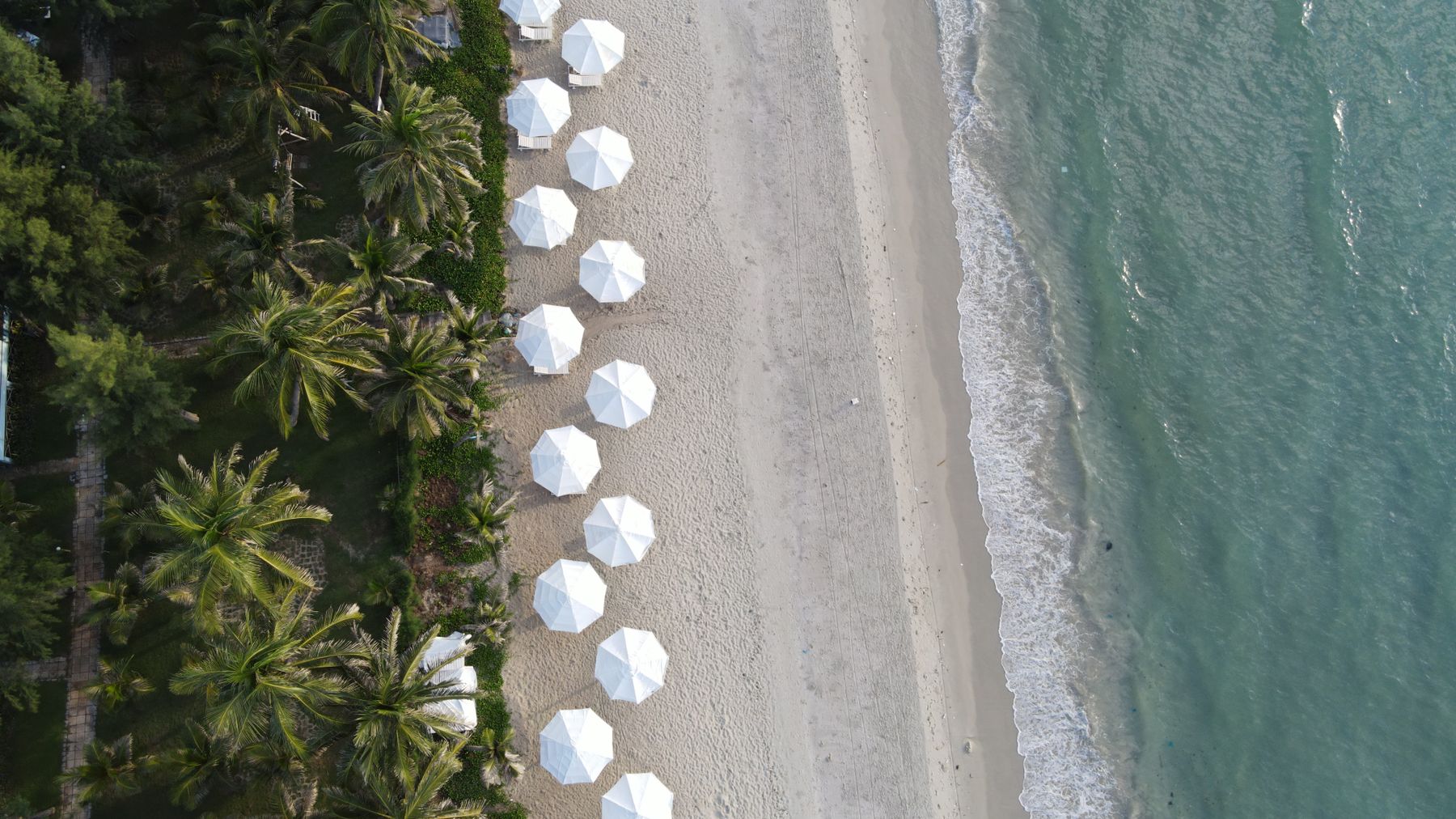
Photo by Quang Nguyen Vinh on Pexels
Practical tips locals would tell you
- Bring cash. ATMs exist in Tinh Gia town but not at the beach itself, and almost nobody takes cards.
- Rent a beach umbrella and chairs for about 50,000-100,000 VND per set rather than baking in the open.
- Sunscreen is expensive at the beach stalls — bring your own from Hanoi or Thanh Hoa city.
- The seafood restaurants don't always have prices listed. Ask before ordering or you'll get the tourist markup. Pointing at someone else's table and saying "bao nhieu" (how much) works.
- If you ride a motorbike to the beach, park in the designated lots (10,000-20,000 VND) rather than on the sand. Tires and salt water are not friends.
Common mistakes to avoid
Don't come expecting a resort experience — Hai Hoa is a local beach, and that's the point. Don't swim after dark; there are no lifeguards and the currents shift. Don't eat seafood at places with no visible tanks or turnover — if the restaurant is empty at lunchtime and the tanks look murky, keep walking. And don't skip Thanh Hoa city entirely on the way back — it has decent "banh mi" shops and a food market worth a quick stop.
Practical notes
Hai Hoa works best as a one-night or two-night stop, either as a break on the Hanoi-to-Hue route or as a weekend trip from the capital. It pairs well with Ninh Binh (about 2 hours north) or Sam Son Beach (30 km north along the coast) if you want variety. Keep expectations calibrated to the price — and you'll eat well, swim well, and see a side of Vietnamese travel that most guidebooks skip entirely.
Last updated · May 29, 2026 · independently researched, never sponsored.