Ninh Giang district in Hai Duong province makes one of the most recognizable cakes in the north: "banh gai", a dense, jet-black sticky rice cake wrapped tight in dried banana leaves. It looks almost austere on the outside, but the filling inside is the whole point.
Why It's Black
The color comes from la gai — the leaves of the ramie plant (Boehmeria nivea), a fibrous shrub common across northern Vietnam (베트남 / 越南 / ベトナム). Dried la gai leaves are ground into a fine powder, then worked into glutinous rice flour until the dough turns a deep, uniform black-green. The leaf extract isn't just for aesthetics: it adds a faint grassy bitterness that cuts through the sweetness of the filling and gives the cake a slightly herbal finish. Without it, you'd just have a plain banh nep. The la gai is what makes banh gai its own thing.
The Filling
Ninh Giang producers typically offer three filling styles, and each shop has its own ratio and technique:
- Mung bean paste — the most common. Split mung beans are cooked, mashed, and sweetened with sugar. Dense and smooth, it anchors the cake.
- Lotus seed — cooked whole lotus seeds are folded into the mung bean base. Adds texture and a faint floral note that older generations tend to prefer.
- Coconut and mung bean — shredded coconut is mixed into the paste, giving the filling a slightly chewy, oilier quality. More popular with younger buyers.
All versions include a small knob of mo hanh (rendered pork fat) worked into the dough itself, which keeps the outer layer from drying out and gives it a subtle savory depth. Don't skip a cake because it mentions fat — that's the technique.
Why Ninh Giang Specifically
Banh gai is made across the north — you'll see versions in Thanh Hoa and Thai Binh too — but Ninh Giang has the clearest reputation for quality and has been producing them commercially for well over a century. Local makers trace the tradition back to the late Nguyen dynasty period, when the district sat along active trade routes connecting Hai Duong to the coast.
The difference in Ninh Giang cakes comes down to the la gai sourcing (local growers on the Thanh Ha side of the province supply most of it) and the wrapping. Ninh Giang banh gai are wrapped in dried dong leaves first, then an outer layer of banana leaf, then tied with bamboo string in a specific crosshatch pattern. That double-leaf wrap traps steam during cooking and prevents the dough from absorbing excess moisture, which is part of why the texture stays firm without turning rubbery.

Photo by Nguyen Truong Khang on Pexels
How to Eat It
Peel the banana leaf slowly — it tears easily once it's been steamed, and the cake will sometimes stick if you rush it. The outer dough should be slightly tacky but hold its shape. Eat it at room temperature rather than cold; refrigeration stiffens the glutinous rice and mutes the flavor. Some older vendors in Ninh Giang town still serve a thin wedge alongside a small cup of green tea — the bitterness of the tea and the sweetness of the filling balance each other cleanly. That's the right way to eat it.
One cake is about 80–120g and fills you up faster than it looks. Two is usually enough for a midday snack.
Where to Buy
The main production street in Ninh Giang town is along Pho Hien, close to the market. Most shops operate out of the front room of family homes — look for the stacks of dark green parcels tied in bamboo string. Prices run around 8,000–15,000 VND per cake depending on filling and size, with lotus seed variants sitting at the higher end.
In Hai Duong city (about 25 km north of Ninh Giang), banh gai Ninh Giang is sold at most dry goods shops and at the covered market stalls near the central bus station. Branded versions from producers like Bao Phuong and Thu Huong are vacuum-packed and available at shops throughout the city — these travel better than the fresh market versions.
If you're passing through on the way between Hanoi and Hai Phong on Highway 5, several roadside stalls outside Ninh Giang district sell them directly to passing traffic. The stalls closest to the Ninh Giang bridge junction usually have the freshest daily batches.
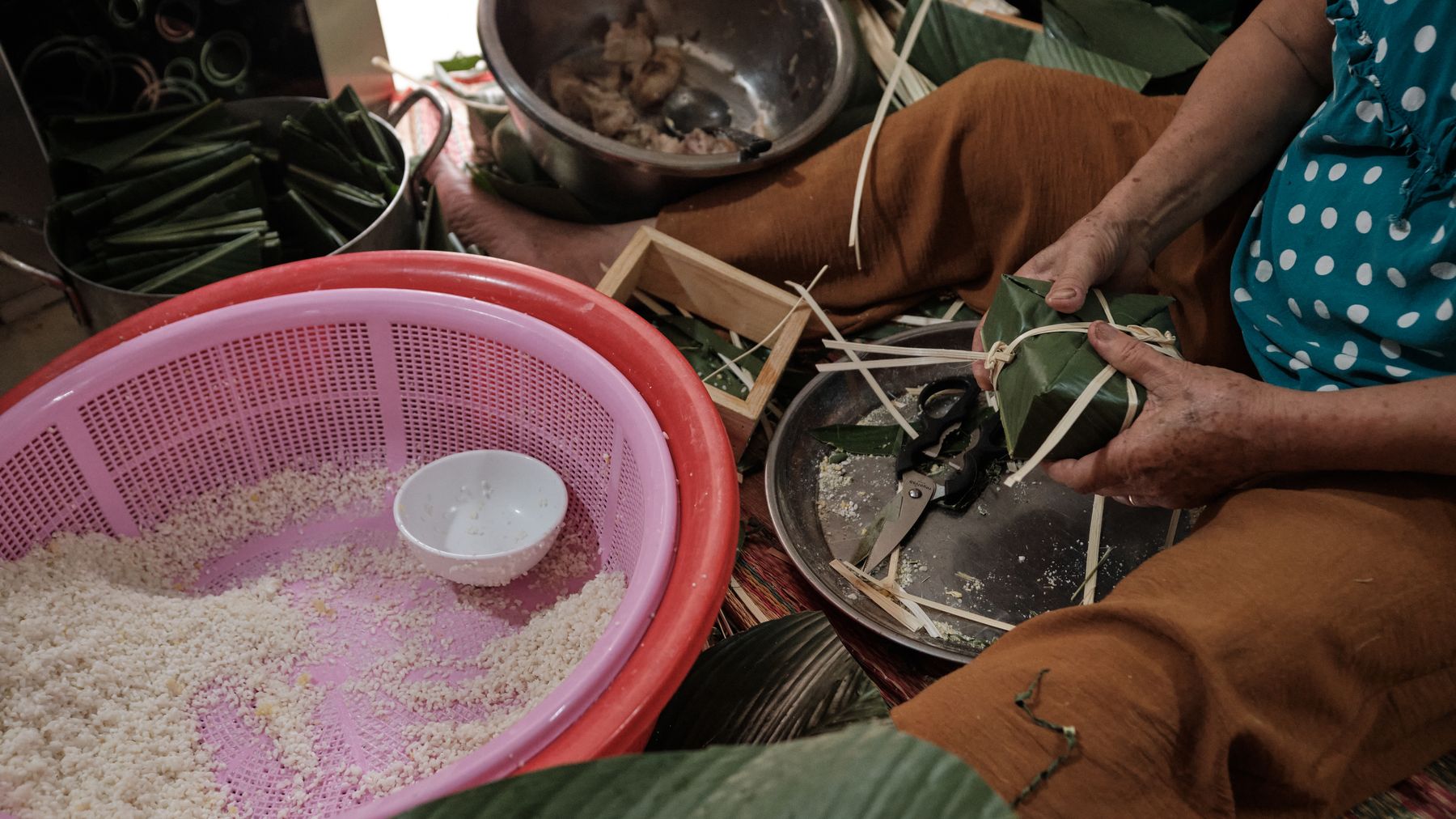
Photo by Nguyen Truong Khang on Pexels
Shelf Life
Fresh banh gai from a market stall keeps for about 3–4 days at room temperature in cool weather. In summer humidity, eat within 2 days. Vacuum-packed commercial versions extend this to 7–10 days unopened. Don't freeze them — the texture breaks down on thawing and the dough turns grainy.
If you're bringing them back to Hanoi (하노이 / 河内 / ハノイ) as gifts (a common move — they're sold at Dong Xuan Market too, though the Ninh Giang origin ones are noticeably better), pack them in a cool bag and eat them within a day or two of purchase.
Practical Notes
Ninh Giang is roughly 60 km southeast of Hanoi, accessible by bus from Hanoi's Giap Bat station with a change in Hai Duong city. It's not a standalone day trip destination for most travelers, but fits naturally into a route through Hai Duong province or a stop between Hanoi and Hai Phong. Buy direct from Ninh Giang if you can — the gap in quality between fresh-market and supermarket versions is real.
Last updated · Jun 5, 2026 · independently researched, never sponsored.