What It Is and Why It Matters
Hoi Quan Phuc Kien — the Fujian Assembly Hall — sits at 46 Tran Phu, right in the middle of Hoi An's old town. It's the biggest and most ornate of the five Chinese assembly halls here, built in the late 1600s by Fujian merchants who had settled along this stretch of the Thu Bon River.
The hall started as a community center and temple for Fujian-origin families. Over three centuries, they expanded it into a sprawling complex dedicated to Thien Hau, the sea goddess who supposedly protected traders on the route between southern China and Southeast Asia. The architecture is southern Chinese — layered roofs, mosaic dragons, carved wood panels — but the setting is unmistakably Vietnamese. Bougainvillea climbs the courtyard walls, incense coils hang from the ceiling beams, and motorbikes idle just outside the gate.
This isn't a museum piece behind glass. Local families of Fujian descent still use the hall for ceremonies, especially during [Lunar New Year](/posts/tet (뗏 (베트남 설날) / 越南春节 / テト (ベトナム旧正月))-lunar-new-year-guide) and the Lantern Festival. You're visiting a living space, not a relic.
Why Travelers Go
Most people come because it's included in the Hoi An Old Town ticket (120,000 VND gets you entry to five sites, and this should be one of them). But beyond the ticket logic, Phuc Kien stands out for a few reasons. The main hall's ceiling is dense with hanging incense coils — some burning for weeks — and the light filtering through them gives the space a hazy, amber quality that photographs well without any effort. The courtyard fountain features a mosaic dragon that's become one of the most recognizable images of Hoi An. And the rear temple, dedicated to fertility and family, is where you'll see local women leaving offerings of fruit and flowers. It's one of the few places in the old town where tourism and daily spiritual life genuinely overlap.
Best Time to Visit
Hoi An's dry season runs from February through August. March to May is the sweet spot — warm but not yet at the brutal June-July peak heat, and well before typhoon season starts in September. The assembly hall is open daily from around 7:00 to 17:30.
For the best experience inside the hall, go early — before 9:00 or after 15:00. Midday tour groups pack the courtyard and main hall between 10:00 and 14:00. Early morning is ideal: the incense coils are freshly lit, the light is soft, and you might have the rear temple almost to yourself.
During Tet and the monthly Full Moon Festival (14th of each lunar month), the hall takes on a different energy. More offerings, more locals, lanterns lit. Worth timing if you can.

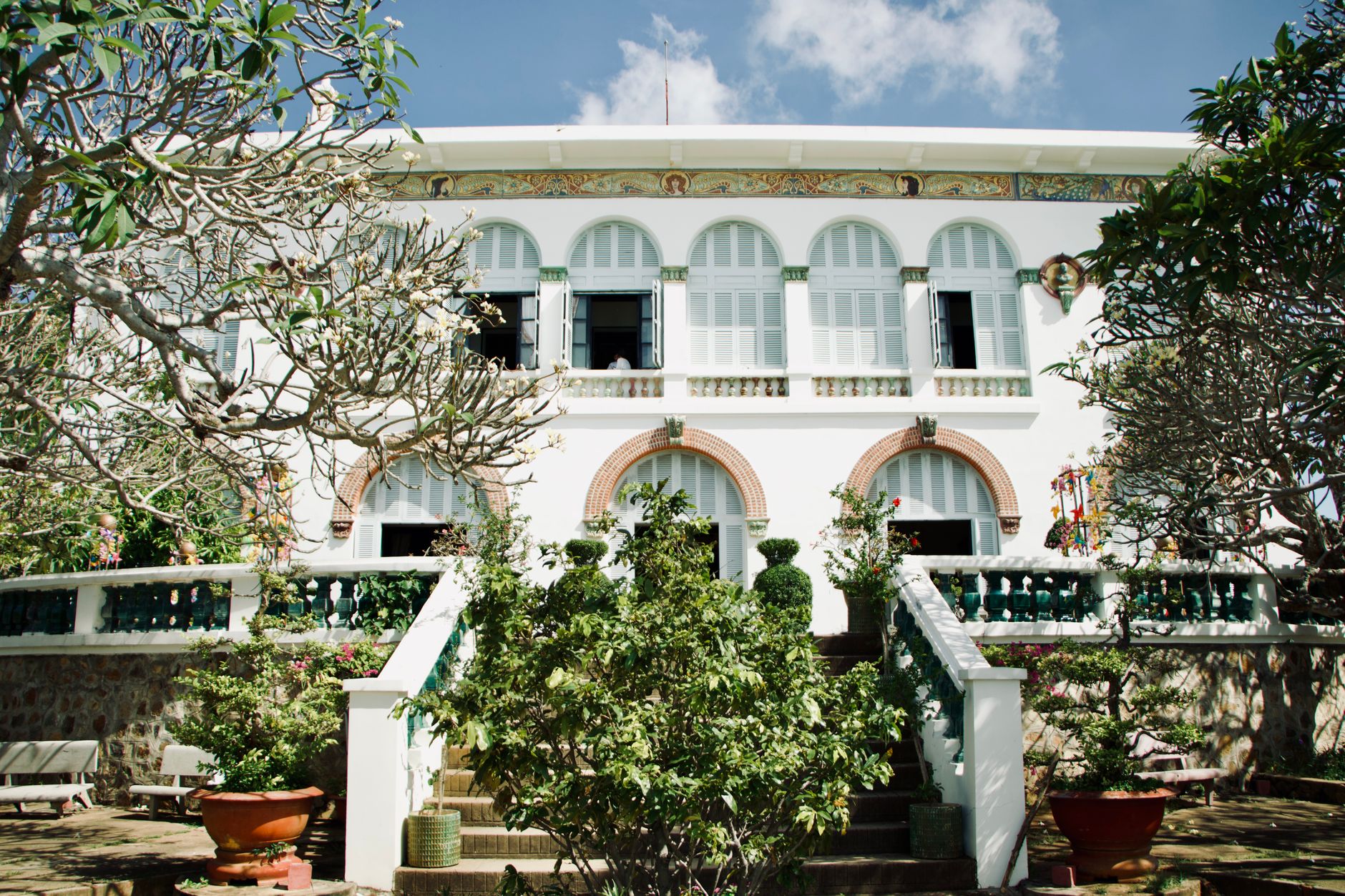
Photo by HONG SON on Pexels
How to Get There
If you're based in Da Nang, Hoi An is about 30 km south. Options:
- Grab/taxi: 250,000–350,000 VND one way, roughly 40 minutes depending on traffic over the Tien Sa or Cua Dai route.
- Local bus (yellow bus #1): Runs from Da Nang bus station to Hoi An bus station. Around 30,000 VND, takes about 75 minutes. From Hoi An bus station, walk or grab a xe om (motorbike taxi) for 15,000–20,000 VND to the old town.
- Motorbike rental: If you're comfortable riding, the coastal road via An Bang Beach is a pleasant 45-minute ride. Rentals run 120,000–150,000 VND/day in Da Nang.
Once in Hoi An's old town, the assembly hall is on Tran Phu Street — the main east-west artery. You'll walk past it if you're heading between the Japanese Covered Bridge and the central market.
What to Do
Walk the Full Complex, Not Just the Front Hall
Most visitors snap a photo of the main altar and leave. The complex goes deeper than it looks. Past the main worship hall, there's a rear courtyard with the fertility shrine, side halls with historical displays about Fujian migration, and a small garden. Budget 30–45 minutes to see everything properly.
Look Up at the Incense Coils
The signature image. Giant spiral coils of incense hang from the rafters, some labeled with prayer notes attached. They burn slowly over days or weeks. The smoke layering through shafts of light is the single best photo opportunity in Hoi An's old town — no filter needed.
Read the Ceramic Murals
The courtyard walls feature elaborate ceramic relief scenes depicting the sea goddess Thien Hau's legends — sailors in storms, divine interventions, mythical creatures. These were restored in the early 2000s and are surprisingly detailed. Take five minutes to trace the narrative panels left to right.
Visit During the Full Moon Festival
If your dates line up, being inside the assembly hall during Hoi An's monthly lantern festival is worth the crowd. The old town goes car-free, lanterns line Tran Phu, and local families bring offerings to the hall. It's one of the few tourist-friendly events that still feels grounded in local life.
Combine with the Other Assembly Halls
Hoi An has four more Chinese congregation halls within walking distance on the same street: Trieu Chau, Quang Dong, Hai Nam, and the smaller Duong Thuong. Phuc Kien is the most elaborate, but seeing two or three gives you a better sense of the different regional Chinese communities that shaped this town. Your old town ticket covers multiple sites.
Where to Eat Nearby
You're in the right town. Within a five-minute walk of the assembly hall:
- "Cao lau" — Hoi An's signature noodle dish, thick rice noodles with pork, greens, and croutons in a small amount of broth. Try it at the Hoi An Central Market (Cho Hoi An) stalls on the river side, around 30,000–40,000 VND a bowl.
- "Mi quang" — turmeric-yellow noodles with shrimp, pork, herbs, and a shallow broth. Ong Hai on Tran Phu (closer to the market end) does a reliable version for 35,000 VND. It's a Quang Nam regional dish, so eating it here is eating it at the source.
For "banh mi", Banh Mi Phuong on Phan Chau Trinh is the well-known spot — a 10-minute walk from Phuc Kien. Expect a queue, but it moves fast. 25,000–30,000 VND.

Photo by Võ Văn Tiến on Pexels
Where to Stay
- Budget (300,000–500,000 VND/night): Homestays and guesthouses cluster along Hai Ba Trung and Le Loi, a short walk from the old town. Basic but clean, often with breakfast included.
- Mid-range (800,000–1,500,000 VND/night): Boutique hotels on the An Hoi side of the river give you lantern views and pool access. Plenty of solid options on Nguyen Phuc Chu.
- Upper range (2,000,000+ VND/night): Riverside resorts line the road between Hoi An and An Bang Beach. You'll need a bicycle or taxi to reach the old town, but the quiet is worth it.
Practical Tips Locals Would Tell You
- The 120,000 VND old town ticket is checked at entry points to major sites, including Phuc Kien. Buy it at any ticket booth — there's one near the Japanese Bridge and another near the market. It covers five site entries; choose wisely.
- Shoes off before stepping onto raised wooden thresholds inside the temple areas. Follow what the person ahead of you does.
- The hall is an active place of worship. Don't pose in front of the main altar or block people making offerings. Step to the side.
- Photography is allowed, but flash is not — and the natural light is better anyway.
- If you want to light incense, you can. Bundles are available near the entrance. No charge, but a small donation to the collection box is standard.
Common Mistakes to Avoid
- Rushing through on a guided tour. Group tours allocate 10–15 minutes here. That's enough to see the front hall and miss everything else. Come back on your own.
- Skipping it because you've seen one assembly hall. Phuc Kien is architecturally different from the others — more ornate, more space, more active worship. Quang Dong is worth seeing too, but they're not interchangeable.
- Visiting at midday. The courtyard has limited shade, the halls are packed, and the light is flat. Early morning or late afternoon, every time.
Last updated · May 29, 2026 · independently researched, never sponsored.