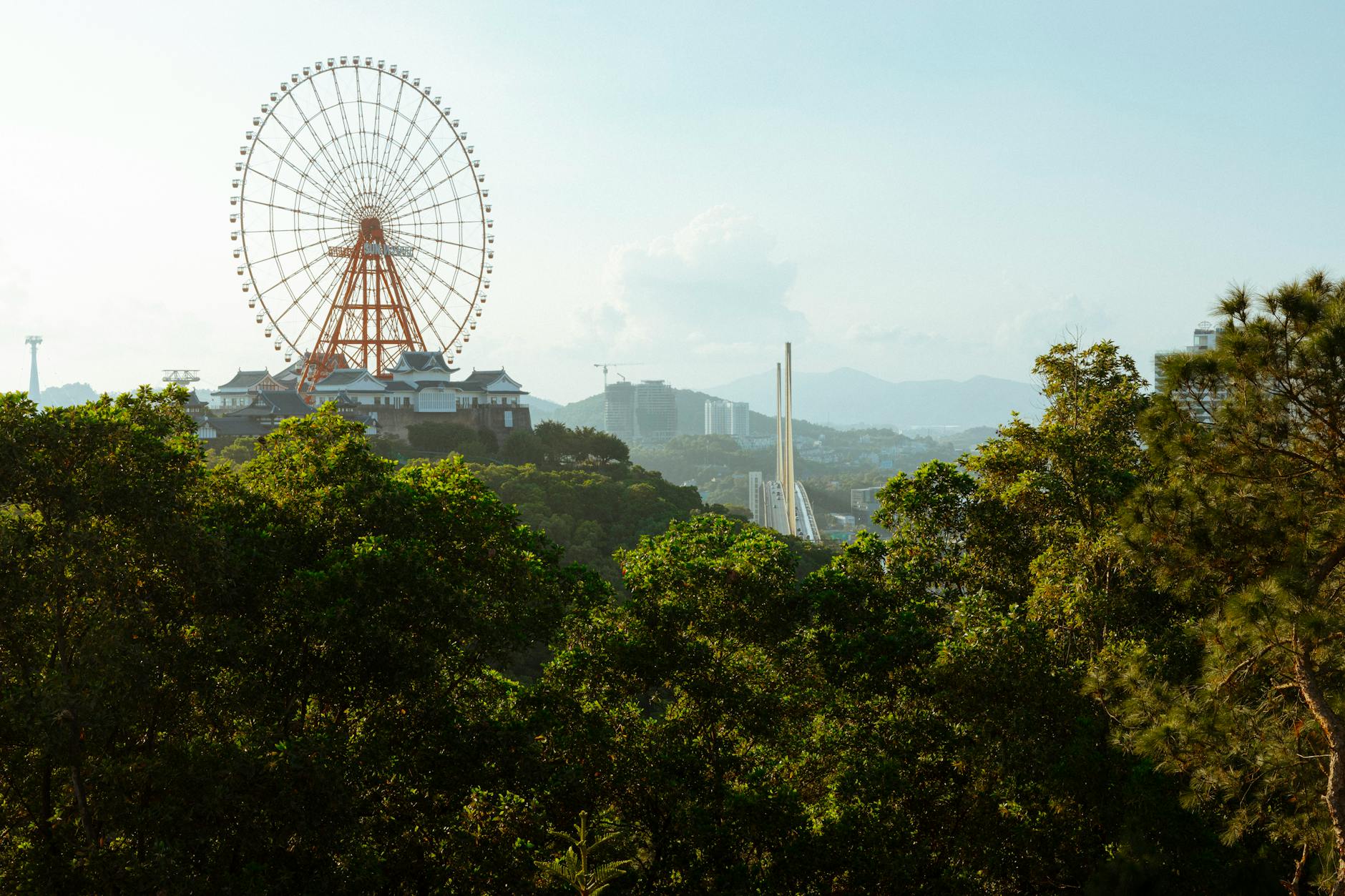
Two limestone karsts lean toward each other at the waterline, shaped by wind and tide into forms that locals have long compared to a rooster and a hen. "Hon Trong Mai" — the Fighting Cock Rocks, sometimes called the Rooster and Hen Islet — sits in the southern part of Ha Long Bay and has become the unofficial symbol of Quang Ninh province. You'll find it printed on the 200,000 VND banknote, on tourism logos, and on roughly half the postcards sold anywhere in northern Vietnam (베트남 / 越南 / ベトナム).
What it is and how it got here
Hon Trong Mai is a pair of karst islets rising about 12 meters above the water, each balanced on a narrow eroded base. Geologically, they're the product of millions of years of seawater and rain dissolving the surrounding limestone — the same process that carved Ha Long Bay (하롱베이 / 下龙湾 / ハロン湾)'s roughly 1,600 other islands. The two rocks stand maybe 5 meters apart and tilt toward each other at the top, which gives them the appearance of a pair of birds touching beaks.
The name translates loosely to "Male and Female Fighting Cocks" — "trong" for rooster, "mai" for hen. Local folklore ties the formation to a story about love and loyalty, which is why Vietnamese couples sometimes consider seeing the rocks together a good omen. The formation was part of the broader Ha Long Bay UNESCO World Heritage Site designation in 1994.
Why travelers go
Hon Trong Mai works as a landmark rather than a destination you spend hours at. You don't climb it or dock beside it — you cruise past it. The appeal is partly photographic (it genuinely looks striking against the water, especially in early morning light) and partly the novelty of recognizing something you've seen on Vietnamese currency. It's also a reliable waypoint: most Ha Long Bay boat tours pass it within the first hour, so it signals the start of deeper bay exploration.
For many visitors, the real value is context. Once you've seen Hon Trong Mai, the rest of the bay's karst formations start making visual sense — the scale, the erosion patterns, the way vegetation clings to vertical rock faces.
Best time to visit
Ha Long Bay has two strong seasons:
- October to December: Clear skies, cooler temperatures (18–25°C), lower humidity. Visibility is best for photography. This is peak season, so expect higher boat prices and more traffic on the water.
- March to May: Warming up (22–30°C), generally dry, fewer tourists than autumn. Mornings can be misty, which actually makes the karsts look dramatic — if you don't mind trading sharpness for atmosphere.
Avoid June through August if you can. Summer brings heavy rain, occasional typhoons, and haze that flattens the landscape. January and February are cold and often overcast, with temperatures dipping to 12–15°C on the water — not ideal for a day on an open boat deck.
How to get there
Hon Trong Mai sits roughly 8 km southwest of the main Tuan Chau Marina in Ha Long City, which is where most bay tours depart.
From Hanoi, the most common options:
- Bus: Limousine-style buses from My Dinh or Gia Lam stations run every 30–60 minutes. Travel time is about 2.5 hours on the Ha Long–Hanoi Expressway. Tickets cost 120,000–250,000 VND depending on the operator.
- Private car: Around 1,200,000–1,500,000 VND one way for a 4-seat sedan. Same route, slightly faster since you skip bus stops.
- Tour package: Most Ha Long Bay day trips from Hanoi include hotel pickup, bus transfer, and a 4–6 hour cruise for 800,000–2,500,000 VND per person depending on the boat class.
Once at Tuan Chau Marina or Bai Chay Tourist Wharf, you board a cruise or day-trip boat. Hon Trong Mai appears on nearly every standard Ha Long Bay itinerary — you don't need to request it specifically.
Photo by Quang Nguyen Vinh on Pexels
What to do
1. Photograph from the boat deck
The rocks look best from the southeast angle where both karsts are visible leaning together. Morning light (before 9 AM) gives warm tones; overcast days create a moody silhouette. Bring a zoom lens if you have one — boats don't get closer than about 50 meters.
2. Combine with Sung Sot Cave
Most itineraries that pass Hon Trong Mai also stop at Sung Sot (Surprise) Cave on Bo Hon Island, roughly 4 km northeast. It's one of the bay's largest caves — high ceilings, well-lit walkways, and a viewpoint at the exit that overlooks a forested lagoon.
3. Kayak around Ti Top Island
Ti Top is about 2 km north of Hon Trong Mai and offers kayak rentals (80,000–150,000 VND per hour). Paddling among the karsts at water level gives you a completely different sense of scale than the boat deck.
4. Swim at a floating platform
Several tour operators anchor near Hon Trong Mai for a swimming stop. The water is calm in the sheltered areas between karsts — surprisingly warm from May to October.
5. Watch for the 200,000 VND banknote angle
This is a small pleasure, but satisfying: hold up the polymer note and match the printed image to the real rocks. The vantage point on the note is from the south-southwest.
Where to eat nearby
You won't find restaurants at Hon Trong Mai itself — it's open water. Meals happen either on your cruise boat or back in Ha Long City.
In Ha Long City, seek out "cha muc" (squid cake), the local specialty. It's deep-fried minced squid, crispy outside, chewy inside, served with dipping fish sauce. Street stalls along Vuon Dao area sell them for about 30,000–50,000 VND per portion. For a sit-down meal, the seafood restaurants clustered near Bai Chay Bridge serve fresh clams, mantis shrimp, and grilled "ca" (fish) — expect 200,000–500,000 VND per person for a solid spread.
If your tour includes a meal on the boat, the quality varies wildly. Budget cruises serve decent "com" (rice) sets; mid-range boats often include "goi cuon" and fried spring rolls alongside grilled seafood.
Where to stay
- Budget: Hostels and guesthouses in Bai Chay ward run 200,000–400,000 VND per night. Basic but functional.
- Mid-range: 3-star hotels near Tuan Chau Island or along Ha Long Road cost 600,000–1,200,000 VND. Most include breakfast and bay views.
- Overnight cruise: This is the popular option — sleep on the bay itself. A standard 2-day/1-night cruise ranges from 1,500,000–6,000,000 VND per person. You'll pass Hon Trong Mai on the way out and potentially again on return.
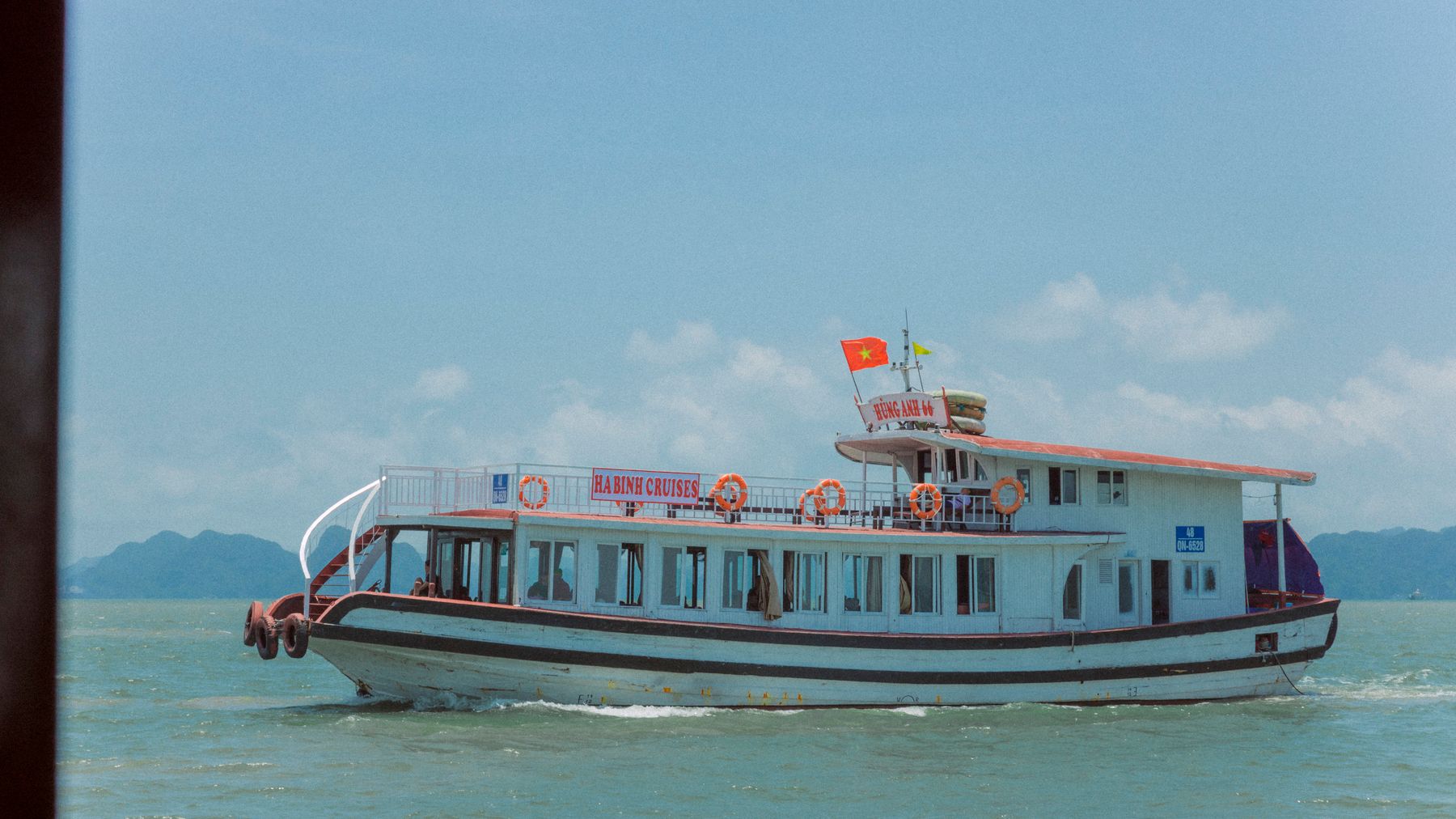
Photo by HONG SON on Pexels
Practical tips locals would tell you
- Bring binoculars or a telephoto lens. The rocks are smaller than photos suggest, and boats keep their distance.
- Book boats through local operators in Ha Long City, not just Hanoi-based agencies. You'll often pay 20–30% less for the same itinerary.
- Wear layers from November to March. Wind on the bay cuts through thin jackets fast.
- Carry cash. Kayak rentals, floating village vendors, and smaller boats are cash-only.
Common mistakes to avoid
- Expecting a stop at the rocks. You sail past Hon Trong Mai — no one docks there. Plan your camera time accordingly.
- Booking the cheapest possible day cruise. Below about 600,000 VND per person, boats tend to be overcrowded, meals are minimal, and the route may skip key stops.
- Skipping the overnight option. A day trip is fine, but the bay at sunrise — with mist threading between the karsts — is a different experience entirely. If you have the budget, stay a night on the water.
- Visiting on a national holiday. Tet and the April 30 / May 1 holiday week bring massive domestic tourism traffic. Boat prices spike, and the water feels crowded.
Practical notes
Hon Trong Mai is a symbol more than a standalone attraction — plan it as part of a broader Ha Long Bay trip rather than a destination on its own. Most standard cruises include it without you needing to ask. If you're spending more time in the north, Ninh Binh and Cat Ba make natural additions to a Quang Ninh itinerary.
Last updated · May 29, 2026 · independently researched, never sponsored.