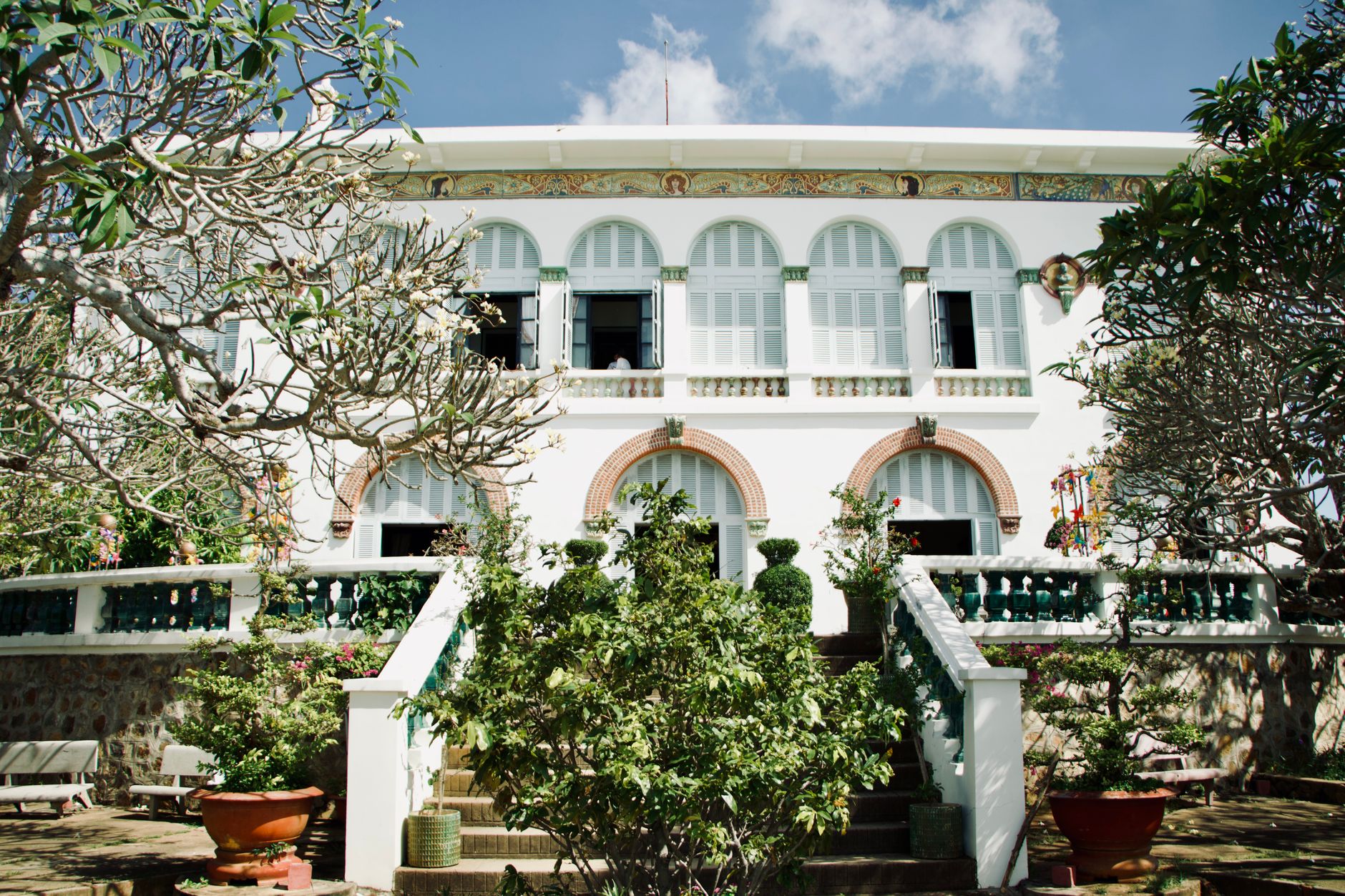
Hue has never been shy about theatrical food. But "com am phu" — literally 'hell rice' — earns its drama through flavor, not just appearance: a shallow bowl of steamed rice layered with sliced pork, a halved soy egg, tiny prawns, pickled vegetables, and a scatter of fried shallots, each topping arranged in deliberate sections like a painter's palette.
The dish traces back to the 1920s, when a late-night street vendor near the old citadel supposedly named it after the underworld — either because she sold it through the small hours, or because the vivid red chili sauce looked like something from a Hue (후에 / 顺化 / フエ) ghost story. Both explanations get repeated with equal confidence depending on who you ask.
What Com Am Phu Actually Tastes Like
The rice itself is the quiet foundation — plain, slightly sticky, nothing remarkable on its own. The work happens in the toppings. Thin slices of "cha lua" (Vietnamese pork sausage) bring a mild, bouncy sweetness. The prawns are small and dry-fried, concentrated in flavor. The egg, marinated in soy and five-spice, adds richness. Pickled bean sprouts and shredded green mango cut through the fat. A spoonful of the accompanying "mam nem" — fermented anchovy dipping sauce thinned with pineapple juice and fresh chili — ties everything together with a salt-forward punch that's very Hue.
A single plate runs 35,000–50,000 VND depending on the spot and portion size. It's filling but not heavy — which is exactly why ordering around it makes sense.
What to Pair It With
Start With Banh Canh Cua
"Banh canh" — thick rice noodle soup — is the obvious warm opener before a rice plate. The Hue version made with crab ("cua") is particularly good: a cloudy, rich broth with chunks of crab paste, pork knuckle, and chewy tapioca noodles. It softens the appetite without overwhelming it. Order a small bowl ("nho"), around 30,000 VND, and you've got a proper first course.
Add a Side of Bun Bo Hue's Cousin — Tom Chua
Hue is the home of "tom chua", fermented shrimp that are bright pink, tangy, and slightly funky. They're usually served as a condiment or side rather than a standalone dish — a small plate alongside com am phu costs almost nothing, around 10,000–15,000 VND, and the acidity does what lime does for fish sauce: sharpens everything else on the table.
Close With Banh It Tran
"Banh it tran" are small steamed glutinous rice dumplings filled with mung bean and dried shrimp, served without their banana-leaf wrapper — hence "tran" (naked). They're dense and slightly sweet, good for ending the meal without ordering a full dessert. You'll find them sold in small steamers at the same shops that do com am phu. Three pieces for about 15,000 VND.
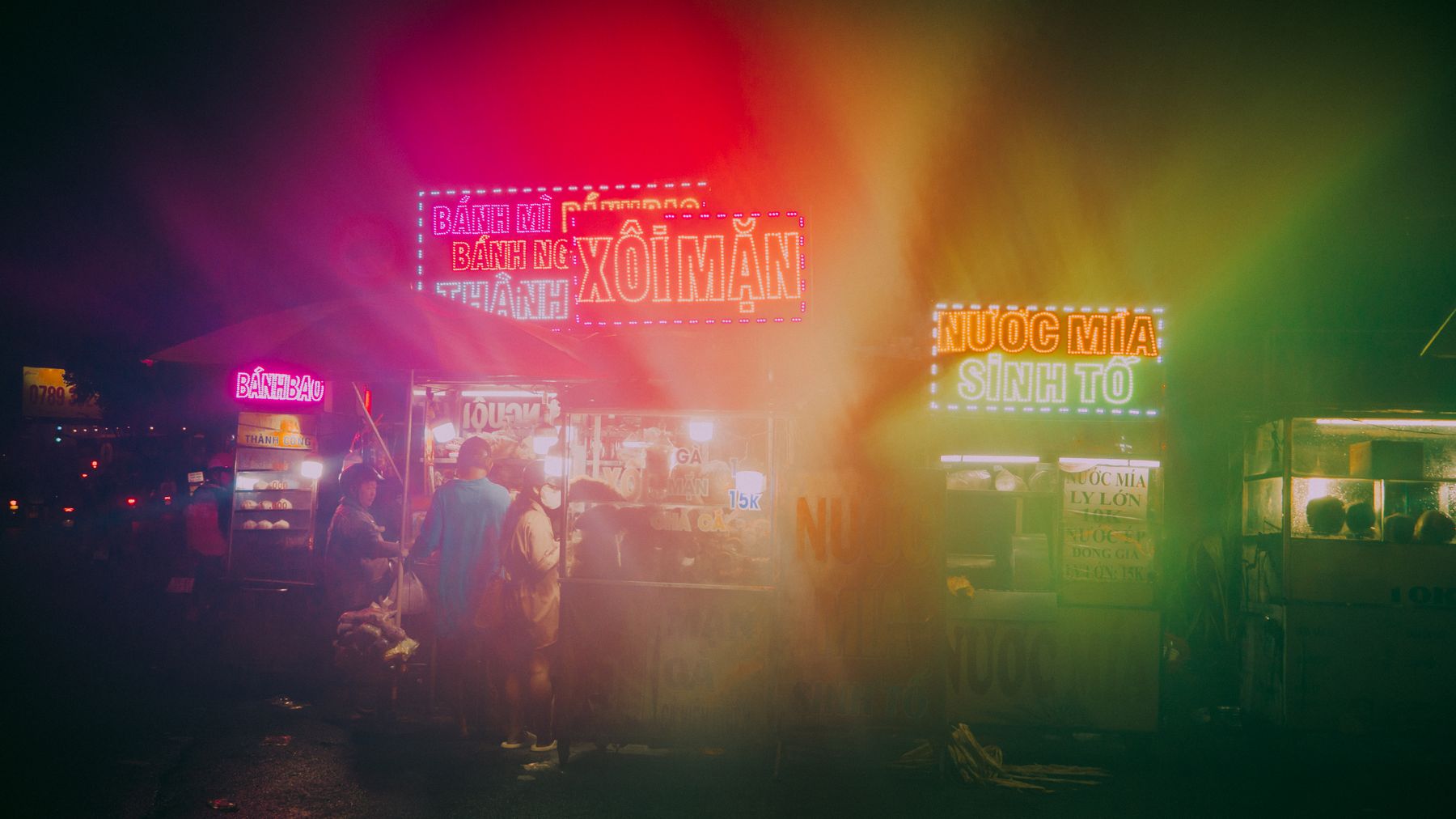
Photo by Nguyễn Hoàng Văn on Pexels
Where to Eat Com Am Phu in Hue
Quan Com Am Phu Ba Beo on Nguyen Binh Khiem Street is the reference point most locals give first. It's been operating for decades, opens around 5 PM, and runs until the rice sells out — usually by 9:30 or 10 PM. The mam nem here is balanced rather than aggressive, which makes it accessible even if fermented fish sauce isn't your default comfort zone. A full plate with egg and prawns: 45,000 VND.
Hem 1 Dinh Tien Hoang (the alley off Dinh Tien Hoang Street near the train station area) has a cluster of com am phu vendors that open from around 6 PM. More local atmosphere, slightly cheaper — 35,000–40,000 VND — and you'll be sharing plastic stools with Hue University students. The banh it tran sold by the cart outside is worth the detour.
For a daytime version — yes, a few spots serve it at lunch — check the market stalls inside Cho Dong Ba on Tran Hung Dao Street. It's a simpler, faster version, less ceremonially plated, but perfectly decent for 30,000 VND.
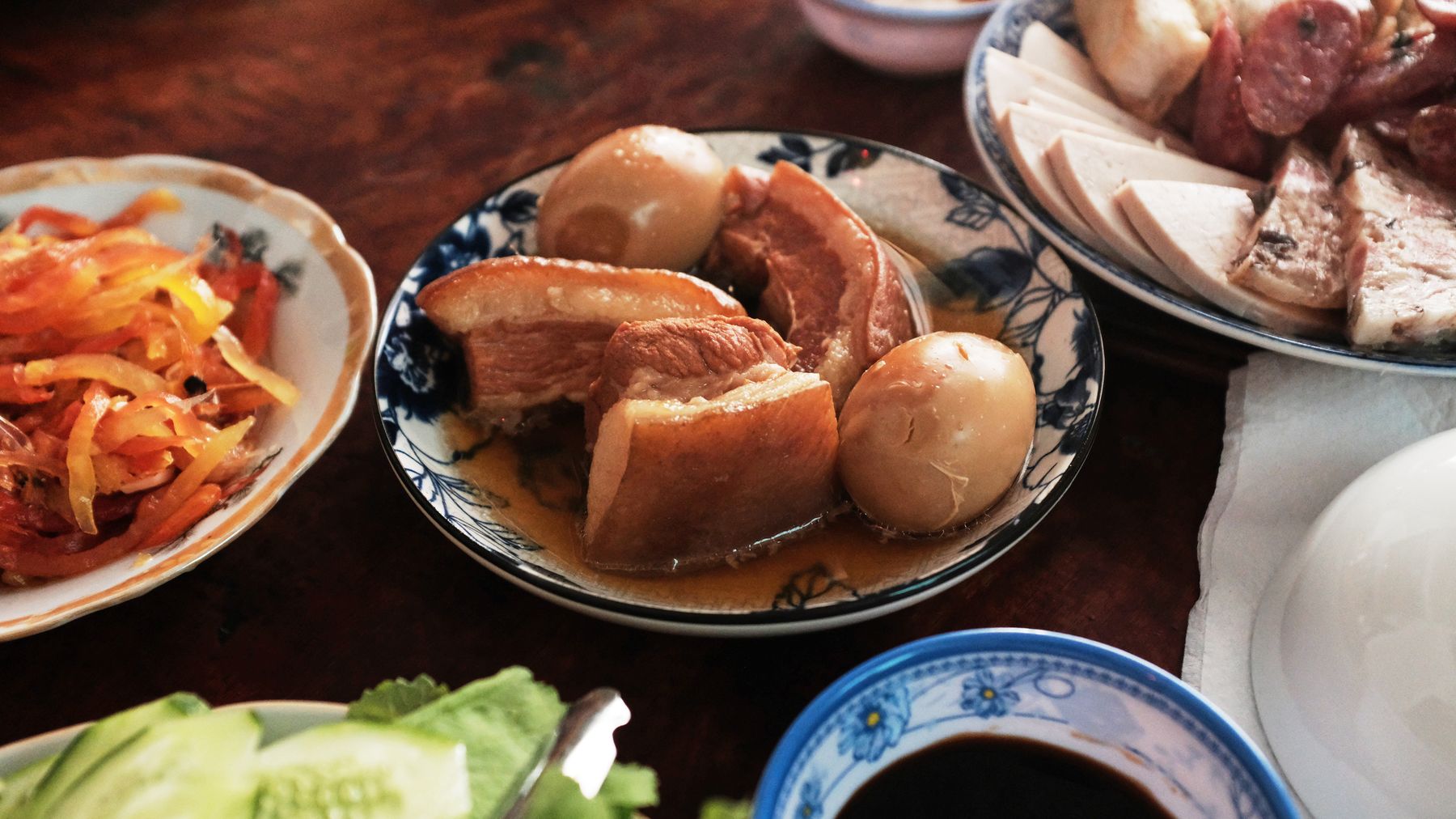
Photo by Nguyen Truong Khang on Pexels
A Note on the Sauce
Mam nem is polarizing. If fermented anchovy is genuinely not your thing, ask for "nuoc mam cham" instead — a straightforward lime-fish sauce dip — and the plate still works. But if you're eating com am phu in Hue and skipping the mam nem entirely, you're eating half a dish. Give it a try with just a small spoonful over the rice before you write it off.
Practical Notes
Com am phu is primarily an evening dish — most dedicated spots don't open before 5 PM. Plan it as dinner, not lunch, and arrive before 8 PM to guarantee the full spread of toppings. The dish doesn't travel well, so eat it where you order it.
Last updated · May 26, 2026 · independently researched, never sponsored.