Sa Dec flower village sits along the banks of the Tien River in Dong Thap province, about 140 km southwest of Saigon. It's been growing flowers for over a century, and today around 2,000 households across roughly 60 hectares cultivate everything from roses and chrysanthemums to orchids and marigolds. If you're passing through the Mekong Delta (메콩 델타 / 湄公河三角洲 / メコンデルタ), this is one of the more visually interesting stops — and one that most foreign travelers skip entirely.
What it is and why it matters
Lang Hoa Sa Dec isn't a single garden with a ticket booth. It's a working agricultural village — a sprawl of nurseries, greenhouses, and open-air flower beds spread across several hamlets along the river. The families here grow ornamental plants year-round, supplying Saigon's flower markets and shops across the southern provinces. During the weeks before Tet, the village goes into overdrive, producing millions of flowers for the lunar new year celebrations that define the holiday across Vietnam (베트남 / 越南 / ベトナム).
The village has roots going back to the early 1900s, when local farmers began shifting from rice to floriculture. The soil along this stretch of the Tien River turned out to be unusually good for it — rich alluvial deposits refreshed by seasonal flooding. That advantage still holds.
Why travelers go
Most visitors come for the color. Rows of potted roses, yellow apricot blossoms ("mai vang"), celosia, and dozens of other species line narrow paths between family plots. It's a working village, not a theme park, which means you'll see people grafting, pruning, and hauling soil alongside the flowers. That's the appeal — it feels real because it is.
Photographers do well here, especially in the early morning light. The combination of flowers, weathered greenhouses, and river backdrop gives you compositions you won't find in a city park.
Sa Dec also has a secondary draw: the Huynh Thuy Le ancient house, a well-preserved Sino-French colonial home along the riverfront. It's connected to Marguerite Duras' novel The Lover — the house belonged to the family of the man the story is based on. Entry is around 20,000 VND.
Best time to visit
The village is active year-round, but two windows stand out:
- Late December through mid-January / 越南春节 / テト)): Peak production. The village is at its most dense and colorful as growers push to have everything bloom in time for the holiday. Expect crowds, especially on weekends, but also the best display.
- March through May: Fewer visitors, still plenty of flowers in bloom. The weather is hot but manageable if you arrive early. This is a better window if you want to wander without bumping into tour groups.
Avoid June through October if you can. Mekong Delta rainy season turns paths muddy and some plots flood. The village still operates, but the experience is diminished.

Photo by Quang Nguyen Vinh on Pexels
How to get there from Saigon
Sa Dec town is the gateway. From Saigon, you have a few options:
- Bus: Phuong Trang (FUTA) runs buses from Mien Tay bus station to Sa Dec. The ride takes about 3.5 to 4 hours depending on traffic. Tickets cost around 120,000–150,000 VND. Buses are air-conditioned and reasonably comfortable.
- Motorbike: Roughly 140 km via National Highway 1A and then cutting south. Takes about 3–3.5 hours without heavy stops. A good ride if you're already touring the Mekong Delta by bike.
- Car/private driver: Expect to pay 1,500,000–2,000,000 VND for a return day trip with waiting time. This is popular with small groups who combine Sa Dec with Can Tho.
From Sa Dec town center, the flower village is only about 2–3 km out. A "xe om" (motorbike taxi) will take you there for 15,000–20,000 VND, or you can use Grab if coverage is available.
What to do
Walk the flower plots
The main activity. Wander the paths between nurseries, talk to growers if you can manage some Vietnamese or gestures, and take your time. Most families don't charge for walking through, though a few of the more photogenic plots near the main road now ask 10,000–20,000 VND as an entry fee. Fair enough — you're walking through their livelihood.
Visit the Huynh Thuy Le ancient house
Worth 30 minutes. The architecture blends Chinese ornamental woodwork with French colonial structure. A guide on-site explains the Duras connection and the family's history as prominent Chinese-Vietnamese merchants.
Take a boat on the Tien River
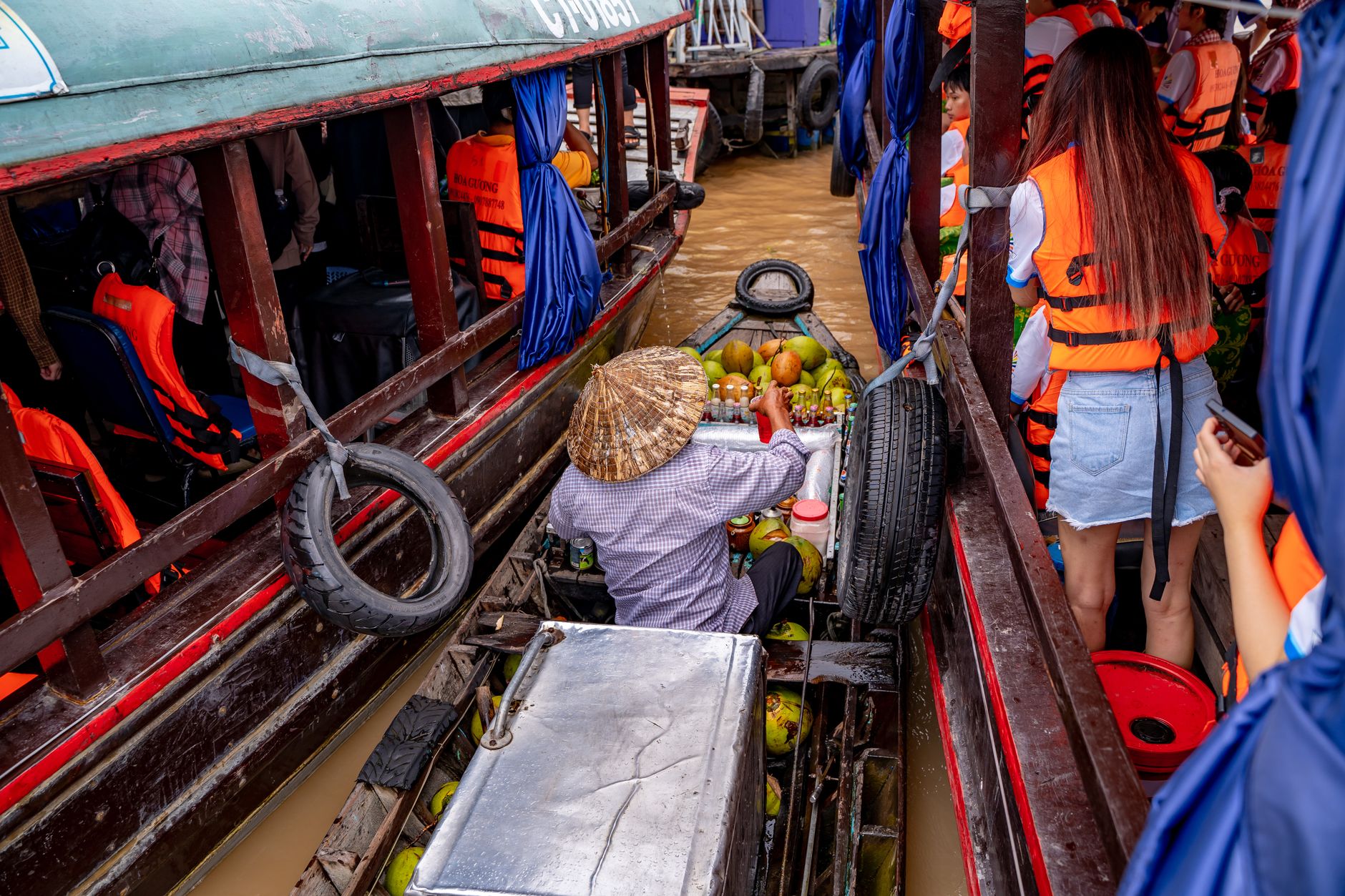
Small boats operate from the Sa Dec riverfront. A short cruise (30–45 minutes) gives you a different angle on the village and the surrounding river life — floating markets, fishing boats, riverside houses. Expect to pay around 100,000–200,000 VND per boat depending on duration and your negotiating.
Browse the Tu Ton Rose Garden
One of the larger private gardens in the village, Tu Ton specializes in roses — over 500 varieties at last count. It's more curated than the working plots and charges a small entry fee. Good if you want a more structured visit.
Explore Sa Dec market
The town's central market is a solid Mekong Delta market experience. Less touristy than the floating markets near Can Tho, and a good place to pick up local snacks and fruit.
Where to eat nearby
Sa Dec has its own noodle dish: "hu tieu Sa Dec." It's a clear pork broth served with thin, springy rice noodles that are slightly different from the hu tieu you get in Saigon — the texture is silkier, closer to fresh-made. Look for stalls along Tran Hung Dao street near the market. A bowl runs 30,000–45,000 VND.
Also worth trying: "banh xeo" from any of the small restaurants along the road into the flower village. Mekong Delta-style banh xeo tends to be larger and crispier than the central Vietnamese version, stuffed with shrimp, pork, and bean sprouts.

Photo by Tuan Vy on Pexels
Where to stay
Sa Dec isn't a major tourist town, so accommodation is limited but adequate:
- Budget: Local guesthouses ("nha nghi") from 200,000–350,000 VND per night. Basic but clean. Try those along Nguyen Sinh Sac street.
- Mid-range: Sa Dec has a few newer hotels in the 500,000–800,000 VND range with air conditioning, hot water, and decent beds. Bong Hong Hotel is a reliable option near the town center.
- Alternative: Many travelers base in Can Tho (about 60 km away, roughly 1.5 hours by car) and day-trip to Sa Dec. Can Tho has a much wider range of hotels and hostels.
Practical tips
- Bring cash. Almost nothing in Sa Dec accepts cards. ATMs exist in town but can be unreliable.
- Go early. The flower village is best before 9 AM — cooler temperatures, better light, and growers are most active. By midday the heat is oppressive and many families take a break.
- Wear shoes you don't mind getting dirty. Paths between plots are packed earth. After any rain, they're mud.
- Ask before photographing people. Most growers are friendly about it, but asking first goes a long way.
- Don't touch or pick flowers. It sounds obvious, but these are commercial crops. A damaged plant is lost income for someone.
Common mistakes to avoid
Don't plan Sa Dec as a full-day destination unless you're genuinely into horticulture. Two to three hours in the flower village plus an hour in town is enough for most people. Pair it with a stop in Can Tho or a visit to Tram Chim National Park (also in Dong Thap, about 40 km north) for a fuller day.
Don't come expecting a manicured botanical garden. This is a farming village that happens to grow flowers. The charm is in the roughness — plastic pots stacked everywhere, hoses running across paths, motorbikes loaded with plants. If you want polished, this isn't it. If you want genuine, it delivers.
Last updated · May 29, 2026 · independently researched, never sponsored.