What Xeo Quyt is and why it matters
Xeo Quyt (sometimes written Xeo Quyt Relic Site) is a 50-hectare cajuput forest and wetland in Dong Thap province, about 30 km east of Cao Lanh city. During the wars of the 20th century, the flooded forest served as a hidden base for resistance operations — its dense canopy and waterlogged terrain made it nearly impossible to locate from the air. Today it operates as a preserved historical zone and ecotourism area, one of the few places in the Mekong Delta (메콩 델타 / 湄公河三角洲 / メコンデルタ) where you can paddle through flooded forest and walk through reconstructed wartime bunkers in the same afternoon.
The site was classified as a national historical relic in 1992. Unlike the Cu Chi Tunnels near Saigon, which draw large tour groups daily, Xeo Quyt stays genuinely quiet. On a weekday you might share the forest with a school group and a handful of domestic visitors. That's part of what makes it worth the trip.
Why travelers go
Two reasons, really. The first is the landscape itself — narrow channels threading through cajuput trees, water hyacinth carpeting the surface, kingfishers launching off low branches. If you've been in Saigon (사이공 / 西贡 / サイゴン) for a week and your ears are ringing, this is a reset. The second is the history. The reconstructed base includes meeting rooms, kitchens, weapons caches, and tunnels built into the swamp. Guides walk you through how fighters lived in the flooded forest for years at a stretch, which is genuinely hard to picture until you're standing ankle-deep in it.
It's not a theme park. The infrastructure is modest, the signs are mostly in Vietnamese, and the experience is better if you have a local guide or at least a translation app ready.
Best time to visit
The flooding season — roughly August through November — is when Xeo Quyt looks its best. Water levels rise, the forest channels fill up, and boat trips feel more immersive. The cajuput trees are lush and the light filtering through the canopy is worth hauling a camera for.
December through March is drier and cooler, which makes walking the trails more comfortable, but the water can drop low enough that some boat routes get shortened. April through June is hot and humid with afternoon downpours. Mornings are fine if you start early — aim to arrive before 9 AM to beat the heat.
How to get there
The nearest major hub is Cao Lanh, the provincial capital. From Saigon, you have a few options:
- Bus: Phuong Trang (FUTA) runs daily buses from the Western Bus Station (Ben Xe Mien Tay) to Cao Lanh. The trip takes about 3.5–4 hours and costs around 130,000–160,000 VND. Buses are air-conditioned sleepers.
- Private car/motorbike: The drive from Saigon is roughly 165 km via National Highway 1A and then cutting south through Sa Dec. Budget 3–3.5 hours depending on traffic getting out of the city.
- From Can Tho: About 85 km north, roughly 2 hours by car or bus.
From Cao Lanh to Xeo Quyt, it's another 30 km southeast — about 40 minutes by motorbike or car. You can hire a "xe om" (motorbike taxi) from Cao Lanh for around 100,000–150,000 VND one way, or use a Grab car if one's available. There's no regular public bus to the site itself, so arrange return transport in advance.
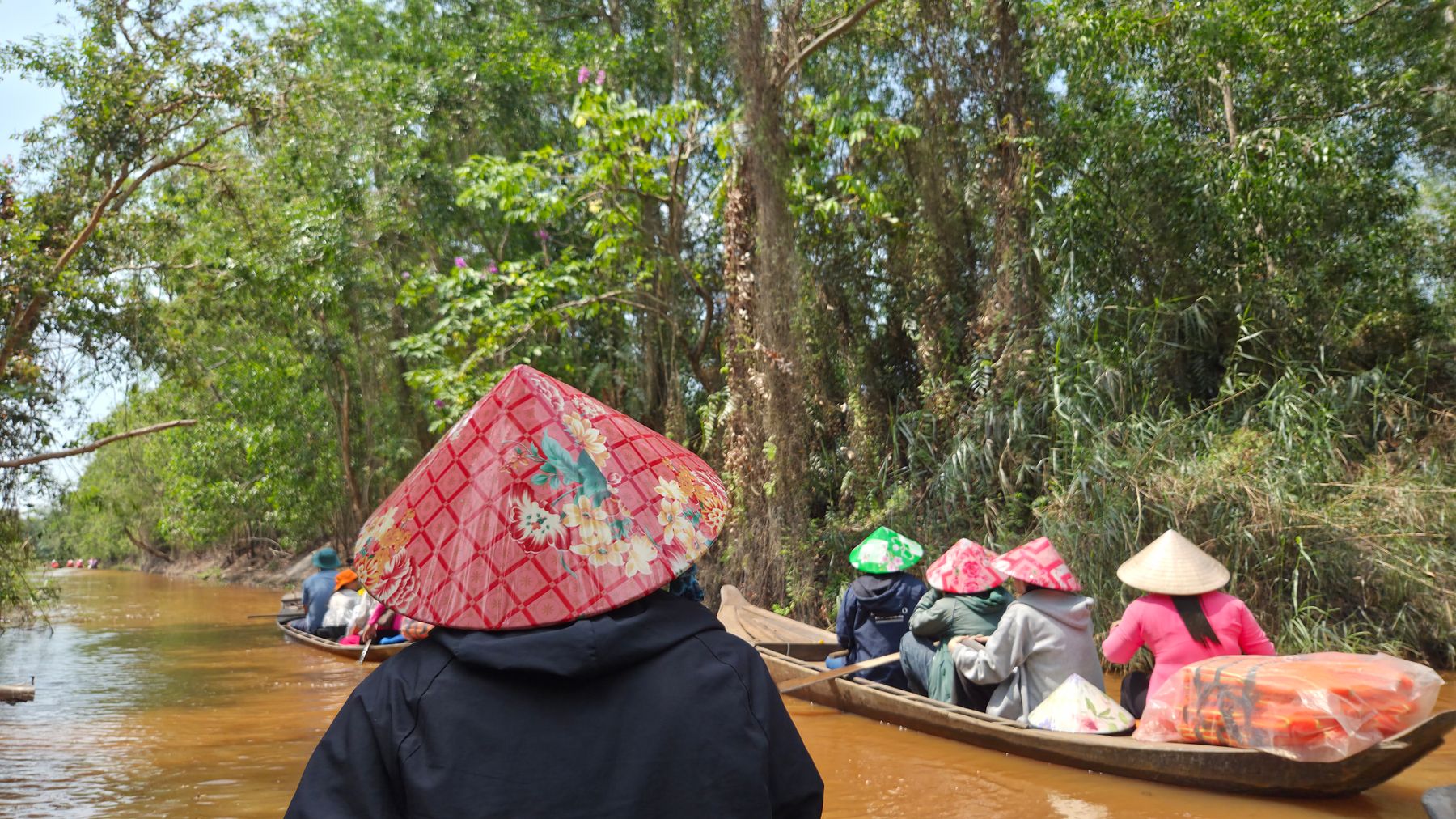
Photo by Nhẫn Nguyễn on Pexels
What to do at Xeo Quyt
Paddle through the cajuput forest
The main activity. Small wooden sampans carry 2–4 passengers through narrow channels under a canopy of cajuput trees. The ride lasts about 30–45 minutes. Boat operators pole through the channels — no motors, so it's quiet enough to hear birds and frogs. The boat fee is typically included in the entry ticket (around 30,000–40,000 VND per person), though tips for the rower are appreciated.
Walk the wartime reconstructions
Raised boardwalks connect bunkers, meeting halls, a field hospital, and storage areas rebuilt to show how the base functioned. Some structures are partially underground, others are elevated on stilts. Information panels explain the layout, though most are in Vietnamese. A local guide costs around 100,000–200,000 VND for a group and makes the visit considerably more interesting.
Visit the Dong Thap Museum exhibits
A small exhibition area near the entrance displays wartime artifacts — documents, weapons, tools, personal items. It's modest but gives context before you head into the forest.
Birdwatching early morning
If you stay overnight nearby, an early start pays off. The wetland supports herons, cormorants, bee-eaters, and during the wet season, migratory species. Bring binoculars — there's no rental available on-site.
Cycle the surrounding countryside
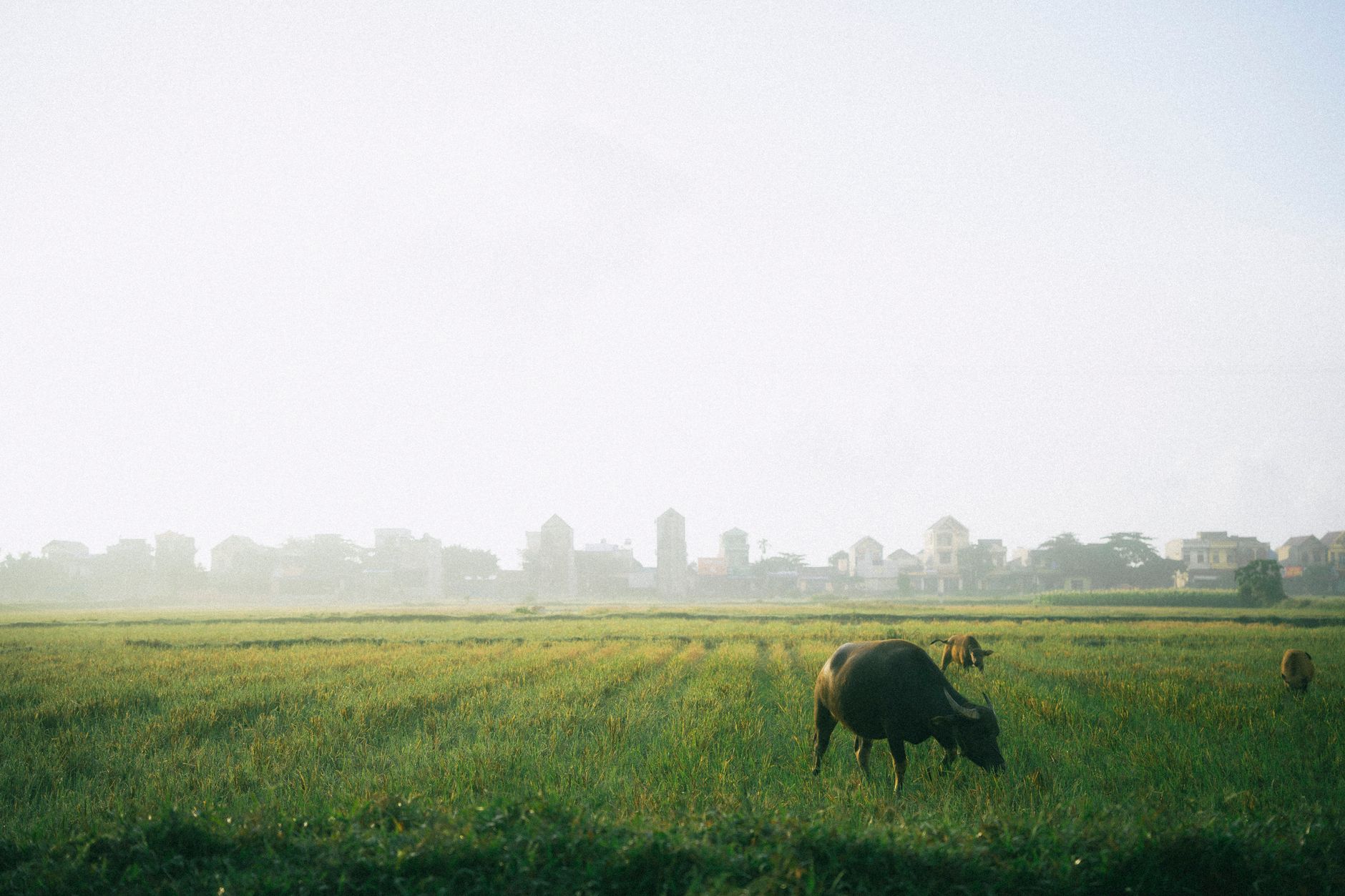
The roads around Xeo Quyt pass through rice paddies, lotus ponds, and small villages. Renting a bicycle in Cao Lanh and riding out here is feasible if you're comfortable with rural Vietnamese roads and don't mind the heat. The terrain is flat — this is the Mekong Delta, after all.
Where to eat nearby
Dong Thap is lotus country. Look for "com sen" — lotus rice, where sticky rice is steamed inside lotus leaves with lotus seeds. It's fragrant, slightly sweet, and specific to this province. In Cao Lanh, several local restaurants serve it.
The other thing to try is "hu tieu" — the southern-style noodle soup that's lighter and sweeter than its northern cousins. Cao Lanh has dozens of "hu tieu" stalls; ask any local for their favorite and you'll get a different answer each time, which is a good sign. A bowl runs 25,000–40,000 VND.
If you're heading through Sa Dec on the way back, stop for "banh xeo" — the crispy crepe stuffed with shrimp and bean sprouts is excellent in the Delta.
Where to stay
Cao Lanh has a range of guesthouses and hotels:
- Budget: Local nha nghi (guesthouses) from 200,000–350,000 VND/night. Basic but clean. Air-con and hot water are standard.
- Mid-range: A few newer hotels in Cao Lanh center charge 400,000–700,000 VND with better beds and breakfast included.
- Homestays: Some families near Xeo Quyt offer homestay accommodation — useful if you want to catch the forest at dawn. Expect to pay 250,000–400,000 VND including dinner and breakfast. Conditions are simple: mosquito net, shared bathroom, generous portions of home-cooked food.

Photo by Hac Hai on Pexels
Practical tips locals would tell you
- Bring insect repellent. The cajuput forest is a wetland. Mosquitoes are part of the deal, especially late afternoon.
- Wear shoes that can get wet. Flip-flops are fine for the boat, but some boardwalk sections flood during rainy season. Sandals with straps work best.
- Cash only. There are no ATMs at the site. Bring enough from Cao Lanh for entry, tips, food, and transport.
- Vietnamese language helps. English is rare here. Download Vietnamese on Google Translate offline before you arrive.
- Sunscreen and a hat for the open sections between tree cover.
Common mistakes to avoid
- Showing up at midday. The heat between 11 AM and 2 PM in the Delta is punishing. Arrive early or late afternoon.
- Not arranging return transport. Grab availability outside Cao Lanh is spotty. If you took a xe om, agree on a pickup time and swap phone numbers.
- Expecting Cu Chi-level infrastructure. This is a provincial site, not a polished tourist attraction outside Saigon. The simplicity is the point, but manage expectations if you're traveling with kids or anyone with mobility issues — boardwalks can be uneven and slippery.
- Skipping the guide. Without context, the reconstructed bunkers are just wooden structures in a swamp. A guide — even one speaking limited English — turns the visit into something you'll actually remember.
Practical notes
Xeo Quyt is open daily, roughly 7 AM to 5 PM. Entry is cheap, and the whole visit takes 2–3 hours. It pairs well with a day trip from Cao Lanh that includes Sa Dec's flower village or Tram Chim National Park. If you're doing a broader Mekong Delta loop from Saigon through Can Tho and back, Dong Thap is a worthwhile detour off the standard route.
Last updated · May 29, 2026 · independently researched, never sponsored.