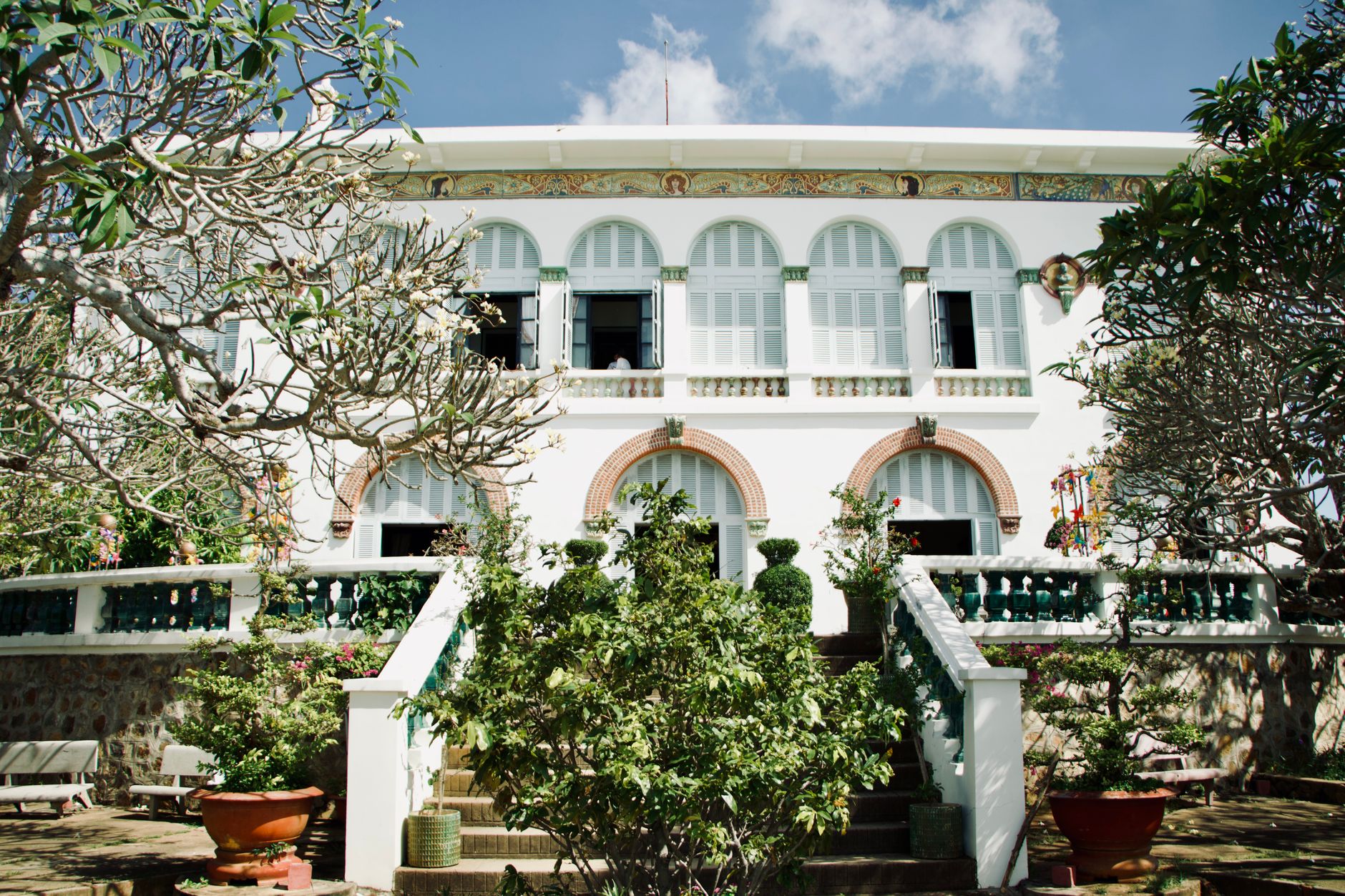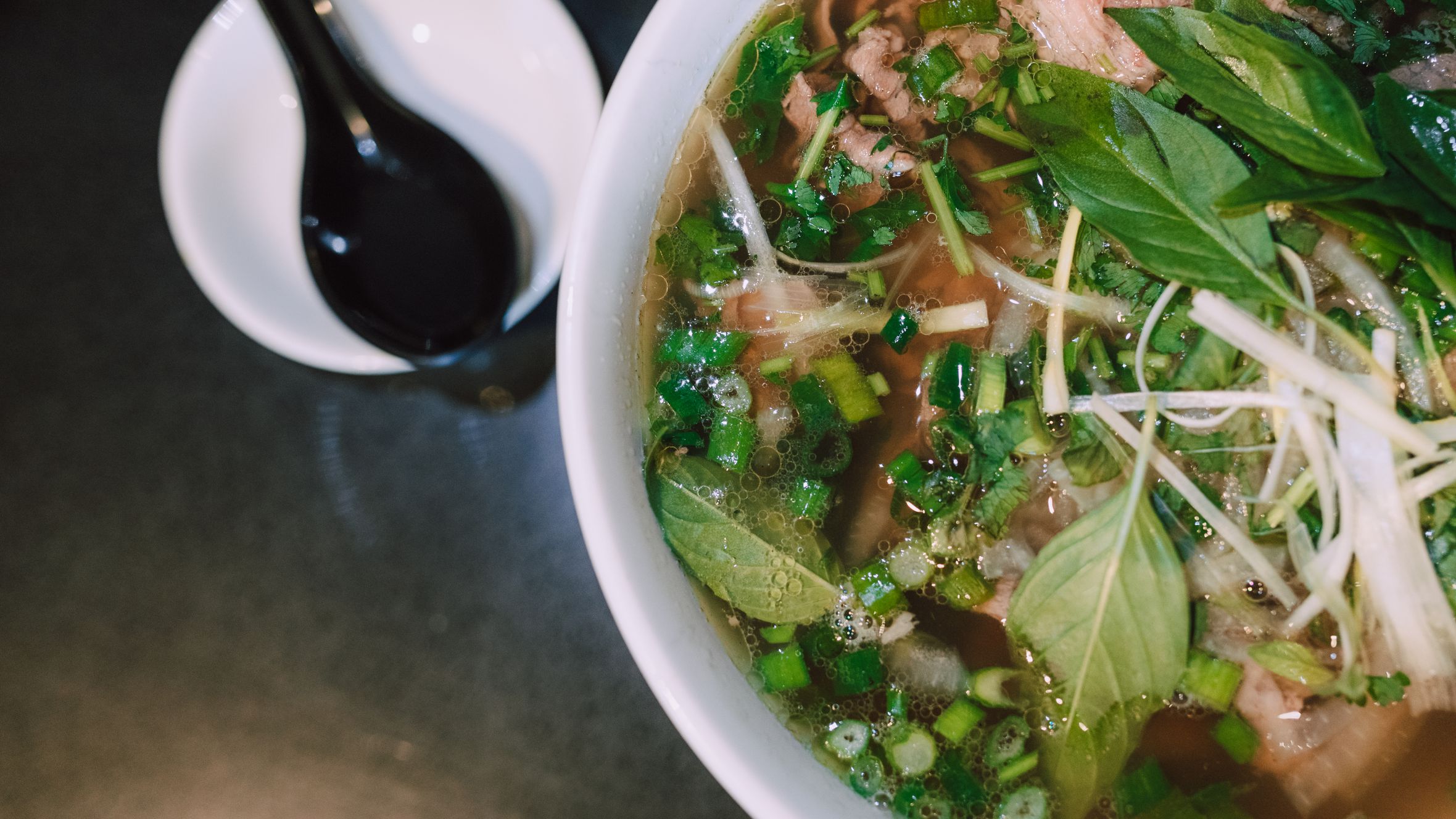
Hoi An has no shortage of food options competing for your attention, but if you only eat one bowl of noodles here, make it "mi Quang" — the turmeric-stained, barely-souped noodle dish that belongs to Quang Nam province and tastes like nothing else in Vietnam (베트남 / 越南 / ベトナム).
The problem for first-timers isn't finding it. It's sitting down, staring at a laminated menu with three versions listed, and having no idea what you just ordered. This is the guide that fixes that.
What You're Actually Eating
Mi Quang (미꽝 / 广南面 / ミークアン) uses wide, flat rice noodles dyed pale yellow with turmeric. The "broth" — and this word is generous — is more like a ladleful of concentrated, slightly oily cooking liquid poured over the noodles. It's not soup. You're not going to get a deep bowl of liquid. That surprises a lot of people expecting something like pho.
On top of the noodles you'll typically find: half a boiled quail egg or chicken egg, a few shell-on shrimp, slices of braised pork, crushed roasted peanuts, and fried shallots. On the side comes a "banh trang" rice cracker — the big, sesame-dotted kind you snap into pieces and either dip into the bowl or crumble directly over everything. Also on the side: a plate of raw herbs (banana blossom shreds, lettuce, mint, bean sprouts) that you pull apart and stuff into the bowl before eating.
The herbs and cracker are not optional garnish. They're structural. A bowl without them is half a bowl.
The Menu Variants (and Which to Order)
Most mi Quang stalls in Hoi An offer two or three versions:
- Mi Quang tom thit — shrimp and pork. The classic. Order this first time, every time.
- Mi Quang ga — chicken. Lighter, good if you want something less oily.
- Mi Quang chay — vegetarian, usually with tofu and mushrooms. Decent, but the broth loses depth without the pork.
If you see mi Quang 1A on a menu, that's a reference to the famous stall on 1A Hai Phong Street in Da Nang — some Hoi An places borrow the branding as a quality signal. It's marketing, but the dish at those spots is usually solid.
Prices in Hoi An run 35,000–55,000 VND per bowl depending on whether you're at a street stall or a sit-down restaurant angled at tourists.
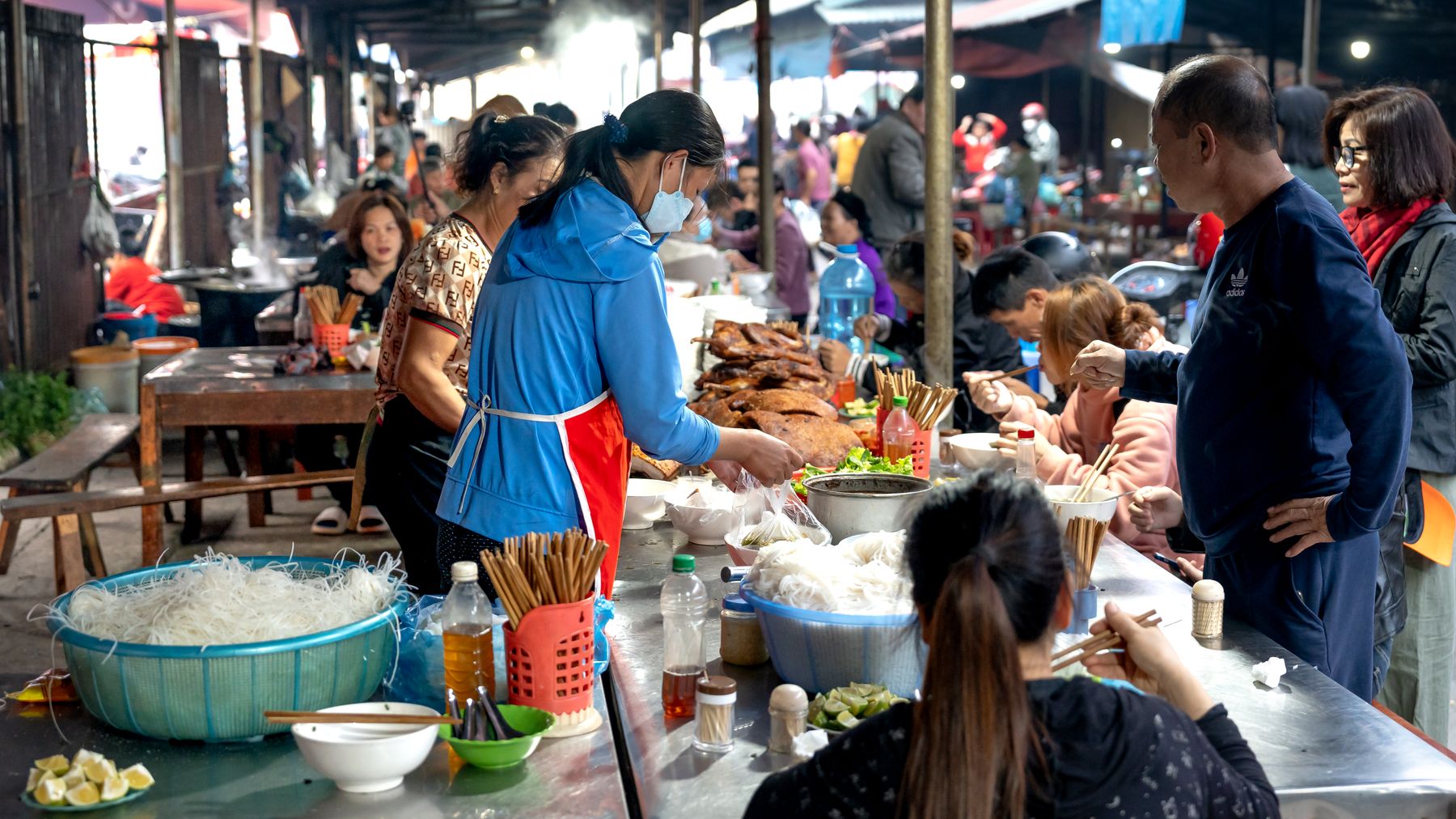
Photo by Quang Nguyen Vinh on Pexels
Where to Go in Hoi An
Quan Mi Quang Ba Vi
15 Phan Chau Trinh. Open roughly 7 a.m. to 1 p.m. — go before 11 a.m. or you'll miss it. A family-run spot, plastic stools, fluorescent lighting, zero atmosphere in the Instagram sense and exactly right in every practical sense. Bowl of tom thit is 40,000 VND. The peanuts here are roasted darker than most, which makes a real difference.
Bale Well Area Stalls
Along and just off Tran Hung Dao, a cluster of small stalls cater to locals at breakfast and early lunch. No English menus, but you only need two words: "mi Quang" and hold up fingers for the number of bowls. They will figure out the rest.
Mi Quang Phu Chiem (Tra Que village adjacent)
If you're heading out to Tra Que herb village, about 3 km north of the Ancient Town, stalls near Phu Chiem market serve mi Quang to a mostly local crowd from around 6 a.m. Prices drop to 30,000 VND. Worth combining with a morning bike ride.
How to Actually Order and Eat It
- Sit down. Someone will come to you — say "cho toi mot mi Quang tom thit" (one shrimp-and-pork mi Quang, please) or just point at the menu and say "mot" (one).
- Check the table for the herb plate and rice cracker. If they're not there, mime a snapping gesture — they'll bring the cracker.
- Add the herbs directly into the bowl. All of them. Tear the banana blossom a bit if the shreds are long.
- Break the rice cracker into rough pieces and lay them on top, or hold a piece and use it to scoop.
- Mix the whole thing with chopsticks before the first bite. The noodles stick together if you don't.
- Add fresh chili from the table condiment tray if you want heat. The dish itself isn't spicy.
That's it. There's no wrong way to eat it once you know the cracker and herbs aren't decorative.
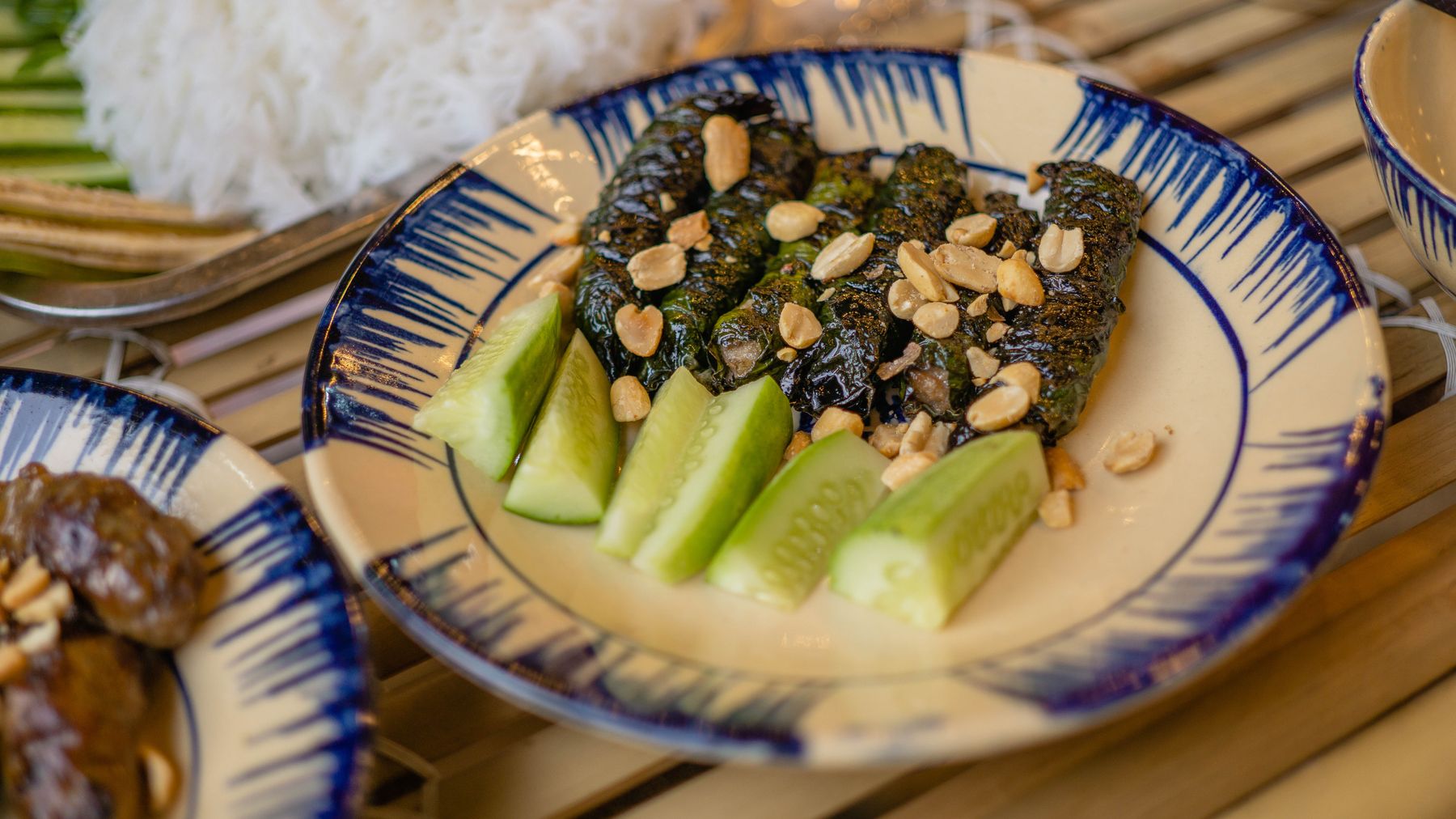
Photo by FOX ^.ᆽ.^= ∫ on Pexels
What It's Not
Mi Quang is not pho. It's not "bun bo Hue" (which is spicy, broth-heavy, and from up the road in Hue). It's not "cao lau", the other Hoi An noodle that uses ash-water-treated noodles and has even less liquid. Each of these dishes is specific to a place and a logic — mi Quang's logic is texture and concentration, not broth volume.
If your bowl arrives and looks almost dry, that's correct. Add the herbs, break the cracker, eat fast before the cracker goes soft.
Practical Notes
Most mi Quang spots in Hoi An are breakfast-to-lunch operations; by 2 p.m. many have sold out or closed. Bring small bills — 50,000 VND notes are fine, anything larger gets complicated at street stalls. The dish contains shellfish and pork, so vegetarian travelers should confirm "chay" clearly when ordering.
Last updated · May 29, 2026 · independently researched, never sponsored.