Nam Dinh sits in the southern Red River Delta, a region steeped in Vietnamese history and culinary tradition. The province is particularly renowned as the home of "pho"—Vietnam's iconic noodle soup—which originated in Van Cu village. It's also the birthplace of national hero Tran Hung Dao and has long served as an educational and cultural cornerstone of northern Vietnam.
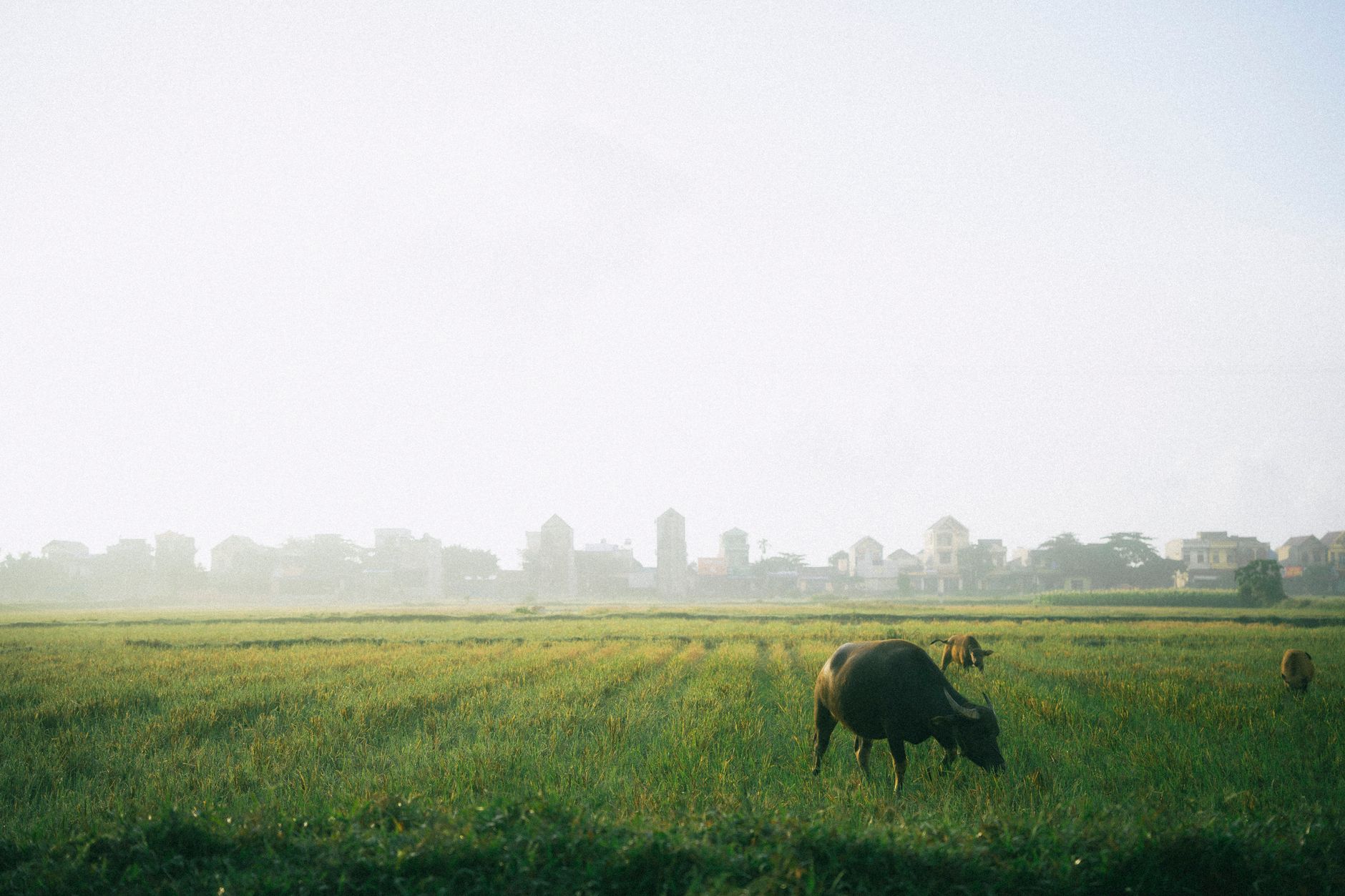
Unlike Hanoi or Hoi An, Nam Dinh doesn't appear on most tourist itineraries. That's part of what makes it worth the trip. You get delta Vietnam without the crowds—rice paddies stretching to the horizon, Catholic cathedrals rising from flat farmland, and bowls of pho that taste noticeably different from what you've had anywhere else.
Geography and Districts
Nam Dinh is subdivided into one central city (Nam Dinh) and nine rural districts: Giao Thuy, Hai Hau, Nam Truc, Nghia Hung, Truc Ninh, Vu Ban, Xuan Truong, and Y Yen. The province's landscape breaks into three distinct regions.
The low-lying delta region—encompassing Vu Ban, Y Yen, Nam Truc, Truc Ninh, and Xuan Truong—is defined by intensive agriculture and textile manufacturing. The lowland coastal region, home to Giao Thuy, Hai Hau, and Nghia Hung, stretches along a 72-kilometer coastline and supports livestock farming and fishing; the Xuan Thuy National Nature Reserve is also located here. Nam Dinh city itself serves as the central hub, concentrating textile, garment, and processing industries alongside traditional trades and growing service sectors.
The province boasts four major estuaries—Ba Lat, Day, Lach Giang, and Ha Lan—which have shaped settlement and commerce for centuries.
If you're coming from Ninh Binh, the border is close—about 30 km separates the two provinces, and the landscapes share a similar flat, waterlogged character. But where Ninh Binh draws visitors for its karst scenery, Nam Dinh rewards with food and religious architecture.
Climate
Nam Dinh experiences a humid subtropical climate typical of the Northern Delta. Average annual temperature sits between 23 and 24 degrees C (73–75 degrees F), with December and January as the coldest months (16–17 degrees C / 61–63 degrees F) and July the hottest (often exceeding 29 degrees C / 84 degrees F).
Rainfall averages 1,750 to 1,800 millimeters (69–71 inches) annually, split between a rainy season (May–October) and drier months (November–February). The province receives 1,650 to 1,700 hours of sunlight per year and maintains 80–85 percent relative humidity. Its proximity to the Gulf of Tonkin means tropical storms and monsoons arrive four to six times annually—a factor worth considering when planning a visit.
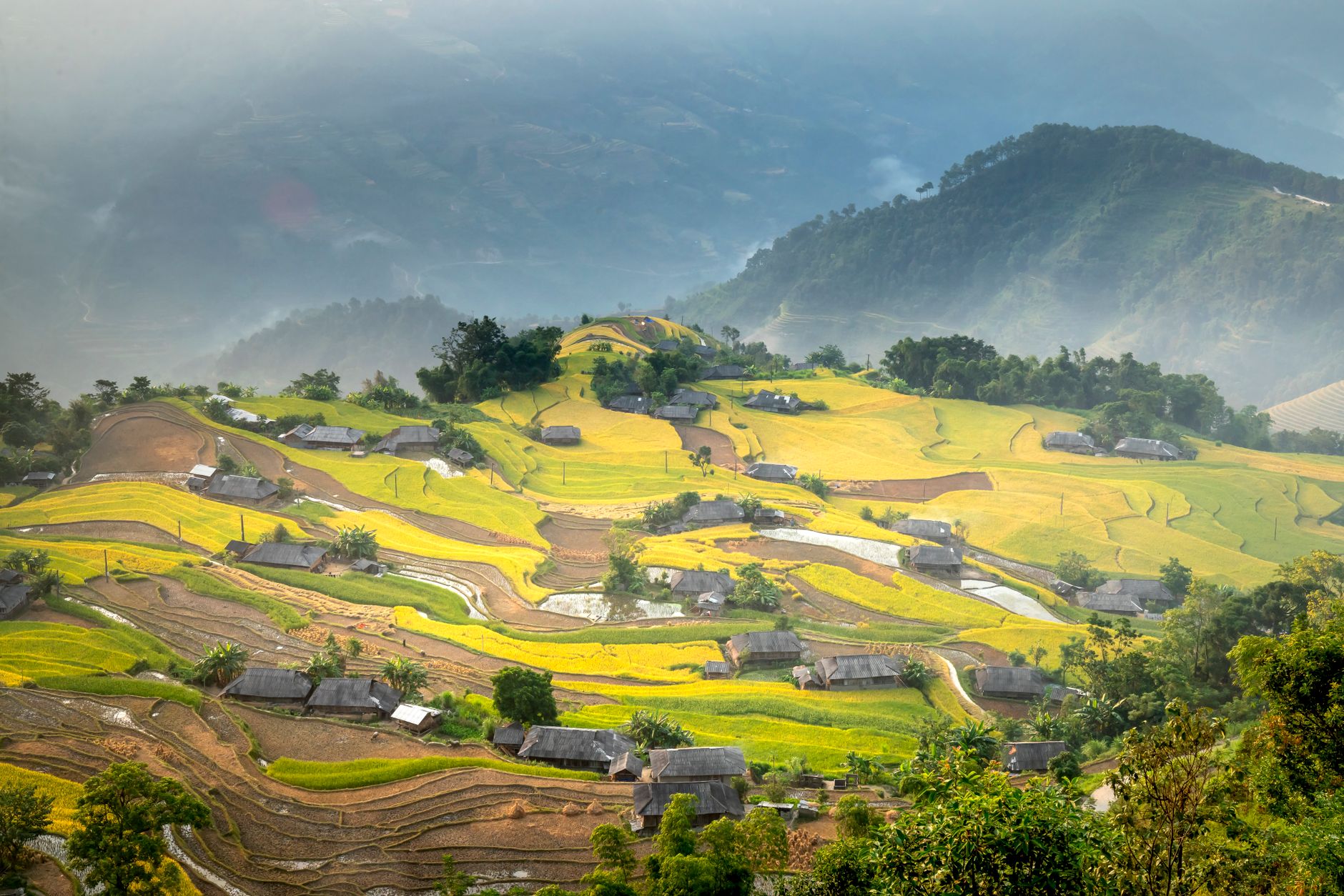
The best window for visiting is October through December: the rain tapers off, temperatures are mild, and the rice harvest turns the paddies golden. January and February can be surprisingly cold and grey—pack a jacket if you're coming for Tet.

Photo by Du Tu Mong on Pexels
Pho's Birthplace: Van Cu Village and Nam Dinh's Noodle Legacy
Nam Dinh's biggest draw for food travelers is its direct claim to pho (쌀국수 / 越南河粉 / フォー). The dish is traced to Van Cu village in the province, where families began making beef noodle soup in the early 20th century. From here, pho migrated north to Hanoi and eventually south to Saigon, evolving along the way. But the Nam Dinh version remains its own thing.
Nam Dinh-style pho tends to be simpler than the Hanoi (하노이 / 河内 / ハノイ) rendition. The broth is clear and deeply beefy, cooked with fewer spices—less star anise, less cinnamon—so the bone flavor comes through stronger. Noodles are often slightly thicker, with a chewier texture. Toppings are straightforward: sliced beef (rare or cooked), scallions, and a scattering of fresh herbs. You won't find the elaborate condiment trays common in southern pho shops.
In Nam Dinh city, look for pho shops along Truong Chinh street and around the central market area. A bowl typically runs 35,000–50,000 VND (under 2 USD), and most shops open by 6:00 AM, with many closing by 10:00 AM. Pho here is a breakfast food—showing up at noon and expecting a bowl will leave you disappointed.
Beyond pho, Nam Dinh has its own noodle repertoire. "Bun cha," grilled pork with vermicelli, is popular here as in Hanoi. "Banh cuon"—steamed rice rolls filled with minced pork and wood ear mushroom—appears at many morning markets. The coastal districts contribute seafood dishes, especially clam-based soups and grilled "cha gio" (spring rolls) filled with crab.
If you're serious about Vietnamese noodles, pairing a Nam Dinh visit with trips to Hue for "bun bo Hue" and Hoi An for "cao lau" gives you a north-to-central noodle education.
Education and Culture
Nam Dinh holds a strong reputation for education across Vietnam. The province hosts several universities including Nam Dinh University of Nursing, University Technical Economics Nam Dinh, Nam Dinh University of Technology Education, and Luong The Vinh University. Le Hong Phong High School ranks among Vietnam's top secondary schools; in 2003, Nam Dinh had 16 schools in the national top 200, and five in the top 100 by 2009.
Culturally, Nam Dinh is a center for "Dao Mau," a Vietnamese folk religion that originated in the province in the 16th century. The Phu Day temple complex in Vu Ban district is the spiritual heart of this tradition—during the third lunar month (usually March or April), thousands of devotees gather for the Phu Day Festival, which features elaborate "len dong" spirit medium ceremonies, ritual singing, and processions. If you happen to be in northern Vietnam during this period, the festival is one of the most visually intense religious events in the country.
Buddhism, particularly the Zen school during the Tran dynasty, has deep historical roots. The Tran Temple complex (Den Tran) in Loc Vuong ward of Nam Dinh city honors the Tran dynasty kings and Tran Hung Dao specifically. It's a well-maintained site, free to enter, and worth an hour's visit. Nearby, the Thien Truong archaeological site marks where the old Tran dynasty capital once stood.
Catholicism is also significant, with parts of the province falling under the Hanoi Archdiocese and the entirety under the Bui Chu Diocese. The Bui Chu Cathedral, originally built in the 19th century, and dozens of smaller parish churches dot the landscape—some of them architecturally impressive, mixing French colonial style with Vietnamese design elements. Hai Hau district alone has more Catholic churches per square kilometer than almost anywhere else in Vietnam.

Photo by Thuan Pham on Pexels
Economy and Industry
By 2005, Nam Dinh's economy was structured as 41 percent agriculture/forestry/fishing, 21.5 percent industry/construction, and 38 percent services. The province hosts six major industrial zones and parks attracting domestic and foreign investment:
Hoa Xa Industrial Zone (808 acres / 3.27 km squared) is the largest, with approximately 86 projects and an estimated 18.76 billion USD in total investment. My Trung Industrial Park (370 acres, expandable to 470) borders National Highway 10 and targets 16.2–19 million USD in development. Thanh An Industrial Park (up to 370 acres) connects via Road 21 to Hai Thinh port and southern districts. Bao Minh Industrial Park in Vu Ban (494 acres) sits 10 kilometers south of Highway 10. Hong Tien Industrial Park in Y Yen (620 acres) sits 25 kilometers from Nam Dinh city, next to Highway 10 and the North-South railway. Ninh Co Industrial Park (500 hectares) spans Hai Hau and Nghia Hung districts, operated by VINASHIN Shipbuilding and supporting seaports, shipbuilding, and tourism services.
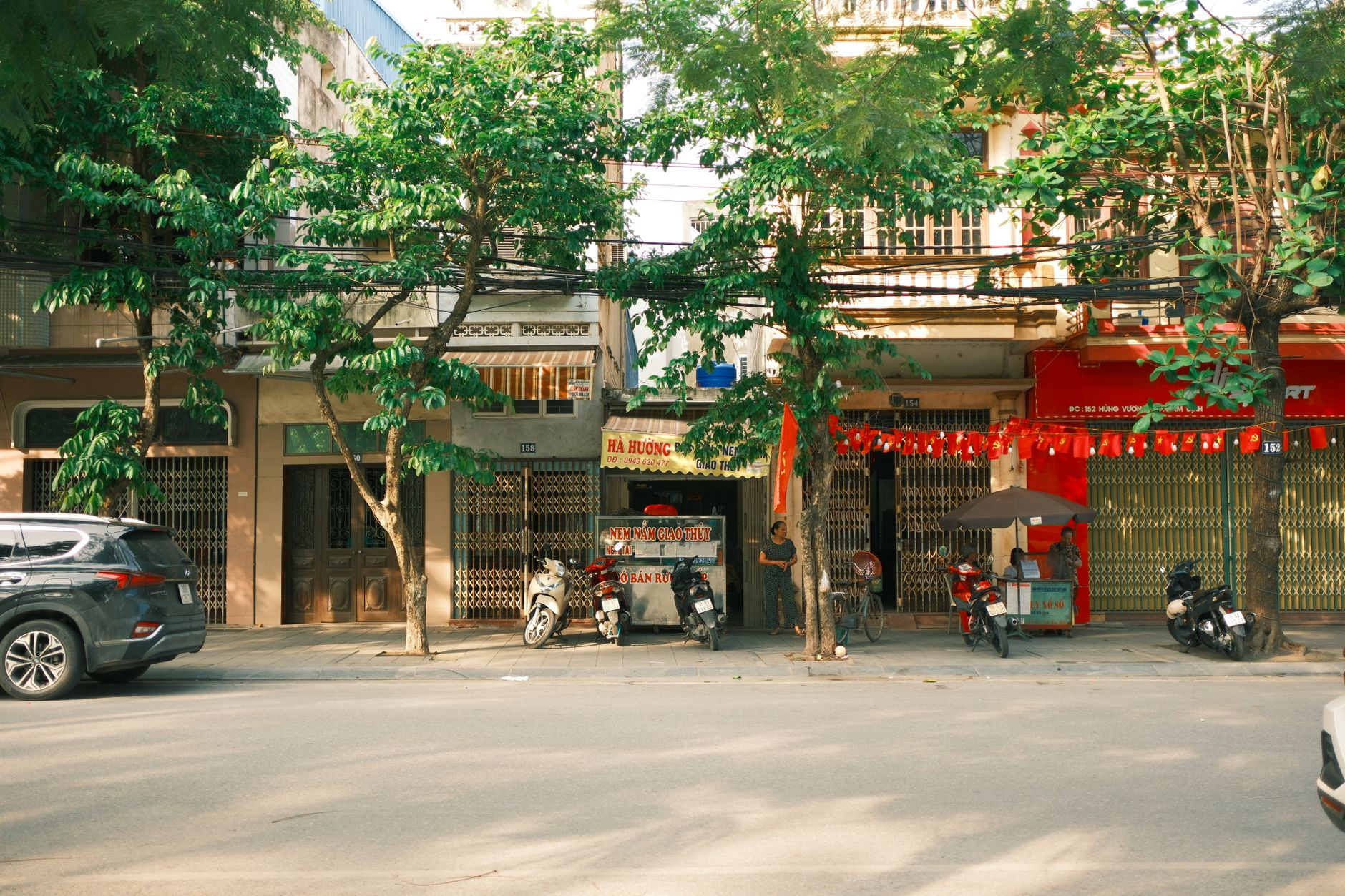
For visitors, the industrial zones aren't destinations in themselves, but they explain why Nam Dinh city feels more working-class and less touristy than comparable provincial capitals. The textile heritage is visible—you'll see fabric shops and tailoring businesses throughout the city center.
Getting to Nam Dinh and Getting Around
Nam Dinh city is about 90 km southeast of Hanoi. The most common route:
- Bus: Regular departures from Hanoi's Giap Bat bus station, roughly every 20–30 minutes from early morning to evening. Tickets cost around 80,000–120,000 VND. The ride takes about 1.5–2 hours depending on traffic. Buses drop you at Nam Dinh bus station on Truong Chinh street.
- Train: The North-South railway stops at Nam Dinh station. Trains from Hanoi take approximately 1.5–2 hours. Tickets for a hard seat run about 60,000–90,000 VND. The station is centrally located.
- Motorbike or car: Take National Highway 1A south, then cut east toward Nam Dinh via Highway 21. The drive is flat and straightforward.
Within the province, local buses connect the city to outlying districts, but service can be infrequent. Renting a motorbike (150,000–200,000 VND per day) or hiring a "xe om" (motorbike taxi) through Grab is the practical way to reach places like Xuan Thuy Nature Reserve (about 35 km from the city) or the coastal Hai Hau district (about 40 km).
There's no airport in Nam Dinh. The nearest is Hanoi's Noi Bai International Airport, roughly 120 km away.
Common Mistakes and What Surprises Foreigners
- Expecting tourist infrastructure: Nam Dinh has limited English signage, few Western-style hotels, and almost no backpacker hostels. Accommodation is mostly Vietnamese-style nha nghi (guesthouses) at 200,000–400,000 VND per night, or mid-range hotels in the city center at 500,000–800,000 VND. Book through Vietnamese booking apps for better rates.
- Arriving after breakfast for pho: Pho shops close early. If you want the real experience, be seated by 7:00 AM.
- Skipping the coast: Most visitors only see the city and leave. The 72 km coastline—especially around Hai Hau beach (Hai Thinh commune)—offers uncrowded sand, cheap seafood, and salt-production villages. It's no Phu Quoc, but that's the point.
- Confusing Nam Dinh pho with Hanoi pho: Locals take the distinction seriously. Asking for hoisin sauce or bean sprouts with your pho (common in southern-style pho) will get you a polite refusal or a confused look. Keep it simple—broth, noodles, beef, herbs.
- Underestimating religious festivals: The Phu Day Festival and Tran Temple ceremonies draw massive crowds. If you visit during the third lunar month, expect packed roads in Vu Ban district. Plan transport in advance.
- Not trying "com tam" or "banh mi" at the market: The central market in Nam Dinh city has cheap and good versions of both, usually 15,000–30,000 VND. Don't fixate exclusively on pho.
Quick Reference: Nam Dinh at a Glance
- Location: Southern Red River Delta, 90 km southeast of Hanoi
- Population: Approximately 1.8 million
- Known for: Birthplace of pho, Tran dynasty heritage, Dao Mau folk religion, Catholic churches, textile industry
- Best time to visit: October–December (dry, mild)
- Pho price range: 35,000–50,000 VND per bowl
- Budget accommodation: 200,000–400,000 VND/night (guesthouse)
- Mid-range accommodation: 500,000–800,000 VND/night (hotel)
- Bus from Hanoi: 80,000–120,000 VND, 1.5–2 hours from Giap Bat station
- Train from Hanoi: 60,000–90,000 VND, 1.5–2 hours
- Motorbike rental: 150,000–200,000 VND/day
- Key sites: Tran Temple complex, Phu Day temple, Bui Chu Cathedral, Xuan Thuy National Nature Reserve, Hai Hau coastline
- Useful Vietnamese phrases: "Cho toi mot bat pho" (Give me a bowl of pho), "Bao nhieu tien?" (How much?), "Cam on" (Thank you)
Why Visit Nam Dinh
For food travelers, Nam Dinh is essential: Van Cu village's pho heritage is tangible and walkable. History enthusiasts will find centuries of cultural layers. The Red River Delta's agricultural landscape, coastal reserves, and traditional textile trades offer genuine glimpses into how northern Vietnam lives and produces.
The province also works well as a day trip or overnight stop on a broader northern Vietnam loop. Combine it with Ninh Binh to the west and Ha Long Bay to the northeast for a route that covers delta, karst, and coast in under a week.
Frequently Asked Questions
Where did pho originate, and how does the Nam Dinh version differ?
Pho traces its origins to Van Cu village in Nam Dinh province, where families began making beef noodle soup in the early 20th century. From there it spread north to Hanoi and south to Saigon, evolving in each place. The Nam Dinh version is considered the original style: the broth is clear and deeply beefy, and simpler in composition than the Hanoi rendition most travelers encounter first.
When is the best time to visit Nam Dinh province?
October through December is the recommended window. Rainfall tapers off after the May-to-October rainy season, temperatures are mild, and the rice harvest turns the paddies golden. Avoid January and February if you dislike cold, grey weather—temperatures drop to 16-17 degrees C (61-63 degrees F) during those months. Tropical storms and monsoons also arrive four to six times annually, so check forecasts if visiting between May and October.
How far is Nam Dinh from Ninh Binh, and what sets the two apart?
Nam Dinh and Ninh Binh share a border roughly 30 km apart, and their flat, waterlogged delta landscapes are similar in character. The key difference is what draws visitors: Ninh Binh is known for karst scenery, while Nam Dinh rewards travelers with food—particularly its original-style pho from Van Cu village—and religious architecture, including Catholic cathedrals rising from flat farmland, without the tourist crowds of better-known destinations.
Bottom Line
Nam Dinh won't overwhelm you with attractions or nightlife. It's a working province where the food is the main event—and that food happens to be the original version of Vietnam's most famous dish. Come for the pho, stay for the delta light over the rice fields, and leave knowing you've seen a part of Vietnam that most visitors skip entirely.
Last updated · May 26, 2026 · independently researched, never sponsored.