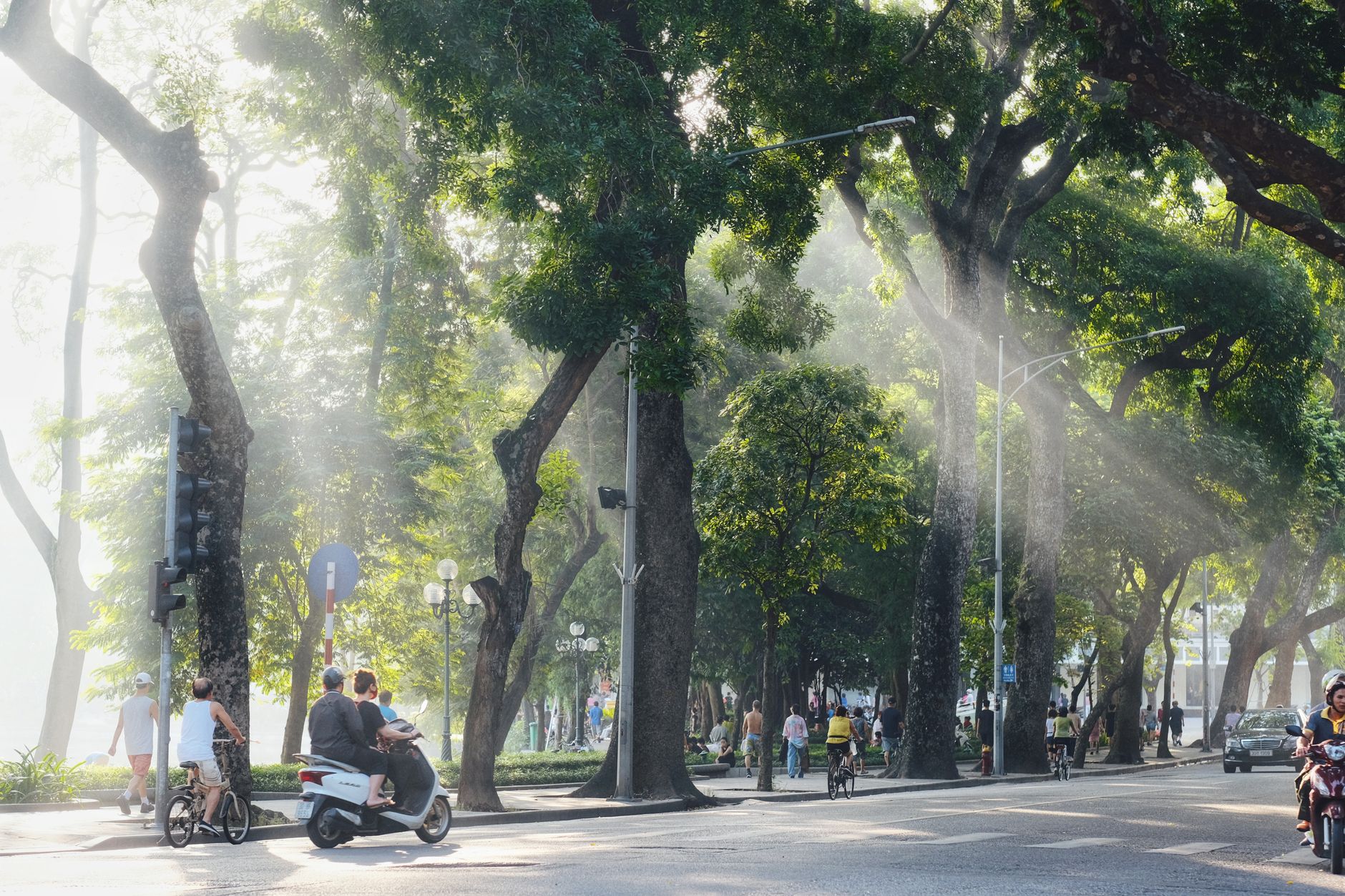
Hai Duong: Red River Delta Gateway Between Hanoi and Haiphong
If you're moving between Hanoi and Haiphong, you'll likely pass through Hai Duong without stopping. Most travelers skip it. That's their loss.
This Red River Delta province—landlocked despite its name (which literally means "ocean sun")—has spent centuries as a working hinterland rather than a tourist draw. Rice paddies, orchards, pagodas, and industrial zones blend into a landscape that feels genuinely Vietnamese rather than staged for visitors. The food is real. The people aren't accustomed to tourist pricing. And if you take a detour, you'll eat better than you will in Hanoi's Old Quarter.
Quick Reference: Hai Duong at a Glance
- Location: 50-70 km east of Hanoi (하노이 / 河内 / ハノイ), 60-80 km west of Haiphong
- Area: 1,668 sq km
- Average temperature: 23.3 C year-round
- Best visit window: February-April (cool, dry, lychee season hasn't started) or late May-June (lychee season)
- Famous for: Lychees, "banh dau xanh" (mung bean cake), Con Son Pagoda, Kiep Bac Temple
- Getting there: National Highway 5 or Hanoi-Haiphong Expressway; regular buses from Hanoi's Gia Lam station (40,000-60,000 VND) and Haiphong's Niem Nghia station
- Time needed: Half-day detour or comfortable overnight
- Budget: Street meals 25,000-50,000 VND; guesthouse rooms 200,000-400,000 VND/night
Geography: The Middle Ground
Hai Duong covers 1,668 square kilometers of flat, fertile land. It sits roughly equidistant between Hanoi (southwest) and Haiphong (northeast), bordered by Bac Ninh, Bac Giang, Quang Ninh, Hung Yen, Thai Binh, and Haiphong itself. National Highways 5, 18, 183, and 37 crisscross the province, plus the Hanoi-Haiphong Expressway, which means transportation into and out is straightforward.
Two pagodas anchor the province culturally: Con Son and Kiep Bac. Both date back centuries and remain active pilgrimage sites and spiritual centers. Con Son is the more famous of the two, perched on a hill with views across the delta. The landscape between them is classic Red River Delta: flat paddy fields broken up by small villages, fish ponds glinting in the afternoon light, and narrow dike roads where motorbikes outnumber cars ten to one.
Climate and Seasons
Hai Duong runs on a tropical monsoon calendar. Winters (December-February) are cool and dry; summers (May-September) are hot and humid. You'll get rain year-round, with peaks from April to October. Annual rainfall averages 1,300-1,700 millimeters. The average temperature hovers at 23.3 C, so you're never in extreme heat or cold—just warm and often damp.
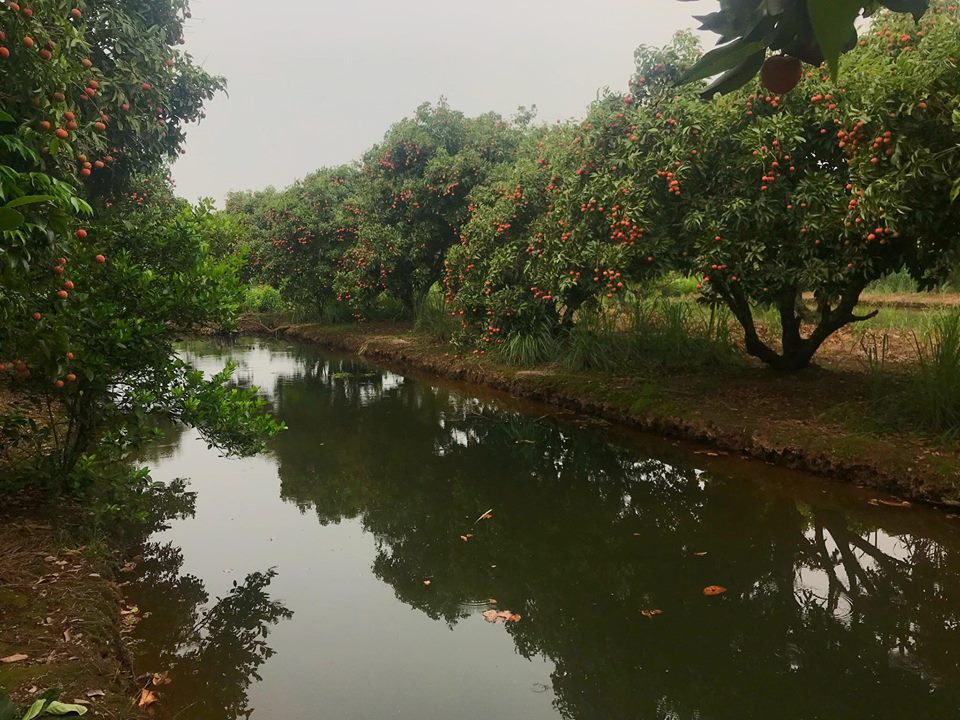
Early February through early April is a transitional sweet spot: mist, occasional drizzle, fewer tourists, pleasant walking weather. If you specifically want lychees, aim for late May through early July—the orchards around Thanh Ha district are loaded, and you can buy a kilogram of fresh fruit for 20,000-40,000 VND depending on the week.
Avoid mid-July through September if you dislike heat. Temperatures push past 35 C and the humidity makes even short walks uncomfortable. That said, the delta looks its greenest then, and you'll have pagodas essentially to yourself.
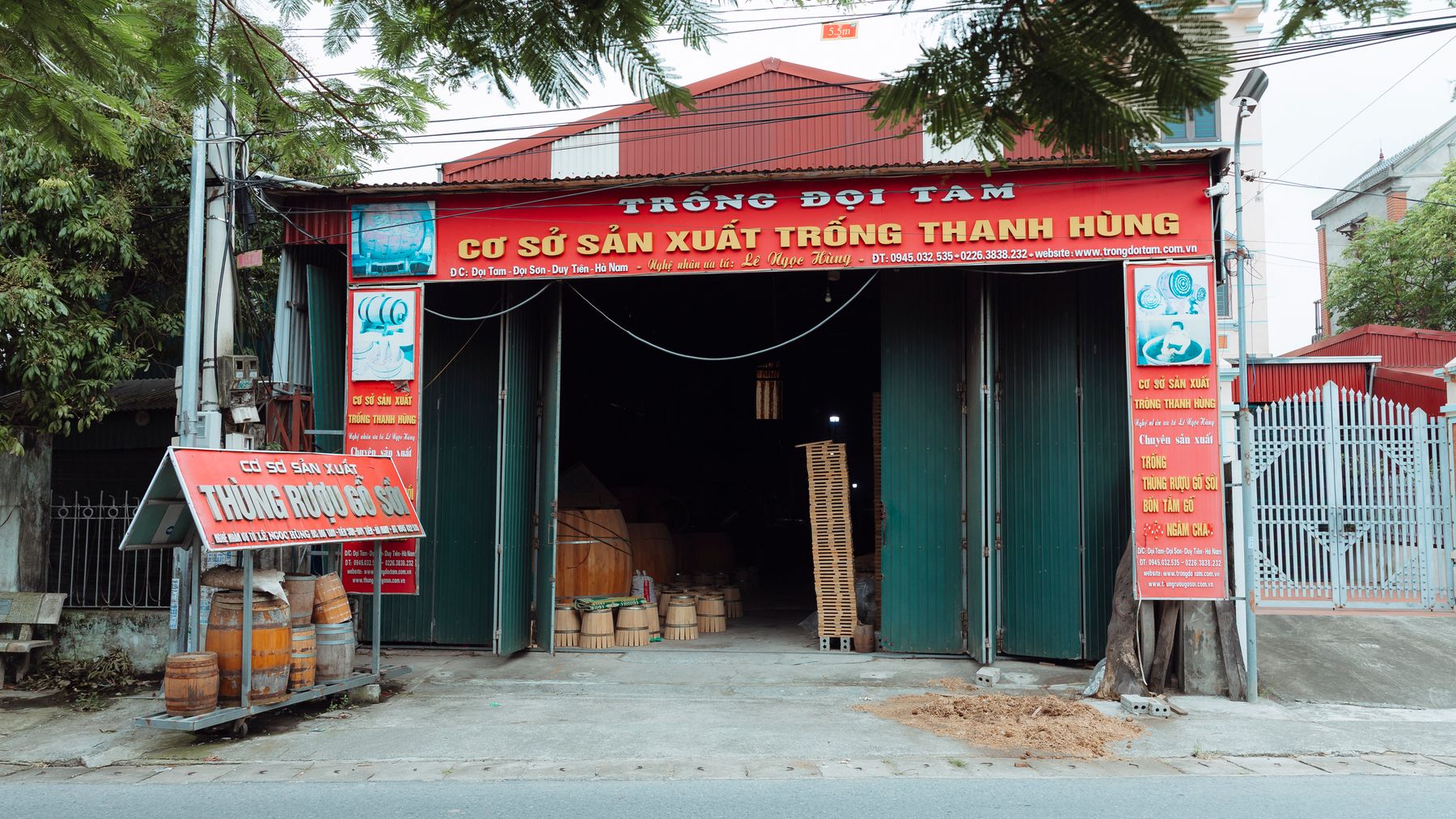
Photo by HONG SON on Pexels
Food and Agriculture: Lychees, Mung Bean Cake, and More
Hai Duong's identity is tied to its harvest. Lychees are the celebrity crop—juicy, seasonal (May-July), and sold fresh at every market and roadside stand. The province ships them to Hanoi, Haiphong, and across Vietnam (베트남 / 越南 / ベトナム).
But the real cultural artifact is "banh dau xanh"—a dense, slightly sweet mung bean paste cake, traditionally wrapped in sticky rice or banana leaf. It's not photogenic. It's not Instagram-friendly. But it's been made here for generations and tastes like history. The most recognized brand is Nguyen Hue, whose factory and shop sit on Nguyen Hue Street in Hai Duong City center. A box of 10 pieces runs around 50,000-80,000 VND—cheap enough to buy several as gifts. You'll see locals doing exactly that at the bus station before heading back to Hanoi.
Beyond specialty exports, Hai Duong feeds the region's major cities. Over 500,000 people work in agriculture, growing rice, vegetables, and fruits in the delta's rich alluvial soil. If you stop at a market in Hanoi and buy fresh greens, there's a decent chance they came from Hai Duong farms.
For sit-down meals, Hai Duong City has a cluster of "com binh dan" (everyday rice) shops along Tran Hung Dao Street near the central market. A plate of rice with two or three sides—braised pork, morning glory, fried tofu—costs 30,000-45,000 VND. The province also does a solid version of "bun cha"—grilled pork patties with rice noodles and herbs—though locals will argue theirs is different from Hanoi's. It's slightly sweeter in the broth. Try it and decide for yourself.
If you're a "pho" person, Hai Duong's morning bowls lean toward the Hanoi style: clear broth, fewer herbs, thin-sliced beef. You'll find vendors near the market area opening as early as 5:30 AM. A bowl runs 30,000-40,000 VND. Pair it with a glass of "ca phe" from any sidewalk stall—strong, dark, served over ice with condensed milk as "ca phe sua da"—for another 15,000-20,000 VND.
Markets and Local Shopping
Hai Duong City's central market (Cho Hai Duong) is the main commercial hub. It's a covered market with the usual Vietnamese layout: ground floor for meat, fish, and produce; upper levels for clothing and household goods. Go before 8 AM for the freshest selection and the best energy—vendors are more talkative in the morning.
For "banh dau xanh," buy directly from the shops along Nguyen Hue Street rather than at the bus station, where prices are slightly marked up. If you want to see traditional production, ask at a shop about visiting a workshop—some smaller producers in the alleys behind the main road welcome visitors, though don't expect a polished tour. It's a working kitchen.
Thanh Ha district, about 15 km east of the city center, is where the lychee orchards concentrate. During harvest season (late May-July), the roadside becomes a continuous fruit market. Farmers sell directly, and prices drop as you move further from the highway. Expect 15,000-30,000 VND per kilogram depending on variety and timing.
Pagodas and Pilgrimage
Con Son Pagoda is the bigger draw: a Buddhist temple built on a hill with views over the flatlands. It's active—you'll encounter monks and worshippers—and feels less touristic than major temples closer to Hanoi, like the Temple of Literature. The climb is moderate; the quiet is genuine. The pagoda complex includes several secondary shrines and a forested path that takes about 30-40 minutes to walk fully. Entry is free, though donation boxes are placed throughout. The site gets busy during the Con Son-Kiep Bac Festival in autumn (usually September-October on the lunar calendar), when thousands of pilgrims arrive from across the delta.
Kiep Bac is smaller and less frequently visited, which means fewer crowds but also less tourist infrastructure. It sits about 5 km from Con Son, making it easy to visit both in a single morning by motorbike. Both sites reflect the deeper spiritual life of the delta, distinct from the nationalized historical narratives of war memorials or state monuments.
If you've already visited pagodas near Ninh Binh or in Hanoi, you'll notice the architecture here is simpler and less restored. That's part of the appeal—Con Son feels like a place where people come to pray, not to pose for photos.

Photo by HONG SON on Pexels
Day Trips and Nearby Connections
Hai Duong's central position in the delta makes it a natural base—or at least a natural stop—for several routes:
- Hanoi to Ha Long Bay: Most tourists take the expressway straight through. Stopping in Hai Duong City for breakfast adds maybe 45 minutes to the trip and gives you a much better meal than the highway rest stops.
- Hanoi to Haiphong: The expressway (toll: around 100,000 VND for a car) passes Hai Duong. Exit at the Hai Duong interchange, eat lunch, visit Con Son, then continue east.
- Bat Trang pottery village (Bat Trang) is about 45 km west, near Hanoi's outskirts. If you're already exploring craft traditions in the delta, Hai Duong's drum-making village of Doi Tam and its silk weaving in some rural communes add depth to that itinerary.
- Chi Linh area: The hills north of Hai Duong City, around Chi Linh, offer slightly elevated terrain and cooler temperatures. Golf courses have sprung up here in recent years, but the area also has quieter pagodas and reservoir scenery worth a half-day ride.
Common Mistakes and What Surprises Foreigners
Expecting tourist infrastructure. Hai Duong City has hotels and guesthouses but very few places with English-speaking staff. Download a translation app or learn a few Vietnamese phrases: "Bao nhieu tien?" (how much?), "Cho toi mot phan" (give me one serving), "Cam on" (thank you). Pointing and smiling works for the rest.
Skipping it entirely on the expressway. The Hanoi-Haiphong Expressway is fast and efficient, which means most people never exit. If you're driving yourself or have a flexible driver, take the old National Highway 5 instead—it's slower (about 90 minutes vs. 60) but passes through actual towns where you can stop, eat, and see daily life.
Buying "banh dau xanh" at the bus station. Prices are 10-20% higher, and selection is limited. Walk 10 minutes into town and buy from a proper shop.
Visiting pagodas during major festivals without preparation. Con Son-Kiep Bac Festival draws enormous crowds. If you want the contemplative experience, visit on a regular weekday. If you want the festival energy—processions, incense, chanting—plan for September-October but arrive early in the morning.
Assuming lychees are available year-round. They're not. The season runs roughly late May through early July. Outside that window, you'll find them dried or processed, but the fresh fruit that makes Hai Duong famous is strictly seasonal.
Comparing the food to Hanoi's restaurant scene. Hai Duong's food is home-style and market-driven. You won't find craft cocktail bars or fusion restaurants. What you will find is a 35,000 VND bowl of pho that's been made the same way for decades by the same family. That's the point.
Why Stop Here
Hai Duong works best as a detour rather than a destination. If you're renting a motorbike and riding between Hanoi and Haiphong, or if you're exploring the Red River Delta beyond the usual circuit, this is where you eat at family restaurants, chat with farmers at markets, and see how rural northern Vietnam actually functions.
The province underwent major administrative changes in 2025 (incorporation into Haiphong), but the food, the pagodas, and the working landscape remain. It's a place for travelers who'd rather understand a region than collect checkmarks.
If you're building a broader northern Vietnam itinerary, Hai Duong pairs naturally with a day in Haiphong's cafe scene, a cruise through Ha Long Bay, or a slower loop through Ninh Binh and the southern delta. It won't be the highlight anyone posts about—but it might be the meal they remember longest.
Getting There
Hanoi to Hai Duong: 50-70 kilometers via National Highway 5, roughly one hour by car or motorbike. Buses depart from Hanoi's Gia Lam bus station every 15-20 minutes; tickets cost 40,000-60,000 VND.
Hai Duong to Haiphong: 60-80 kilometers via the Hanoi-Haiphong Expressway, roughly 90 minutes. The expressway toll for motorbikes is around 25,000 VND; for cars, approximately 100,000 VND.
Buses run regularly between both cities and Hai Duong City (the provincial capital). Motorbike rental is straightforward if you're comfortable riding. Grab cars also operate in Hai Duong City, though wait times are longer than in Hanoi—expect 5-10 minutes for a pickup in the city center, longer in rural areas.
Frequently Asked Questions
How far is Hai Duong from Hanoi and Haiphong?
Hai Duong sits 50-70 km east of Hanoi and 60-80 km west of Haiphong, roughly equidistant between the two cities. National Highway 5 and the Hanoi-Haiphong Expressway both pass through the province, making access straightforward. Buses from Hanoi's Gia Lam station cost 40,000-60,000 VND, and buses from Haiphong depart Niem Nghia station. The province works as either a half-day detour or a comfortable overnight stop.
What food is Hai Duong most known for?
Hai Duong is known for two things: lychees and banh dau xanh. Lychees are grown in Thanh Ha district and sold fresh from late May through early July, with prices around 20,000-40,000 VND per kilogram. Banh dau xanh is a dense, slightly sweet mung bean paste cake wrapped in sticky rice or banana leaf — a regional specialty you can find at markets across the province. Street meals generally run 25,000-50,000 VND.
When is the best time to visit Hai Duong?
February through April offers cool, dry weather and fewer visitors, making it a good general window for first-time travelers. If lychee season is the draw, aim for late May through early June when orchards in Thanh Ha district are at peak yield. Avoid mid-July through September if heat is a concern — temperatures exceed 35 C with high humidity, though the delta landscape is at its greenest and pagodas like Con Son and Kiep Bac see minimal crowds.
Bottom Line
Hai Duong isn't trying to impress you, and that's exactly why it's worth a stop. The mung bean cakes, the seasonal lychees, and the unhurried pace of a delta province that exists for its own sake rather than for tourism—these are the things that make a trip through northern Vietnam feel complete. Budget half a day, eat everything, and keep moving east.
Last updated · May 29, 2026 · independently researched, never sponsored.