The restaurants showing up on your map app in Nha Trang (냐짱 / 芽庄 / ニャチャン) are fine. They're also, mostly, not where anyone who lives here eats lunch. The real cooking happens in alleys off Nguyen Thien Thuat, at the back corners of Dam Market, and in front of houses where a woman has been making the same soup for thirty years with no sign, no menu, and certainly no QR code.
Why These Places Don't Have Reviews
It's not that they're secret — it's that the regulars never thought to write anything down. A lot of these spots operate on a single dish, a four-hour window, and a customer base that lives within walking distance. The cook doesn't speak English, doesn't want walk-ins, and will sell out by 10am regardless. There's no incentive to be discoverable. That's actually a good sign.
If you want to find them, you need to move slowly and pay attention to where motorbikes cluster at odd hours, where plastic stools spill onto the pavement, and where you see construction workers and xe om drivers eating — not tourists.
What to Look For and Where
Dam Market Back Rows
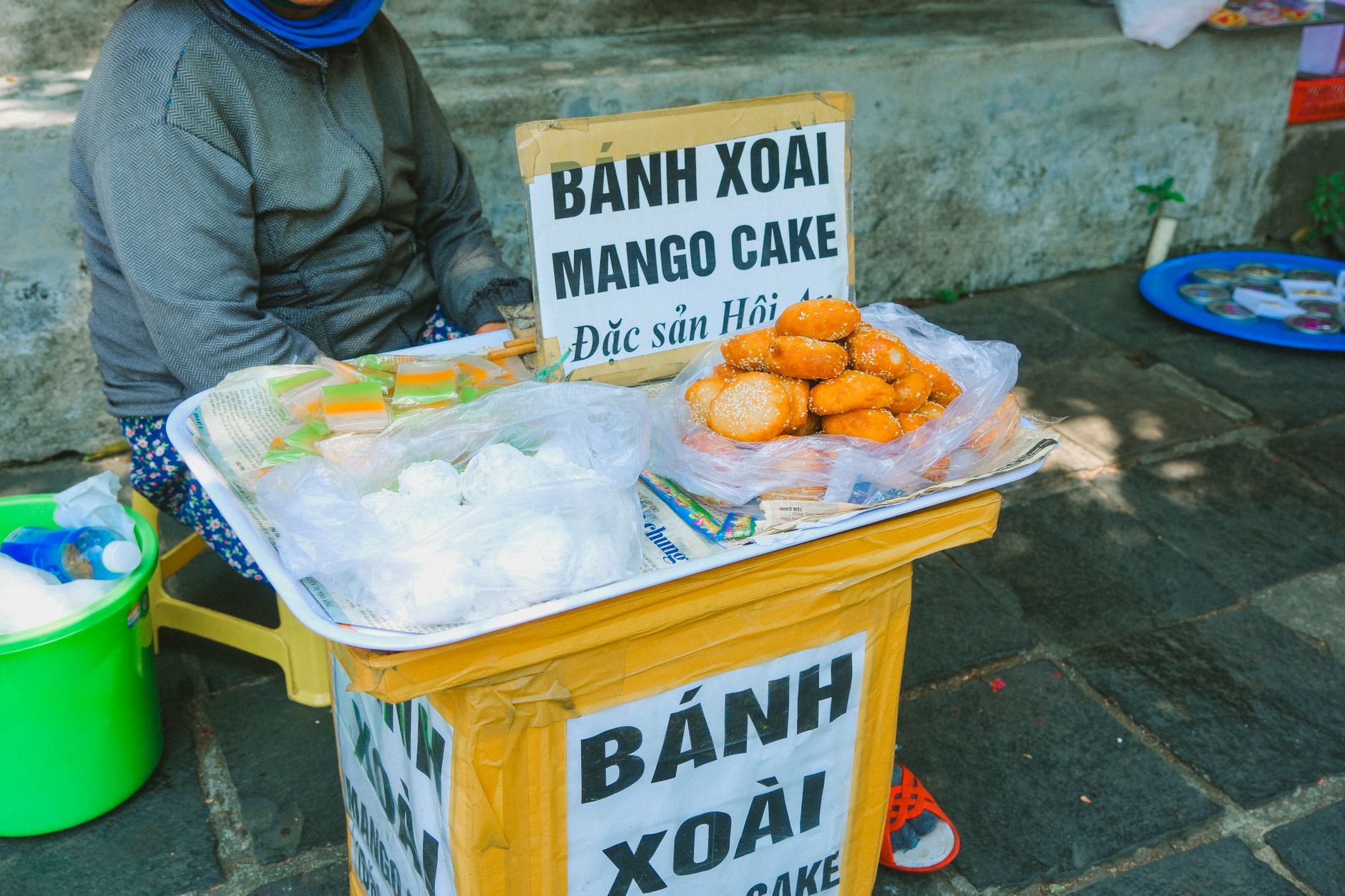
Dam Market (Cho Dam) gets covered as a souvenir stop. Ignore the front stalls. Walk through to the interior wet-market section and turn toward the back rows facing Phan Boi Chau street. Around 6–8am, there are four or five women set up with portable burners and a single pot each. One makes "bun ca" — fish noodle soup using fresh cobia or mackerel — for around 25,000–30,000 VND a bowl. Another does "banh canh cha ca", a thick-noodle soup with fish cakes that is specific to this coastal stretch of central Vietnam. Neither has a name. Point at the pot, hold up fingers for how many bowls, sit down on the stool they gesture toward.
These stalls are gone by 9:30am. Come hungry and early.
Alley 4, Nguyen Thien Thuat
Nguyen Thien Thuat is a main street but its alleys run deep. The narrow passage between numbers 4 and 6 (locals just call it hem 4) opens up into a small courtyard where a family runs a breakfast operation out of their ground floor. They do "banh mi" with a filling you won't find in tourist cafes: slow-braised pork skin and lemongrass paste, topped with pickled green papaya. A single banh mi costs 15,000 VND. They also do a rice congee with shredded chicken — "chao ga" — that is exactly what you want if you've been overindulging on seafood the night before.
There's no sign. The tell is a blue plastic tarp strung across the alley entrance and an old woman who may or may not acknowledge you. Sit anyway.
The Phu Dong Street Morning Strip
Phu Dong runs parallel to the beach but a few blocks inland, and the section between Tran Phu and Lo Duc has a short stretch of breakfast vendors operating off the back of motorbikes and folding tables. The one to find is the man selling "mi quang" — the turmeric-yellow noodle dish more associated with Da Nang and Hoi An, but made here with a distinctly coastal spin: dried shrimp, peanuts, and a broth that's more liquid than the central version. Thirty-five thousand VND, served with a pile of fresh herbs and a rice cracker on top. He's there daily from about 6:30am to whenever the pot runs out, usually around 9am.
Near Nha Trang Cathedral, Evenings
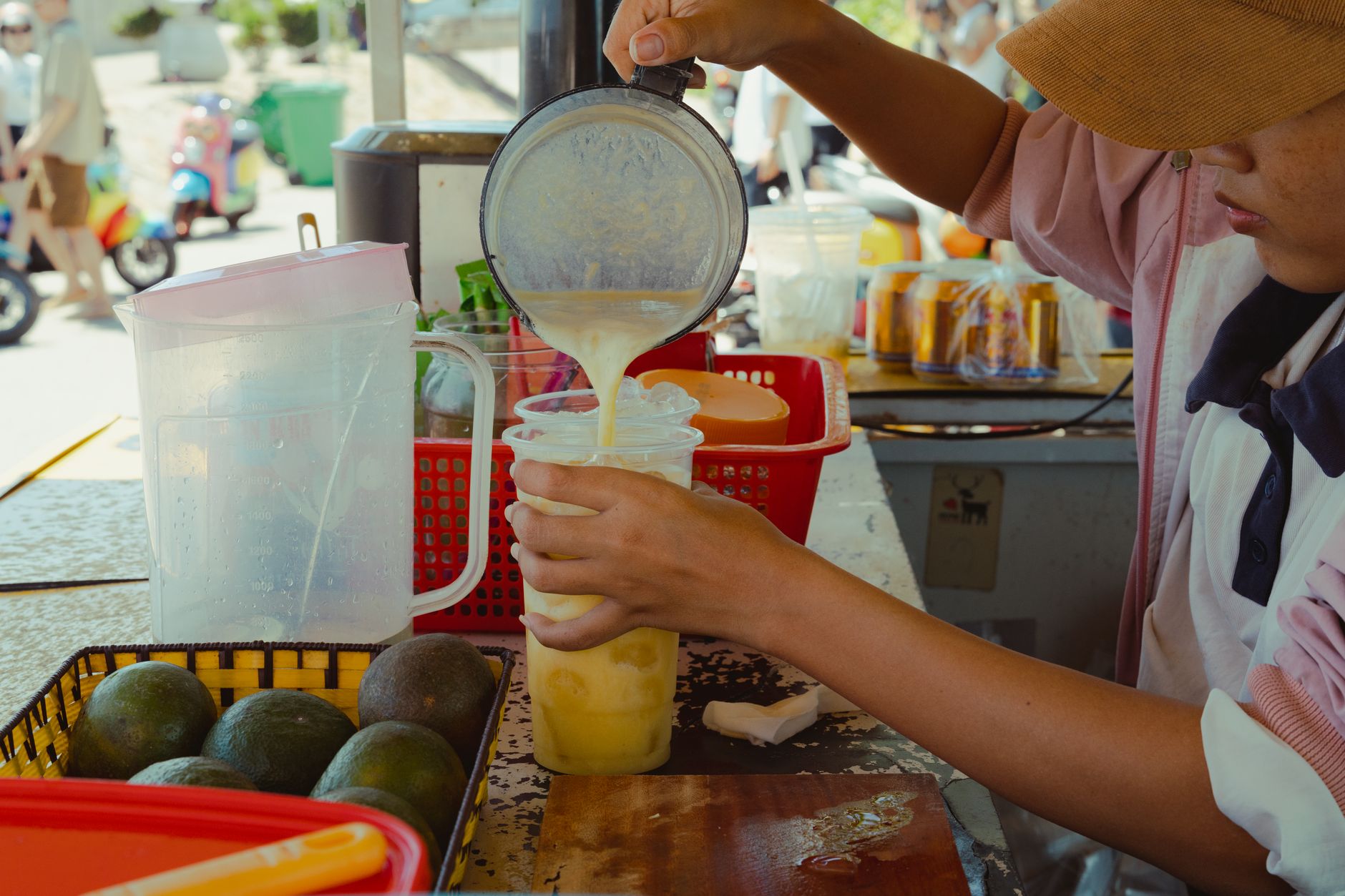
The area around Nha Trang Cathedral (Nha Tho Nui) gets busy in the early evening with locals doing their after-work eating. A woman sets up a cart at the corner of Thai Nguyen and Nguyen Trai around 5pm selling "nem chua" — fermented pork rolls wrapped in banana leaf, served with garlic and chili. These are made in-house, not bought wholesale, which you can tell from the texture. Four rolls for 20,000 VND. She pairs them with "bia hoi (비아호이 / 鲜啤 / ビアホイ)" poured from a small cooler — local draft beer at 10,000 VND a glass. This is as close to a no-frills evening as Nha Trang gets.

Photo by Thien Phuoc Phuong on Pexels
How to Navigate Without a Shared Language
Pointing works. So does showing a photo of the dish on your phone. Saying "mot" (one) or "hai" (two) for quantity gets you far. If you're at a single-dish stall, you don't need to order — just sit down and a bowl will appear.
Bring small bills. These vendors rarely have change for 200,000 VND notes and will visibly calculate the inconvenience on their faces. A wallet full of 20,000 and 50,000 VND notes makes everything smoother.
Don't photograph without reading the room. Some vendors are fine with it. Others find it rude. A smile and a gesture asking permission goes a long way.

Photo by Trần Phan Phạm Lê on Pexels
What to Expect (and Accept)
No English menu. No dietary substitution options. Limited seating that you may share with strangers. Occasional uncertainty about what exactly is in the soup. These are not problems — they're just the conditions. The food is fresher and more carefully made than most of what's on TripAdvisor because these cooks have only one dish and have made it every morning for years.
Some days a stall won't be there. Someone's sick, it rained, there was a family thing. That's the deal. Come back tomorrow.
Practical Notes
Most of these spots operate 6–10am or 5–8pm — there's very little in between that fits this category. A motorbike or bicycle makes the hunting easier; Nha Trang's street-food geography rewards wandering rather than destination-seeking. Budget 50,000–80,000 VND for a full breakfast including coffee from a nearby street cart, and you'll eat as well as anyone in the city.
Last updated · May 26, 2026 · independently researched, never sponsored.