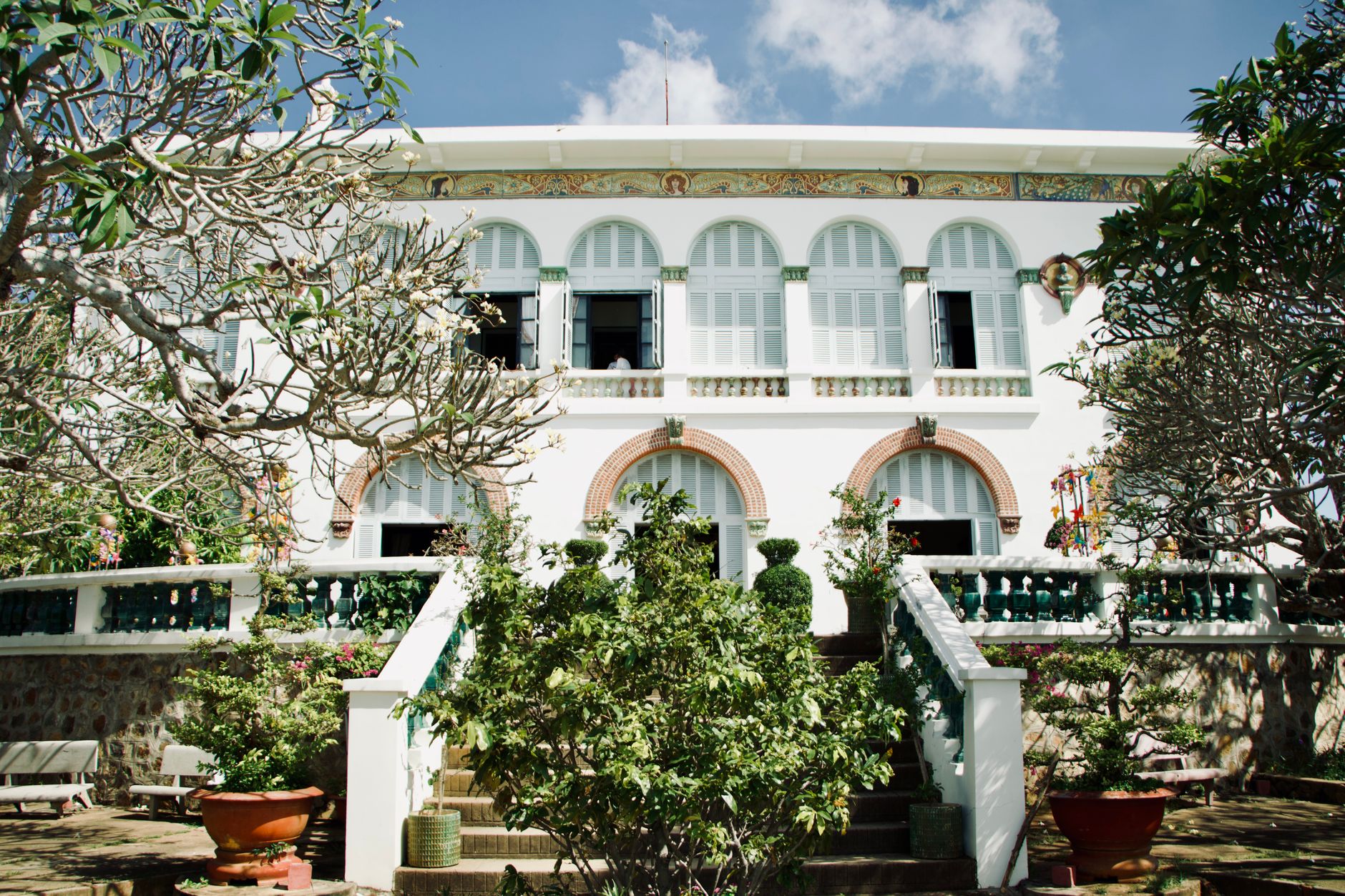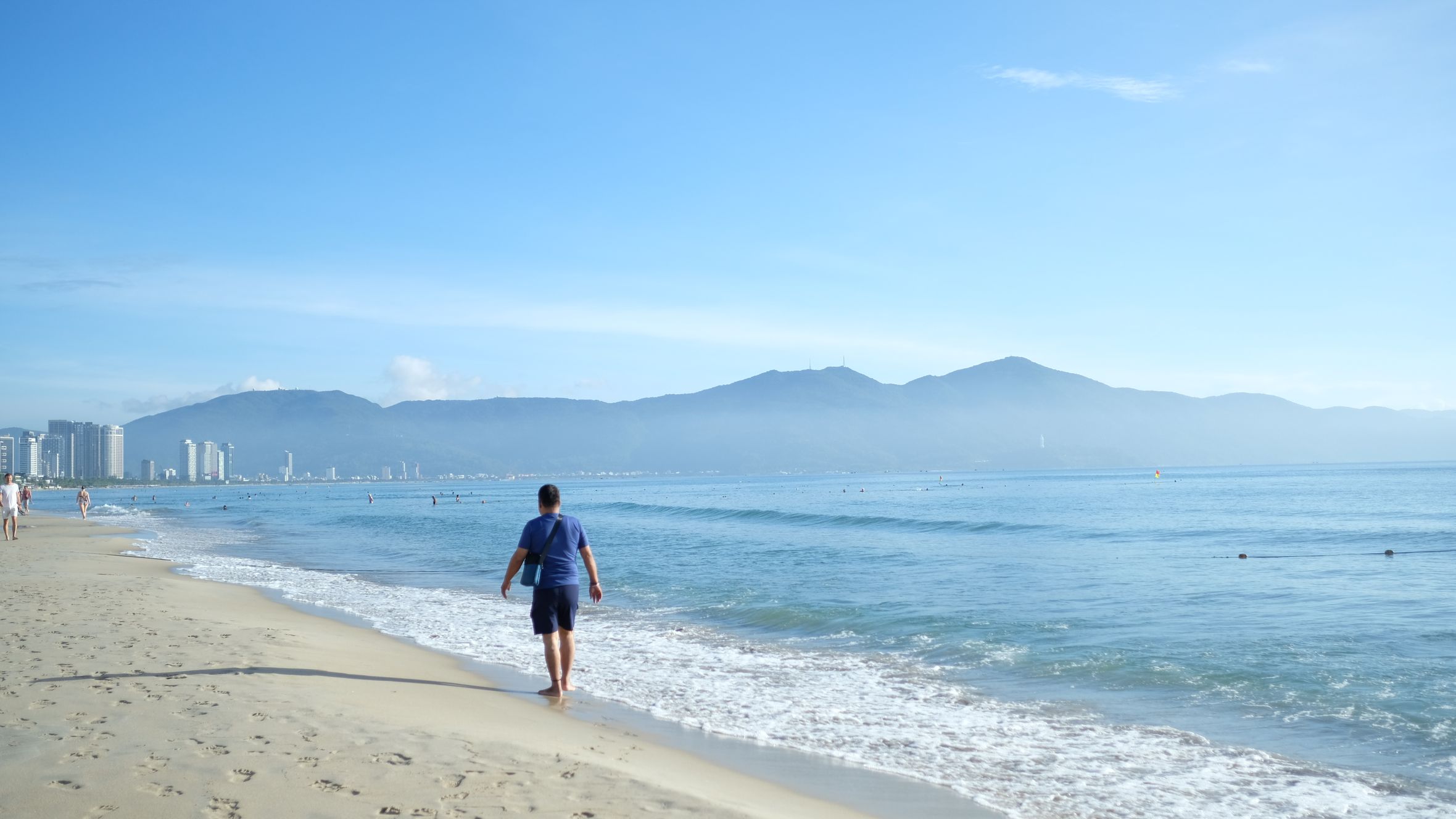
Non Nuoc Beach runs about five kilometers along Da Nang's southern coast, anchored at one end by the Marble Mountains and tapering south toward Hoi An. It's quieter than its famous neighbor My Khe, less developed than An Bang, and one of the better spots in central Vietnam for actual swimming — the sand shelf drops gradually, the undertow is manageable most of the year, and the water stays warm enough that you won't think twice about getting in.
What it is and a little background
Non Nuoc Beach takes its name from the Ngu Hanh Son (Marble Mountains) cluster that rises just inland. During the American War, the area served as an R&R site for soldiers stationed nearby — the beach was already known then for its calm water and wide sand. Today it sits within Da Nang (다낭 / 岘港 / ダナン) city limits. The stretch is lined with a handful of resorts on the northern end, but much of the beach remains open and uncrowded, especially if you walk south past the last hotel.
The Marble Mountains themselves have been a pilgrimage and craft site for centuries. Stone carvers still work in the village at their base, chipping away at marble and limestone the same way their families have for generations.
Why travelers go
Three reasons, mostly. First, the beach itself — it's long, clean, and genuinely swimmable for large stretches of the year. Second, it's the closest beach to the Marble Mountains, so you can combine a morning of cave temples and hilltop pagodas with an afternoon on the sand without any real commute. Third, it draws surfers. Non Nuoc gets decent swells between September and March, and Da Nang's small but growing surf scene is centered here and at My Khe. Board rentals run about 150,000–200,000 VND per hour from shops along the beach road.
Best time to visit
The sweet spot is March through August. Skies are clear, the sea is calm, and temperatures hover around 30–35°C. This is Da Nang's dry season, and the beach is at its best for swimming and lounging.
September through December brings rain and bigger surf. If you're here to ride waves, that's your window — but expect grey skies, occasional storms, and rougher water that makes casual swimming less appealing. January and February are cooler (22–25°C) and can be drizzly, though you'll have the beach mostly to yourself.
How to get there
Da Nang's airport is about 10 km north of Non Nuoc Beach. A Grab car from the airport takes 20–25 minutes and costs roughly 120,000–150,000 VND. From the center of Da Nang (near the Dragon Bridge), it's about 9 km south — 15 minutes by motorbike, 20 by car.
If you're coming from Hoi An (호이안 / 会安 / ホイアン), it's roughly 18 km north along the coastal road. A Grab runs around 180,000–220,000 VND, or you can rent a motorbike in Hoi An for 120,000–150,000 VND per day and ride up yourself. The coast road between the two towns is flat, straightforward, and worth doing on two wheels if you're comfortable with Vietnamese traffic.
Local buses (route 1) run from Da Nang city center to the Marble Mountains area for 5,000 VND, but the stop is a 10-minute walk from the beach.
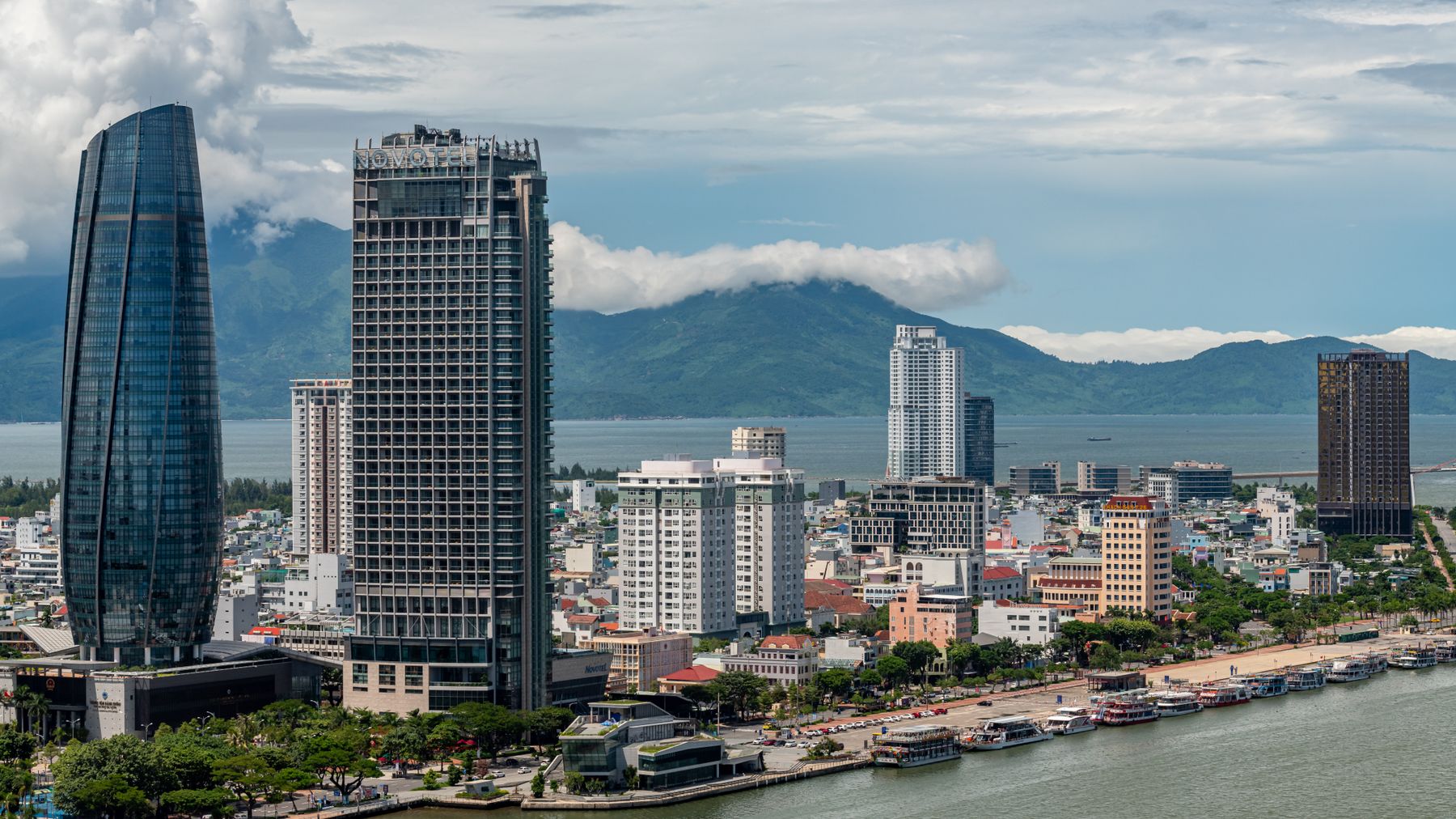
Photo by Kirandeep Singh Walia on Pexels
What to do
Walk the Marble Mountains
The obvious pairing. Thuy Son, the largest and most-visited peak, has a network of caves, Buddhist shrines, and viewpoints reachable by stone steps (or an elevator, 15,000 VND). Entry is 40,000 VND. Go early — by 10 a.m. the steps get crowded and hot. The view from the top looks straight down over Non Nuoc Beach and south toward Hoi An.
Surf or bodyboard
Non Nuoc's break is a gentle beach break, good for beginners and intermediates. Surf schools cluster near the Hyatt and Pullman resorts. A two-hour lesson with board runs about 700,000–900,000 VND. If you already know what you're doing, standalone board rental is cheap.
Visit the stone carving village
Non Nuoc Stone Carving Village sits just off the main road between the beach and the mountains. It's been here since the 18th century. You'll see everything from small Buddha statues to three-meter lions destined for someone's garden. It's a working village, not a tourist performance — the dust is real, the noise is real, and the craftsmanship is genuinely impressive. Shipping services are available if you fall for a 200 kg statue.
Cycle south toward Hoi An
Rent a bicycle from your hotel or a nearby shop (50,000–80,000 VND per day) and ride the coastal path south. The stretch between Non Nuoc and An Bang Beach is flat and relatively quiet, passing through fishing villages and open coastline. It's about 12 km to Hoi An's old town — an easy morning ride.
Do nothing
Non Nuoc's southern stretch has long gaps between sunbed operators. Bring a towel, park yourself on empty sand, and swim. No one will bother you. This is genuinely one of the better "just be on a beach" experiences in central Vietnam.
Where to eat nearby
The beach road has tourist restaurants, but the better eating is slightly inland. Look for "mi quang" — Da Nang's signature noodle dish, turmeric-yellow broth with pork, shrimp, herbs, and crispy rice crackers. A bowl costs 30,000–45,000 VND at local spots along Huyen Tran Cong Chua street. "Banh xeo" — the crispy, turmeric-yellow crepe stuffed with shrimp and bean sprouts — is another Da Nang staple. Ba Duong on Hoang Dieu street (closer to the city center) is the most famous spot, but smaller stalls near the Marble Mountains do solid versions for 20,000–30,000 VND.
For seafood, the string of restaurants along Man Thai fishing village (about 4 km north) lets you pick your fish from tanks and pay by weight. Budget 200,000–400,000 VND per person for a proper spread.
Where to stay
Budget (300,000–600,000 VND/night): Guesthouses and homestays cluster along the inland roads near the Marble Mountains. Basic but clean, usually with motorbike rental on-site.
Mid-range (1,000,000–2,500,000 VND/night): Several beachfront hotels line Non Nuoc's northern stretch — pool, breakfast, ocean view. The Boutique Hoi An Resort and Naman Retreat sit in this bracket depending on season.
High-end (3,000,000+ VND/night): The Hyatt Regency and Pullman sit directly on the beach with full resort amenities. You'll pay for it, but the beach access is unbeatable.

Photo by Nhi Huynh on Pexels
Practical tips locals would tell you
- Sunscreen is not optional. Central Vietnam sun is aggressive, especially March–August between 10 a.m. and 3 p.m. Reapply after swimming.
- Rip currents exist. Swim near lifeguard stations (red-yellow flags). If you feel a pull, swim parallel to shore, not against it.
- Haggle at the stone carving village. First prices are tourist prices. A polite counter-offer of 60–70% is normal and expected.
- Bring cash. Beachside vendors and smaller restaurants don't take cards. ATMs are available near the Marble Mountains entrance.
Common mistakes to avoid
Don't visit the Marble Mountains at midday — the exposed stone steps radiate heat and there's minimal shade. Don't assume the beach is unsafe in surf season — it's fine if you stay in flagged zones, but skip the unsupervised southern stretches when waves are up. And don't take a taxi from the airport without using Grab or a metered cab — the flat-rate quotes from drivers outside arrivals are reliably double what the ride actually costs.
Practical notes
Non Nuoc Beach works as a day trip from either Da Nang or Hoi An, but staying a night or two on this stretch gives you time to actually slow down. Pair it with the Marble Mountains in the morning and an afternoon on the sand, and you've got one of the more satisfying low-key days available on Vietnam's central coast.
Last updated · May 26, 2026 · independently researched, never sponsored.