A limestone cliff face, a spring-fed stream barely a meter deep, and thousands of fat carp so tightly packed they look like a living carpet. That's Suoi Ca Than Cam Luong — a village spring in Cam Thuy district, Thanh Hoa province, where wild fish have been protected by local Muong people for centuries. It's one of those places that sounds like a gimmick until you're standing over the water watching hundreds of dark-backed carp drift past your ankles.
What it is and why the fish are there
The stream flows from the base of a karst mountain in Cam Luong commune, about 90 km west of Thanh Hoa city. The water stays cool year-round — around 18-20°C — fed by an underground spring system running through the limestone. The fish are mostly common carp and a local species villagers call "ca than" (divine fish), some weighing up to 5-6 kg.
No one farms these fish. They've been here as long as anyone remembers. Muong villagers consider them sacred and have enforced a strict no-fishing, no-harming rule for generations. The stream runs through the village, right alongside houses and a small temple. A village covenant — passed down orally and now posted on signs — forbids catching or eating the fish. This isn't a tourist invention; the taboo predates any visitor infrastructure by a long time.
The site was recognized as a national heritage destination in 2020, which brought some improvements (paved paths, better signage) without turning it into a theme park.
Why travelers go
Honestly, the fish are the draw. They cluster in a section of stream about 150 meters long, and during feeding times the density is almost absurd — you can barely see the streambed. It's a genuinely unusual natural phenomenon, not something you'll see replicated elsewhere in Vietnam (베트남 / 越南 / ベトナム).
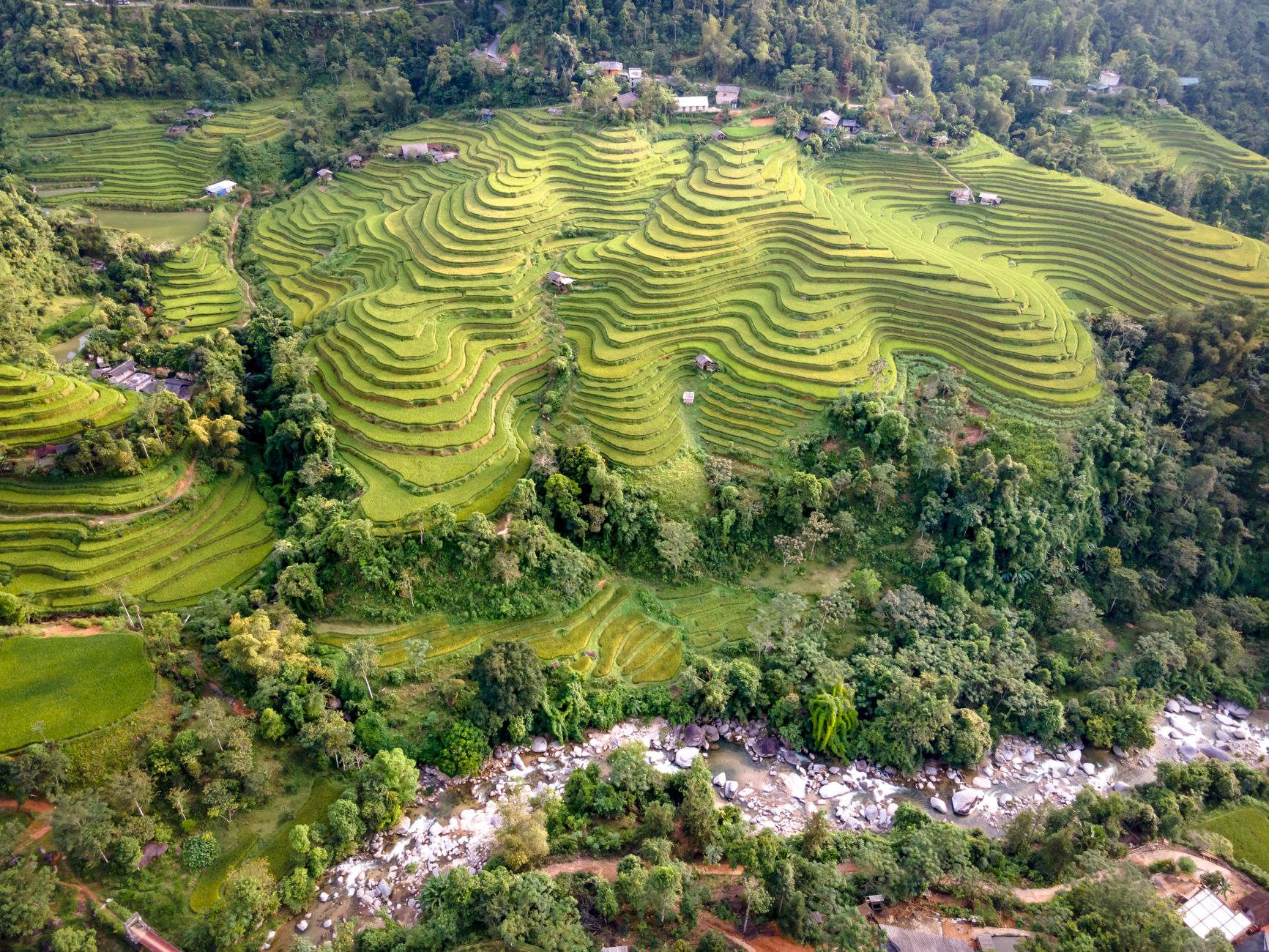
Beyond the fish, the setting is worth the trip. Cam Thuy district sits in the transition zone between the Red River Delta and the Truong Son range. The karst scenery here is quieter and less touristed than Ninh Binh (닌빈 / 宁平 / ニンビン), with rice paddies pressed against limestone towers and very few other foreign visitors. If you're heading south from Hanoi toward Hue or Phong Nha, it's a worthwhile detour.
Best time to visit
The stream runs year-round, but the best window is March through June and again in September through November. These months avoid the heaviest rains (July-August can bring flash flooding in the hills) and the coldest weeks of winter when the fish are less active near the surface.
Weekday mornings are ideal. The site gets domestic tour groups on weekends and Vietnamese holidays, especially around Tet. If you show up on a Tuesday at 8 AM, you might have the stream mostly to yourself.

Photo by Quý Hoàng on Pexels
How to get there
The nearest major hub is Thanh Hoa city, roughly 90 km to the east.
- By motorbike: The most practical option. Ride west on QL217 toward Cam Thuy. The road is paved and in decent shape, winding through farmland and foothills. About 2-2.5 hours from Thanh Hoa city. Rental bikes in Thanh Hoa run 120,000-180,000 VND/day.
- By car/taxi: A private car from Thanh Hoa city costs around 800,000-1,200,000 VND one way. Grab is unreliable this far out — arrange a return driver.
- By bus: Local buses run from Thanh Hoa bus station toward Cam Thuy town (about 30,000-40,000 VND), but from Cam Thuy you'll still need a "xe om" (motorbike taxi) for the last 15 km to Cam Luong village. Budget 50,000-80,000 VND for that leg.
If you're coming from Hanoi, it's about 150 km to Thanh Hoa city (3-3.5 hours by bus or train), then another 90 km west.
What to do
Watch the fish feeding
Villagers scatter rice and breadcrumbs into the stream at set times, usually early morning and late afternoon. This is when the carp swarm. Stand on the stone walkway built along the stream's edge and watch hundreds of fish surge toward the food — the water literally boils with movement.
Walk the stream path
A paved walkway follows the stream for a few hundred meters, passing the densest fish sections, a small shrine, and the spring mouth at the cliff base. The whole loop takes about 30-40 minutes if you're not rushing.
Visit the cave spring source
At the upstream end, the water emerges from a cave opening in the limestone. You can peer inside (bring a phone light) and feel the temperature drop. The cave isn't deep or developed for tourism, but it's an interesting look at where all that clear water originates.
Explore Cam Luong village
The Muong village itself is worth a slow walk. Traditional stilt houses, small garden plots, chickens wandering around. It's not curated for tourists — people live and work here. Be respectful, ask before photographing homes.
Ride through Cam Thuy karst scenery
If you have a motorbike, the roads around Cam Thuy district are excellent for a half-day ride. Limestone hills, river crossings, very little traffic. No specific route needed — just follow any road heading west or south from Cam Luong and you'll find good scenery.
Where to eat nearby
Cam Luong village has a few small restaurants near the stream entrance, mostly serving standard Vietnamese rice plates. The local specialty worth seeking is "com lam" — sticky rice cooked inside bamboo tubes over charcoal, a Muong staple. Look for vendors grilling them near the parking area. Pairs well with grilled pork or "ga nuong" (grilled chicken).
For something more substantial, Cam Thuy town (15 km east) has local rice shops and "bun" noodle stalls. Don't expect anything fancy — this is rural Thanh Hoa, not Hanoi — but the food is fresh and cheap. A full meal runs 40,000-70,000 VND.

Photo by Quang Nguyen Vinh on Pexels
Where to stay
There's no real hotel scene in Cam Luong itself. Your options:
- Homestays in Cam Luong village: A couple of families offer basic rooms. Expect a mattress, a fan, maybe AC, shared bathroom. Around 200,000-350,000 VND per night. Ask at the ticket office for current listings.
- Cam Thuy town: A handful of "nha nghi" (guesthouses) with private rooms and hot water for 250,000-400,000 VND.
- Thanh Hoa city: Full range of hotels from budget (300,000 VND) to mid-range (600,000-1,000,000 VND). Most travelers base here and day-trip to the stream.
Practical tips
- Entry fee: 30,000 VND per person (as of 2024). Cheap.
- Don't touch or feed the fish unless directed by village staff. The no-harm rule is taken seriously.
- Wear shoes you can get wet. The walkway is close to the water and can be slippery.
- Bring cash. No ATMs in Cam Luong, and the nearest one is in Cam Thuy town.
- Sunscreen and a hat if visiting midday — shade is limited along parts of the stream.
Common mistakes to avoid
- Trying to visit as a rushed day trip from Hanoi. The 240 km round trip from Hanoi to the stream and back makes for an exhausting day. Stay a night in Thanh Hoa city or Cam Thuy instead.
- Showing up on a weekend or holiday. The stream section is small. Fifty visitors feels manageable; two hundred feels cramped.
- Expecting a big production. This is a village stream with fish in it, not a national park. Adjust expectations accordingly and you'll enjoy it more. The charm is in the simplicity and the setting, not in polished infrastructure.
- Skipping the surrounding area. The stream itself takes under an hour. Budget time to ride the back roads and eat local food — that's half the experience.
Last updated · May 29, 2026 · independently researched, never sponsored.