Den Ba Trieu sits on Phu Dien hill in Hau Loc district, about 40 km northeast of Thanh Hoa city. It's one of the most significant temple complexes in the province, and one that very few foreign travelers bother to visit — which is exactly why it's worth the detour.
What it is and why it matters
The temple honors "Ba Trieu" (Lady Trieu, also known as Trieu Thi Trinh), a 3rd-century figure who led an uprising against Eastern Wu occupation in 248 AD. She's often compared to Joan of Arc in Western shorthand, though that comparison is reductive. In Vietnamese popular memory, she's remembered for riding an elephant into battle at age 20. Whether the details are legend or history depends on who you ask — but the reverence is real.
The complex was originally built centuries ago and has been rebuilt and expanded multiple times. It was recognized as a national historical relic site, and the grounds were significantly renovated in 2014. The current layout includes a front gate, a main worship hall, a rear shrine, and Ba Trieu's tomb on the hilltop behind the complex. The architecture blends traditional Vietnamese temple design with newer restoration work — some of it tasteful, some of it heavy-handed, as tends to happen with state-funded renovations.
Why travelers go
Most visitors are Vietnamese, coming for worship or school trips. For foreign travelers, the draw is different: it's a quiet, well-maintained historical site with actual atmosphere, away from the tour-bus circuits. There's no ticket line, no hawker gauntlet at the entrance. You walk through the gate, and it's just you, the incense smoke, and the sound of wind through the casuarina trees on the hill. If you've been bouncing between heavily touristed spots in Hue or Hoi An, this is a reset.
Best time to visit
The temple festival falls on the 21st day of the 2nd lunar month (usually March), marking Ba Trieu's death anniversary. During the festival, expect processions, traditional music, and large crowds of local worshippers — it's lively and worth timing your visit around if you're in the area.
Outside the festival, September through November is the most comfortable window. The summer heat in Thanh Hoa is punishing (35-38°C with high humidity from May through August), and the rainy season peaks in September-October but tends to come in short bursts rather than all-day downpours. Mornings are best for the hill climb regardless of season.
How to get there
From Thanh Hoa city, Hau Loc district is about 40 km northeast. You have a few options:
- Motorbike: The most practical choice. Rent one in Thanh Hoa for 120,000-150,000 VND/day and ride via QL1A north, then cut east on DT510. About 50 minutes in light traffic. The road is flat and in decent shape.
- Grab car: A one-way Grab from central Thanh Hoa runs roughly 200,000-280,000 VND. Return trips can be tricky — cell signal is fine, but driver availability in Hau Loc is limited. Consider asking the driver to wait (negotiate a round-trip fare of 500,000-600,000 VND including wait time).
- Local bus: There are buses from Thanh Hoa's bus station heading toward Hau Loc, but schedules are irregular and the last stretch from Hau Loc town to the temple (about 4 km) still requires a xe om or walk. Budget 25,000-30,000 VND for the bus.
If you're coming from Hanoi, take the train or bus to Thanh Hoa (about 3-3.5 hours by train, tickets from 80,000 VND for a hard seat) and arrange transport from there.

Photo by thAnh nguyễn on Pexels
What to do at the temple
Walk the full complex, bottom to top
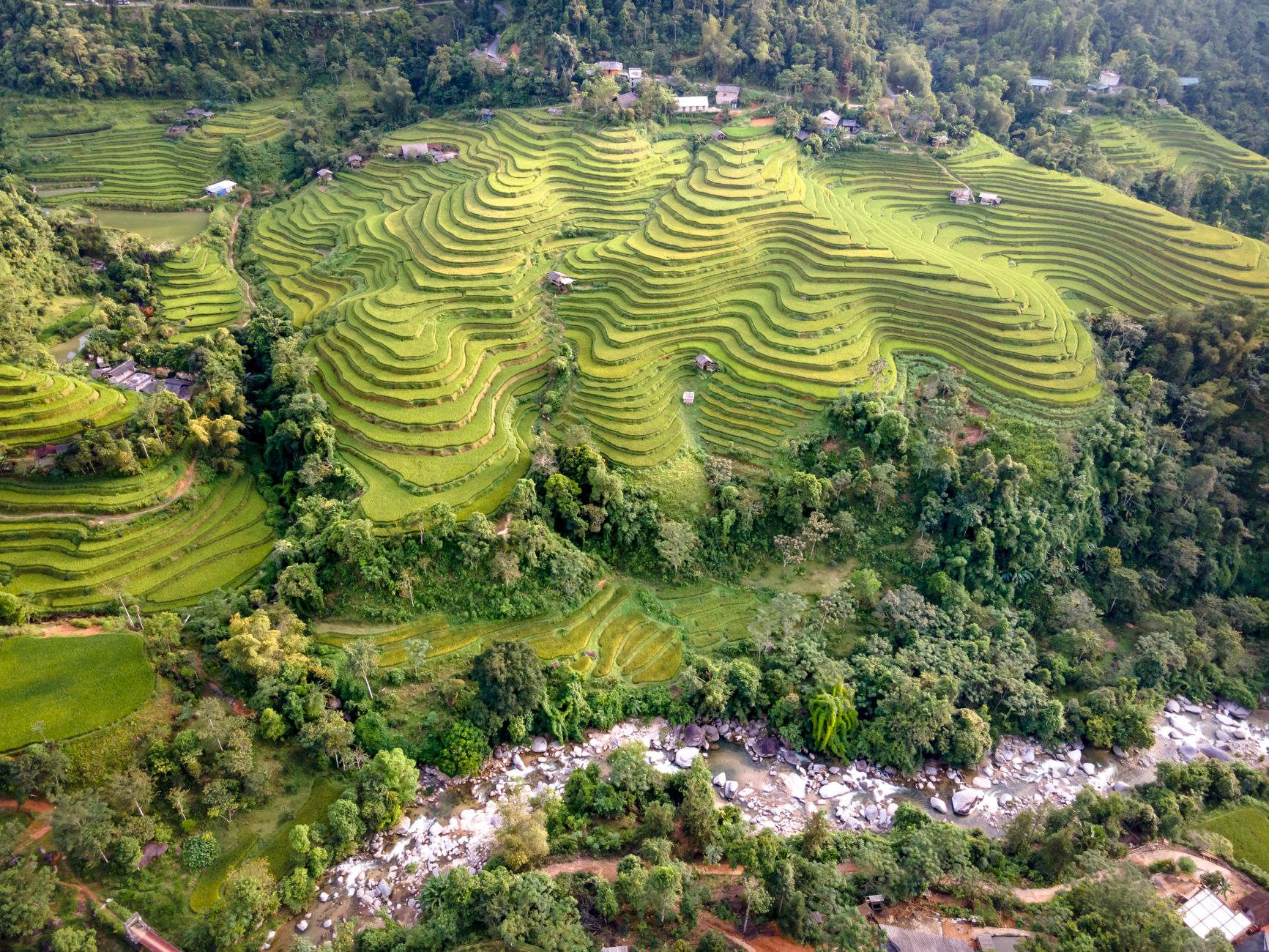
Start at the front courtyard and ceremonial gate. The main worship hall holds the primary altar with Ba Trieu's statue. Continue through to the rear shrine, which is quieter and more intimate. Then take the stone path up Phu Dien hill to her tomb at the summit. The climb is short — maybe 10 minutes — but the elevation gives you a view over the surrounding rice paddies and coastline in the distance.
Watch the incense rituals
If you visit on a lunar calendar auspicious day (1st or 15th of the month), locals come to pray and burn offerings. It's not performative — this is genuine daily worship. Be respectful, don't block the altar for photos, and you're welcome to observe.
Check the stone stelae
Several carved stelae around the complex record historical accounts and poetry related to Ba Trieu. They're in classical Chinese script (Han Nom), so you won't read them without a guide, but they're physically impressive and some date back several centuries.
Explore the surrounding village
The area around the temple is still a working agricultural village. A short walk in any direction puts you among rice fields and fish ponds. No coffee shops or souvenir stalls — just rural Thanh Hoa doing its thing.
Where to eat nearby
Hau Loc district isn't a culinary destination, but Thanh Hoa province has genuinely good food. On the way back to the city, stop for:
- "Nem chua" — Thanh Hoa's famous fermented pork roll. It's sold everywhere in the province, but the roadside shops along QL1A near Thanh Hoa city sell the freshest batches. A bundle of 10 rolls runs about 50,000-70,000 VND. Tangy, spicy, and pairs well with cold beer.
- "Banh cuon" — steamed rice rolls with minced pork and wood ear mushroom. Several small shops in Thanh Hoa city center serve solid versions for 25,000-35,000 VND per plate. Ask your hotel or a local for the nearest spot — the best ones rarely have signage.
Where to stay
There's no reason to stay in Hau Loc itself. Base yourself in Thanh Hoa city and day-trip to the temple.
- Budget: Nha nghi (guesthouses) near the train station start at 200,000-300,000 VND/night. Basic but functional — expect a fan room, hot water, and thin walls.
- Mid-range: Hotels along Le Loi or Tran Phu streets in central Thanh Hoa run 400,000-700,000 VND. Air conditioning, breakfast included, Wi-Fi.
- Higher-end: A couple of newer hotels near FLC complex charge 800,000-1,200,000 VND. Clean, modern, but nothing remarkable.

Photo by Valeria Drozdova on Pexels
Practical tips
- Dress modestly. This is an active place of worship. Cover your shoulders and knees. Shoes off in the main halls.
- Bring cash. There are no ATMs at the temple and no card machines within several kilometers.
- Mosquito repellent. The hilltop is green and damp. Mosquitoes are aggressive, especially in the late afternoon.
- Combine with Sam Son beach. Sam Son is only about 25 km south of Hau Loc and makes a logical pairing for a full day — temple in the morning, coast in the afternoon.
Common mistakes to avoid
- Skipping the hilltop tomb. Many visitors just see the main hall and leave. The tomb and the view from the top are the best part of the visit.
- Coming midday in summer. The hill has limited shade, and 35°C heat makes the climb miserable. Arrive before 9 AM or after 3 PM.
- Expecting English signage. There's almost none. Download a Vietnamese phrasebook or translation app before you go. A few key phrases — xin chao (hello), cam on (thank you) — go a long way with the temple caretakers.
Final note
Den Ba Trieu won't appear on most itineraries, and that's part of its appeal. It's a genuinely atmospheric site in a province that most travelers only see from the window of a bus heading somewhere else. If you're passing through Thanh Hoa — or looking for a reason to stop — this is a good one.
Last updated · May 26, 2026 · independently researched, never sponsored.