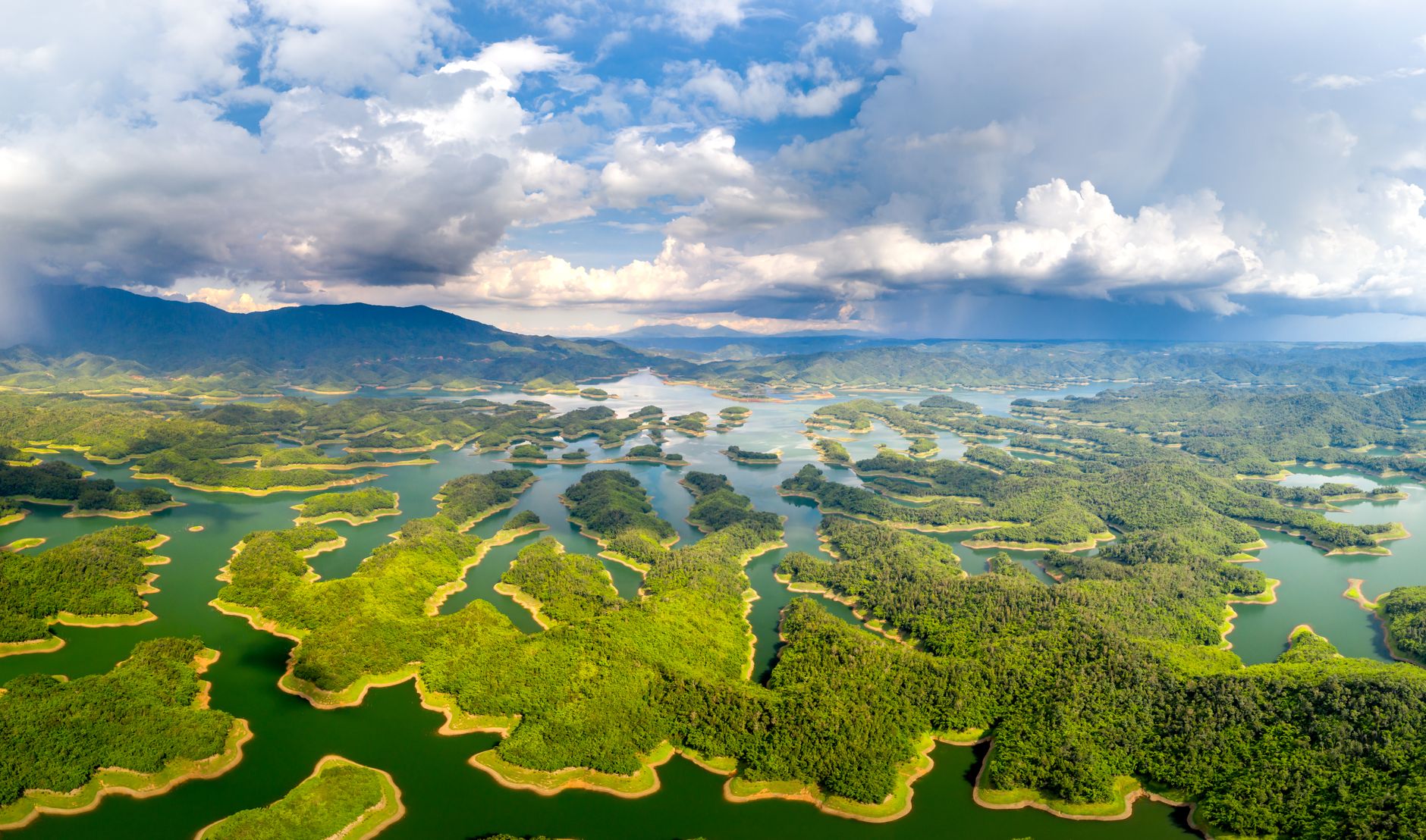
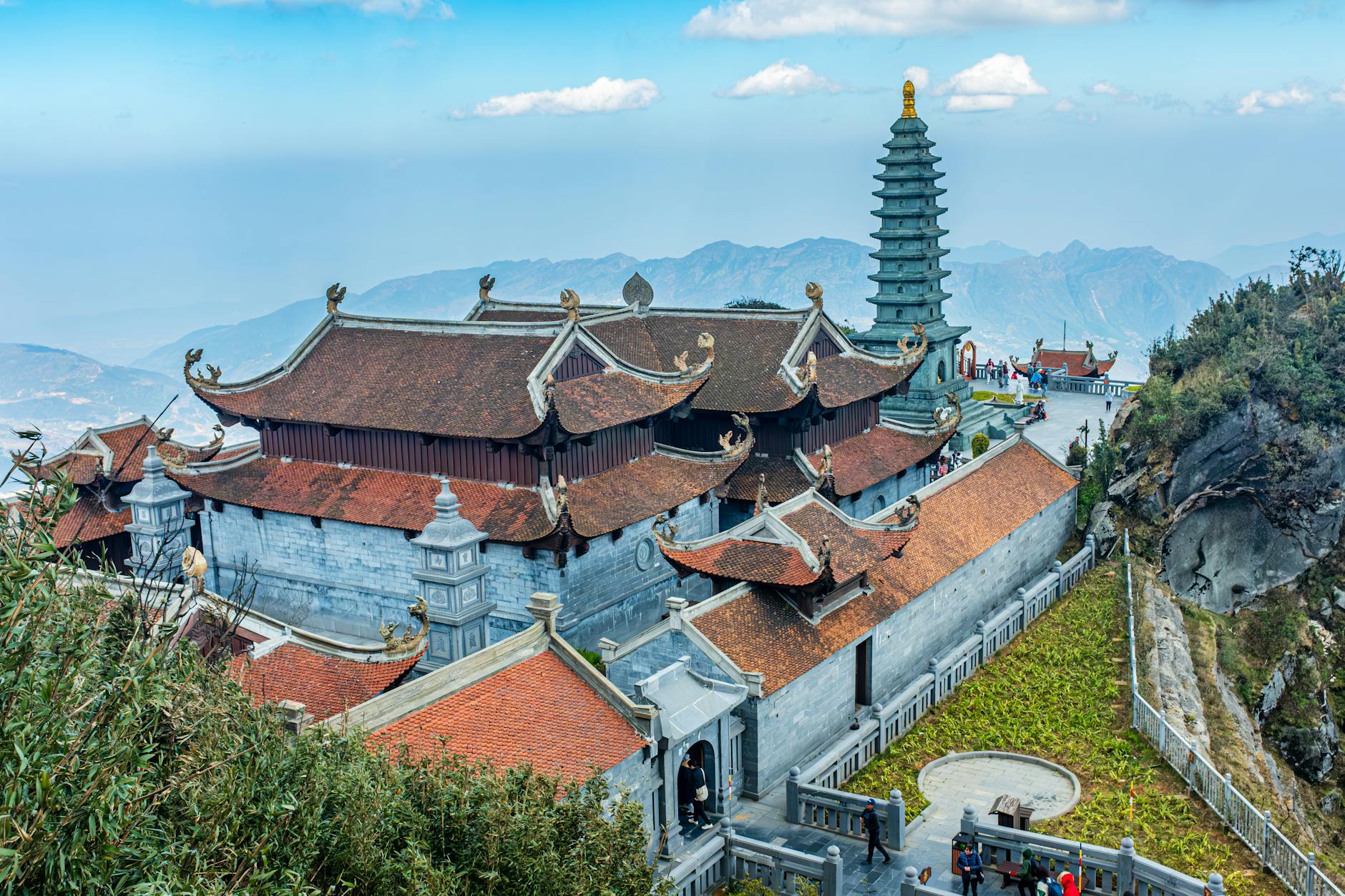
Tam Dao National Park covers over 36,000 hectares of mountain forest straddling the border of three northern provinces — Phu Tho, Thai Nguyen, and Vinh Phuc. Most travelers know Tam Dao as the hill station town on the Vinh Phuc side, but the park itself is far bigger than that one strip of hotels, and the Phu Tho access points offer a quieter, less developed way in.
What it is
Established in 1996, Tam Dao National Park protects a stretch of the Tam Dao mountain range — three main peaks topping out around 1,400 meters. The range runs roughly northwest to southeast, creating a natural wall that catches moisture off the Red River Delta. That means dense subtropical forest, heavy fog, and temperatures 8–10°C cooler than Hanoi year-round.
The park is home to over 1,200 plant species and around 350 animal species, including the Tam Dao salamander — a small, dark creature found nowhere else on earth. You probably won't see one. You will see butterflies, hear birds constantly, and walk through stretches of forest thick enough to block out the sky.
Why travelers go
Tam Dao is the closest real mountain forest to Hanoi (하노이 / 河内 / ハノイ) — roughly 80 km northwest. People come for three reasons: cool weather when the delta is unbearable, easy trekking without a multi-day commitment, and the particular atmosphere of walking through cloud forest with nobody else around. It's not Sapa. There are no rice terrace viewpoints or homestay circuits. Tam Dao is simpler than that — forest, fog, quiet.
From the Phu Tho side specifically, you get access to less-trafficked trails and buffer zone villages where tourism infrastructure is minimal. That's either a selling point or a warning, depending on your preferences.
Best time to visit
April to June and September to November are the most comfortable windows. April and May bring wildflowers and clear mornings before afternoon fog rolls in. September and October offer cooler air without the heavy rains of July–August.
Avoid July and August if you can — trail conditions deteriorate, leeches multiply, and the fog can be so thick you lose the trail entirely. December to February is cold and wet, sometimes dropping below 10°C at elevation. If you're coming from Hanoi to escape summer heat, May or June hits the sweet spot.
Weekends year-round are busier on the Vinh Phuc side (Tam Dao town). The Phu Tho approaches stay quiet regardless.
How to get there from Hanoi
From Hanoi, you have two options depending on which side of the park you want.
To Tam Dao town (Vinh Phuc side — most common): Drive or bus northwest on the Hanoi–Lao Cai expressway, exit at Vinh Yen, then follow provincial roads up the mountain. Total distance is about 80 km. A private car or motorbike takes 1.5–2 hours. Buses run from My Dinh station to Vinh Yen (around 60,000–80,000 VND), then you grab a local taxi or xe om up the mountain road for another 25 km — expect 150,000–200,000 VND for that leg.
To the Phu Tho buffer zone: Head toward Viet Tri city on the Hanoi–Lao Cai expressway or via National Route 2. From Viet Tri, you'll need a motorbike or private car southwest toward the park boundary — roughly 40–50 km on provincial roads. No direct public bus serves the Phu Tho park entrances. Budget 2–2.5 hours total from Hanoi. This approach makes more sense if you're already visiting Phu Tho for the Hung Kings Temple complex or passing through on a wider northern loop.
The Hung Kings Festival draws big crowds to Phu Tho each spring — combining a temple visit with a day or two at Tam Dao's Phu Tho edge is a natural pairing.

Photo by Quang Nguyen Vinh on Pexels
What to do
Trek to the summit ridge
The main trek follows a trail from Tam Dao town up to the TV tower near the highest peak (Thien Thi, around 1,400 m). It's a 3–4 hour round trip on a marked but occasionally steep path. The forest transitions as you climb — broadleaf at the base, mossy cloud forest near the top. On clear mornings you can see across the Red River plain.
Walk the old French route
Scattered through the forest near Tam Dao town are ruins from a French colonial hill station built in the 1930s. Stone walls, crumbling staircases, foundations being swallowed by trees. No entrance fee, no signs — you just find them along trails behind the town. It's a strange, quiet place.
Find the waterfall trails
Several waterfalls sit within day-hike range — Thac Bac (Silver Waterfall) on the Vinh Phuc side is the most accessible. From the Phu Tho buffer zone, local guides can point you toward smaller cascades that don't appear on tourist maps. Expect to pay 200,000–300,000 VND for a half-day guide.
Birdwatching
Tam Dao is one of the better birding sites in northern Vietnam (베트남 / 越南 / ベトナム). The silver pheasant is the headline species, but you're more likely to spot fork-tailed sunbirds, various laughingthrushes, and bar-backed partridges. Early morning, first hour after dawn, before the fog thickens.
Visit a buffer zone village
On the Phu Tho side, small Dao and San Diu communities live along the park's lower slopes. These aren't organized tourism villages — don't expect a welcome gate or ticket booth. But if you show up respectfully, people are generally friendly. Bring a few Vietnamese phrases.
Where to eat nearby
Tam Dao town has dozens of restaurants serving "com lam" — rice cooked inside bamboo tubes over charcoal. It's the local signature, and it's good when done fresh. Pair it with grilled stream fish or "thit lon cap nach" (small local pig, roasted). A full meal runs 100,000–200,000 VND per person.
On the Phu Tho side, options are limited — pack food or eat in Viet Tri before heading to the park. Viet Tri has decent "pho" and "bun rieu" shops along the main roads near the market.
Where to stay
Tam Dao town has the widest range — budget guesthouses from 300,000–500,000 VND/night, mid-range hotels at 600,000–1,200,000 VND, and a few resort-style places pushing 2,000,000 VND+. Book ahead on weekends.
Phu Tho side: Almost nothing. A few basic homestays in buffer zone villages charge 200,000–400,000 VND, but availability is unpredictable. Most travelers base in Viet Tri (plenty of hotels, 300,000–700,000 VND range) and day-trip to the park.

Photo by Quang Vuong on Pexels
Practical tips locals would tell you
- Bring a rain jacket regardless of season. The mountain makes its own weather.
- Leech socks or long pants tucked into socks — essential from June through September.
- Phone signal is patchy once you're on trails. Download offline maps before you go.
- The mountain road up from Vinh Yen has sharp switchbacks and fog patches. If you're riding a motorbike, go slow and use your horn on blind curves.
- Tam Dao town gets genuinely cold at night from November to March. Most budget guesthouses have thin blankets. Bring a layer.
Common mistakes to avoid
- Showing up on a summer weekend without a booking. Tam Dao town fills up fast when Hanoi is hot. Friday afternoon traffic on the mountain road can back up for an hour.
- Expecting Sapa-level infrastructure on the Phu Tho side. There are no tourist buses, no organized trekking companies, no English menus. That's the tradeoff for having trails to yourself.
- Skipping the forest for the town. Tam Dao town itself is a concrete strip of karaoke bars and selfie spots. The actual park — the reason to come — starts where the town ends. Walk past the hotels.
Practical notes
Tam Dao National Park charges a small entrance fee (around 40,000 VND) at official access points, though enforcement varies. The park is an easy add-on to a Hanoi-based northern itinerary — combine it with Ninh Binh to the south or a stop in Phu Tho for the Hung Kings temples. Just don't try to do it all in one day.
Last updated · May 29, 2026 · independently researched, never sponsored.