Vinh city doesn't make many travel itineraries. That's partly why Thanh Co Vinh — the old citadel sitting in the middle of town — feels like it belongs to the locals more than to tourists. It's not a grand imperial complex like what you'd find in Hue, but it's a real piece of Nguyen dynasty military architecture, and walking its perimeter on a weekday morning you'll likely have the place mostly to yourself.
What it is
Thanh Co Vinh (literally "Vinh Ancient Citadel") is a star-shaped fortress built in the early 19th century under Emperor Gia Long, then expanded under Emperor Minh Mang around 1831. The design follows the Vauban fortification style — the same French-influenced military geometry you see at the Imperial Citadel Thang Long in Hanoi and at the Hue (후에 / 顺化 / フエ) Citadel, though on a much smaller scale.
The citadel originally served as the administrative and military headquarters for Nghe An province. It took serious damage during the wars of the 20th century — French colonial bombardment and later American bombing during the 1960s and 70s left most of the interior structures destroyed. What remains today are sections of the outer walls, a couple of restored gates, and a moat that's been partly filled in. The site was recognized as a national historical relic in 1962.
It's not a polished museum experience. The charm is in the contrast: thick laterite walls and old gateways surrounded by the everyday noise of a mid-sized Vietnamese city. Motorbikes park along the moat. Locals exercise on the grass inside the walls at dawn.
Why travelers go
Most visitors to Thanh Co Vinh are either Vietnamese history enthusiasts or travelers passing through Nghe An on their way north to Ha Giang or south toward Hue and Da Nang. The citadel gives you a reason to stop in Vinh for a few hours rather than just using it as a transit point.
If you've seen the better-preserved citadels in Hue or Hanoi (하노이 / 河内 / ハノイ), Thanh Co Vinh offers an interesting comparison — same Vauban blueprint, but with the rawness of a site that hasn't been heavily restored or commercialized. There's no entry ticket, no gift shop, no guided tour. You just walk in.
Best time to visit
Nghe An has hot, humid summers and a cooler dry season. The best months are October through March, when temperatures hover around 18-24°C and rainfall drops off. April and May get increasingly hot (often above 35°C), and June through September brings heavy rain that can make the citadel grounds muddy and the moat overflow.
Early morning — around 6:00 to 7:30 — is the best time of day. The light is good for photos, it's cooler, and you'll see locals doing tai chi and jogging along the walls, which gives the place some life.
How to get there
Vinh is the main city in Nghe An province, about 290 km south of Hanoi.
- Train: The Reunification Express stops at Vinh station. From Hanoi, the ride takes roughly 5.5-7 hours depending on the service. Tickets run 150,000-400,000 VND for a seat, more for a sleeper berth.
- Bus: Frequent buses from Hanoi's southern bus stations (Nuoc Ngam or Giap Bat) take about 5-6 hours. Expect to pay 180,000-250,000 VND.
- Flight: Vinh International Airport (VII) has daily flights from Hanoi and Saigon. Flight time from Hanoi is about 1 hour; budget airlines often sell tickets for 500,000-900,000 VND if booked early.
From Vinh's city center, the citadel is on Quang Trung street, roughly 2 km from the train station. A xe om (motorbike taxi) or Grab ride costs about 15,000-20,000 VND.

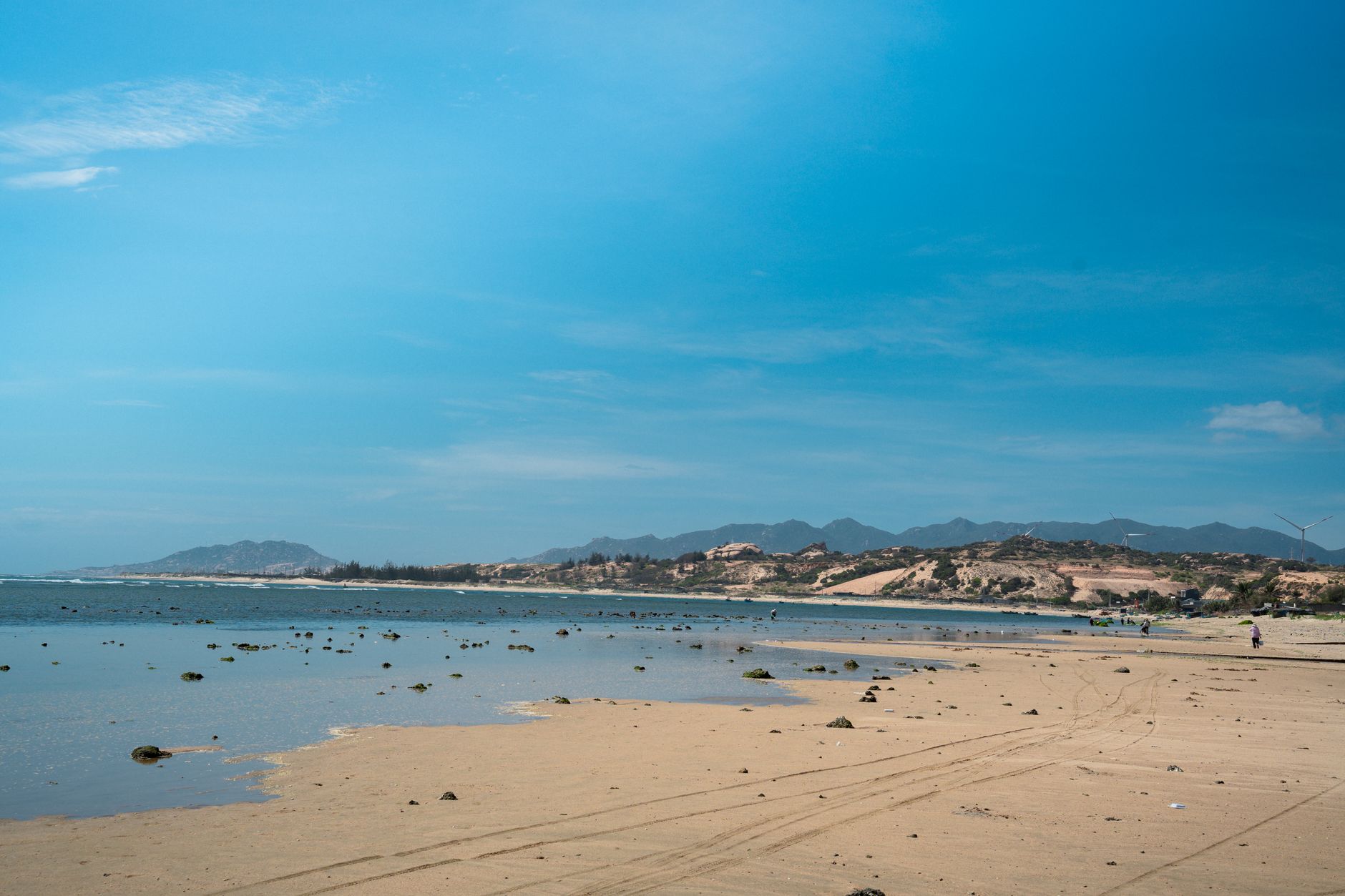
Photo by Nguyen Duc Toan on Pexels
What to do
Walk the walls and gates
The most intact feature is the Cua Tien (Front Gate) on the southern side, which has been partially restored. Walk the perimeter — the full circuit is about 1.6 km — and you'll pass sections where the original laterite and brick walls still stand at 3-4 meters high. The northeastern corner has some of the least-restored stretches, which are more interesting to photograph than the cleaned-up sections.
Visit the Ho Chi Minh memorial area
Inside the citadel grounds, there's a small memorial park dedicated to Ho Chi Minh, who was born in Nghe An province. It includes a modest exhibition hall with photographs and personal items. Free entry. It takes about 20 minutes.
Check the moat
The moat on the eastern and southern sides still holds water and is lined with mature trees. In the cooler months, the area around the moat is where Vinh residents come to sit, fish, and drink "ca phe sua da" from plastic chairs set up by street vendors. It's a good spot to take a break and watch the city move.
Quang Trung Square and surroundings
Just outside the citadel's southern gate, Quang Trung Square is Vinh's main public plaza. Nothing remarkable architecturally, but it connects you to the city's commercial district and is useful for orientation. On weekend evenings, families gather here and food carts set up along the edges.
Cua Lo Beach (day trip)
If you have extra time, Cua Lo beach is about 16 km northeast of Vinh — a 25-minute drive. It's a local beach town, not a resort destination, but it's clean enough for a swim and the seafood stalls along the shore are cheap and fresh.
Where to eat nearby
Nghe An is known for a few regional dishes worth seeking out:
- "Luon" (eel) dishes: Vinh is arguably the eel capital of Vietnam. Look for "chao luon" (eel porridge) or "luon om chuoi" (eel braised with green banana). There are several eel restaurants on Le Loi street, about 1 km from the citadel. A bowl of eel porridge costs 30,000-45,000 VND.
- "Banh muot": A steamed rice-flour roll similar to "banh cuon" in Hanoi, but with a slightly different texture and typically served with a fish sauce–based broth and grilled pork. Street vendors near Cho Vinh (Vinh Market) sell this for about 20,000-30,000 VND per portion.
Where to stay
Vinh has no shortage of budget and mid-range accommodation. Most options cluster around Quang Trung street and Le Loi street, both within walking distance of the citadel.
- Budget: Basic guesthouses and mini-hotels run 200,000-350,000 VND/night. Clean, air-conditioned, no frills.
- Mid-range: Hotels with breakfast and decent rooms go for 400,000-700,000 VND/night. Muong Thanh chain has a branch in Vinh that's reliable.
- Higher-end: Limited options. The best hotels in Vinh top out around 1,200,000 VND/night — comfortable but nothing luxurious.

Photo by Thi Đoàn on Pexels
Practical tips locals would tell you
- Bring water. There's no vendor inside the citadel walls — the nearest convenience store is on Quang Trung street.
- Wear shoes you don't mind getting dirty. The paths inside are unpaved in places and can be muddy after rain.
- The citadel is open all day and there's no fence or gate closure. You can visit at any hour, though there's no lighting at night.
- If you're combining Vinh with onward travel to Hue, the train is more scenic and comfortable than the bus for that stretch (about 5-6 hours).
Common mistakes to avoid
- Expecting a fully restored site. This isn't the Imperial City in Hue. If you go in expecting a polished attraction, you'll be disappointed. Treat it as an atmospheric historical walk, not a museum.
- Skipping Vinh entirely. A lot of travelers blast through on the night train. If you're on the north-south route, even a half-day stop gives you enough time to see the citadel, eat eel porridge, and get a feel for a Vietnamese city that isn't performing for tourists.
- Visiting midday in summer. Vinh gets brutally hot from May through August. The citadel has limited shade. Morning or late afternoon only.
Practical notes
Thanh Co Vinh won't be the highlight of a Vietnam trip, and that's fine. It's worth a stop precisely because it's unpolished — a real piece of 19th-century military architecture sitting in a city that goes about its business around it. Budget two to three hours for the citadel and nearby eating, then move on refreshed.
Last updated · May 29, 2026 · independently researched, never sponsored.