Thanh Hoa doesn't show up on most travelers' radar, which is part of what makes it worth a stop. Thien Vien Truc Lam Ham Rong — a Truc Lam Zen monastery perched on the slopes of Ham Rong hill — is one of the quieter reasons to spend a half-day here instead of just passing through on the train between Hanoi and Hue.
What it is
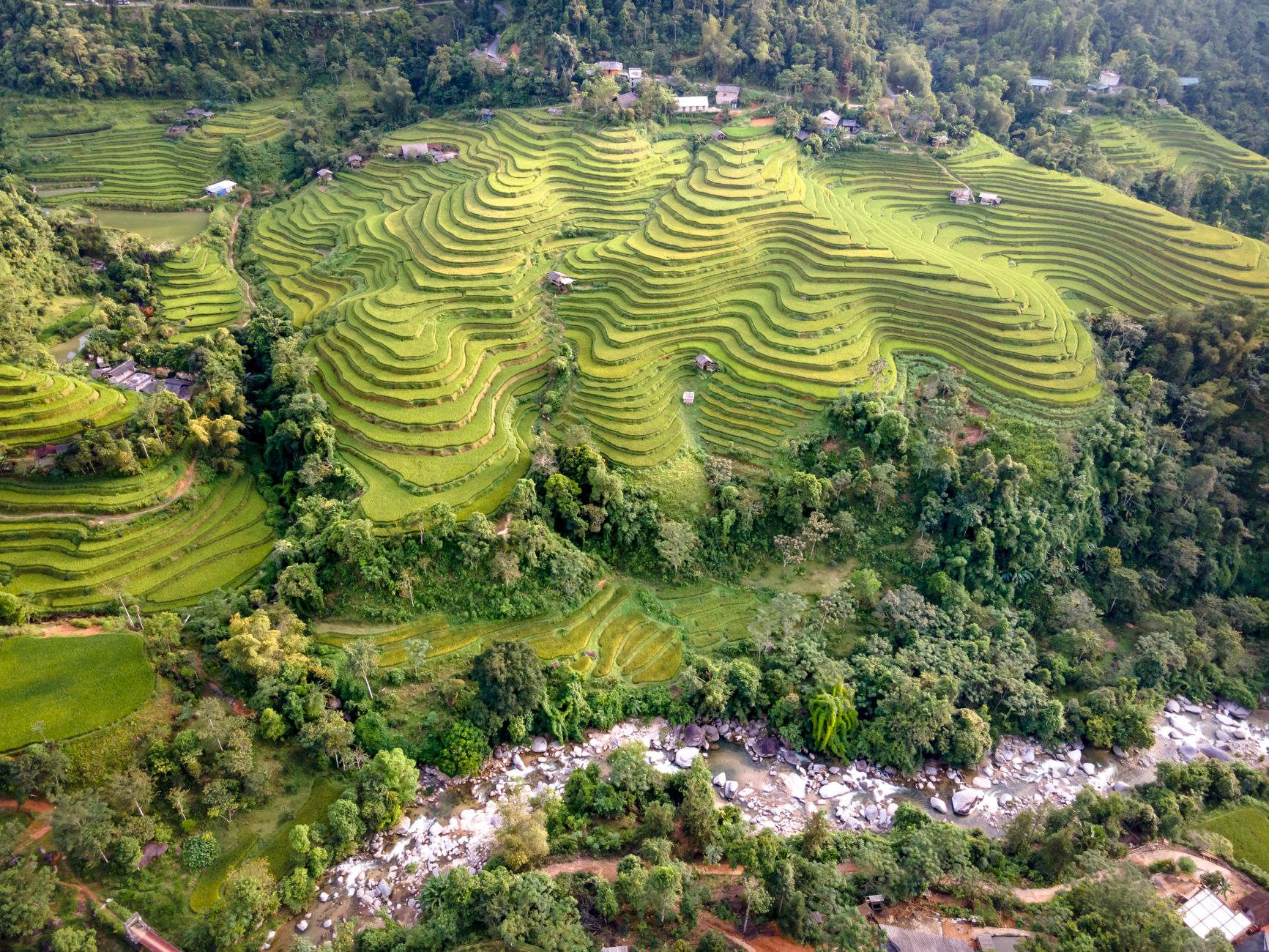
Thien Vien Truc Lam Ham Rong belongs to the Truc Lam Zen Buddhist order, a Vietnamese school of Zen Buddhism revived in the 1960s-70s by Zen Master Thich Thanh Tu. The monastery was built in the early 2010s on the western slope of Ham Rong (Dragon Jaw) hill, about 5 km northwest of central Thanh Hoa city. It sits on roughly 30 hectares of forested hillside, with the main prayer hall, a bell tower, lotus ponds, and meditation gardens spread across multiple terraced levels.
The architecture follows the pattern of other Truc Lam monasteries across the country — clean lines, dark wood, curved tile roofs, no gilded excess. The scale is large but the atmosphere stays restrained. This isn't a tourist temple loaded with incense vendors. It's an active monastery where monks practice daily.
Why travelers go
Most visitors come for two things: the calm and the views. From the upper terraces, you get a wide panorama over the Ma River valley, Thanh Hoa's sprawl, and the surrounding karst hills. The grounds are well maintained, shaded by old trees, and genuinely peaceful on weekday mornings when visitor numbers thin out.
For travelers on the north-south route, Thanh Hoa sits in that dead zone between Ninh Binh (닌빈 / 宁平 / ニンビン) and Hue where few people stop. Thien Vien Truc Lam Ham Rong, combined with a walk around Ham Rong hill, gives you a legitimate reason to break the journey for a few hours.
Best time to visit
Thanh Hoa has a tropical monsoon climate with a hot, wet season (May–September) and a cooler, drier stretch from October through March. The best months to visit the monastery are October to December — temperatures drop to 20–25°C, humidity eases, and the grounds look sharp after the rains. January and February can be grey and drizzly.
Avoid the weeks right around Tet (뗏 (베트남 설날) / 越南春节 / テト) if you want quiet. The monastery draws large crowds of local worshippers during the Lunar New Year holiday, and the reflective atmosphere disappears under the weight of thousands of visitors.
Early morning — before 8 a.m. — is the best window any time of year. The light is softer, the monks are active, and you'll have the walking paths mostly to yourself.
How to get there
From Hanoi, Thanh Hoa is about 150 km south. The Reunification Express train takes roughly 2.5–3 hours and costs 80,000–180,000 VND depending on seat class. Buses from Giap Bat station run frequently and take around 3 hours (100,000–130,000 VND). If you're driving, the route along the QL1A or the Hanoi–Ninh Binh expressway extending south is straightforward.
From Thanh Hoa city center to the monastery, it's about 5 km heading northwest toward Ham Rong hill. A Grab bike costs around 20,000–30,000 VND; a Grab car roughly 40,000–50,000 VND. If you've got a motorbike, follow Le Loi street west, then turn onto the road climbing up Ham Rong. The monastery entrance and parking area are clearly signed.

Photo by Karolina on Pexels
What to do
Walk the full grounds
Don't just visit the main hall and leave. The monastery's terraced layout rewards a slow loop. Start from the gate, climb through the lower gardens past the lotus ponds, up to the main prayer hall (Chanh Dien), then continue to the bell tower at the higher elevation. The whole circuit takes about 45–60 minutes at a relaxed pace. Wear shoes you can slip on and off — you'll remove them at several buildings.
Sit in the meditation garden
Behind the main hall, a walled garden with stone benches and low hedges is set aside for quiet reflection. Monks use it. Visitors are welcome to sit. Five or ten minutes here, with the city noise filtered by the hill, is the best thing the monastery offers.
Climb Ham Rong hill
The monastery occupies only part of the hill. A trail continues upward through eucalyptus and pine forest to a viewpoint at the summit. It's a short but steep climb — about 20 minutes. The view at the top covers the Ma River, the coastal plain, and on clear days, a faint line of sea to the east.
Visit the bell tower
The bronze bell is one of the largest in the Thanh Hoa region. The tower itself is a good vantage point, and if your timing is right — around 5 a.m. or 5 p.m. — you'll hear it ring during the monks' prayer sessions.
Photograph the lotus ponds
From June through August, the ponds at the lower terrace fill with blooming lotus. Even outside bloom season, the stone walkways, arched bridges, and reflections off the water make for good photographs in the early morning light.
Where to eat nearby
Thanh Hoa's signature dish is "nem chua" — fermented pork wrapped in banana leaf, tangy and slightly fizzy on the tongue. You'll find it sold everywhere, but the shops along Tran Phu street in the city center are a reliable bet. Expect to pay 5,000–10,000 VND per piece.
For a proper meal, look for "banh cuon" — steamed rice rolls filled with minced pork and mushroom, served with herb plates and dipping sauce. Stalls near Thanh Hoa's central market dish these out for 25,000–35,000 VND a plate. If you want something more substantial, the local "pho" is solid if unremarkable — the city doesn't try to compete with Hanoi on that front, and that honesty keeps it decent.
Where to stay
Thanh Hoa city has a range of accommodation, though nothing luxury-tier. Budget guesthouses (nha nghi) run 150,000–250,000 VND per night. Mid-range hotels with air conditioning, hot water, and breakfast cluster along Phan Chu Trinh and Le Loi streets for 400,000–700,000 VND. The Muong Thanh chain has a property here at the higher end, typically 800,000–1,200,000 VND.
Most travelers don't overnight — Thanh Hoa works well as a half-day stop between Ninh Binh and points south.

Photo by Quang Nguyen Vinh on Pexels
Practical tips
- Dress modestly. This is an active monastery. Cover shoulders and knees. No shorts or tank tops inside the prayer halls.
- Keep noise down. Monks live here full-time. Groups of visitors sometimes forget this. Keep phone volumes off and voices low.
- No entrance fee. The monastery is free to enter. There are donation boxes inside the main hall if you want to contribute.
- Bring water. There's limited food or drink for sale on the hill. A bottle of water and a hat will save you on hot days.
- Parking is free at the base of the monastery road. Motorbike and car spots are available.
Mistakes to avoid
Visiting midday in summer — the exposed hillside path becomes punishing in 35°C+ heat with no shade on the upper sections. Coming during Tet weekend expecting solitude — you'll get the opposite. And skipping the hill walk to only see the main hall — the monastery is fine, but the views from the summit are the real payoff.
Practical notes
Thien Vien Truc Lam Ham Rong is a low-key stop, not a full-day destination. Pair it with a morning walk on Ham Rong hill, lunch in Thanh Hoa, then catch an afternoon train south toward Hue or Phong Nha. That's a day well used in a city most people skip entirely.
Last updated · May 29, 2026 · independently researched, never sponsored.