Thuan Phuoc Bridge connects the tip of the Son Tra Peninsula to the eastern edge of Da Nang's beachfront strip, spanning roughly 1.8 km across the mouth of the Han River where it meets the sea. It's the longest suspension bridge in Vietnam, and for travelers, it's one of the more underappreciated spots in a city that tends to funnel everyone toward the same three or four attractions.
What it is and a bit of history
Thuan Phuoc Bridge (Cau Thuan Phuoc) opened in 2009 after six years of construction. It was built to link Hai Chau district on the city side with Son Tra district across the water, cutting what used to be a long drive around the river mouth down to a two-minute crossing. The bridge sits at the very point where the Han River empties into the East Sea — so you get river on one side, open ocean on the other, and Da Nang (다낭 / 岘港 / ダナン)'s skyline behind you.
A quick note on geography: Da Nang recently merged administratively with the former Quang Nam province areas, so you may see references to "Da Nang (sap nhap Quang Nam)" on newer Vietnamese maps and documents. For travelers, this doesn't change much — Thuan Phuoc Bridge is still in the urban core, and getting there is the same as before.
Why travelers go
Thuan Phuoc doesn't get the tourist traffic that Dragon Bridge or the Golden Bridge pull in. That's part of the appeal. People come here for three reasons: the sunset views looking west over the Han River and the city skyline, the night lighting when the bridge's cables glow in shifting colors, and the walk itself — nearly 2 km over open water with a proper breeze coming off the sea. Photographers in particular like this spot because you can frame Da Nang's full riverfront bridge collection (Han, Dragon, Tran Thi Ly, Thuan Phuoc) in a single panorama from Son Tra's side.
Best time to visit
Da Nang's dry season runs from roughly March through August. For Thuan Phuoc specifically, April to June is the sweet spot — the heat isn't as brutal as July-August, skies tend to be clear, and sunset light hits the bridge at a good angle. Avoid October through December if you can; central Vietnam's rainy season makes an exposed bridge walk genuinely unpleasant, and the wind picks up hard.
Time of day matters more than the month, honestly. Late afternoon around 5:00-5:30 PM gets you the sunset, and if you linger until 6:30-7:00 PM, the bridge lights switch on. That golden hour-to-blue hour window is when the bridge is at its best.
How to get there
From central Da Nang (say, the area around Han Market or the cathedral), Thuan Phuoc Bridge is about 4 km northeast. A Grab bike costs roughly 15,000-25,000 VND; a Grab car runs 30,000-45,000 VND. The ride takes 10-15 minutes depending on traffic.
If you're staying along My Khe Beach, it's even closer — maybe 3 km and a straight shot up Pham Van Dong street. Renting a motorbike (100,000-150,000 VND/day from most hotels) is the most flexible option since you can park at either end and walk across.
From Hoi An, it's about 30 km and roughly 45 minutes by car or bike.

Photo by Quang Nguyen Vinh on Pexels
What to do — five specific things
Walk the full span at sunset
There's a pedestrian walkway on both sides of the bridge. Start from the city (south) end around 5:00 PM, walk the full 1.8 km to the Son Tra side, and you'll hit the far end right around sunset. The midpoint of the bridge, roughly 900 meters out, gives you the most open view in every direction.
Photograph the Da Nang bridge lineup
From the Son Tra end of Thuan Phuoc, you can see Dragon Bridge and the Han River Bridge lit up downriver. Bring a tripod if you have one — the wind on the bridge itself makes handheld long exposures tough, but the Son Tra end has a small plaza area where it's more sheltered.
Combine it with Son Tra Peninsula
Once you're across, you're at the base of Son Tra — home to the Linh Ung Pagoda (the one with the 67-meter Lady Buddha statue) and some of Da Nang's best coastal roads. Riding up Son Tra in the early morning and then crossing Thuan Phuoc back into the city makes for a solid half-day loop.
Watch the fishing boats at dawn
The waters directly below the bridge are a working fishing area. If you're up early, around 5:30-6:00 AM, you'll see the round basket boats ("thung chai") heading out and the overnight boats coming back in. It's a completely different scene from the sunset crowd.
Night ride across
The bridge's LED cable lighting changes colors throughout the evening. Riding a motorbike across after dark, with Da Nang glowing on one side and the dark sea on the other, is one of those moments that actually feels like something. Go slow — there's no rush, and the bridge has a 40 km/h speed limit anyway.
Where to eat nearby
The city-side end of the bridge puts you in Hai Chau district, close to some good local food. Head about 1 km south toward Dong Da street for a proper bowl of "mi quang" — the turmeric-tinted noodle dish that's central Vietnam's answer to pho. Mi Quang Ba Mua on Le Duan is a reliable local spot, with bowls running 35,000-50,000 VND.
For seafood, the stretch of restaurants along Pham Van Dong near Man Thai beach (just east of the bridge's south end) serves grilled squid, clams in chili sauce, and "banh xeo" stuffed with shrimp. Expect to pay 150,000-300,000 VND per person for a full spread with a couple of beers.
If you're crossing to Son Tra, the small seafood shacks near Tien Sa port serve fresh catches at dock prices — cheaper than the beachfront places in town.
Where to stay
Most travelers base themselves along My Khe Beach or in the Han River area, both within easy reach of the bridge.
- Budget: Hostels and guesthouses along An Thuong street run 150,000-350,000 VND/night for a dorm bed or basic private room.
- Mid-range: Hotels along Vo Nguyen Giap (the beachfront road) go for 500,000-1,200,000 VND/night. You get a pool, breakfast, and beach access at most of them.
- Upper-range: The big resorts cluster further south toward Non Nuoc Beach, starting around 2,000,000 VND/night.
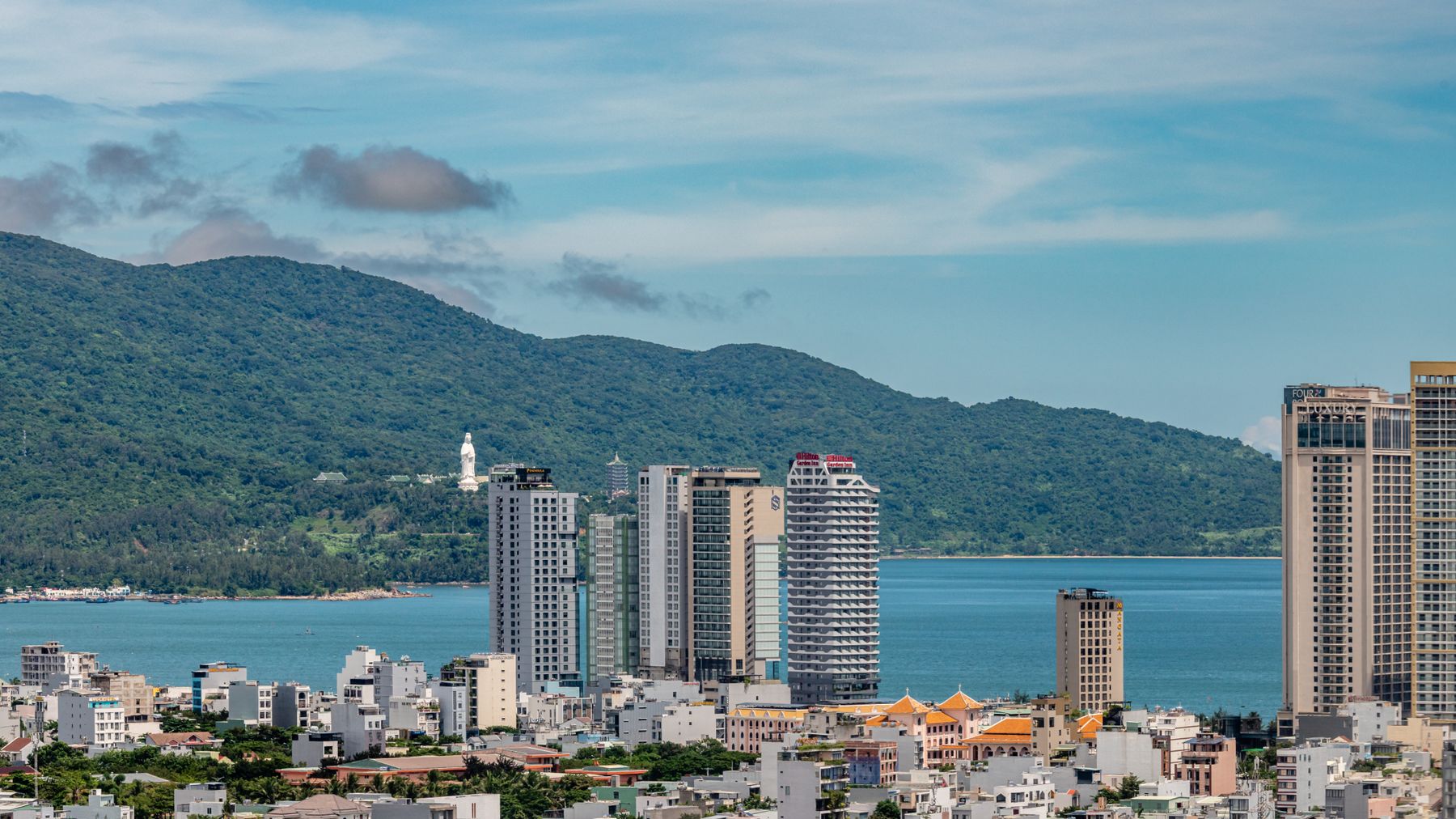
Photo by Kirandeep Singh Walia on Pexels
Practical tips locals would tell you
- The bridge gets seriously windy, especially after 4 PM and during the shoulder months (September, March). If you're on a motorbike, keep both hands on the handlebars and don't ride next to trucks — the crosswind draft is real.
- There's no shade on the bridge. Walking it at midday in summer is a bad idea. Bring water regardless of the time.
- Parking is informal. On the city side, you can leave a motorbike along the access road near the bridge entrance. On the Son Tra side, there's a small lot. Neither charges more than 5,000 VND.
- Don't confuse Thuan Phuoc with Tran Thi Ly or Han Bridge when giving directions to a Grab driver — Da Nang has six bridges and locals navigate by bridge names.
Common mistakes to avoid
- Skipping it because "it's just a bridge." The walk and the views are genuinely worth 45 minutes of your time, especially at sunset.
- Going only at night. The lit-up bridge looks great in photos, but walking it in the dark can feel exposed and the wind is stronger. Sunset-to-early-evening is the better window.
- Not combining it with Son Tra. The bridge is a natural gateway to the peninsula. Treating it as an isolated stop wastes its best feature — it connects two very different parts of Da Nang.
Practical notes
Thuan Phuoc Bridge is free to cross, open 24 hours, and accessible by foot, bicycle, or motorbike. Budget about an hour for a round-trip walk, or 15 minutes if you're just riding across. It pairs naturally with a Son Tra morning or a Da Nang riverfront evening — no need to build a whole day around it, but don't skip it either.
Last updated · May 26, 2026 · independently researched, never sponsored.