Walk into almost any pho shop, sit down at a plastic stool on the sidewalk, or finish a bowl of "bun cha" in Hanoi — before you even order, a glass arrives. Cold, faintly golden, slightly bitter. That's "tra da": iced tea, and it's so woven into daily life here that most people have stopped noticing it.
What Tra Da Actually Is
The name is simple: tra means tea, da means ice. What's in the glass varies by region and by whoever brewed the pot that morning, but the most common version is made from dried green tea leaves — cheap, rough-grade stuff bought in bulk from the northern highlands or the Central Highlands (중부 고원 / 中部高原 / 中部高原) around Da Lat. It's brewed strong, diluted, sometimes barely flavored at all, then poured over crushed ice or ice cubes and set on the table without comment.
In the south — Saigon especially — you'll also encounter "tra atiso", artichoke tea, which has a faintly sweet, earthy taste and is said to support digestion. In Hue, tea culture runs deeper than elsewhere; the city has a long imperial tradition around lotus tea, where green tea leaves are layered overnight with fresh lotus stamens to absorb fragrance before being dried and brewed. That version is not the stuff you get free at a com tam stall, but it shares the same logic: tea is a background constant.
Why Every Meal Comes With It
The short answer is hospitality. Setting down a glass of tra da when a customer sits is the Vietnamese equivalent of a bread basket — it says you're welcome here, we see you. It costs the restaurant almost nothing. A kilogram of low-grade green tea runs around 30,000–50,000 VND and can brew dozens of liters. The gesture is cheap; the signal is not.
The longer answer is practical. Vietnam (베트남 / 越南 / ベトナム)'s climate — humid and hot for most of the year across most of the country — makes cold drinks a necessity rather than a luxury. Tea has natural astringency that cuts through the fat in grilled pork, clears the palate after a rich broth, and settles the stomach after a meal heavy in fish sauce and chili. People here don't drink water the way Westerners do with meals. They drink tra da.
There's also a caffeine logic to it. Vietnamese coffee — whether the slow-drip "ca phe sua da" or a street-corner espresso — is strong enough to stain your teeth. Tea is the lower-gear option, something you can drink all day without your hands shaking by noon. Office workers keep a thermos of hot tea at their desk and pour it over ice before heading out. Motorbike drivers stop at sidewalk stalls between fares.

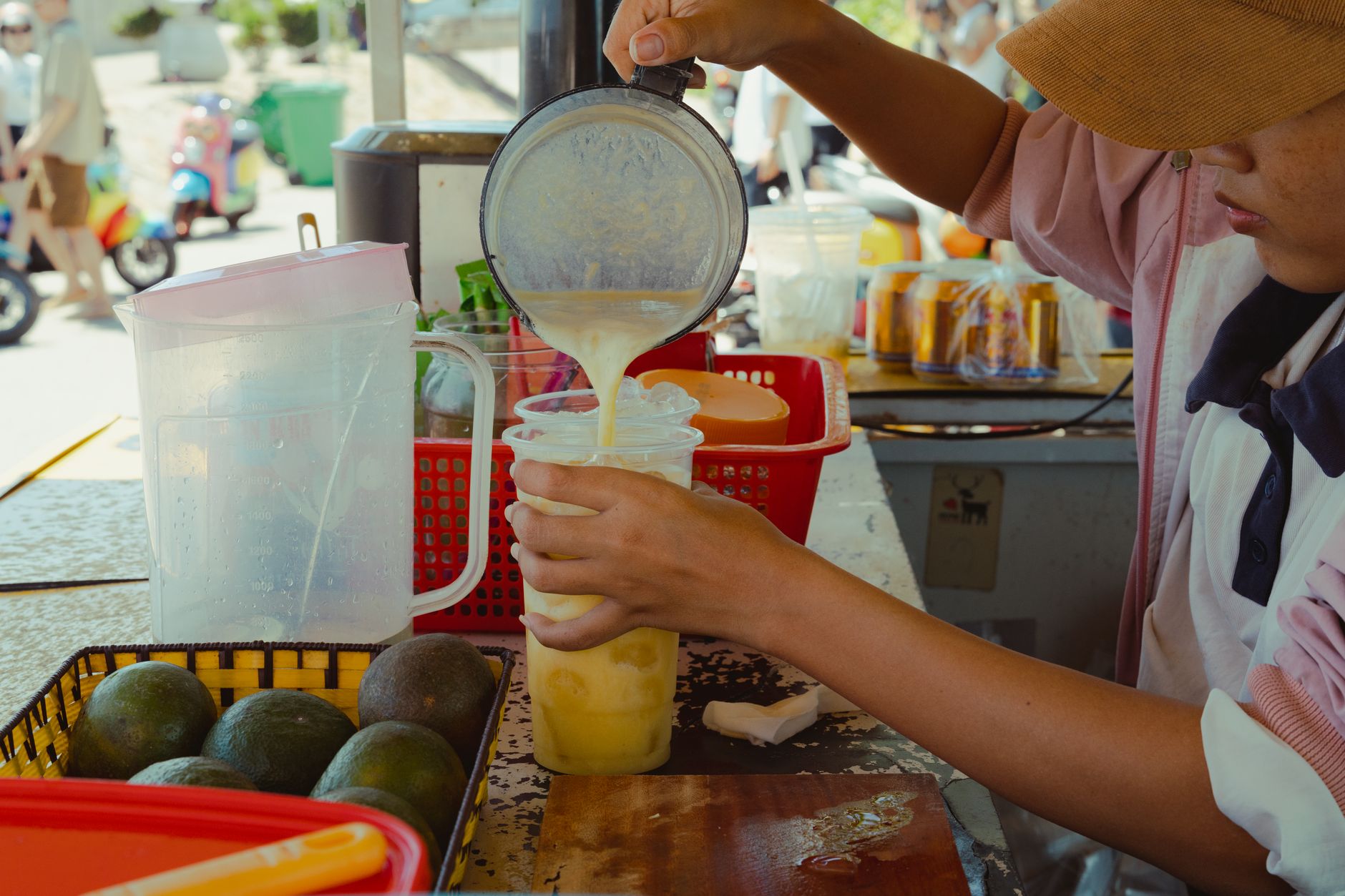
Photo by Theodore Nguyen on Pexels
The Sidewalk Tea Stall
This is where tra da becomes a social institution rather than just a drink. In Hanoi's Old Quarter and in the residential alleys branching off every major street in Saigon, you'll find small folding tables — sometimes just a low plastic crate — with a woman or older man behind a tray of glasses, a pot of tea, and a bucket of ice. A glass costs 3,000–5,000 VND. Often there are cigarettes, candy, and small snacks for sale alongside.
These aren't cafes. They're neighborhood anchors. The same group of men might play chess at the same tea stall every morning for twenty years. Teenagers sit on the kerb after school. Xe om drivers park their motorbikes and talk for an hour. The tea stall is where information moves — who's hiring, whose kid passed their university entrance exam, where the traffic police are set up this week.
In the north especially, this culture has deep roots. Hanoi's sidewalk tea stalls were operating long before the city had espresso bars or bubble tea chains, and many of them are still run by the same families that started them a generation ago.
Regional Variations Worth Knowing
Not all tra da is identical. A few distinctions worth noting as you travel:
Hanoi and the north: Usually plain green tea, sometimes with a faint smoky note from the drying process. Cold, no sweetener, no garnish. You'll get this with pho, banh cuon, bun thang — essentially every northern breakfast.
Hue and the central coast: Tea culture here is more elaborate. Hue's tea tradition ties into the old imperial court aesthetic — small cups, fragrant blends, attention to presentation. But at street level you still get a plain glass with your bun bo hue.
Saigon and the south: More variety. Artichoke tea is common, and you'll sometimes get sweetened chrysanthemum tea or barely-there jasmine at southern com tam restaurants. Portions are larger, ice is more abundant.
Da Lat: The highlands city grows its own tea on the surrounding slopes. Local green and oolong teas are sold at the market and often brewed fresher and with more care than what you'd get at a roadside stall in the lowlands.

Photo by Nguyễn Hưng on Pexels
What to Do With It
Drink it. Don't overthink the hygiene — the boiling-water brewing process takes care of most concerns, and the ice question is the same calculation you make for any cold drink in Vietnam. The glass is generally fine.
If you're at a tea stall and want to sit for a while, order a second glass. It signals you're not in a rush, which is the entire point. Bring a newspaper or just watch the street. Nobody will bother you.
Practical Notes
Tra da is almost always free at restaurants; if it's a paid sidewalk stall, 5,000 VND covers a glass with room to tip. You won't find it on menus — just look for the plastic pitcher on the table or ask by tapping your glass and raising an eyebrow. That works everywhere.
Last updated · May 29, 2026 · independently researched, never sponsored.