What is the Vietnam e-visa?
The e-visa is an electronic travel authorization issued by the Vietnamese government. It's valid for 90 days from issue and lets you enter Vietnam (베트남 / 越南 / ベトナム) once (single-entry) or multiple times (multi-entry) within that window. UK passport holders qualify for e-visa eligibility—no embassy appointment or visa sticker required.
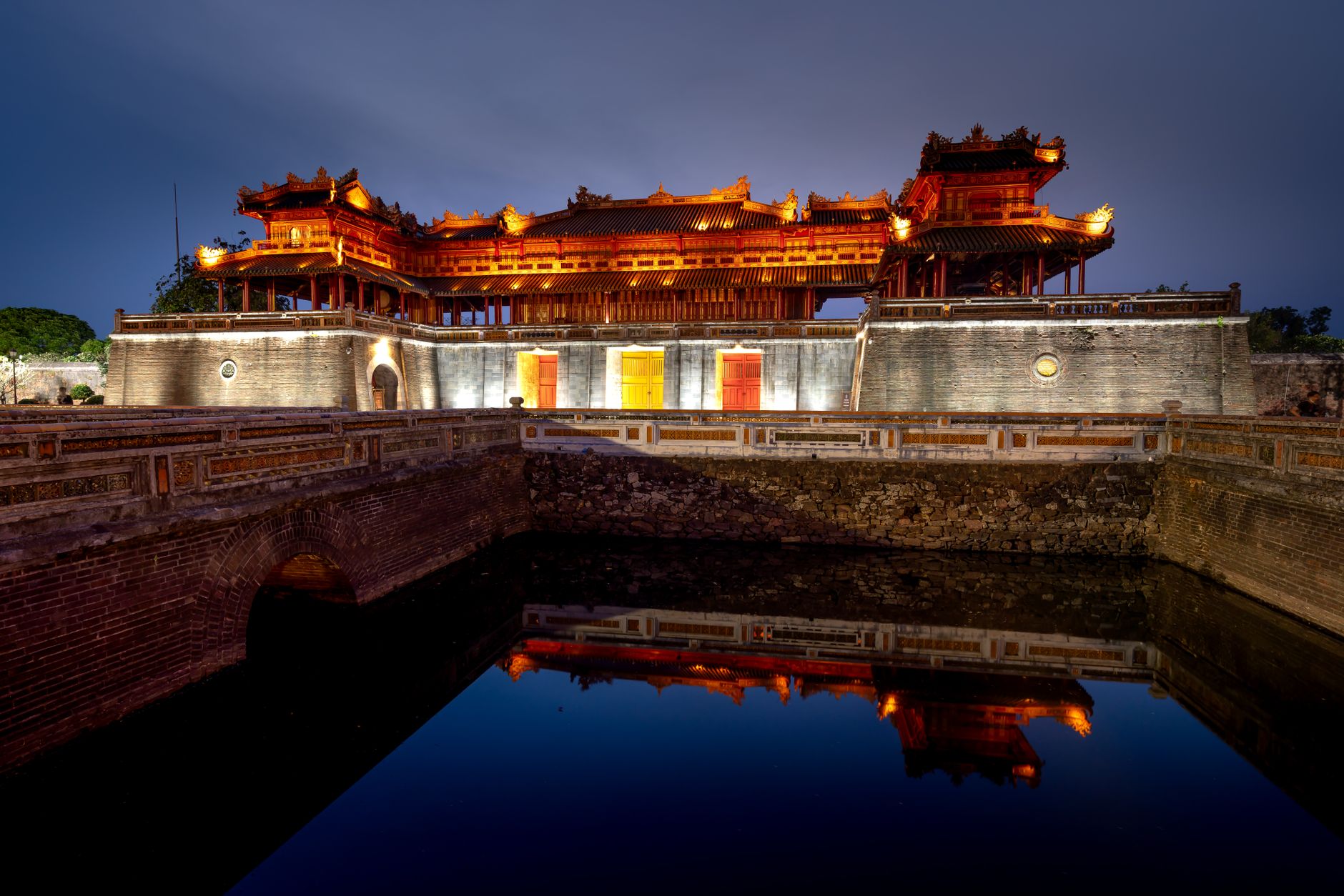
Before August 2023, e-visas were capped at 30 days with single entry only. The updated policy doubled the window and added multi-entry, which makes the e-visa genuinely useful for longer trips. If you're planning a north-to-south route—say, Hanoi down to Ho Chi Minh City with a detour through Hue, Hoi An, and Da Nang—90 days gives you plenty of breathing room.
Who can apply?
You're eligible if:
- Your UK passport is valid for at least 6 months beyond your travel date
- You're traveling for tourism, business meetings, or conferences (not work)
- You plan to stay 90 days or fewer
If you're moving to Vietnam long-term, working, or studying, you'll need a different visa type through the Vietnamese embassy.
One thing worth noting: the e-visa covers most entry purposes that short-term visitors actually need. Scouting out apartments, attending a friend's wedding, doing a two-week motorbike loop through Ha Giang—all fine. The line it draws is around paid employment and formal enrollment in educational programs.
How to apply online
-
Go to evisa.gov.vn — this is the only official government portal. Avoid third-party agents or paid intermediaries; they add unnecessary markup. The URL matters: if the domain doesn't end in
.gov.vn, close the tab. -
Fill the form: nationality (United Kingdom), passport number, full name as it appears in your passport, email address, intended entry date. Use your name exactly as printed—middle names included. A mismatch between your application and your passport bio page is the most common reason for rejection.
-
Upload a digital photo — 4x6 cm, white background, face clearly visible. A smartphone photo works if you crop it properly. Avoid selfies with shadows or glasses glare. The system occasionally rejects photos with compression artifacts, so use the highest quality setting on your phone camera.
-
Upload a passport scan — high-resolution image of the biographical page (photo + data fields). Make sure all four corners of the page are visible and the text is sharp enough to read. A scan at 300 DPI is ideal; a well-lit phone photo of the page laid flat on a table also works.
-
Select visa type:
- Single entry: $25. One arrival, unlimited exits. Typical for most tourists.
- Multiple entry: $50. Enter and exit as many times as you want within 90 days. Useful if you're doing regional travel (Cambodia, Laos) and returning. If you're planning a side trip to Angkor Wat or Luang Prabang mid-trip, the multi-entry pays for itself versus reapplying.
-
Pay by card — Visa, Mastercard accepted. Payment is instant. The charge appears as a Vietnamese government merchant on your statement. Some UK banks flag international government payments as suspicious, so it's worth giving your bank a heads-up or using a travel card like Wise or Revolut.
-
Wait 1-3 business days. You'll receive a PDF approval letter via email. Print it or save it on your phone.

Photo by Ekaterina Belinskaya on Pexels
At the airport
Arrive with:
- Printed or digital copy of your e-visa approval letter
- Your passport
- Completed TM.6 arrival form (given at immigration desk, or fill online beforehand)
- Return or onward flight confirmation
- Proof of funds (credit card, ATM statement, or hotel booking)
The immigration officer will scan your approval letter, check your passport, and stamp you in. The whole process takes 5-10 minutes. No additional fees.
E-visas are accepted at all international airports: Noi Bai (Hanoi), Tan Son Nhat (Ho Chi Minh City), Da Nang, Cam Ranh (Nha Trang (냐짱 / 芽庄 / ニャチャン)), Phu Bai (Hue), Phu Quoc, Cat Bi (Hai Phong), and Can Tho. They're also valid at major land border crossings—Moc Bai (to Cambodia), Lao Bao (to Laos), and Huu Nghi (to China), among others—and several seaports.
If you're arriving on a late-night flight, immigration desks at Noi Bai and Tan Son Nhat operate 24 hours. Staffing is thinner after midnight, but the e-visa lane is usually faster than the visa-on-arrival queue regardless.
Which entry points accept the e-visa?
This catches people off guard: not every border gate accepts e-visas, though the major ones all do. The government maintains an official list on evisa.gov.vn. As of the current policy, 33 border gates are approved, including:
- Airports: Noi Bai (Hanoi), Tan Son Nhat (HCMC), Da Nang, Cam Ranh, Phu Quoc, Phu Bai, Cat Bi, Can Tho
- Land borders: Moc Bai, Lao Bao, Huu Nghi, Nam Can, Cha Lo, Cau Treo, Tay Trang, Ha Tien
- Seaports: Ho Chi Minh City port, Da Nang port, Hai Phong port, Nha Trang port, Quy Nhon port, Ha Long port
If you're entering at a smaller or more remote crossing—particularly in the northern mountains near Sapa or along the central highlands—double-check the approved list before you travel. Getting turned away at a land border with no nearby alternative is not a fun afternoon.
Common questions
Can I extend my e-visa in Vietnam? No. The 90-day window is fixed from issue date, not arrival date. If you need longer, you must apply for a different visa type through the Immigration Department or an agency in Hanoi or Saigon before your e-visa expires.
What if my application is rejected? Rare, but possible (e.g., passport damage, unclear photo, data mismatch). You'll receive an email explaining the reason. Contact the Vietnamese embassy in London: vietnamembassy.org.uk. They can advise on reapplication or alternative visa types.
Do I need travel insurance? Not required for entry, but highly recommended. Travel medical insurance covering COVID and evacuation is smart given healthcare costs.
Can my partner or kids apply separately? Yes, each traveler applies independently with their own passport.
What if I arrive after the approval date? Your e-visa approval letter has a validity window (usually 90 days from issue). You must enter Vietnam before the end of that window. If you miss it, reapply.
Is the e-visa tied to my passport number? Yes. If you renew your passport before travel, your e-visa is invalid. You'll need to reapply with your new passport details.
Can I apply from outside the UK? Yes. The application is online and nationality-based, not location-based. You can apply from a layover in Bangkok or from your couch in Manchester—same process, same fee.
What you cannot do on an e-visa
- Work or accept payment for services
- Enroll in a course (requires student visa)
- Relocate long-term
- Act as a journalist
If you're volunteering, teaching English freelance, or doing any paid work, you need a work permit and D-class (long-term) visa.

Photo by Ivan S on Pexels
Costs recap
| Visa type | Cost | Entries | Duration | |-----------|------|---------|----------| | Single-entry e-visa | $25 | 1 entry, unlimited exits | 90 days | | Multiple-entry e-visa | $50 | Unlimited entries & exits | 90 days |
No hidden fees. Payment is one-time at application. The fee is in US dollars regardless of where you apply from. Your bank will convert at their prevailing rate, typically adding 1-2% on top.
Processing times
- Standard: 1-3 business days
- Urgent: Not available on the official site (evisa.gov.vn avoids rush tiers). Third-party agencies claim 24-hour processing, but they're unofficial and charge $10-20 extra.
Apply at least 5-7 days before your flight to avoid stress. Vietnamese public holidays / 越南春节 / テト)/Lunar New Year in January-February, Reunification Day on April 30, National Day on September 2) can push processing to the longer end. During Tet week, expect delays of up to 5 business days.
Common mistakes that trip up UK applicants
Applying on a copycat website. Search "Vietnam e-visa" and you'll see paid ads for sites like "vietnam-evisa.com" or "vietnamvisapro.net." These are third-party agents. They'll submit your application to the real government portal and charge you $60-80 instead of $25. The only legitimate site is evisa.gov.vn.
Name order confusion. Vietnamese names put the family name first. The e-visa form follows this convention. Enter your surname in the "Family name" field and your given names in the "Given name" field. Getting this backwards won't necessarily cause a rejection, but it can cause delays at immigration if the officer reads the approval letter literally.
Picking the wrong entry date. The form asks for your "intended date of entry." Your e-visa validity starts from this date. If your flight changes and you arrive earlier than stated, you'll be denied boarding or turned away at immigration. Pick a date a day or two before your actual flight as a buffer.
Passport photo vs. visa photo. The photo you upload is not the same as a UK passport photo. Dimensions are 4x6 cm (not 35x45 mm). White background, not grey. The system is stricter about this than you'd expect from a government website.
Forgetting to check email spam. The approval letter comes from a Vietnamese government email address. Gmail and Outlook sometimes route it to spam or promotions. Check daily after applying, and whitelist the sender domain.
Not printing a backup. Phone screens crack, batteries die, airport Wi-Fi fails. Print a paper copy of your approval letter and keep it in your carry-on. Immigration officers at smaller airports occasionally prefer paper.
Quick reference: Vietnam e-visa for UK citizens
- Official portal: evisa.gov.vn (only this one)
- Fee: $25 single entry / $50 multiple entry
- Processing: 1-3 business days
- Validity: 90 days from issue date
- Stay limit: 90 days per entry
- Extension: Not possible — apply for a new visa type before expiry
- Passport requirement: 6+ months validity beyond travel date
- Payment: Visa or Mastercard (USD)
- Accepted at: 33 border gates including all major international airports
- Photo spec: 4x6 cm, white background, no glasses
- Passport scan: Bio page, all four corners visible, high resolution
- Apply from: Anywhere in the world with internet access
Practical notes
The evisa.gov.vn site is straightforward and user-friendly. Applying takes 10 minutes. Keep your approval letter safe—screenshot it, email it to yourself, and print a backup. If you're traveling as a couple or group, each person applies individually; there's no family bundle option.
Once you land, your first practical step is getting local currency. ATMs at Noi Bai and Tan Son Nhat dispense Vietnamese dong (VND) with a withdrawal fee of around 22,000-55,000 VND per transaction depending on the bank. Vietcombank and BIDV ATMs tend to have the lowest fees. Avoid currency exchange desks in the arrivals hall—the rates are consistently worse than ATMs.
If you're heading into Hanoi from Noi Bai, a Grab car to the Old Quarter costs roughly 250,000-350,000 VND (about 8-11 GBP). From Tan Son Nhat into central Saigon, expect 120,000-200,000 VND depending on District 1 or District 3. Download the Grab app before you land—it works immediately on Vietnamese mobile data or airport Wi-Fi.
For your first meal after arrival, you can't go wrong with a bowl of "pho" at a street-side stall (40,000-60,000 VND in Hanoi) or a "banh mi" from a cart outside the airport (20,000-35,000 VND). If you land in Saigon, a plate of "com tam" (broken rice with grilled pork) from a local shop near Tan Son Nhat runs about 45,000-65,000 VND. For coffee, ask for "ca phe sua da" — iced coffee with condensed milk — at any streetside cafe for 20,000-35,000 VND. It's the default caffeine hit across the country and arguably the best way to start adjusting to the timezone.
Bottom line
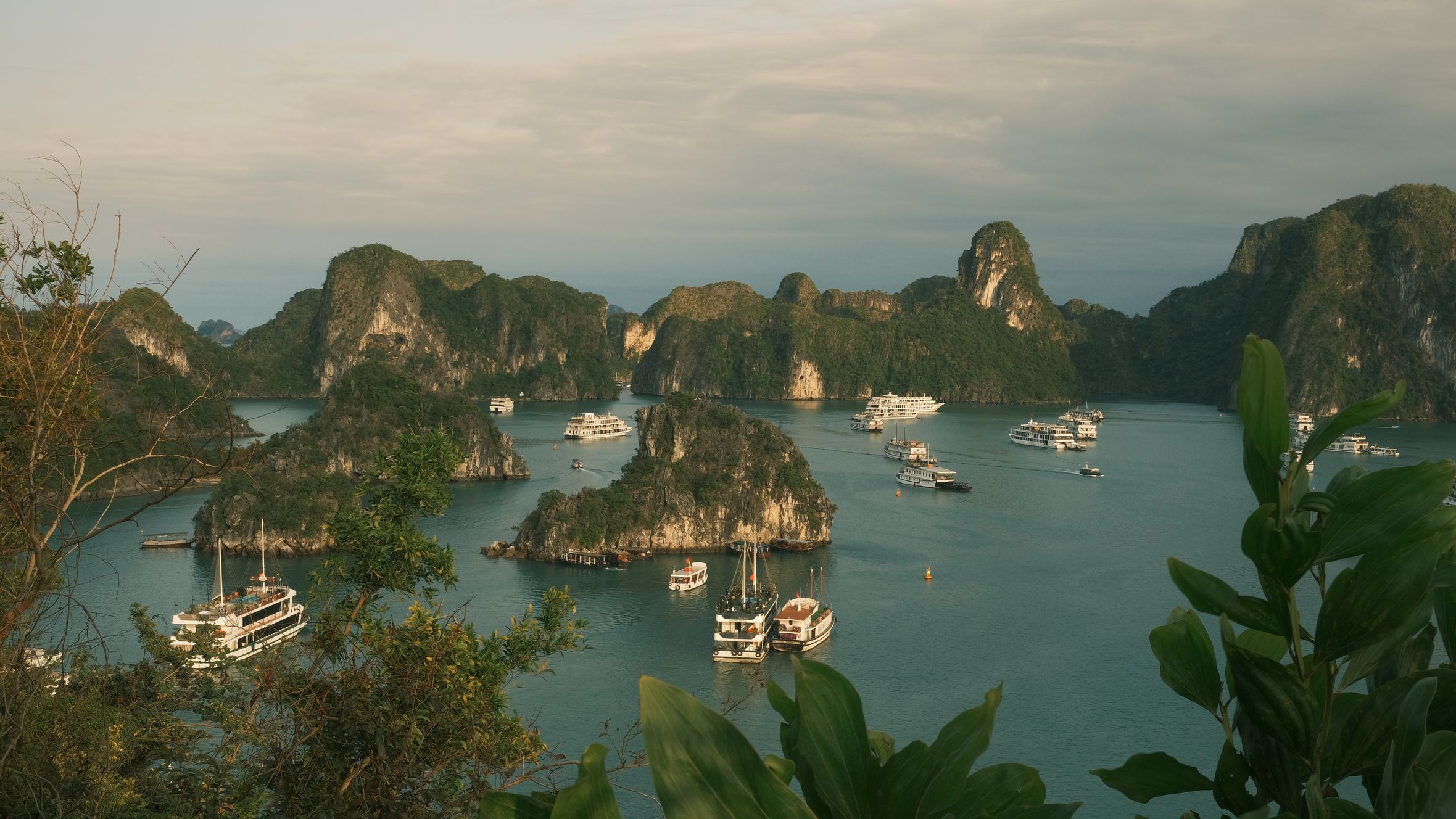
The Vietnam e-visa is the simplest way for UK passport holders to enter the country. Twenty-five dollars, ten minutes of form-filling, and a couple of days' wait — that's it. No embassy queue, no letter of invitation, no agent fees. Apply on evisa.gov.vn, double-check your name and passport number, print the approval letter, and you're sorted. The hard part isn't the visa. The hard part is deciding whether to head north to Ha Long Bay or south to Phu Quoc first.
Last updated · May 29, 2026 · independently researched, never sponsored.