Why But Thap Matters
But Thap Temple (Chua But Thap, historically Ninh Phuc Tu) sits in Thuan Thanh District, Bac Ninh Province, about an hour from Hanoi. What makes it unusual among Vietnamese temples is its chronological unity: almost everything you see—the carvings, altars, statuary—dates to the 17th century. No major renovations across later eras means no stylistic hodgepodge. The temple offers a direct window into one moment in Vietnamese Buddhist art.
Origins trace to the 13th century, but the physical temple you visit is fundamentally 17th-century work. During that period, the abbot and Zen master Thich Chuyet Chuyet (1590–1644) resided here, anchoring the temple's spiritual reputation in the region. His stupa still stands on the grounds, a modest brick structure near the back of the complex that most visitors walk past without realizing its significance.
Bac Ninh Province itself is known as the cradle of "quan ho" folk singing—a UNESCO-recognized tradition. Visiting But Thap puts you in the cultural heartland of northern Vietnam (베트남 / 越南 / ベトナム), where village life, craft traditions, and Buddhist practice have overlapped for centuries. If you've already explored the Temple of Literature in Hanoi, But Thap offers a rural counterpart: less polished for tourists, more rooted in its original context.
The Thousand-Armed Quan Am
The marquee piece is the "Quan Am" statue—Guanyin in East Asian Buddhism—carved with a thousand eyes and thousand arms. It's housed in the main hall and carved entirely from wood, a feat of detail and scale that still arrests visitors. The statue exemplifies 17th-century Vietnamese sculptural technique at its peak. If you're visiting temples anywhere in northern Vietnam, this is among the most technically impressive carvings you'll encounter.
The statue stands roughly 3.7 meters tall including its base. Each arm holds a different ritual object or forms a distinct mudra. The eyes are distributed across the palms—symbolic of the bodhisattva's ability to see suffering in every direction and reach out simultaneously. The wood is jackfruit, a dense tropical hardwood that Vietnamese carvers favored for its fine grain and resistance to insects. Four centuries of incense smoke have darkened the surface to a deep amber-black.
Photography is permitted but challenging in the dim interior. A phone flash won't do it justice; if you care about images, bring a camera that handles low light well, or simply spend time looking. The detail rewards patience more than lenses.

Photo by Hồng Quang Official on Pexels
Ten Buildings, Fifty Statues
The complex spans roughly 100 meters and includes ten structures: entry gate (with three doors), bell tower, main worship hall, back house, and several smaller chapels. You'll count more than 50 individual statues throughout—not just the Quan Am. Look for the Triad Buddha, Manjusri atop a blue lion, and Samantabhadra on a white elephant. Each reflects the hand of master artisans from the same era.
Walk the sequence from front gate inward. The layout follows classical Vietnamese temple design, moving visitors through a graduated spiritual journey. The wooden railings, altar fixtures, and roof details all carry carvings. Spend time with the smaller pieces; the specificity of the facial expressions and drapery carving reveals the skill available to the temple's patrons.
One structure often overlooked is the stone stele pavilion, which houses carved stone tablets recording the temple's history and donor inscriptions. These function as primary historical documents—dates, names, and amounts donated for construction. If you read classical Chinese characters ("chu Han"), you can piece together the patronage network that funded the 17th-century rebuild.
The nine-story stone tower ("thap da") near the rear of the complex is another highlight. At roughly 5 meters tall, it's modest compared to Chinese or Japanese pagoda towers, but the carved lotus petals and Buddhist iconography on each tier show the same precision as the interior woodwork.
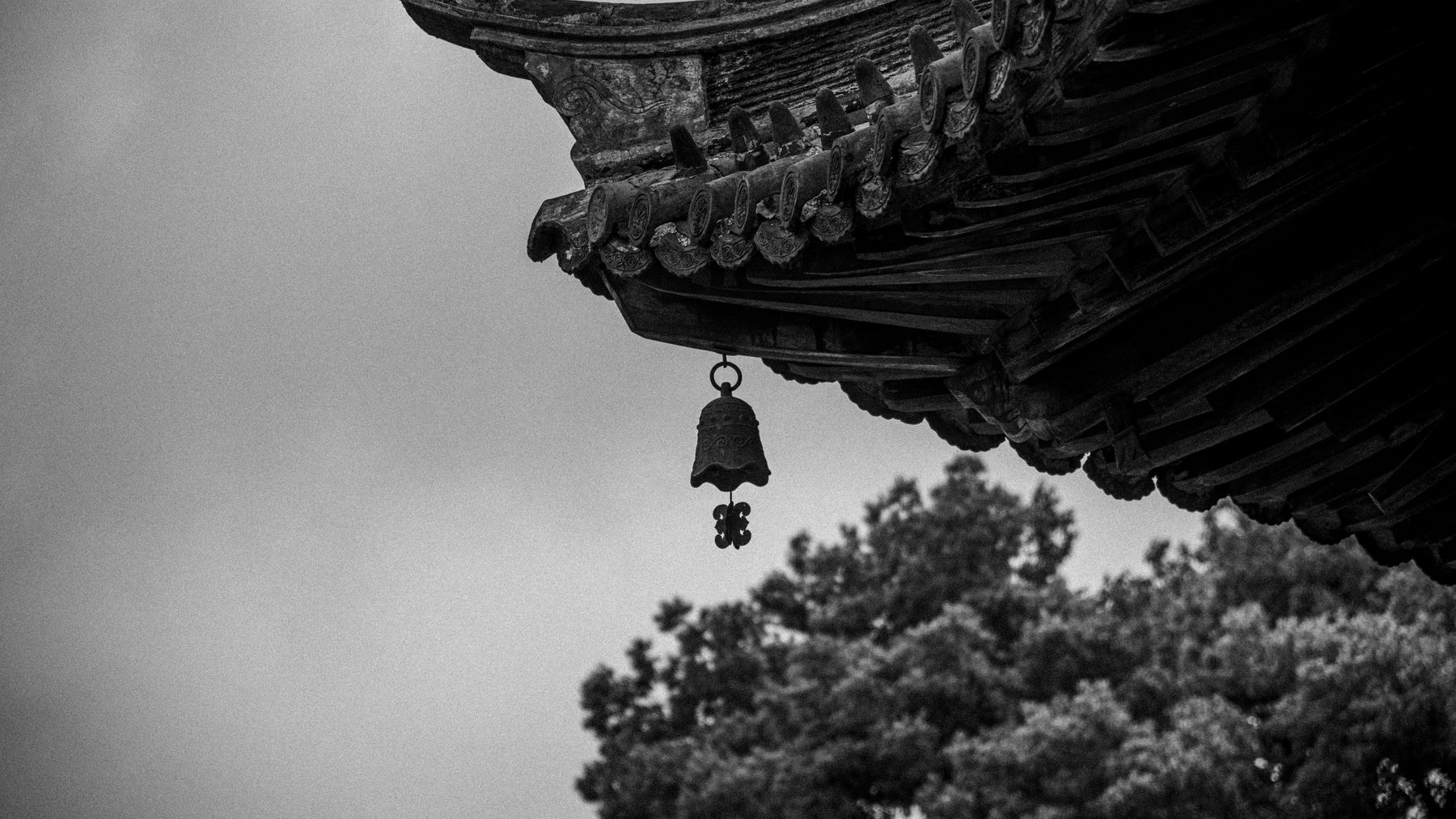
Photo by Qing Luo on Pexels
Getting There and Visiting
From Hanoi (하노이 / 河内 / ハノイ), hire a driver or motorbike taxi for the trip to Thuan Thanh (roughly 40–50 km northeast). The road passes through rural Bac Ninh, giving you a sense of the Red River Delta landscape. Most temples in Vietnam open during daylight (roughly 7 a.m. to 5 p.m., though hours vary). Wear respectful clothing—long pants or skirts, shoulders covered. Photography is usually allowed but ask before shooting monks or during active prayer sessions.
There's no formal entrance fee listed, though donations are welcome. The setting is peaceful, especially on weekday mornings when few visitors arrive. The proximity to the Duong River dyke adds a quiet natural frame to the visit.
By car or Grab: A Grab car from central Hanoi runs roughly 250,000–350,000 VND one way depending on traffic and pickup point. The drive takes 50–70 minutes via National Highway 1A or the newer expressway toward Bac Ninh city, then south on provincial roads. Ask the driver to search for "Chua But Thap, But Thap, Thuan Thanh" on the map app—the temple is well-marked on Google Maps and local navigation apps.
By motorbike: Experienced riders can take Highway 1A northeast, turn off toward Thuan Thanh after passing Bac Ninh town. The route is flat delta road—easy riding, heavy truck traffic on the highway segment. Budget 60–90 minutes.
By bus: Public buses from Hanoi's Gia Lam bus station run to Bac Ninh city (around 30,000–40,000 VND). From Bac Ninh, you'd need a local "xe om" (motorbike taxi) or taxi south to Thuan Thanh—another 15 km. This option works but adds complexity.
What to Look For
Beyond the famous Quan Am, notice the woodwork throughout: how the lotus-petal reliefs on the altar frame catch light, how the beam carvings layer motifs. The bell tower's wooden structure and the back-house roof both carry intricate detail. The smaller statuary—some just 30–40 cm tall—show equal craft. Bring a notebook if you're interested in architectural detail; the interplay of Chinese and local Vietnamese design choices rewards close study.
But Thap is not Hanoi's temple-tourism circuit. You won't find souvenir stalls or crowds. That's its appeal: you're seeing 17th-century Buddhist material culture preserved nearly intact, in the regional context where it was made.
Combining But Thap with Nearby Stops
Bac Ninh Province is compact enough that you can pair But Thap with other sites in a single day trip from Hanoi.
Bat Trang Ceramic Village sits on the way back toward Hanoi, about 30 km southwest of But Thap along the Red River. It's been producing ceramics since the 15th century—you can watch potters at wheel, buy direct from workshops, or try painting a piece yourself. Prices start around 50,000 VND for a simple bowl. The village is especially active on weekends. See more on Bat Trang.
Dong Ho folk painting village is roughly 20 km from But Thap, also in Thuan Thanh District. The woodblock-print tradition here dates to the same era as the temple. A few families still produce prints by hand during the [lunar new year](/posts/tet / 越南春节 / テト)-lunar-new-year-guide) season (November–January lunar calendar). Outside that window, you can still visit workshops and buy prints for 30,000–100,000 VND per sheet.
Bac Ninh city center has local restaurants serving "bun cha" and "pho" at significantly lower prices than Hanoi—a bowl of pho typically runs 35,000–50,000 VND. The city itself isn't a tourist destination, but it's a practical lunch stop.
If you're spending multiple days exploring the Red River Delta, Ninh Binh lies further south and pairs well with a broader northern Vietnam itinerary.
Common Mistakes and What Surprises Foreigners
Expecting English signage. There is almost none. The temple has no audio guide, no English-language pamphlets, and no guided tour service on site. If context matters to you (it should—this is a complex site), read up beforehand or hire a Vietnamese-speaking guide through a Hanoi tour operator. Budget around 500,000–800,000 VND for a half-day local guide.
Rushing through. Most visitors spend 20–30 minutes. That's not enough. The interior details—especially the smaller statues in side chapels and the carved wooden screens—only reveal themselves when you slow down. An hour is reasonable; ninety minutes if you're sketching or photographing seriously.
Wearing shorts or tank tops. This is an active Buddhist worship site, not a museum. Monks live on the grounds. Locals pray here. Dress as you would for any Vietnamese temple: knees and shoulders covered. If you forget, some temples lend wraps—But Thap may or may not have this option, so don't rely on it.
Confusing But Thap with Tay Phuong or Thay Pagoda. These are different temples in different directions from Hanoi (Tay Phuong and Thay are west, in Quoc Oai district). All three are known for sculpture, but But Thap is northeast in Bac Ninh. Double-check your driver's route before departing.
Visiting on the 1st or 15th lunar day. These are prayer days ("ngay ram" and "ngay mung mot"). The temple will be active with worshippers burning incense and making offerings. It's culturally interesting but harder to examine the art quietly. Weekday mornings outside lunar calendar dates are the emptiest.
No food or drink on site. There's no cafe, no restaurant, no convenience store at the temple. Bring water. The nearest real food options are back in Thuan Thanh town center, about 3–4 km away, or in Bac Ninh city.
Quick Reference
- Full name: Ninh Phuc Tu (But Thap Temple / Chua But Thap)
- Location: But Thap village, Dinh To commune, Thuan Thanh District, Bac Ninh Province
- Distance from Hanoi center: approximately 40–50 km northeast
- Travel time: 50–70 minutes by car
- Opening hours: approximately 7:00–17:00 daily (no fixed posted hours)
- Entrance fee: free (donation box available)
- Key artwork: Thousand-armed, thousand-eyed Quan Am statue (17th century, jackfruit wood)
- Number of structures: 10 buildings
- Number of statues: 50+
- Best time to visit: weekday mornings, outside lunar 1st/15th
- Grab car from Hanoi: 250,000–350,000 VND one way
- Time needed on site: 60–90 minutes
- Dress code: knees and shoulders covered
- Facilities: minimal (no cafe, no restroom signage in English)
- Nearest lunch: Thuan Thanh town (3–4 km) or Bac Ninh city (15 km)
Bottom Line
But Thap Temple is not a convenient stop and it doesn't try to be. There's no ticket booth, no gift shop, no English explanation panel. What it offers instead is rare: a 17th-century Buddhist complex that survived largely unaltered, holding sculpture that ranks among the finest in Southeast Asia. If Vietnamese art and architecture interest you beyond surface-level sightseeing, the hour-long drive from Hanoi is worth it.
Last updated · May 29, 2026 · independently researched, never sponsored.