The Buddhist roots of "an chay"
Vegetarianism in Vietnam (베트남 / 越南 / ベトナム) isn't a lifestyle trend—it's woven into Buddhist practice. On the 1st and 15th days of the lunar month, many Vietnamese Buddhists abstain from meat and alcohol. You'll see "an chay" (meat-free) stalls pop up in markets and neighborhoods, and temple kitchens produce elaborate plant-based meals. This cultural moment created a whole cuisine of its own: vegetable stocks, mushroom-based broths, mock meat from soy and wheat gluten, and techniques that make eating without meat feel complete rather than restricted.
The tradition runs deep enough that most neighborhoods have at least one "nha hang an chay" (vegetarian restaurant) or vendors who know exactly what you mean when you ask for "an chay". You won't find rabbit-food salads or apologetic plates. Think crispy banh xeo chay filled with mushrooms and bean sprouts, creamy coconut curries built on vegetable stock, and noodle soups that taste nothing like punishment.
What "an chay" actually means on a menu
"An chay" translates to "eating vegetarian," but the nuance matters. Strict Buddhist vegetarianism excludes garlic, onion, shallots, and alcohol—though many restaurants and home cooks outside temples ignore this rule for flavor. When you order "an chay" at a street stall, you're asking for no meat, fish sauce, or shrimp paste; many vendors will assume garlic and shallots are fine unless you specify otherwise.
If you need vegan (no dairy, eggs, honey), say "an chay 100%" or "an chay khong co trung, sua" (no eggs, dairy). Most chefs will understand and adapt. Some dedicated vegan spots advertise "100% plant-based" on their signs in English.
Pho chay and noodle soups without the bone broth
"Pho chay" swaps the traditional beef or chicken stock for a vegetable-based broth made from carrots, celery, mushrooms, and sometimes ginger and star anise. It's thinner and cleaner than meat pho, and you don't lose the warmth. The key is in the rice noodles—they need to be fresh and chewy, not starchy. Most pho stalls will make it if you ask, even if it's not on the board.
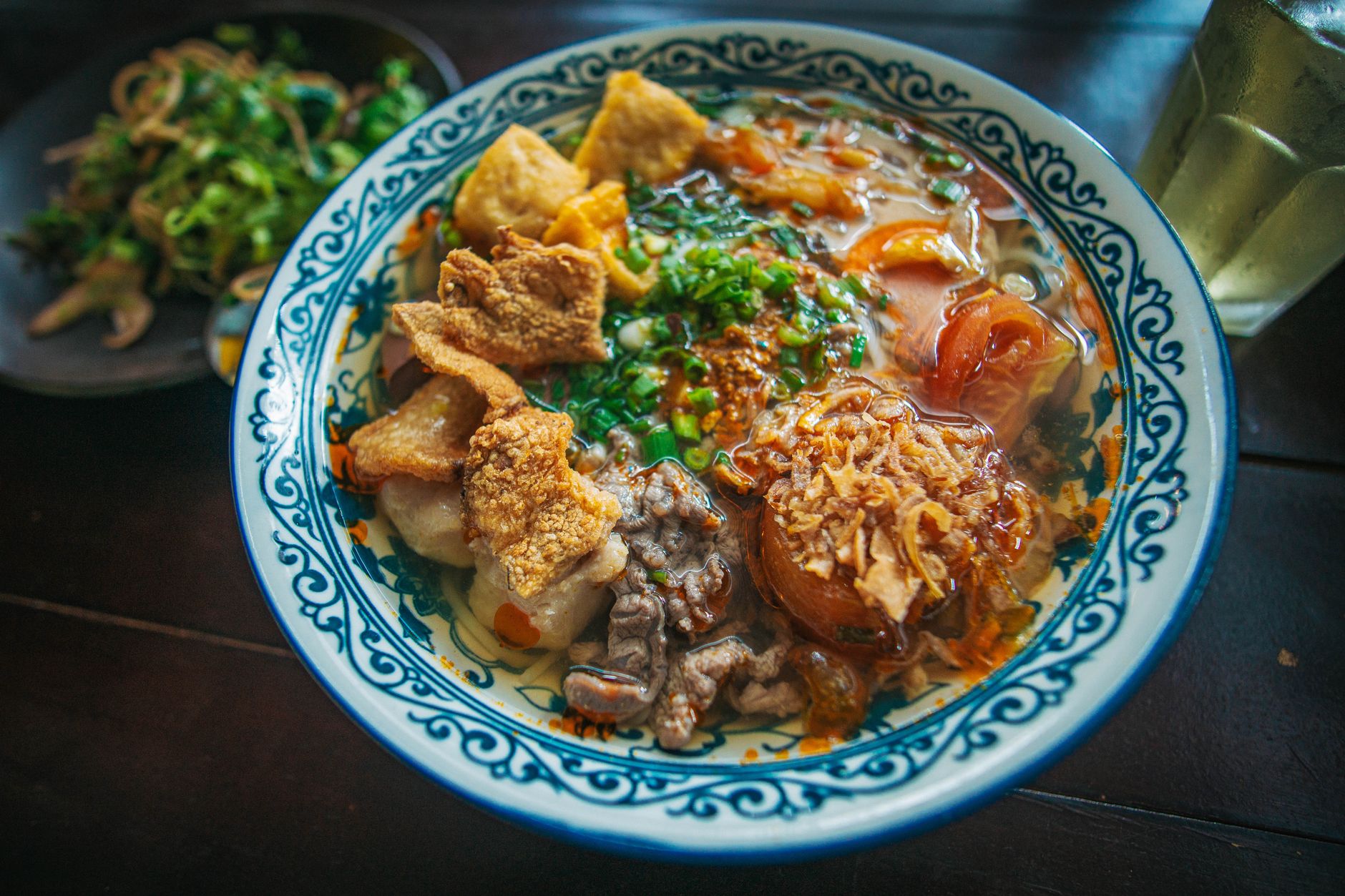
"Bun rieu chay" (crab-flavored vegetarian noodle soup) uses a tomato and vegetable base instead of actual crab, often reinforced with cashew cream or coconut milk. It's sweeter and richer than the original, which some find better.
For a more filling option, try "banh canh chay"—thick tapioca or potato starch noodles in a silky vegetable broth, topped with mushrooms, tofu, and fresh herbs. It's a winter favorite in northern Vietnam and genuinely comforting.

Photo by Connor Scott McManus on Pexels
Banh xeo chay and crispy staples
"Banh xeo (반세오 / 越南煎饼 / バインセオ)" (the sizzling crepe) can be made entirely from vegetables. The batter stays the same—turmeric, rice flour, coconut milk—but the filling shifts to shiitake or wood ear mushrooms, day lily buds, bean sprouts, and soft tofu instead of pork and shrimp. When it hits the pan, it crisps up just as loud and satisfying. Dip it in fish-sauce-free "nuoc cham" (dipping sauce made with lime, sugar, and chilies) and wrap it in greens and herbs.
"Cha gio chay" (vegetarian spring rolls) are filled with mushrooms, cabbage, carrots, and sometimes glass noodles. They fry golden and crack when you bite them. The texture matters as much as the ingredients.
"Goi cuon chay" (fresh summer rolls) with tofu, avocado, mint, and basil are easier to find at any market; they're naturally plant-forward anyway.
Where to eat in Hanoi
Loving Hut on Tran Hung Dao is the vegan standard. International menu (pasta, burgers, pizza) with tofu and plant-based proteins, but their pho chay and banh xeo chay are solid. Not fancy, straightforward execution. Main dishes run 60,000–90,000 VND.
Aubergine in the Old Quarter is more upscale—wood-fired oven, refined plating, creative vegetable-forward dishes. Expect 150,000–200,000 VND per person. Reserve ahead for dinner.
Ngo Tung near Hoan Kiem Lake is a casual Buddhist restaurant run by monks. Extremely cheap (40,000–60,000 VND), simple food, serious craft. Lunch only; arrives by mid-morning and sells out.
For street-level "an chay", scan for stalls with "com chay" (vegetarian rice with many toppings) or small shop signs reading "nha hang an chay". Dong Xuan Market has at least two dedicated vegetarian stalls on the ground floor.

Photo by Nimit N on Pexels
Where to eat in Saigon
Hum in District 3 is casual and packed. Banh mi chay, com tam chay, pho chay—all good, prices around 50,000–80,000 VND. Their house-made vegetarian pate is worth trying.
Pi in District 1 is minimalist, Instagram-friendly, plant-based pizza and pasta. Pricier (120,000–180,000 VND), better for brunch or a casual date than solo lunch.
Thanh Huong An Chay in Binh Thanh District is a no-frills institution—pho chay, bun rieu chay, rice bowls. Locals eat here; tourists rarely find it. About 45,000–70,000 VND.
Ben Thanh Market has vegetarian vendors, though you need to ask vendors specifically for "mon an chay" or point to vegetables in cases.
How to order "an chay" at a regular restaurant or stall
Most street food vendors and small restaurants will adapt a dish if you ask. Point to greens or vegetables, then say clearly: "An chay, khong co thit, khong co ca, khong co tom" (vegetarian, no meat, no fish, no shrimp). If you also want to skip fish sauce, add "khong co nuoc mam". Many vendors nod and do it without fuss.
If you're vegan, specify: "An chay 100%, khong co trung, khong co sua, khong co ca" (100% vegetarian, no eggs, no dairy, no fish).
At restaurants with menus, look for the word "chay" and point. Most tourist menus in major cities now have a vegetarian section, though "vegetarian" might mean mushroom-forward rather than meat-free in a Western sense.
Practical notes
Major cities and tourist areas have dedicated vegetarian restaurants, but smaller towns often rely on market stalls and family-run "com chay" shops. Buddhist temples sometimes serve meals to visitors on the 1st and 15th—ask your hotel or guesthouse if you're near one. "An chay" culture is real and accessible; you're not eating out of necessity or ideology alone, but tapping into a centuries-old tradition that happens to be delicious.
Last updated · May 29, 2026 · independently researched, never sponsored.