"Hu tieu" is one of those dishes you think you know until you order it twice in different towns and get two entirely different soups. Each of the three major styles—Nam Vang, Sa Dec, and My Tho—came out of the Mekong Delta (메콩 델타 / 湄公河三角洲 / メコンデルタ)'s Cambodian and Chinese-Vietnamese trade routes, but they've drifted so far apart that locals will argue over which is "real."
The short answer: they all are. But knowing which is which, and where to hunt them down, changes everything about eating your way through the south.
Hu Tieu Nam Vang: The Cambodian-Influenced Standard
Nam Vang means "Phnom Penh"—the capital of Cambodia—and this is the style most Vietnamese outside the delta grew up eating. It's the one you'll find in Hanoi, Bangkok, even overseas Vietnamese restaurants: a clear or pale-golden broth, darker from soy and pork stock, served with thin dried shrimp, lean pork belly slices, and sometimes liver. The noodles are fine and slightly wavy.
The broth is the telling detail. It's not sweet. It's umami-forward, built on pork bones simmered for hours with dried shrimp, garlic, and a splash of dark soy sauce—the kind of bottom-line savory that doesn't announce itself. You taste it best on the second or third spoonful, when your palate catches the depth. Cambodian influence shows in the restrained hand with sugar and the preference for pork over seafood.
In Saigon, Nam Vang is everywhere. Try Hu Tieu (후띠우 / 粿条 / フーティウ) An Nam (District 1, around Nguyen Hue), a hole-in-the-wall that's been there longer than most restaurants. A small bowl runs 35,000–40,000 VND. The broth here is genuinely light and clean, almost tea-like, with just enough soy undertone to keep it interesting. Eat it around 7 a.m. when the stock is fresh—by lunchtime, the bowl has picked up the day's clatter and tastes slightly tired.
Hu Tieu Sa Dec: The Sweet and Porky Pivot
Sa Dec, a river town about 70 km southwest of Saigon in Dong Thap Province, claims its own version, and it's noticeably sweeter. The broth here has a trace of rock sugar—not enough to make it dessert, but enough that you notice the sweetness against the salt. Pork is the star: you get more of it, in thicker slices, and often a poached egg yolk stirred into the hot broth. Some vendors add a drizzle of sesame oil or a scoop of lard, which isn't on the menu but arrives anyway.
The noodles in Sa Dec-style hu tieu tend to be slightly thicker and chewier than Nam Vang. The broth is richer, cloudier, closer to a "milky" pork broth than a clean sip. It reads as more indulgent, less austere—a comfort bowl rather than a wake-up meal.
If you're in Sa Dec proper, Hu Tieu Thanh Huong (Ba Tháng Hai Street, near the Mekong) is the canonical spot. A bowl costs around 30,000 VND. The place is tiny, three tables max, and they run out of broth by 10 a.m. The difference from a Saigon Nam Vang hit you immediately: it's warmer, sweeter, with a visible sheen of fat on the surface. Pork dominates; you chew it, you don't sip past it.
If you can't get to Sa Dec (and most travelers don't), Hu Tieu Thu Trang in Saigon's District 5 does a decent rendition—sweeter than the purist Nam Vang joints, with good fatty pork and that poached egg yolk stirred in.

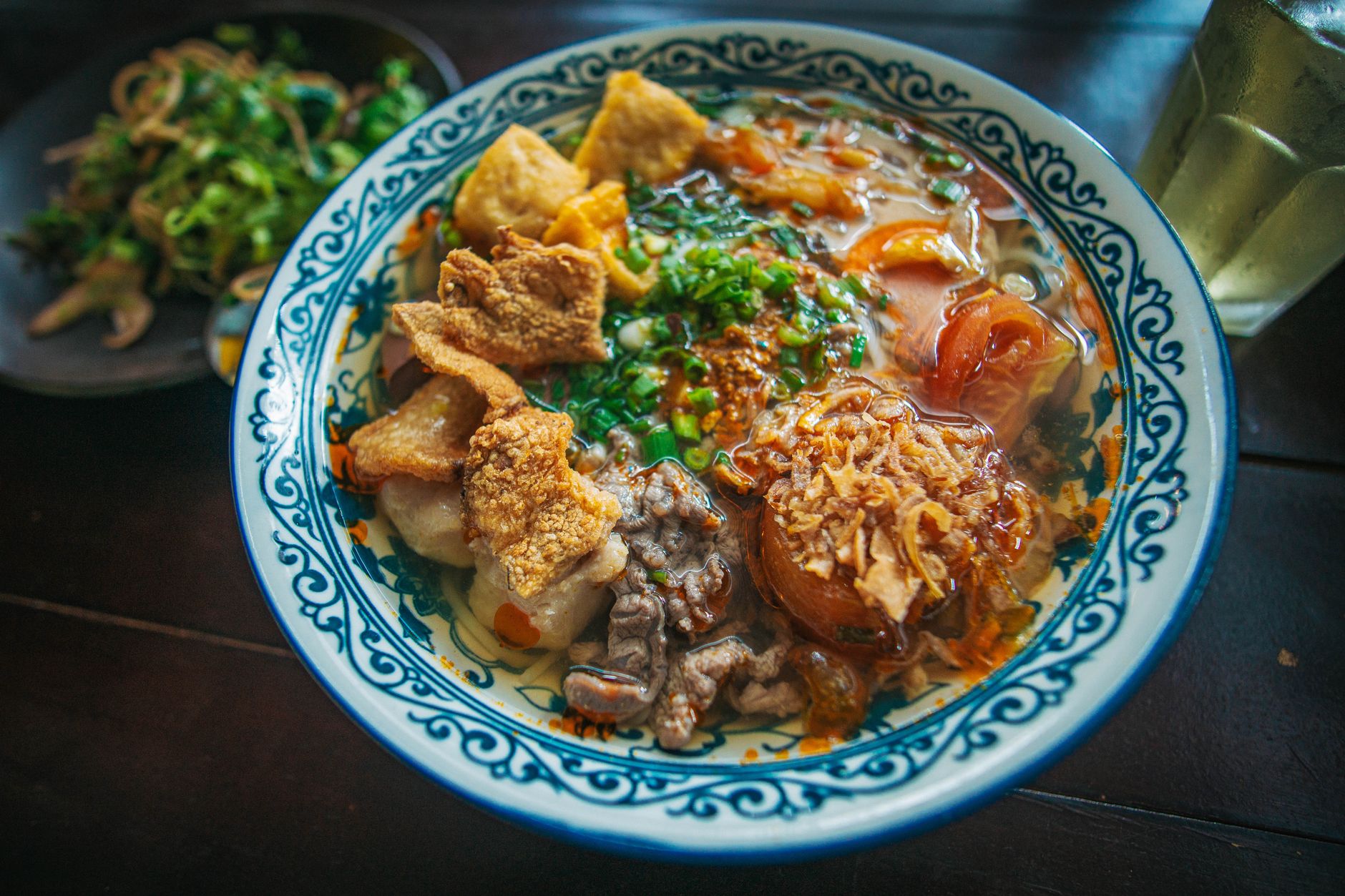
Photo by Trần Phan Phạm Lê on Pexels
Hu Tieu My Tho: The Shrimp-Forward Lightness
My Tho, another Mekong town about 65 km south of Saigon in Tien Giang Province, has the most distinct version. The broth here is lighter and cleaner than Sa Dec, and visibly shrimp-forward: dried shrimp are more prominent in the stock, and you often get fresh shrimp in the bowl as well. The noodles are noticeably finer and more delicate than the other two styles—almost hair-thin, which means they absorb broth faster and get a bit mushy if you dawdle.
My Tho hu tieu walks a middle line: not as austere as Nam Vang, not as pork-heavy as Sa Dec. It's bright, slightly mineral from the fresh shrimp, and works as a lunch or dinner bowl (Nam Vang and Sa Dec are breakfast foods, mostly).
Hu Tieu Ct (67 Le Thánh Tón, My Tho, near the market) is the textbook reference. You'll find locals eating standing at a chest-high counter, bowls in two hands. A small is 25,000 VND. The broth tastes of the river: clean, faintly sweet from natural shrimp sugar rather than added sugar, with a mineral ping you don't get elsewhere. Fresh white shrimp sit on top, and the noodles are so fine they're almost fragile.
In Saigon, Hu Tieu Chau Doc (District 5, Tran Hung Dao Street) does a My Tho-ish version with that lighter, shrimp-forward hand, though it's not as refined as the original.
The Distinctions, Simplified
If you line up three bowls:
- Nam Vang is clear-ish, dark soy-forward, pork-based, fine noodles. Breakfast. Cambodian DNA. Austere.
- Sa Dec is cloudy, sweetened with rock sugar, pork-heavy with fat and richness. Breakfast or lunch. Comfort-bowl energy.
- My Tho is bright, shrimp-prominent, finer noodles, cleaner broth. Any meal. Most "refined" of the three.
The broth-to-noodle ratio tells the story too. Nam Vang is broth-led; Sa Dec is nearly a one-to-one; My Tho favors noodles.
Photo by Trần Phan Phạm Lê on Pexels
Where Each Tastes Most Authentic
Your best shot at each:
-
Nam Vang in Saigon—the style is so dominant in the city that almost any old hole-in-the-wall "Hu Tieu" sign will do. Hu Tieu An Nam stays consistent.
-
Sa Dec hu tieu requires a day trip. If you're heading to the Mekong Delta anyway (floating markets, orchards), Sa Dec sits on the route. Go early, eat at Thanh Huong, taste the difference, move on. Without the trip, the Saigon proxies are worth trying but not essential.
-
My Tho hu tieu also works best on-site. The river-fresh shrimp matter. Ct has been there for 20+ years and doesn't gimmick it up. Again, it's worth a morning run if you're in the delta.
If you're stuck in Saigon and just want to taste the spectrum without leaving the city, an afternoon hitting Hu Tieu An Nam (Nam Vang), then swinging by Hu Tieu Thu Trang (Sa Dec-style), then Hu Tieu Chau Doc (My Tho-ish) gives you the essentials. Budget 2–3 hours, 120,000 VND total.
Frequently Asked Questions
How is Hu Tieu Nam Vang different from Hu Tieu Sa Dec?
Nam Vang uses a clear, umami-forward pork bone broth built with dried shrimp, garlic, and dark soy sauce — restrained with sugar, Cambodian in influence. Sa Dec broth is richer and cloudier, sweetened with rock sugar, and served with thicker pork slices and often a poached egg yolk stirred in. Nam Vang wakes you up; Sa Dec is the comfort bowl. In Saigon, a Nam Vang bowl at Hu Tieu An Nam (District 1) runs 35,000–40,000 VND; Sa Dec-style at Hu Tieu Thanh Huong in Sa Dec costs around 30,000 VND.
What town do I visit to eat the most authentic Hu Tieu Sa Dec?
Sa Dec, a river town in Dong Thap Province about 70 km southwest of Saigon, is where the style originates. The canonical spot is Hu Tieu Thanh Huong on Ba Thang Hai Street near the Mekong — three tables, around 30,000 VND a bowl, and they sell out of broth by 10 a.m. If Sa Dec is not on your itinerary, Hu Tieu Thu Trang in Saigon's District 5 serves a similar sweeter, fatty-pork version with the poached egg yolk.
When should I arrive to get the best bowl of Hu Tieu Nam Vang in Saigon?
Arrive around 7 a.m. The stock at spots like Hu Tieu An Nam in District 1 is freshest in the early morning — light, clean, and almost tea-like with a soy undertone. By lunchtime, the broth has degraded noticeably. Sa Dec's Hu Tieu Thanh Huong follows the same pattern, running out entirely by 10 a.m., so an early start is practical for both styles.
Practical Notes
All three are breakfast or early-lunch dishes; most places close by 11 a.m. Broth quality depends on freshness, so go early. Regional differences are real but subtle—if you're not sensitive to soy-forward versus shrimp-forward or sweet versus dry, one bowl will do. But if you're eating your way through the delta, the trip to Sa Dec or My Tho adds texture to your understanding of how a single dish fragments into local pride and practice.
Last updated · May 29, 2026 · independently researched, never sponsored.