What is "mi vit tiem"?
"Mi vit tiem" is stewed duck served over egg noodles in a light, clean broth. The duck—usually the whole bird or large pieces—is braised low and slow until the meat slides off the bone, then ladled over fresh egg noodles with bok choy, mushrooms, or offal depending on the stall. The broth itself is the star: savory but restrained, often made from duck stock, rock sugar, and a handful of aromatics like ginger and star anise. It's nothing like the rich, spiced broths of "bun bo Hue" or the dense gravy of standard roasted-meat noodle shops. Instead, it sits somewhere between Chinese lo mein tradition and Vietnamese comfort food—which is exactly what it is.
The Cho Lon origin story
This dish belongs to Saigon's Cho Lon (also called District 5), the city's Cantonese-Chinese neighborhood. Cho Lon has been the heartland of Vietnamese-Chinese culinary fusion since the early 20th century, and "mi vit tiem" is one of its clearest products. The technique—low braising, clear stock, egg noodles—comes straight from Cantonese cooking. But the execution, the casual street-stall service, and the way it sits alongside "banh mi", "pho", and other Vietnamese dishes, makes it unmistakably Saigon. Most of the best bowls still come from family stalls in Cho Lon's narrow alleys, run by ethnic Chinese families who've been doing it the same way for 30, 40, sometimes 50 years. It's not trendy. It's just reliable.
How it differs from other noodle soups
The key distinction: stewed duck is about tenderness and subtlety. Unlike roasted "[com tam](/posts/com-tam-saigon (사이공 / 西贡 / サイゴン)-broken-rice)" or quick-boiled broths, the duck has been braised for hours. The meat is soft enough to eat with just a spoon. The broth, because it's not chased with heavy spices or chili, lets you taste the duck itself—the fat, the umami, the bone flavor. You'll also notice the noodles. Most "mi vit tiem" shops use fresh egg noodles (the yellow kind), which have a slight chew and absorb the broth differently than rice noodles or dried wheat. Some places offer a choice of "mi" (egg noodles) or "banh" (fresh rice noodles), but the egg version is canonical.
It's the opposite of "mi quang" or "bun rieu (분지에우 / 蟹肉米粉汤 / ブンリュウ)", which are color-loud and ingredient-heavy. "Mi vit tiem" is monochrome and quiet. That restraint is the whole point.
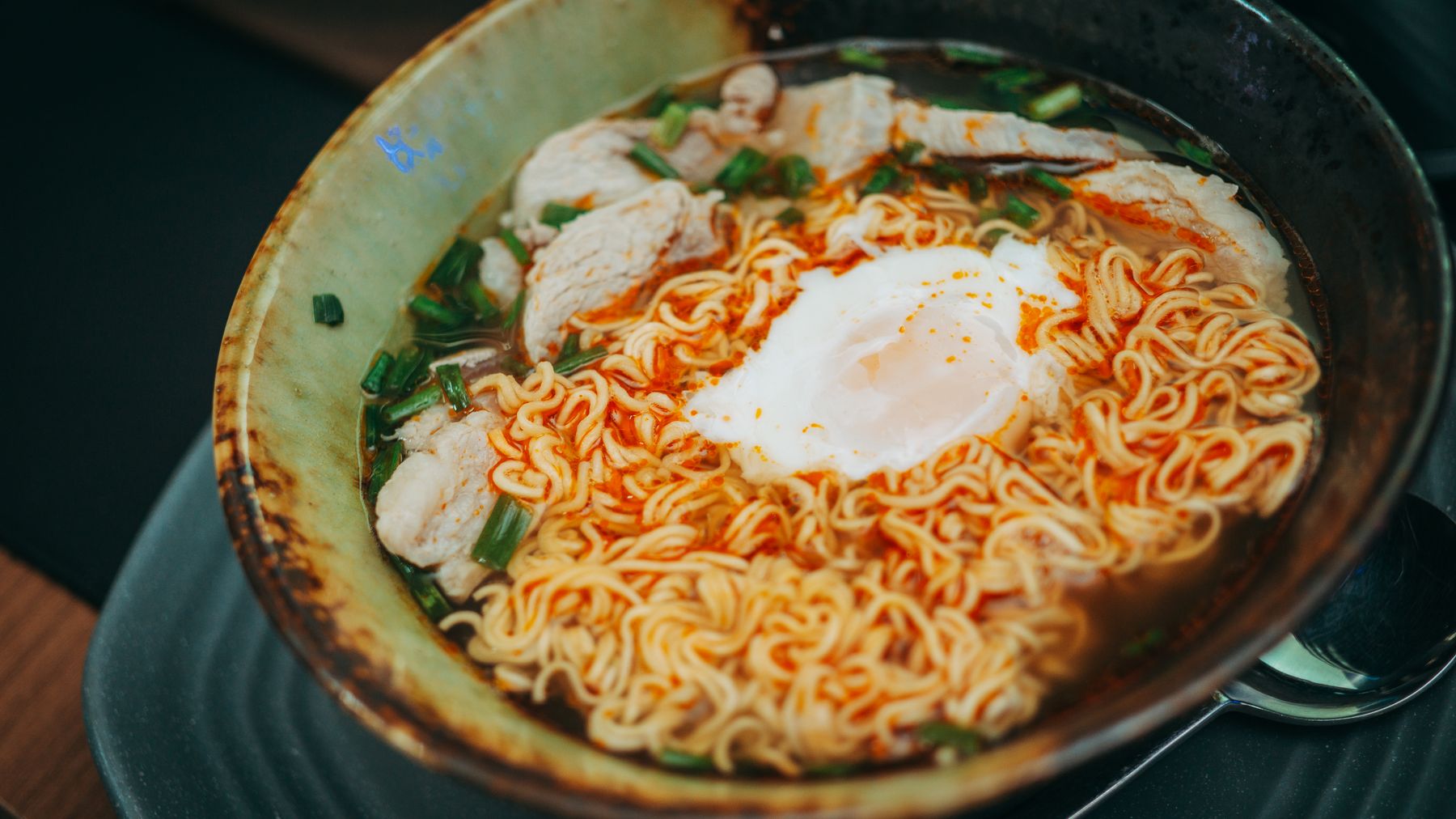
Photo by FOX ^.ᆽ.^= ∫ on Pexels
Where to find it in Saigon
Choosing a stall is part of the ritual. Most authentic "mi vit tiem" lives in Cho Lon (District 5), especially along Nguyen Hue, Tran Hung Dao, and the side streets near Binh Tay Market. A few rules of thumb: If the duck is hanging in the window, that's a good sign. If the owner looks like they've been there since the 1980s, better. If there's a line at 10 a.m., you're in the right place.
Some standout names to hunt for (ask locals—names change hands, and many stalls don't have signs): Mi Vit Tiem 186 (Nguyen Hue, District 5) is a safe bet, though busy at lunch. Mi Vit Tiem Cho Lon on Tran Hung Dao is another reliable anchor. Prices hover around 60,000–100,000 VND depending on which cut of duck you choose and whether you add offal (liver, gizzard, heart). A bowl of breast meat sits at the lower end; a bowl with mixed organs or an extra portion of thigh tips toward the higher side.
Outside Cho Lon, you'll find scattered "mi vit tiem" stalls in District 1 and District 3, but they're less consistent. If you're not navigating Cho Lon's alleyways, you lose some authenticity—and you'll pay slightly more.
How to order and eat
Most stalls work on a simple order: "Mot tia mi vit" (one bowl of duck noodles). Then the owner asks you which part—breast ("va"), thigh ("dui"), mixed ("lon lon"). They'll ladle noodles, top with your duck, pour hot broth, and add greens and garnish. Lime, chilies, and fish sauce are usually on the table; use them sparingly so you don't mask the broth.
Eat it quickly. The egg noodles soften fast, and the broth cools within minutes. Pull the meat apart with your spoon or chopsticks—if the stall has done its job, it should separate from the bone without resistance. The bones themselves are usually left in the bowl; sip the broth around them or set them aside.

Photo by Nimit N on Pexels
The non-negotiables for authenticity
You'll know it's real "mi vit tiem" when: the duck is whole or in large, meaty pieces (not shredded or diced); the broth is clear, not opaque or oily; the noodles are fresh and yellow; and the bowl costs less than a cafe cappuccino. If you see cream, tomato, or heavy seasoning, you've wandered into a modern take or a tourist trap. Not evil, just not the thing.
Practical notes
Best eaten for breakfast or lunch. Most stalls close by 2 or 3 p.m. Go early (before 11 a.m.) to avoid crowds and ensure the duck hasn't run out. Bring cash—many Cho Lon stalls don't take cards. And wear clothes you don't mind splashing; hot broth and spoons can be enthusiastic.
Last updated · May 29, 2026 · independently researched, never sponsored.