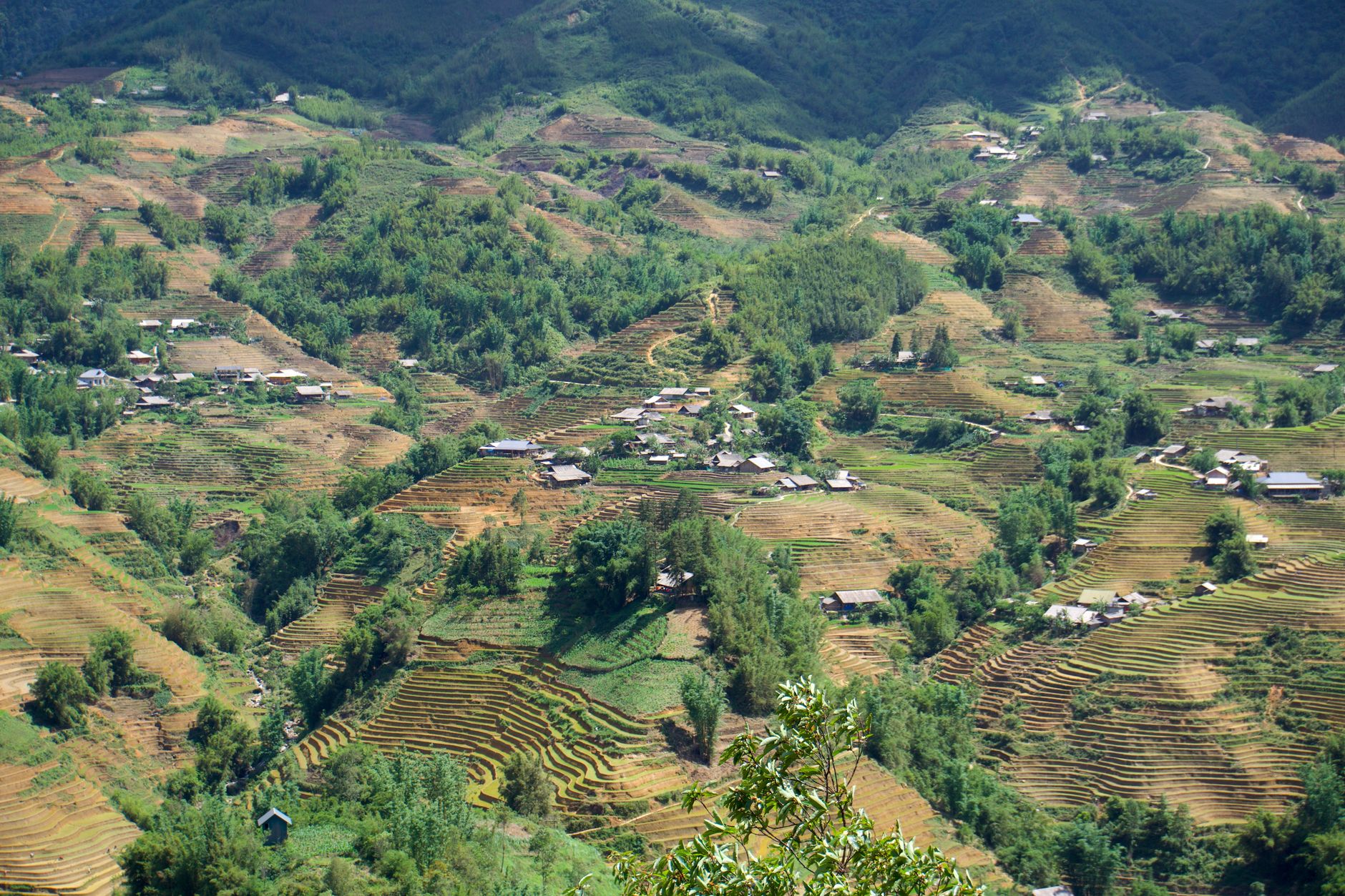
Bac Kan sits in the far northeast, surrounded by limestone karst and dense jungle. The food here is quieter than Hanoi's streetside chaos—less pho, more grilled fish and foraged greens. Most visitors pass through on the way to Ba Be Lake or Ha Giang, but staying a meal or two reveals a regional kitchen built on what the Ba Thang River and forest floor offer.
The Core Dish: Grilled Fish and Sticky Rice
If you eat one thing in Bac Kan, make it grilled river fish with "com tam" sticky rice. Local "ca nuong" (grilled fish) uses carp or snakehead from Ba Be Lake or the Ba Thang River, split and splayed over charcoal, seasoned with salt, fish sauce, and lime. The flesh stays moist, the skin charred. Serve it with a ball of warm sticky rice, fresh dill, mint, and a small bowl of "nuoc mam" (fish sauce dip) mixed with lime and chili.
This is not restaurant food. You'll find it at family-run stalls near the riverside or at modest eateries in town, often run by Tay or Dao ethnic families who fish the local waters. Expect to pay 60,000–90,000 VND (US$2.50–3.80) per person for fish, rice, and greens.
Market Food and Street Eats
Bac Kan's main market, at the corner of Quang Trung and Tran Hung Dao streets, opens early. By 6 a.m., you'll see vendors selling "banh chung" (sticky rice cakes wrapped in dong leaves), boiled eggs, and "xoi" (savory sticky rice with meat, peanuts, or corn). A banh chung costs 15,000–25,000 VND and feeds one person. The xoi stalls are thinner on rice than Hanoi (하노이 / 河内 / ハノイ) versions—more restraint, less oil.
Walk the side alleys behind the main market building. Here, older women set up small plastic tables and serve breakfast soups: "canh chua" (sour soup with vegetables and small fish or shrimp), "canh khoai mon" (taro soup), and "canh lang" (vegetable soup made with forest greens). Each bowl runs 20,000–30,000 VND. The broth is light, not rich; the vegetables are sourced from nearby gardens and forest margins.
Signature Specialties Worth Seeking
Forest Vegetables — Bac Kan's restaurant menus push greens foraged from the surrounding hills. Look for "rau can" (a bitter, leafy green), "rau tang" (hoary peppermint), and "dung chay" (a fibrous vegetable that grows wild). These are stir-fried with garlic and a touch of oil, or blanched and dipped in shrimp paste. They taste assertive and taste of the place. Dishes run 40,000–70,000 VND.
Sticky Rice with Herbs — Beyond plain com tam (껌땀 / 碎米饭 / コムタム), locals order sticky rice topped with chopped herbs, grilled meat (pork or chicken), and a raw egg yolk stirred in. The warmth sets the yolk into a silky sauce. It's breakfast, lunch, or a late-night bowl. Cost: 35,000–55,000 VND.
Snakehead Fish — "Ca loc" (snakehead) is prized here. It's meatier and more assertive than carp, and grilled versions are common. You'll also find it braised with dill and sour fruit (lime or tamarind), or made into a clear soup with herbs. The fish and vegetable soup ("canh ca loc") is a staple in family kitchens and modest restaurants. Budget 50,000–80,000 VND for a soup or grilled fish plate.

Photo by K on Pexels
Where Locals Eat (Not Tourist Traps)
Quang Trung Street — This is the spine of Bac Kan's working food scene. Narrow shop-houses have plastic stools facing the sidewalk. There are no English menus. You point or repeat the dish name. Here you'll find rice-and-topping stalls, "pho" vendors (though Bac Kan pho is less famous than northern varieties), and grilled meat stands.
Ba Be Lake Roadside — On the 12 km road to Ba Be National Park, several family-run restaurants cater to locals and lake-goers. These places have no signs, or hand-painted wooden ones. Ask your guesthouse for directions to "nha hang com suon" (rice-and-grilled-meat place) near the park entrance. The fish here is caught daily; grilled carp plates with rice and greens run 60,000–100,000 VND.
Early-Morning Noodle Vendors — Around 5:30 a.m., look for pushcarts on Tran Hung Dao and Bach Dang streets selling "hu tieu" (clear tapioca noodle soup) or "mi quang" (Quang-style turmeric noodles, less common here but appearing). A small bowl is 25,000–40,000 VND. These close by 9 a.m.
Avoiding Overpay
Bac Kan is a small city; tourist markup is minimal compared to Hanoi or Saigon. But a few rules:
- Avoid eating in your hotel unless it's a homestay. Hotels charge double.
- Street stalls and family restaurants are cheaper and more authentic. A full meal (main, greens, rice, soup) is 80,000–150,000 VND per person.
- Restaurants with English menus and photos are aimed at tour groups; prices jump 30–50%.
- Grilled fish is cheaper if you eat it at a stall near the market or riverside rather than a sit-down restaurant.

Photo by Quang Nguyen Vinh on Pexels
Drinks and Dessert
Bac Kan's "ca phe sua da" (iced coffee with condensed milk) is standard; a glass costs 15,000–25,000 VND. For tea, locals favor strong green tea or herbal "tra" made with ginger and honey (20,000 VND at a cafe). Sugarcane juice is rare here; the climate and market don't support it the way the south does.
For dessert, try sticky rice with fresh fruit (banana, watermelon, or seasonal berries), or "che" (sweet soup made with tapioca pearls, coconut milk, and fruit). These are eaten as afternoon snacks rather than formal desserts, and cost 20,000–35,000 VND.
Frequently Asked Questions
How much does a typical meal cost at Bac Kan street stalls?
A full meal at a family-run stall in Bac Kan runs 60,000-90,000 VND (US$2.50-3.80) for grilled river fish, sticky rice, and greens. Breakfast soups from the market alleys behind the Quang Trung and Tran Hung Dao intersection cost 20,000-30,000 VND per bowl. Banh chung sticky rice cakes at the main market are 15,000-25,000 VND each.
What is the signature dish to try in Bac Kan?
Grilled river fish with sticky rice is the dish most associated with local cooking here. Called ca nuong, it uses carp or snakehead from Ba Be Lake or the Ba Thang River, charcoal-grilled and seasoned with salt, fish sauce, and lime. It is served with warm sticky rice, fresh dill, mint, and a nuoc mam dipping sauce. Find it at riverside stalls or modest eateries, often run by Tay or Dao ethnic families.
When does Bac Kan's main market open for breakfast food?
The main market at the corner of Quang Trung and Tran Hung Dao streets opens by 6 a.m. Early vendors sell savory sticky rice called xoi, boiled eggs, and banh chung wrapped in dong leaves. The side alleys behind the main market building are where older women serve breakfast soups including canh chua, canh khoai mon, and canh lang made with foraged forest greens, each priced at 20,000-30,000 VND.
Practical notes
Bring cash. Few stalls take cards. Eat when locals do: breakfast around 6–7 a.m., lunch at noon, dinner by 7 p.m. The city's food scene shuts down early. If you're visiting Ba Be Lake, eat in town before heading to the park; restaurant options near the lake are limited and pricier.
Last updated · May 29, 2026 · independently researched, never sponsored.