Con Dao Prison sits on Con Son Island, roughly 230 km off the southern coast. It operated for over a hundred years — first under French colonial rule starting in 1862, then through various administrations until 1975. Today it's a museum complex and national memorial, and for many Vietnamese travelers, it's the main reason to visit Con Dao at all.
What it is
The prison complex is actually a series of separate camps spread across Con Son town. The main sites include Phu Hai Prison (Camp 1, the largest and oldest), Phu Son Prison (Camp 2), and the infamous "tiger cages" at Phu Tuong and Phu Binh. Altogether, these camps held political prisoners, independence activists, and revolutionaries across multiple eras. The site became a national historical relic in 1979 and draws hundreds of thousands of Vietnamese visitors annually.
You're walking through real cells, solitary confinement blocks, and forced labor yards. The tiger cages — small stone cells with iron grating on top where guards could surveil and punish prisoners — are the most confronting part. This isn't a reconstructed heritage park. The walls, shackles, and cramped spaces are original.
Why travelers go
Most international visitors come to Con Dao for the beaches and marine life, then visit the prison because it's there. Vietnamese travelers often do the opposite — the prison is the pilgrimage, and the beaches are a bonus. Either way, the complex gives you a visceral understanding of Vietnamese modern history that you simply can't get from reading about it.
If you've visited the Cu Chi Tunnels near Saigon, Con Dao Prison is a natural companion piece. Where the tunnels show ingenuity under pressure, the prison shows what people endured on the other side. Together, they form a more complete picture.
Best time to visit
Con Dao's dry season runs from November through February — cooler temperatures, calmer seas, and the most comfortable conditions for walking around an outdoor museum complex with minimal shade. March to May is hot but still dry. June through September brings monsoon rains that can delay or cancel ferries and flights, and walking through the open-air prison yards in a downpour isn't ideal.
The prison museum is open daily, typically 7:00–11:30 and 13:30–17:00. Go early in the morning. By 9:30 AM, tour groups fill the main camps, and the midday heat in the unshaded yards is brutal.
How to get there
Con Dao is administered under the newly merged Ho Chi Minh City (호치민시 / 胡志明市 / ホーチミン市) area (previously Ba Ria - Vung Tau province). Getting there from central Saigon:
By air: Vietnam (베트남 / 越南 / ベトナム) Airlines and Bamboo Airways fly from Tan Son Nhat Airport to Con Dao (Co Ong Airport). Flight time is about 45 minutes. Tickets typically run 1,200,000–2,500,000 VND one way depending on season and booking lead time. This is the easiest option.
By ferry: Take a bus or car from Saigon to Vung Tau (about 2 hours, 130 km), then a high-speed ferry to Con Dao. Con Dao Express and Superdong operate the route — roughly 3.5–4 hours on the water, tickets around 700,000–850,000 VND one way. The ferry can be rough in monsoon season.
Once on Con Son Island, the prison complex is right in town. You can walk to most camps from any hotel in the center, or rent a motorbike for about 150,000–200,000 VND per day to cover the more spread-out sites.

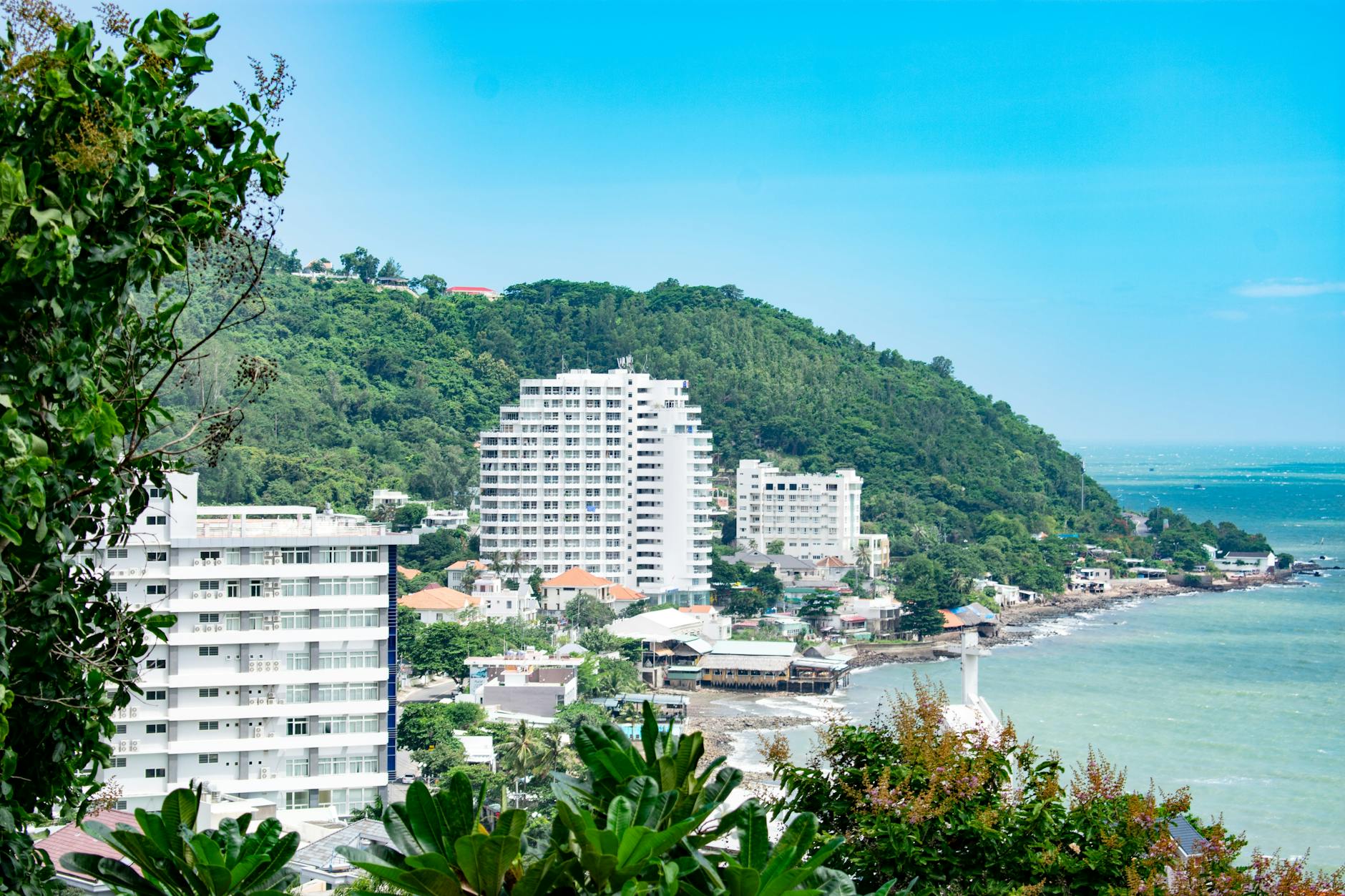
Photo by Luke Dang on Pexels
What to do
Walk Phu Hai Prison (Camp 1)
This is the largest and most intact camp. French-built in 1862, it held thousands of prisoners over the decades. The communal cells, isolation rooms, and courtyard give you a clear sense of scale. Budget 45 minutes to an hour here.
See the tiger cages
Two sets exist — the French-era cages at Phu Tuong and the later ones at Phu Binh. The Phu Binh cages were concealed from international inspectors for years and only publicly revealed in 1970. The cells are shockingly small. This is the part of the visit that stays with people.
Visit Hang Duong Cemetery
Just north of town, this is the burial ground for prisoners who died in the camps. Over 20,000 people are believed to be buried here, most in unmarked graves. The cemetery is especially significant to Vietnamese visitors — many come at midnight to pay respects at the grave of Vo Thi Sau, a young revolutionary executed on the island in 1952. Even if you skip the midnight tradition, the cemetery during the day is quiet and affecting.
Tour the Con Dao Museum
Located on Nguyen Hue Street in town, the museum provides context for the prison complex with photographs, documents, and artifacts. It's small but worth 30–40 minutes before visiting the actual camps, so you understand what you're looking at.
Walk the coastal road at sunset
After a heavy day at the prisons, the road along the waterfront between the town pier and the old French governor's house is a good place to decompress. It's a flat 2 km stretch with frangipani trees and not much traffic.
Where to eat nearby
Con Dao's signature dish is "oc vu nang" — a type of sea snail found in the surrounding waters, usually grilled with salt and chili or stir-fried with tamarind. Try it at the cluster of seafood restaurants along Vo Thi Sau Street in town — a plate runs about 80,000–150,000 VND. "Banh canh" with crab is another local staple here, thicker and heartier than what you'll find on the mainland. Most meals on the island cost 60,000–120,000 VND at local spots.
Where to stay
Con Son town has a full range:
- Budget: Guesthouses and mini-hotels from 300,000–500,000 VND per night. Basic but clean. Most are within walking distance of the prison complex.
- Mid-range: Newer hotels with air conditioning and breakfast, 700,000–1,500,000 VND per night.
- High-end: Six Senses Con Dao is the big-name resort, starting around 8,000,000 VND per night. It's on a separate beach east of town — beautiful, but you'll need transport to reach the prison sites.
Book accommodation in advance during peak Vietnamese travel periods — especially around the anniversary of Vo Thi Sau's death (January 23 lunar calendar) and Tet, when the island fills up.

Photo by Dmitriy Ryndin on Pexels
Practical tips locals would tell you
- Dress respectfully. This is a memorial site. Shorts are fine (it's hot), but avoid anything too casual — no swimwear, no party shirts.
- Bring water. There's limited shade between camps, and the midday sun is relentless.
- Hire a local guide if you want context. Many details aren't on the signage, which is mostly in Vietnamese. Guides can be arranged through your hotel for about 300,000–500,000 VND for a half-day.
- Entry to the prison complex is free. The museum is also free.
Common mistakes to avoid
- Rushing it. Some day-trippers try to see the prisons in an hour between beach activities. The main camps alone need two to three hours if you're actually reading and absorbing.
- Skipping Hang Duong Cemetery. It's not inside the prison complex, so people miss it. Don't.
- Visiting only by day. If you're comfortable with it, the midnight visit to Hang Duong Cemetery is a unique cultural experience — not spooky, just deeply reverent. Ask your hotel to arrange it.
- Assuming ferries run daily in monsoon season. Check schedules 24 hours ahead from June to September. Cancellations are common.
Practical notes
Con Dao Prison is the kind of place that reframes your entire trip. Pair it with a few days of diving or beach time on the island, and you've got one of the most layered destinations in southern Vietnam. If you're flying back to Saigon, the return flight gives you a full afternoon to explore the city — Vung Tau is also worth a stop if you're taking the ferry route back.
Last updated · May 29, 2026 · independently researched, never sponsored.