My Khe Beach is Da Nang's main stretch of sand — roughly 9 km running south from the base of Son Tra Peninsula toward Marble Mountains. It's where the city meets the sea, and for most visitors it doubles as the default reason to book a hotel in Da Nang at all.
What it is and how it got here
My Khe was already well-known during the American War, when GIs stationed at the nearby base used it as an R&R beach. After reunification it stayed relatively quiet for decades, just a local swimming spot backed by casuarina trees. The real transformation came in the 2000s when Da Nang (다낭 / 岘港 / ダナン) invested heavily in coastal infrastructure — a wide promenade, lifeguard stations every few hundred meters, and a wall of hotels along Vo Nguyen Giap street.
Today Da Nang is one of Vietnam's fastest-growing cities, and My Khe sits right at the center of its tourism economy. The beach itself remains public and free to access along its entire length. No entrance fee, no roped-off resort sections. That's increasingly rare in Southeast Asia and worth appreciating.
Why travelers go
The draw is simple: it's a long, wide, clean city beach with decent waves, warm water, and a full strip of restaurants and hotels within walking distance. You don't need to take a boat or a two-hour bus ride to reach it — it's a 10-minute taxi from Da Nang's airport.
Surfers come for the winter swells. Families come for the shallow shelf in calm months. Everyone else comes because it's the most convenient beach stop between Hoi An and Hue on a central Vietnam trip.
Best time to visit
March through August is dry season. April to June hits the sweet spot — air temperatures around 30-33°C, water warm enough to swim without thinking about it, and afternoon winds that haven't yet ramped up to the gusty levels you get in July and August.
September through January brings rain and sometimes serious swell. October and November are the wettest months, and the sea gets rough enough that red flags go up regularly. If you're a surfer, this is actually your window — November through February delivers the most consistent waves, typically 1-2 meters, occasionally bigger during storms.
Avoid Tet (usually late January or early February) unless you want the beach packed with domestic tourists and hotel prices doubled.
How to get there
Da Nang International Airport is 4 km from the north end of My Khe. A Grab car costs 50,000-70,000 VND and takes about 10 minutes outside of rush hour.
From Hoi An (호이안 / 会安 / ホイアン), it's 30 km north — a Grab runs around 250,000-300,000 VND, or you can rent a motorbike and ride the coastal road in 40 minutes. From Hue, the train takes about 2.5 hours and drops you at Da Nang station, which is 3 km from the beach.
If you're coming from Hanoi or Saigon, direct flights run daily and cost 800,000-1,500,000 VND depending on how far ahead you book.
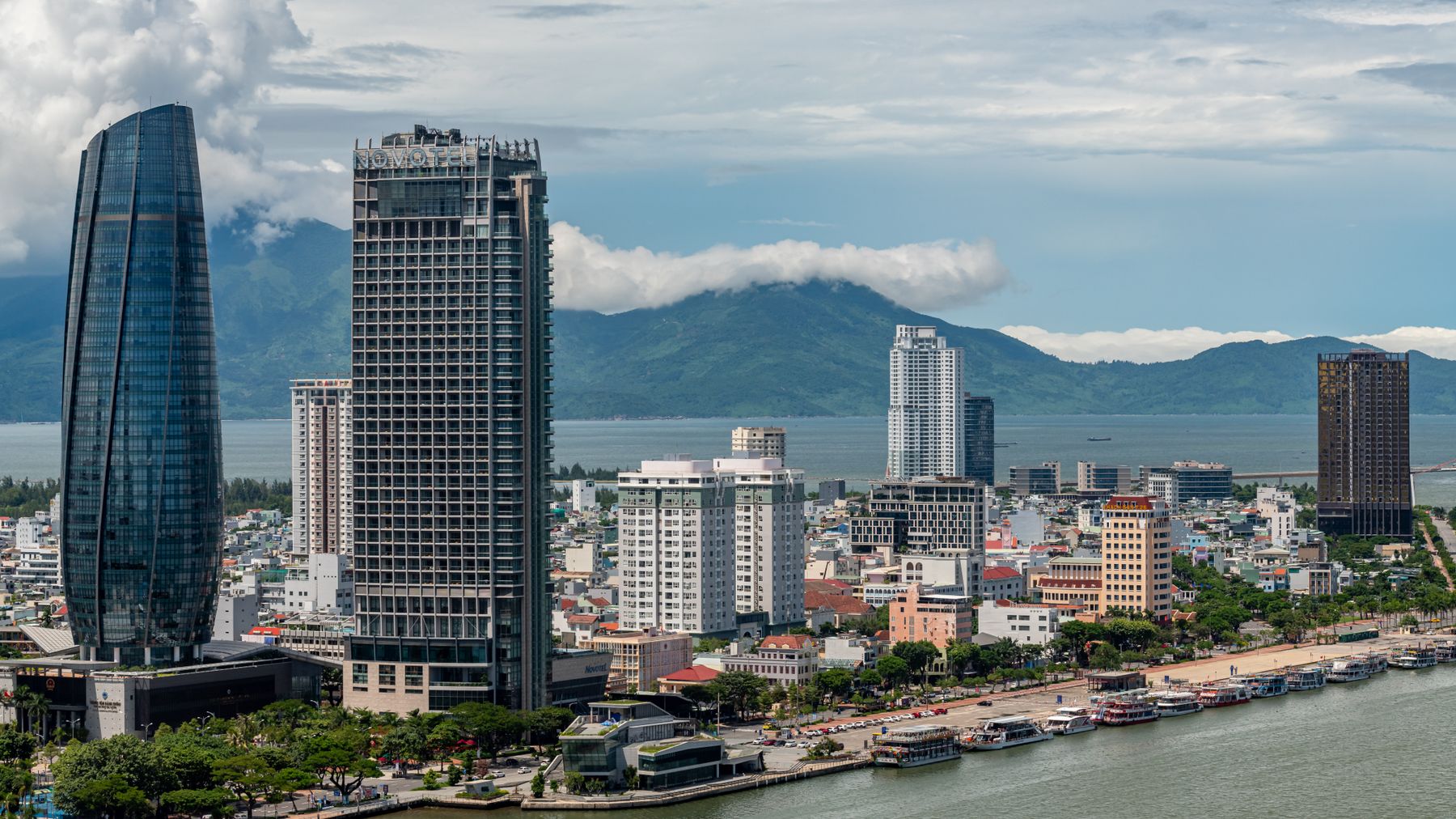
Photo by Kirandeep Singh Walia on Pexels
What to do
Swim early
The best swimming window is 5:30-7:30 AM. The water is calmest, the light is good, and you'll share the beach mostly with locals doing their morning exercise. Lifeguards are on duty from 5 AM at most stations. By 10 AM the sun is punishing and the beach gets crowded.
Surf the south end
The stretch near An Thuong neighborhood, toward the southern end, picks up the most consistent waves. Board rentals run 100,000-150,000 VND per hour from the shops along the beach. A surf lesson costs around 600,000-800,000 VND for 90 minutes. The break is forgiving — sandy bottom, no reef — so it's a reasonable place to learn.
Walk to Son Tra Peninsula
From the north end of My Khe, you can walk or ride up to Son Tra (also called Monkey Mountain). The road climbs through forest to the Linh Ung Pagoda, which has a 67-meter Lady Buddha statue visible from the beach. It's about 10 km by road from the beach — rent a motorbike or take a Grab. No entrance fee.
Visit Marble Mountains
Five km south of the main beach strip, the cluster of limestone karst hills called Ngu Hanh Son has caves, pagodas, and viewpoints. Entry is 40,000 VND, plus 15,000 VND for the elevator if you'd rather skip the stairs. An hour or two is enough.
Catch the Dragon Bridge show
On Saturday and Sunday nights at 9 PM, Da Nang's Dragon Bridge — a 666-meter span shaped like a dragon — breathes fire and sprays water. It's kitschy but genuinely fun to watch. Walk over from the beach in 15 minutes or grab a seat at one of the riverside restaurants on Bach Dang street.
Where to eat nearby
The An Thuong neighborhood, one block back from the beach, is where most travelers eat. It's dense with restaurants, but for local food, look beyond the tourist menus.
"Mi quang" is Da Nang's signature noodle dish — turmeric-yellow rice noodles with pork, shrimp, herbs, and just a little broth. Mi Quang 1A on Hai Phong street is a reliable local spot, bowls around 35,000-45,000 VND.
For "banh xeo" — the crispy stuffed crepe — try Banh Xeo Ba Duong at 23 Hoang Dieu. It's not right on the beach but a short taxi away, and locals have been eating there for years. Expect to pay 50,000-80,000 VND per person.
Da Nang also has excellent seafood. The stretch of restaurants along Pham Van Dong near Man Thai fishing village serves fresh catch — grilled, steamed, or stir-fried — at prices well below resort rates. Point at what looks good in the tank and negotiate before ordering.
Where to stay
Budget (300,000-600,000 VND/night): Hostels and guesthouses cluster in An Thuong. You're a 5-minute walk from the sand. Dorm beds start around 150,000 VND.
Mid-range (800,000-2,000,000 VND/night): Plenty of 3-4 star hotels line Vo Nguyen Giap street with pools, breakfast, and ocean views. Competition keeps quality high.
High-end (3,000,000+ VND/night): International chains and boutique resorts occupy the beachfront. Some have direct beach access, though the beach is public regardless.

Photo by 🇻🇳🇻🇳 Việt Anh Nguyễn 🇻🇳🇻🇳 on Pexels
Practical tips locals would tell you
- Rip currents are real. Swim near a lifeguard station and obey the flag system. Red means stay out. Drownings happen every year, mostly to swimmers who ignore the flags.
- Rent a beach chair. Sets of two chairs plus an umbrella cost 50,000-100,000 VND for the day. Worth it.
- Sunscreen before 8 AM. The UV index in central Vietnam regularly hits 11+. You'll burn faster than you expect.
- Lock your stuff. Petty theft on the beach isn't rampant but it happens. Don't leave phones and wallets unattended while swimming.
Mistakes to avoid
- Booking a hotel on the wrong side of the river. The beach is east of the Han River. Some budget hotels are on the west bank — fine for city exploring, annoying for daily beach access.
- Swimming at midday. It's brutally hot and the water is at its roughest from afternoon wind chop.
- Skipping Hoi An. My Khe is great, but Hoi An is only 30 km south and worth at least a full day for its old town, "cao lau" noodles, and the market along the Thu Bon river.
- Only eating on the beachfront strip. The best food in Da Nang is in the neighborhoods, not the tourist-facing restaurants with laminated English menus.
Practical notes
My Khe works as a base for exploring central Vietnam — Hoi An, Hue, and the Hai Van Pass are all day-trip distance. Two to three nights gives you enough time to enjoy the beach, eat well, and see the surrounding sights without rushing.
Last updated · May 29, 2026 · independently researched, never sponsored.