Why stop in Hai Duong?
Hai Duong sits 30 km east of Hanoi along National Highway 5, on the way to Ha Long Bay or Haiphong. Most tourists drive straight through. The province is rural, unglamorous, and deliberately overlooked — which is exactly why it's interesting. You get working Red River delta scenery, genuine pottery workshops, and temples that see handful of foreign visitors per month.
A half-day or full-day detour is realistic and worthwhile. Public transport exists (buses from Hanoi's Gia Lam station), but a hired car or motorbike is easier.
Bat Trang: pottery village and kiln-side eating
Bat Trang, just across the Red River from Hanoi but administratively in Hai Duong, is the main draw. It's been a ceramics hub since the 15th century — all that blue-and-white stuff you see in Hanoi Old Quarter originates here.
Walking the main drag, Hang Gom Street, you'll pass 200+ pottery shops. Most are middling tourist traps selling mass-produced celadon and replica "ancient" bowls. But if you turn into side alleys near the river — especially around 1-2 km south of the town center — you'll find actual working kilns and family-run studios. These places don't expect tourists. Prices are lower. You can watch potters at the wheel and buy seconds cheaply.
Don't miss lunch at one of the outdoor "pho" houses near the kilns, where construction workers and kiln staff eat. A bowl of pho and a fried egg costs 30,000–40,000 VND. The broth is gelatinous and rich from hours of simmering; nothing fancy, pure fuel.
For a guided experience, contact a ceramicist directly through Instagram or ask your hotel to arrange a studio visit. Most charge 300,000–500,000 VND for 2–3 hours including hands-on wheel work.
Getting there: From central Hanoi, take a Grab to Bat Trang (20–25 km, 45 min–1 hour depending on traffic). Alternatively, catch a local bus from Gia Lam station (15 km southeast of Old Quarter) toward Hai Duong; hop off at Bat Trang. Cost: 20,000 VND.
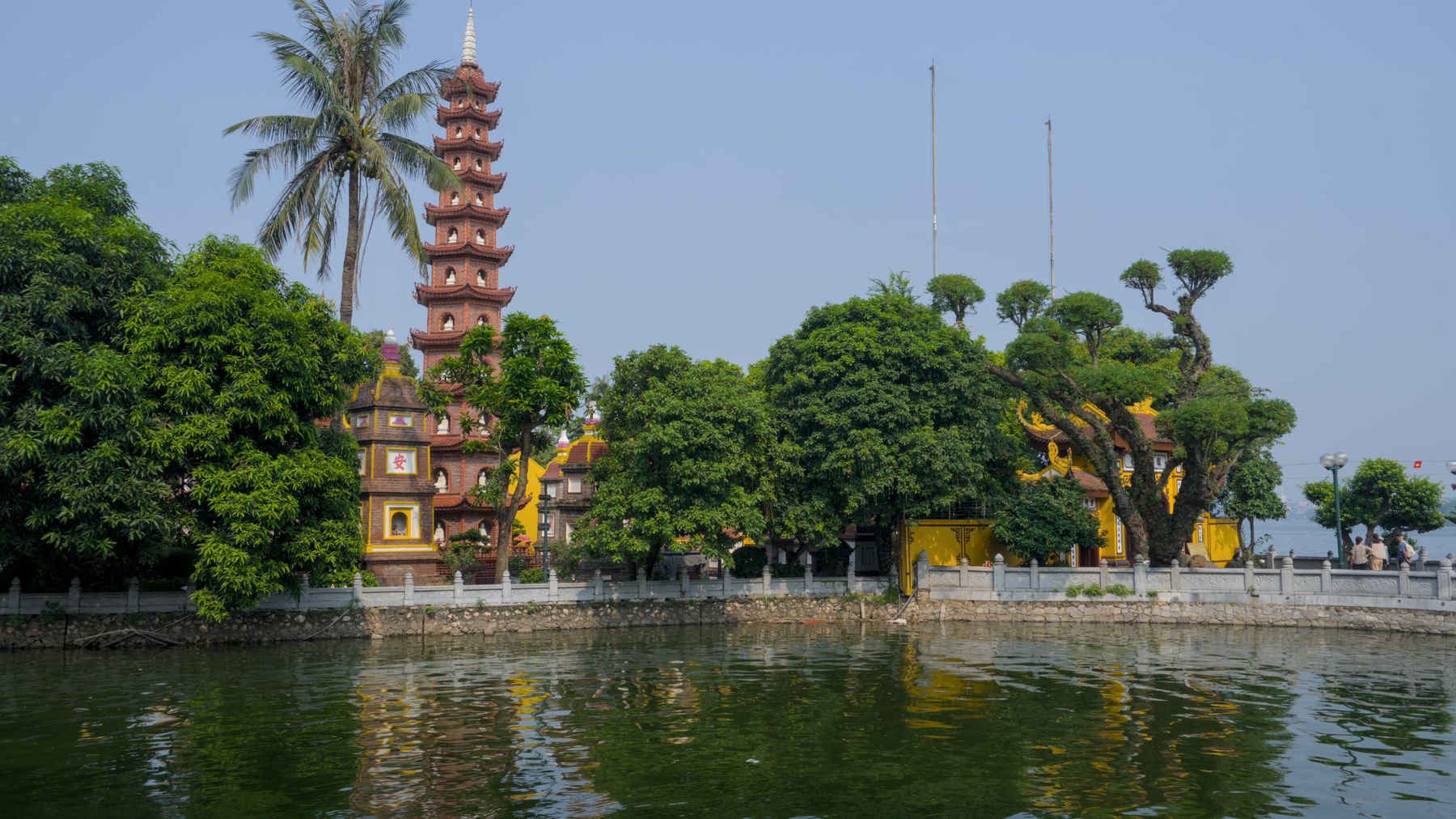
Photo by Jordan Coleman on Pexels
Tran Quoc Pagoda and riverside temple-hopping
Tran Quoc Pagoda sits on a small island in the Red River, west of central Hai Duong. It's one of Vietnam's oldest temples, founded in the 6th century. The atmosphere is serene — elderly monks, potted plants, river breeze — and far fewer tour groups than similar temples near Hanoi.
The pagoda itself is modest: a tiered tower, prayer halls, and gardens. Photography is fine, but be respectful during morning chanting (6–7 AM). A donation of 20,000–50,000 VND is customary.
Nearby, walk along the river embankment to Bai Dinh Temple (different from the famous Bai Dinh in Ninh Binh). This one is smaller and quieter, dedicated to local historical figures.
Practical note: Both temples are best visited early morning, before heat and humidity peak. Many travelers combine a visit with a pottery workshop in Bat Trang — it's a 30-minute drive inland.
The countryside: cycling and rice-field walks
Outside the main towns, Hai Duong is flat, quiet, and agricultural. Renting a bicycle from your hotel in Hanoi and taking a slow ride into Hai Duong rice paddies is meditative and cheap.
Request your guide or driver to drop you at a random village — say, Thanh Ha or Van Giang, both administered by Hai Duong — and cycle for 1–2 hours on rural roads. You'll pass water buffalo, oxcarts, children playing volleyball on concrete platforms, and old men sitting on plastic stools smoking. Stop at a "com tam" (broken-rice) stall for lunch — always good, always under 50,000 VND.
No tourist infrastructure means no hassle. Villagers are used to city dwellers passing through; they'll point you directions if lost.

Photo by Quân Thiều Quang on Pexels
What to skip
Hai Duong City center: The provincial capital is a typical midsize Vietnamese town — motorbike chaos, concrete, chain hotels, no compelling reason to linger. The Old Quarter feel you'd want is in Hanoi. Unless you're catching a bus, skip it.
Souvenir shopping beyond Bat Trang: Tourist-aimed pottery shops on Hang Gom mark up 300 % over kiln prices. Buy direct from studios or not at all.
Organized "pottery tours": Hanoi tour operators run group trips to Bat Trang with a fixed itinerary, a bus full of people, and restaurants that brief tourists. Do your own thing instead — hire a local motorbike driver for 200,000 VND per day, or take a Grab, and explore on foot.
Practical notes
Best time to visit: October to April. May to September is hot and humid, and frequent rain can make village roads muddy. Public toilets and Western food are rare outside Hanoi; eat what locals eat. Bring cash — many small workshops and rural eateries don't accept cards. A day trip from Hanoi is realistic; staying overnight in a local guesthouse (300,000–500,000 VND per night) is quieter and lets you rise early for temples and kilns.
Last updated · May 26, 2026 · independently researched, never sponsored.