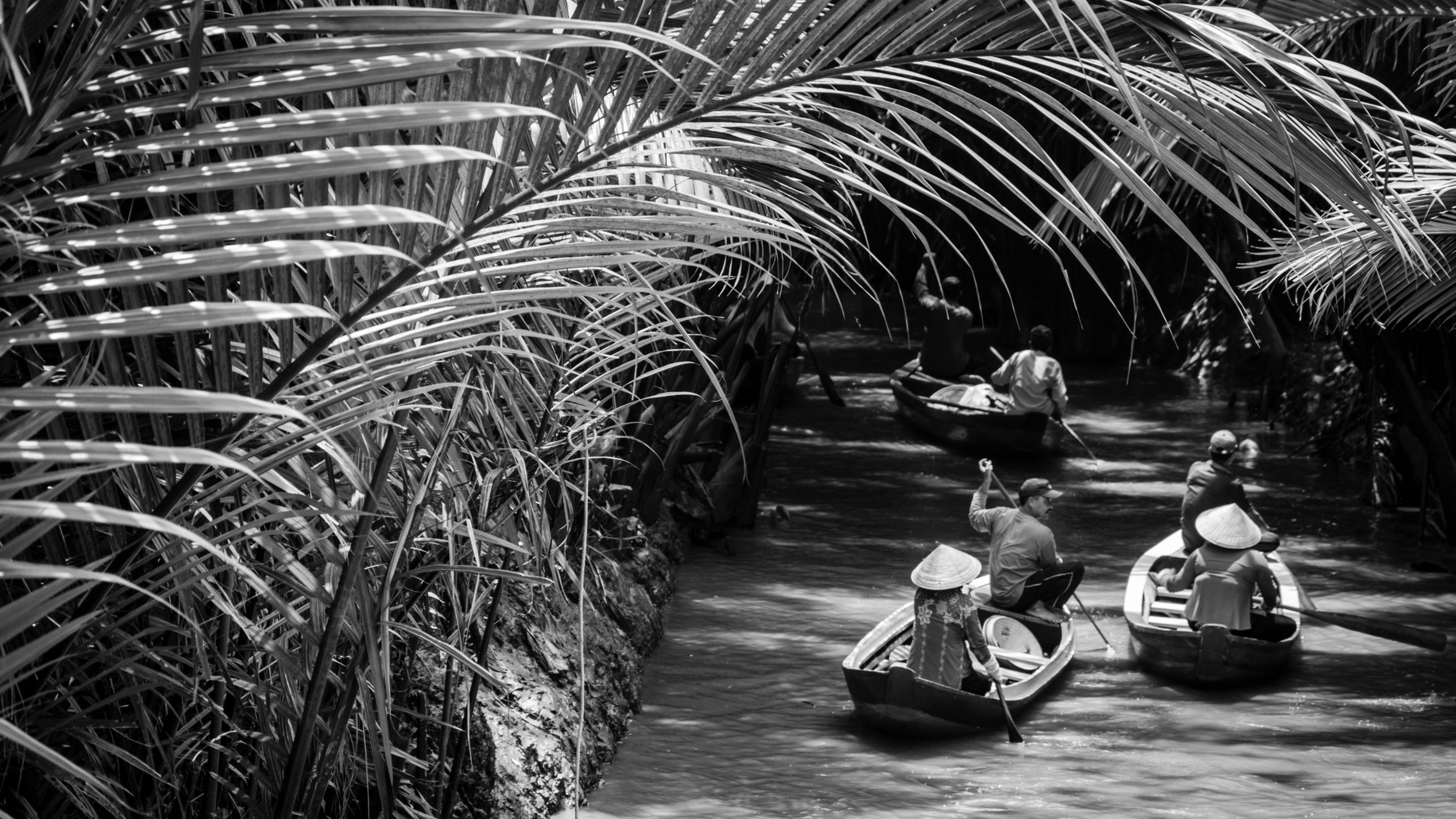
Ben Tre is a Mekong Delta (메콩 델타 / 湄公河三角洲 / メコンデルタ) province where coconut palms outnumber people, and the rhythm of life follows water levels and harvest cycles. Picking the right season shapes whether you'll navigate calm canals or wade through flooded backroads, and whether you'll share a "sampan" boat tour with three other visitors or have one mostly to yourself.
Dry Season: November to April
This is Ben Tre's high season, and for good reason. The northeast monsoon pushes moisture away from the delta, leaving skies mostly clear and temperatures in the range of 25–32°C (77–90°F). Mornings are cool enough to move without sweating through your shirt by 9 a.m.
November and December are the sweet spot. Humidity drops noticeably, and the air feels less heavy than it will in March or April. Coconut orchards are lush but not waterlogged. Early mornings on the water show reflections of palms and sky on still canals. Tourist flow picks up in late December as families travel for the holidays, but Ben Tre still feels quieter than Saigon or Hoi An.
January and February see peak visitor numbers, especially around Tet (뗏 (베트남 설날) / 越南春节 / テト) (lunar new year) if it falls early in February. Prices at guesthouses and boat operators rise 15–30 percent. If you book a private tour, expect higher rates. Public ferries and local sampans run on normal schedules, unaffected by tourism.
March and April are hotter (30–35°C / 86–95°F) and the air becomes stickier as the wet season approaches, but mornings remain manageable. By late April, the first heavy rains arrive and humidity climbs.
Wet Season: May to October
The southwest monsoon dumps rain across the delta. May through September see daily downpours in the afternoon, and occasional all-day weather in September and early October. Temperatures hover at 28–34°C (82–93°F), with humidity often above 80 percent.
May, June, and September are the wettest months. Canal levels rise, and some rural roads flood. Tourist infrastructure doesn't shut down—boats still run, restaurants stay open—but outdoor activities become less predictable. Sunrise sampan tours might be rained out; you'll pay the same price but spend an hour under a tarp watching palm trees drip.
July and August bring slightly less rain than June and September but remain humid and unpredictable. Fewer foreign tourists visit during these months, so prices drop and crowds thin. Local guesthouses and homestays offer discounts. If you're flexible with plans and don't mind getting wet, you'll pay 20–40 percent less and have canals nearly to yourself.
October is a transition month: rain slackens, but humidity lingers. By late October, skies begin to clear.

Photo by Pew Nguyen on Pexels
Festival Calendar and Cultural Timing
Ben Tre doesn't host major national festivals like those in Hanoi or Hue, but the Mekong Delta's rhythms matter for travel experience.
Tet (January or February): The lunar new year brings the highest tourist influx of the year. Family trips, school holidays, and domestic tourism spike. Boat tours operate, but expect company. Hotels and tour operators charge peak rates. Local life grinds quietly—many small shops and family-run eateries close for a week as residents visit home villages.
Doan Ngo (May): Also called the summer solstice festival. Less publicized than Tet, it's observed locally with small ceremonies and family meals. Tourist activity is minimal; this is not a reason to visit but won't disrupt your travel.
Coconut harvest cycles (year-round, but peak Nov–Jan): Ben Tre's identity revolves around coconuts. Harvest intensifies from November through January. You'll see more activity in orchards, and some tours incorporate visits to coconut candy workshops and processing facilities. The rest of the year, the orchards are quieter but still visitable.
Month-by-Month Breakdown
November: Ideal. Clear skies, cool mornings, manageable crowds. This is when most writers and photographers recommend visiting. Tourist numbers rise but remain moderate. Prices are standard to slightly elevated.
December: Still excellent. Slightly more humid than November, but clear. Crowds increase noticeably after mid-December as holiday travel begins. Book accommodations early.
January: Peak season. Hot and humid in afternoon hours, but mornings are pleasant. Tet arrives mid- to late-January. Prices are highest. Domestic tourists flood the delta.
February: Tet period continues into early February if the lunar new year falls late. Afterwards, crowds thin slightly but remain above average. Weather is warm and humid.
March: Warm (28–33°C / 82–91°F), increasingly humid. Morning tours are still worthwhile. Afternoon heat and humidity build. Tourist numbers begin to drop.
April: Hot and oppressive (30–35°C / 86–95°F). First rains arrive mid- to late month. Humidity is exhausting. Tourists thin significantly. This is not recommended unless you have a specific reason or high heat tolerance.
May–August: Wet season. Afternoon/evening rain is near-certain. Humidity above 75 percent. Tourist numbers are lowest. Prices drop. If rain doesn't deter you and you want solitude, these months work. Early mornings before rain are still viable.
September–October: Continuing monsoon, though rain slackens in October. Humidity remains high. Tourist activity picks up slightly as people anticipate the dry season. By late October, skies clear noticeably.

Photo by Musaddek Sayek on Pexels
Practical Notes on Crowds and Booking
Ben Tre's tourism is diffuse—visitors spread across homestays, small hotels, and local boat operators rather than concentrating in one resort zone. Even in November and December, the province doesn't feel crowded the way Hoi An's Old Town does. Private boat tours can be booked on short notice; walk into any guesthouse and they'll arrange one for the next morning. Public sampans to islands like Thoi Son or Phoenix Island ferry local commuters and a handful of tourists together—no reservation needed.
If you're traveling solo or in a pair, you won't need to book months ahead even in high season. Groups of six or more, or travelers with specific date requirements, should confirm boat tours 2–3 weeks in advance.
Bottom line
Visit November to April for reliable weather and clear water reflections. November and December are the most comfortable months overall. If you can handle heat and humidity and want lower prices and emptier canals, July and August reward flexible travelers. Avoid late March through April unless you have a high tolerance for oppressive heat.
Last updated · May 29, 2026 · independently researched, never sponsored.