Why Da Lat's Banh Uot Matters
"Banh uot" — steamed rice rolls — shows up across Vietnam (베트남 / 越南 / ベトナム), but Da Lat has quietly built a reputation for a version that's almost impossibly tender. The rolls here tend thinner, wetter, and less likely to split apart than what you find in Hanoi or Saigon. Part of that comes from the water (cooler, softer), part from technique (local vendors have been doing this for decades), and part from stubbornness: Da Lat cooks refuse to rush the steaming process.
Locals will send you to specific stalls in the market or hole-in-the-wall breakfast joints, not tourist restaurants. Here's where to go.
Banh Uot Stall at Dalat Market (Cho Dalat)
Inside Dalat Market, near the north entrance on Nguyen Trai Street, a vendor has been rolling out banh uot since dawn for 20+ years. The rolls are ordered by the plate (a plate holds 4–5 rolls, 25,000–30,000 VND). The broth — made from pork bone and shrimp — is poured tableside and arrives steaming.
What sets this stall apart: the rice flour is milled locally, not imported. You can taste it. The rolls don't have that slightly gummy texture you get from older flour. They arrive soft enough that a spoon cuts through, almost like custard.
Go before 9 a.m. By 10:30 a.m., the rolls start to firm up, and by late morning the vendor is usually sold out. Sitting is basic — plastic stools, communal tables — but that's where the best ones always are.
Banh Uot Huong at Trai Mat Street
On Trai Mat Street (a quiet residential block near the Da Lat (달랏 / 大叻 / ダラット) flower market), a small shop called "Banh Uot Huong" opens at 6 a.m. and closes by 10:30 a.m. The owner is Huong, who learned the recipe from her mother-in-law in 1995.
Huong's version includes a thin layer of seasoned ground pork underneath the rice flour, plus a drizzle of fish sauce and a pinch of fried shallot on top. One plate (4 rolls) costs 28,000 VND. The broth is darker and richer than the market stall — she simmers it overnight with dried squid and anchovies.
This spot draws Da Lat office workers and older residents. You'll rarely see tourists. The shop has maybe 8 stools, no air conditioning, and a small window facing the street. Huong doesn't speak English, but she'll point to the broth pot and smile. That's the signal to order.

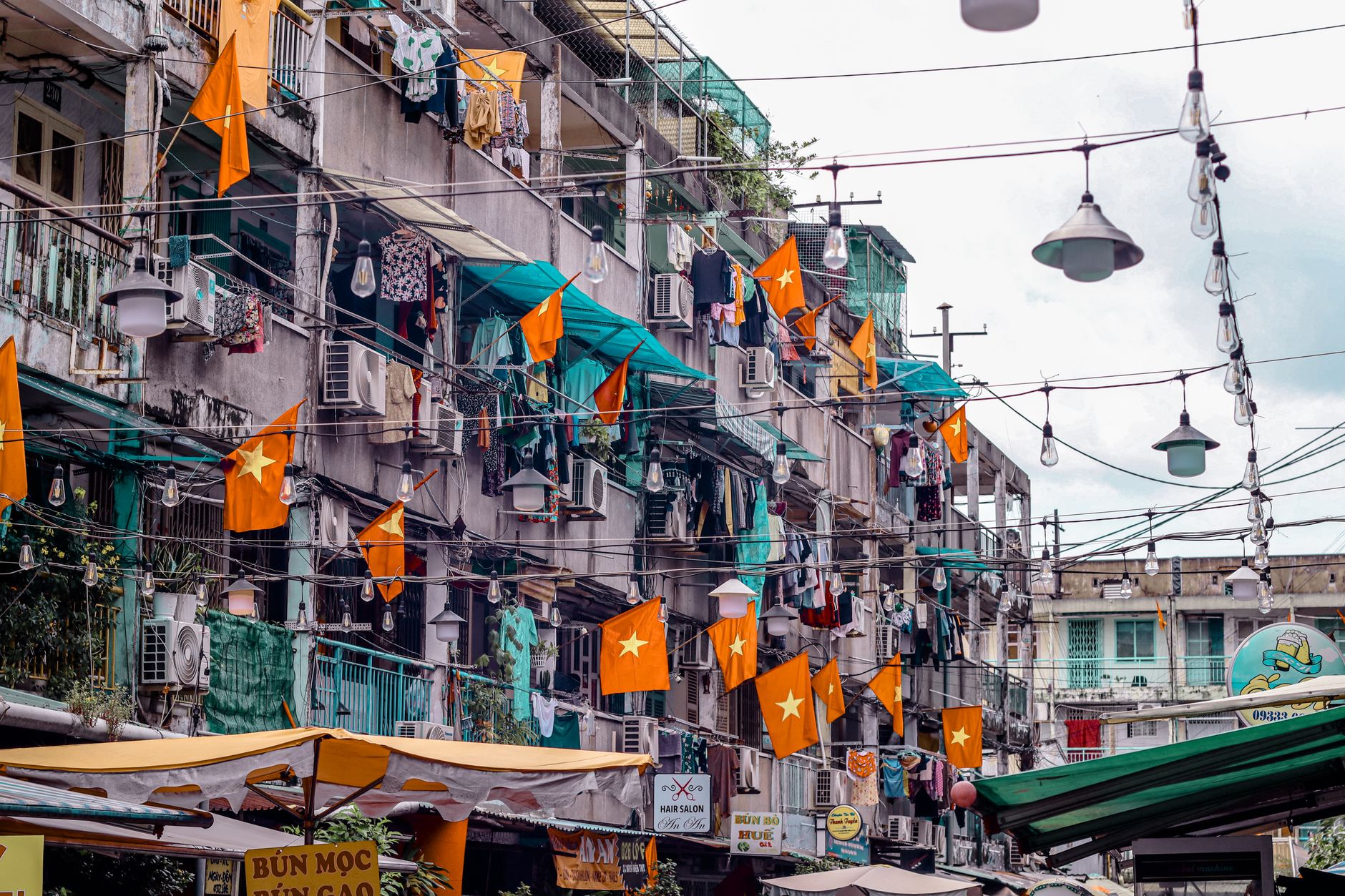
Photo by LUC PH@M on Pexels
Banh Uot at Thanh Cong Pho Stall (Tran Phu Street)
Technically a "pho stall," but the banh uot here is just as serious as the noodle soup. Located on the corner of Tran Phu and Phan Boi Chau, near the Saigon Da Lat Hotel, this place opens at 6 a.m. and runs until 11 a.m. (breakfast/early lunch only).
One plate of banh uot is 26,000 VND. The broth leans lighter — pork and chicken — so the delicate rice taste comes through. Many locals order a plate of banh uot alongside a small bowl of pho, mixing and matching.
The owner, Mr. Thanh, has run this stall for 18 years. He'll ask if you want extra chili oil or fish sauce. If you hesitate, he'll add both anyway. That's not pushiness; it's care.
Banh Uot at Lam Dong Food Court (Quang Trung Street)
The food court on Quang Trung (near the intersection with Phan Dinh Phung) has a banh uot vendor — Stall 12 — run by a woman in her 60s who starts prepping at 4 a.m. Her rolls are slightly thicker than the others mentioned here, which some locals prefer for texture and chew.
One plate costs 27,000 VND. The broth is clear and light, almost a consomme. She tops each plate with cilantro, crispy shallot, and a wedge of lime.
This stall fills up quickly after 7 a.m. with commuters heading to work. By 9:30 a.m., she's often done for the day. The seating is shared (communal metal tables), so you'll eat next to Da Lat locals. It's a good place to observe how people actually eat banh uot here: roll, dip in broth, finish in two bites, then move on.
What Makes Da Lat's Version Different
Northern banh uot (common in Hanoi) is often served with a side of ground meat and seasoning that you mix into the rolls yourself. Southern versions tend toward curry or soy-braised toppings.
Da Lat strips it back. The rolls are the star. The broth is meant to be light and clean so you taste the rice. Vendors here don't overseasoned or oversauced. It's almost ascetic in its simplicity, which is why the quality of the base ingredients — water, flour, time — matters so much.

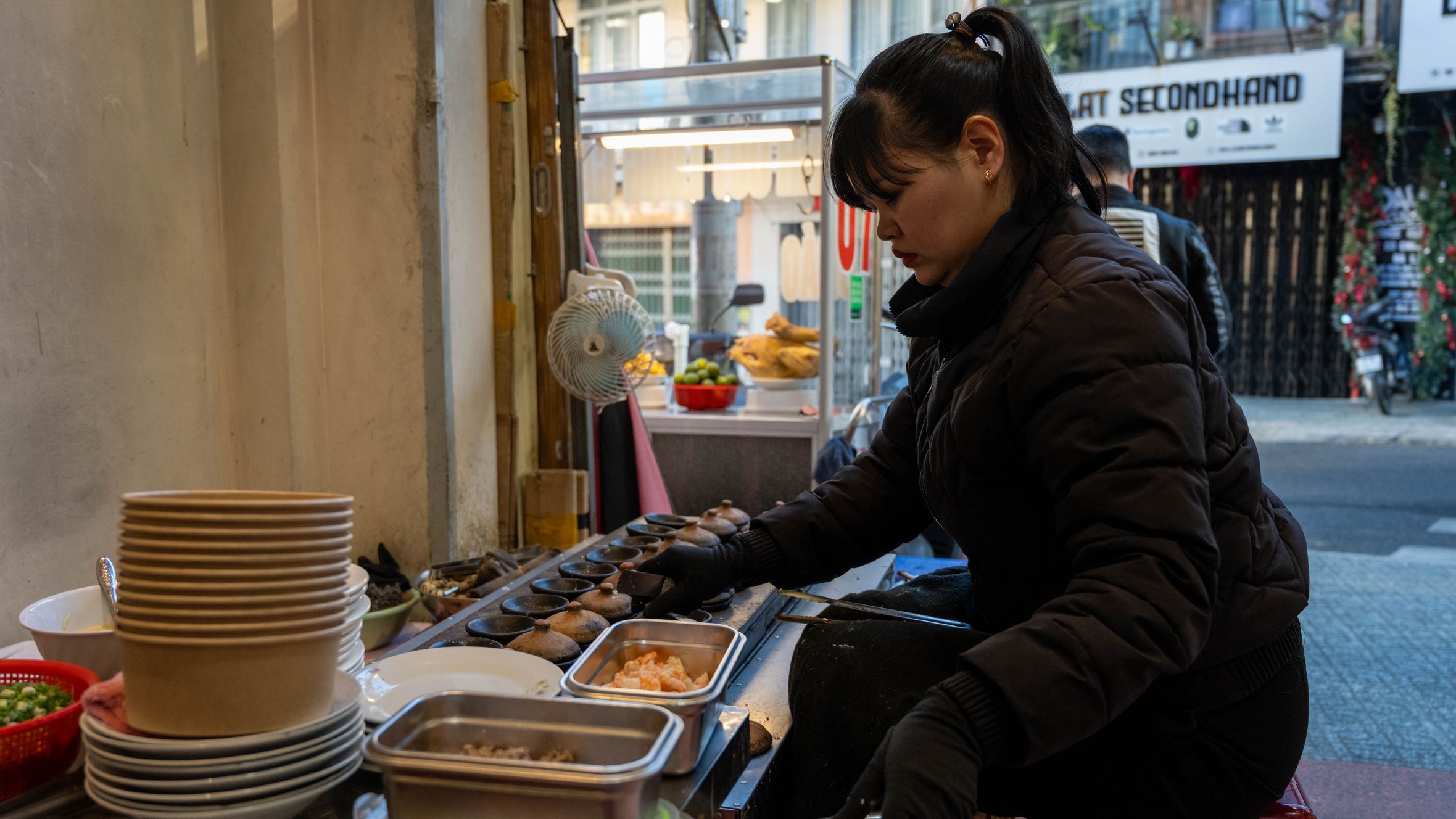
Photo by HONG SON on Pexels
How to Order
Point at the steamer if you see the rolls. Or say "Mot dia banh uot" (one plate of banh uot). If you want extra broth, hold up two fingers or say "Them nuoc." Most stalls have small bowls of chili oil, fish sauce, and lime on the table — mix to taste.
Many locals eat banh uot with a small side of pork patty ("cha luon") or a fried shallot cake ("banh trang nong"), though neither is required.
When to Go
Best time: 6:30–8:30 a.m. All five stalls mentioned are at their peak. The rice is just-steamed, the broth is at proper temperature, and the crowd energy is good.
Second best: 8:30–9:30 a.m. Still solid, but rolling stock is thinning.
Avoid: After 10 a.m. Most vendors have shut down or are serving reheated rolls from earlier batches. The texture suffers.
Da Lat mornings are cool (12–15°C year-round), so eating hot banh uot outside is actually pleasant. Bring a light jacket if you're not used to it.
Practical Notes
All five spots mentioned are within a 1.5 km radius of central Da Lat and walkable from major hotels. Most accept cash only (50,000–100,000 VND notes). If you're not staying in Da Lat proper, a taxi from Lien Khuong airport costs about 100,000 VND; it's worth arriving early just to hit these stalls fresh. Banh uot doesn't freeze or travel well, so eat it on-site.
Last updated · May 29, 2026 · independently researched, never sponsored.