The central coast is where Vietnamese food stops being a single thing. Hue cooks with fermented shrimp paste and chili heat. Da Nang loads tables with grilled fish and clams. Hoi An has its own noodles, its own pancake, its own logic. Five days across these three cities won't cover everything, but it gets you close.
Day 1 — Hue: Arrival and the Royal Pantry
Fly or take the train into Hue (후에 / 顺化 / フエ) and keep your first evening light. Walk to Dong Ba Market near the Perfume River and eat standing up. Pick up a bowl of "bun bo Hue" — the spicier, lemongrass-forward beef noodle soup that Hue considers its own and most of the country has never matched. A portion runs 35,000–50,000 VND. The broth should be a deep orange-red; if it's pale, find another stall.
For orientation: Hue is compact. The Imperial Citadel sits on the north bank of the Perfume River; most eating and sleeping happens south of it.
Day 2 — Hue: Going Deeper
Breakfast at one of the "banh canh" shops near Truong Tien Bridge. This thick, chewy noodle soup — made with tapioca or rice-flour noodles — is Hue's underrated morning staple. Ask for it with crab (banh canh cua); the broth is sticky and rich in a way that sets you up for a long day.
Mid-morning, cross into the Citadel. The imperial kitchens are long gone but the culinary legacy survives in the "com hen" stalls around Dong Ba. This is a cold dish — tiny basket clams over broken rice with shredded herbs, roasted peanuts, pork crackling, and fermented shrimp paste. It sounds like chaos. It works.
Lunch is the move for proper royal cuisine. Tinh Gia Vien restaurant on Nguyen Binh Khiem serves a tasting spread of Hue's court dishes — lotus-seed soup, stuffed crepe parcels, steamed rice cakes in banana leaf — at around 180,000–250,000 VND per person. Book ahead; it fills up.
In the late afternoon, take a motorbike 7 km south to visit the Tomb of Tu Duc. The architecture matters less than the walk through the pine forest getting there, which puts the imperial obsession with aesthetics into context. Back in the city, close the night at a "bia hoi (비아호이 / 鲜啤 / ビアホイ)" corner near the backpacker strip on Pham Ngu Lao Street — draft beer at 10,000–15,000 VND a glass, with grilled pork skewers.

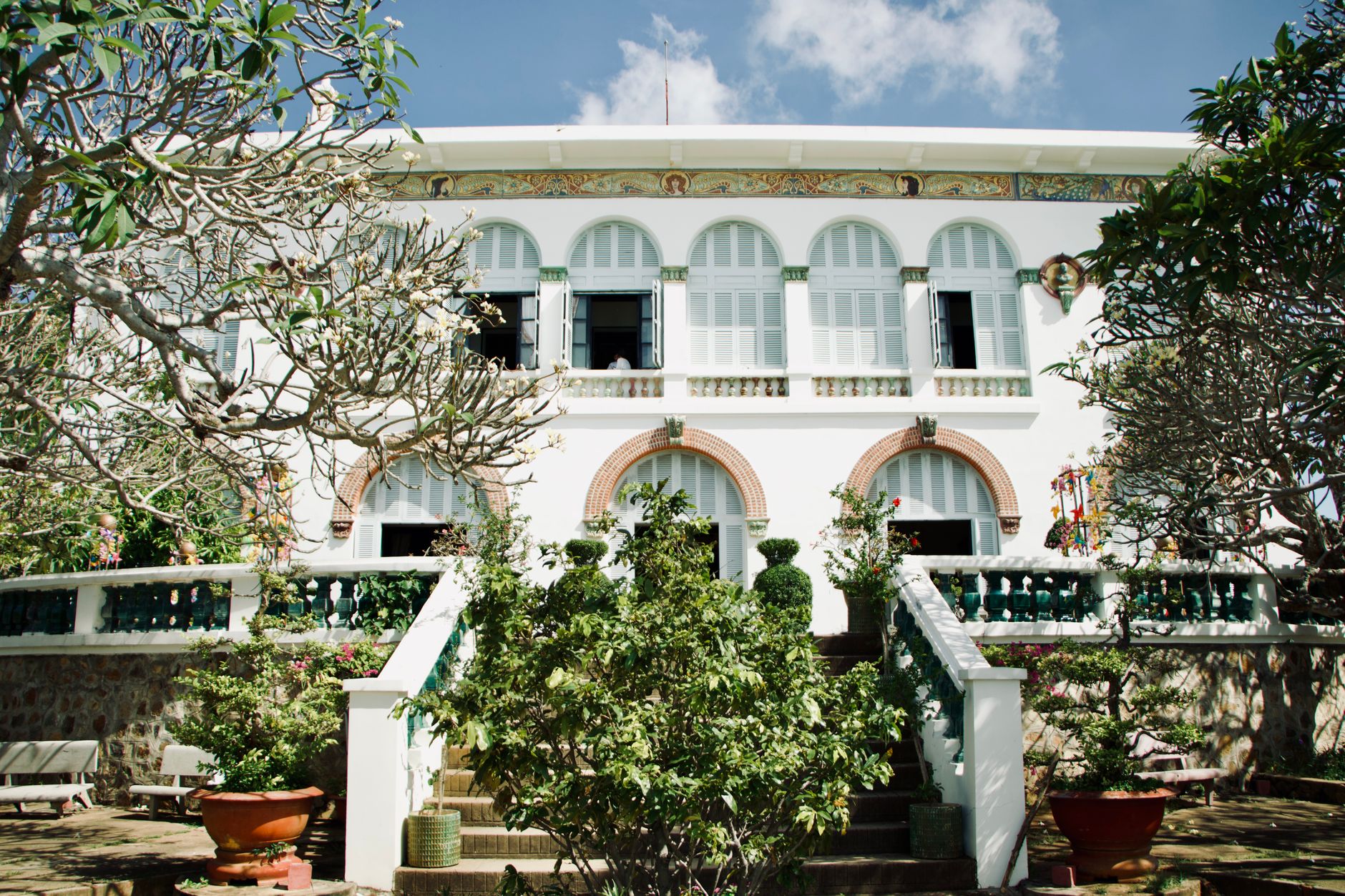
Photo by Pew Nguyen on Pexels
Day 3 — Da Nang: Coast and Grill
Hue to Da Nang is 100 km. The train takes around 2.5 hours and cuts through the Hai Van Pass — worth the window seat. Buses are faster but miss the scenery.
Da Nang's food identity is built around proximity to the sea. Drop your bags and go straight to the Han Market, where the ground floor stalls sell "banh xeo" — crisp rice-flour crepes filled with shrimp, pork, and bean sprouts. The Da Nang version is smaller and crispier than the southern style; wrap it in rice paper with herbs and dip it in nuoc cham.
For dinner, head to the stretch of seafood restaurants along Tran Hung Dao Street near My Khe Beach. Order grilled scallops with spring onion and oil (so diep nuong mo hanh), steamed clams with lemongrass, and whatever whole fish they have fresh that evening. Budget 200,000–350,000 VND per person with a couple of beers. Avoid the places with picture menus and aggressive touts — walk one block back from the beach and prices drop.
If you can stay up for it, the Night Market on Bach Dang Street runs until midnight with street snacks and cheap cold beer alongside the Han River.
Day 4 — Da Nang to Hoi An: The Noodle Towns
The drive from Da Nang south to Hoi An is 30 km and takes 45 minutes by car or an hour by motorbike along the coast road. Go by motorbike if the weather holds.
Hoi An's food anchors are two noodles that don't travel well: "cao lau" and "mi quang". Cao lau is the stranger dish — thick wheat noodles with sliced pork, crispy rice crackers, and a small amount of broth that's more sauce than soup. The noodles are allegedly made with water drawn from specific wells in town; the story may be tourist mythology, but the noodles are genuinely different from anything else in Vietnam. Find it at the market stalls inside Hoi An Central Market for around 40,000 VND.
Mi quang is a turmeric-yellow noodle dish with a shallow pool of rich broth — pork, shrimp, or frog depending on the stall — topped with roasted peanuts and a wedge of rice cracker. It's a meal that looks like a salad and eats like a proper lunch. Ba Mua on Truong Dinh Street is a reliable address at 45,000–55,000 VND.
Spend the afternoon walking Hoi An's old town lanes — Tran Phu, Nguyen Thai Hoc, Bach Dang along the river. Stop for "ca phe sua da" at one of the narrow shophouse cafes; the old town has a dozen good ones.
Evening: the riverfront fills with lantern light after dark. Eat "white rose dumplings" (banh bao vac) at Phuoc Hung or Bale Well, which also serves the grilled pork skewers (thit nuong) you grill yourself over charcoal at the table. Dinner at Bale Well runs 150,000–180,000 VND per person and comes with unlimited wrapping herbs.

Photo by baolong thai on Pexels
Day 5 — Hoi An: Morning Market and the Road Out
Get up early enough for the morning market on Tran Quy Cap Street before the tour groups arrive. This is where locals shop: fresh herbs, live shellfish, whole pigs, stacks of "banh mi" from the bread stall that opens at 6 a.m. Hoi An's banh mi — particularly Phuong's on Le Loi Street — is widely cited as a benchmark; the bread is lighter and crispier than Saigon's standard, and they pile in more fresh herbs.
If you have a late flight or train from Da Nang, use the morning to eat one more bowl of cao lau and walk the old town before the heat sets in.
Practical Notes
Flights into Hue (Phu Bai Airport) or Da Nang are the usual entry points; Da Nang has more connections. Moving between cities by train or hired car is straightforward and cheap — the 100 km Hue–Da Nang run costs around 80,000–120,000 VND by train. Budget 300,000–500,000 VND per day on food if you're eating at market stalls and local restaurants; double that if you're mixing in sit-down meals with drinks.
Last updated · May 29, 2026 · independently researched, never sponsored.