What it is
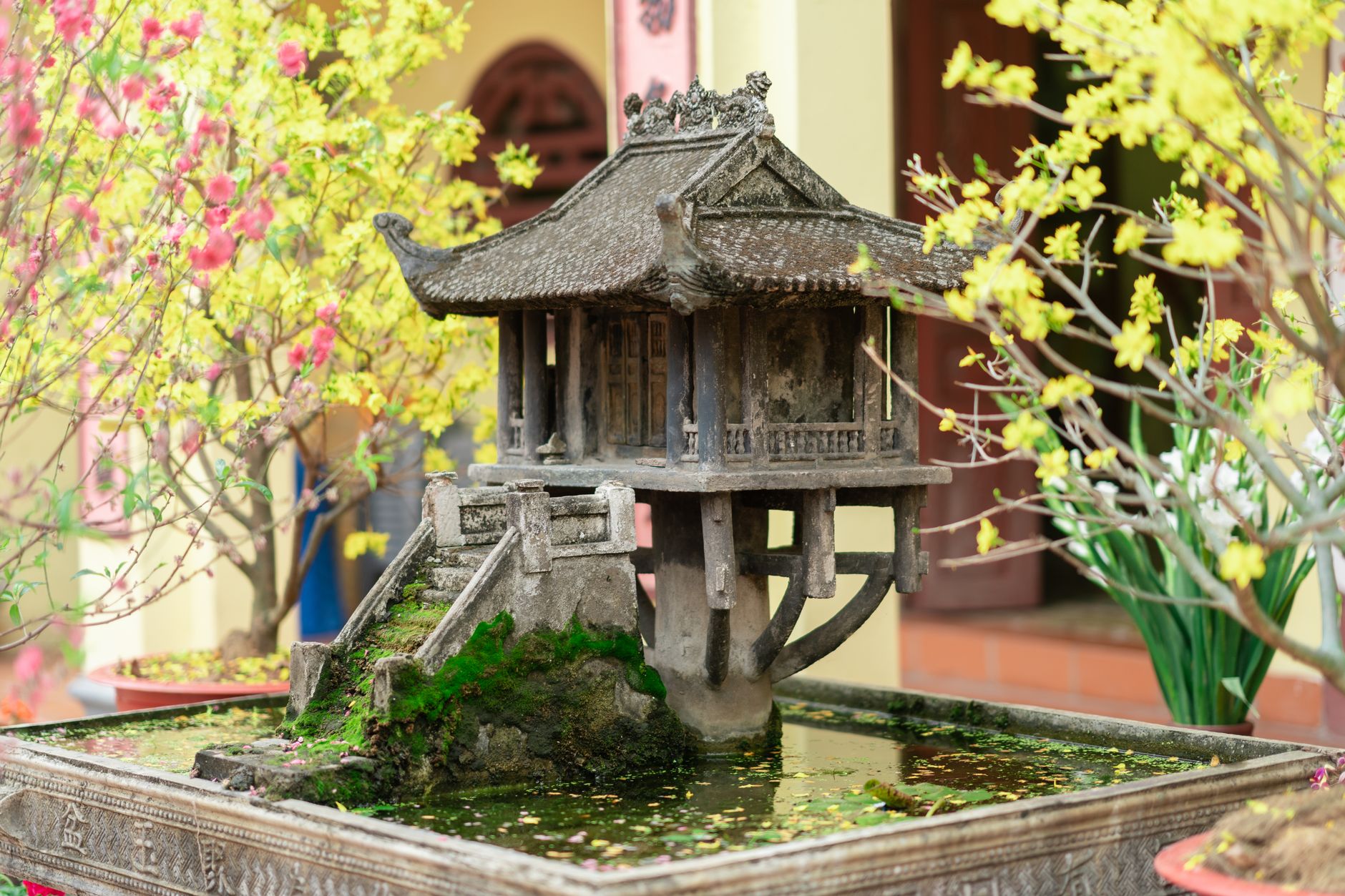
Chua Minh Thanh sits on a low hill at the edge of Pleiku city, the capital of Gia Lai province in Vietnam's Central Highlands (중부 고원 / 中部高原 / 中部高原). Built in 1964 and expanded significantly from 2002 onward, the pagoda blends Vietnamese Mahayana Buddhist architecture with unmistakable Japanese design influences — curved rooflines, dark timber framing, a towering Bodhi tower, and stone gardens that feel closer to Kyoto than to the red-and-gold temples most travelers see along the coast.
The pagoda complex covers roughly 5,000 square meters. Its centerpiece is a multi-tiered wooden tower rising about 40 meters, visible from several kilometers away on a clear day. The main hall, bell tower, and surrounding courtyards use volcanic basalt sourced from nearby quarries, giving the whole compound a dark, grounded weight that contrasts with the bright laterite soil of the highlands.
Why travelers go
Most foreign visitors reach Chua Minh Thanh by accident — they're passing through Pleiku on the way to Kon Tum or heading south toward Buon Ma Thuot and spot the tower from the road. But it's worth a deliberate stop for a few reasons:
- Architecture: The Japanese-Vietnamese hybrid style is genuinely unusual. You won't find another pagoda like it in the country. The craftsmanship in the wooden joinery and stone carvings is detailed and clearly expensive.
- Atmosphere: Unlike major pagodas in Hanoi or Hue, Chua Minh Thanh sees very few tour groups. On weekday mornings you might have the courtyards entirely to yourself.
- Photography: The dark wood against highland mist, the tiered tower, the stone lanterns lining walkways — it photographs extremely well, especially in the golden hour or when low clouds roll through.
It's not a full-day destination. Budget 60-90 minutes for a relaxed visit, longer if you're shooting photos.
Best time to visit
Gia Lai has two seasons: dry (November to April) and wet (May to October). The dry season is more comfortable for walking the grounds, but the wet season wraps the pagoda in dramatic fog that softens the architecture beautifully.
Early morning — before 8 AM — is ideal year-round. The monks are finishing morning prayers, incense smoke drifts through the courtyards, and the light is soft. Midday gets hot and flat. Late afternoon (4-5 PM) works well too, especially from November through February when the sun drops quickly and the stone takes on warm tones.
Avoid major Vietnamese Buddhist holidays (full moon days of the 1st, 4th, and 7th lunar months) unless you want crowds. Tet brings the biggest surge of local visitors.
How to get there
Chua Minh Thanh is at 47 Nguyen Viet Khai Street, Pleiku city — about 2 km from the city center.
From Da Nang or Hoi An: Drive west on QL14E/QL19 through An Khe pass. Total distance from Da Nang is roughly 300 km (6-7 hours by car, longer by bus). There's a daily bus from Da Nang's central station to Pleiku, around 180,000-220,000 VND.
From Quy Nhon (Binh Dinh coast): Take QL19 west over An Khe pass — about 170 km, 3.5-4 hours by car or motorbike. This is the most scenic approach, climbing from coastal plains into highland pine forests.
From Saigon (사이공 / 西贡 / サイゴン): Flights to Pleiku (Gia Lai Airport) run daily on Vietnam Airlines and VietJet, typically 500,000-900,000 VND one way. Flight time is about 1 hour 15 minutes. From the airport, the pagoda is 5 km — a 30,000 VND Grab ride.
Local transport: From central Pleiku, a xe om (motorbike taxi) costs 15,000-20,000 VND. Grab works in Pleiku but drivers are fewer than in coastal cities.

Photo by Ahmad Malulein on Pexels
What to do
Walk the grounds
Enter through the main gate and follow the stone path past the bell tower to the central courtyard. The main prayer hall is open to visitors — remove shoes, keep voices low. The Bodhi tower behind the main hall has multiple levels; ask a monk politely if you can climb (sometimes permitted, sometimes not).
Stone garden and rear courtyard
Behind the main complex, a landscaped garden with bonsai, stone lanterns, and a small koi pond offers a quiet spot to sit. This area is modeled on Japanese temple gardens and feels genuinely meditative.
Photography tips
Bring a wide-angle lens for the tower and courtyards. The dark wood absorbs light quickly, so expose for shadows. The stone walkways leading to the main gate create strong leading lines. If it's misty, lean into it — the fog adds depth.
Where to eat
Pleiku's food scene is underrated. Within 2-3 km of the pagoda:
- Pho Kho Gia Lai (dry pho) — a regional specialty where noodles come separate from broth. Try the stall cluster on Nguyen Thai Hoc street, 35,000-45,000 VND per bowl.
- Com tam rice plates are everywhere — look for the busy spots on Tran Phu street around lunchtime, 30,000-40,000 VND.
- Bun cha ca (fish cake noodle soup) — a Central Highlands version that's lighter than coastal renditions. Several good spots on Hung Vuong street.
- For coffee, Pleiku has excellent local roasters. T'Nung Coffee near Bien Ho lake uses beans grown within 20 km of the city. Vietnamese coffee here costs 15,000-25,000 VND and tastes noticeably fresher than what you'll get in tourist centers.
Where to stay
Pleiku isn't a resort town, but accommodation is clean and cheap:
- Budget: Nha nghi (guesthouses) near the bus station run 150,000-250,000 VND/night. Basic but functional.
- Mid-range: Duc Long Gia Lai Hotel or Hoang Anh Gia Lai Hotel offer decent rooms for 400,000-700,000 VND with breakfast included.
- Homestays: A few newer homestays have opened on the road toward Bien Ho lake, catering to domestic tourists. Expect 300,000-500,000 VND.

Photo by HONG SON on Pexels
Practical tips
- Dress code: Cover shoulders and knees. This is an active monastery, not a museum.
- Entry fee: Free. Donations welcome — there's a box near the main hall entrance.
- Language: Very little English spoken. Download Vietnamese phrases or use Google Translate's camera function for signs.
- Combine with: Bien Ho (T'Nung Lake), a volcanic crater lake 7 km north of Pleiku — makes a good half-day pairing with the pagoda.
Common mistakes
- Skipping Pleiku entirely: Most travelers blast through the highlands on sleeper buses between the coast and Da Lat. Pleiku deserves at least one night.
- Arriving midday: The pagoda bakes in direct sun between 11 AM and 3 PM. The architecture loses all its mood in flat overhead light.
- Using flash inside the prayer hall: Don't. Monks will ask you to leave.
- Expecting English signage: There's almost none. The pagoda's history and significance aren't explained on-site in English — read up before you go.
Final note
Chua Minh Thanh won't make anyone's top-ten Vietnam temples list because almost nobody knows it exists. That's precisely why it's worth the detour. The Central Highlands remain one of the least-touristed regions in the country, and this pagoda is one of its quiet rewards.
Last updated · May 29, 2026 · independently researched, never sponsored.