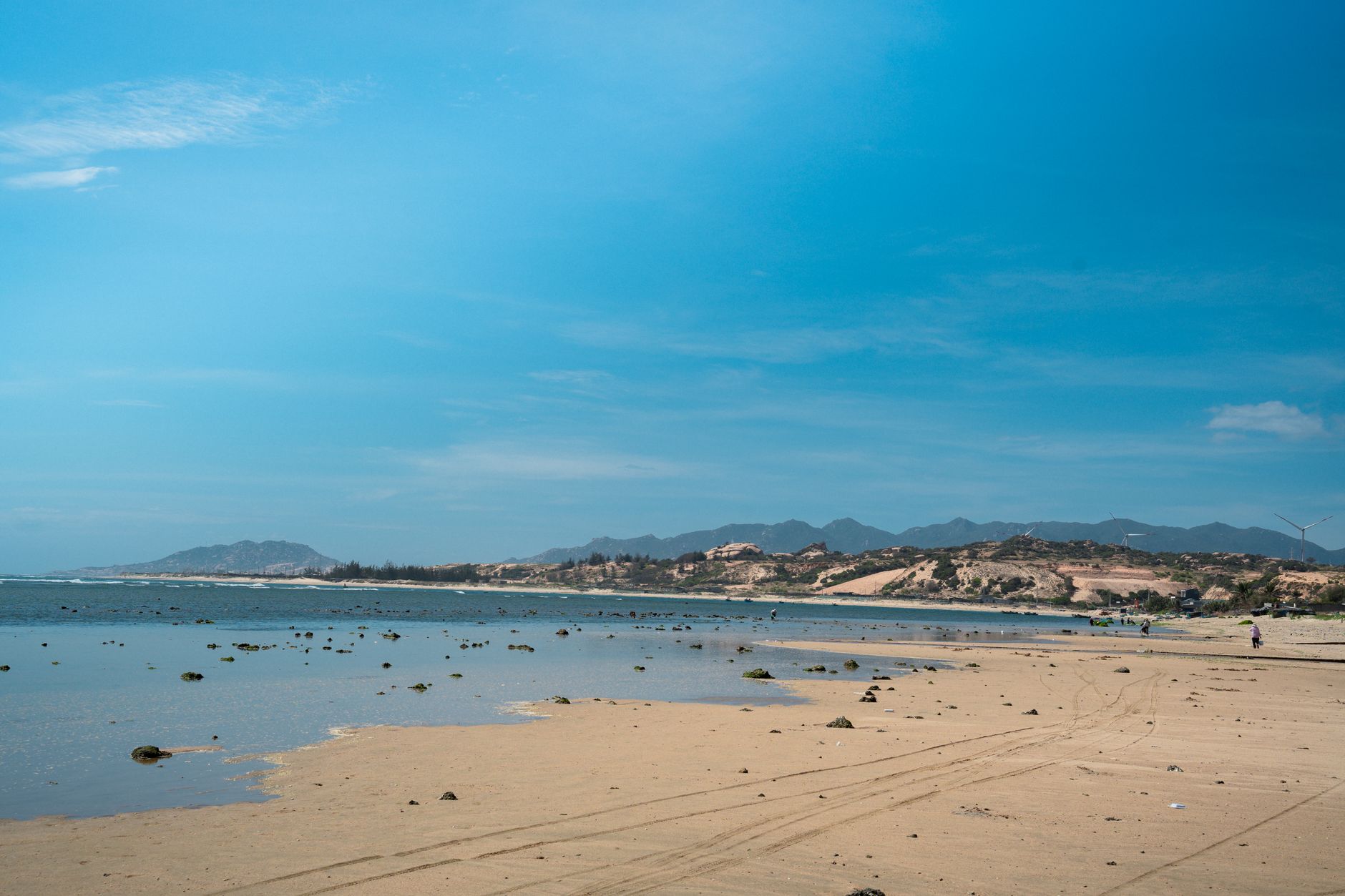
Cua Hoi Beach is one of those places most foreign travelers have never heard of, but half of Nghe An province treats as their default summer escape. It sits right at the mouth of the Lam River in Cua Lo town, about 15 km from Vinh city, and stretches roughly 3 km along the coast with coarse golden sand and water that's warm enough to swim in from April through September.
What it is and a bit of background
Cua Hoi is technically the southern extension of the broader Cua Lo beach strip, located where the Lam River empties into the Gulf of Tonkin. Locals sometimes use "Cua Hoi" and "Cua Lo" interchangeably, but Cua Hoi specifically refers to the stretch near the river mouth — it's quieter, less developed, and has a slightly different character than the main Cua Lo tourist zone to the north.
The area has been a fishing community for centuries. Tourism only picked up in the last couple of decades, and development here still lags behind places like Da Nang or Mui Ne. That's part of the appeal. The seafood comes straight off the boats, the hotels are locally owned, and you won't find a single rooftop infinity pool.
Why travelers go
Honestly, most visitors are Vietnamese families from Vinh, Hanoi, or the surrounding provinces. The draw is simple: affordable beach time, excellent seafood, and proximity to Vinh — which is itself a transport hub for the region. If you're passing through Nghe An on your way between Hanoi and Hue, or heading out to explore Pu Mat National Park, Cua Hoi makes a solid overnight stop. It's not trying to be Phu Quoc or Hoi An, and that's fine.
The river mouth setting also gives the beach a different feel. The water is calmer in certain sections, and watching fishing boats navigate the channel at dawn is one of those low-key moments that sticks with you.
Best time to visit
Aim for May through August. Water temperature is comfortable, rain is infrequent (storms mostly hit later in the season), and the beach is lively without being unbearable. June and July are peak domestic season — expect weekend crowds and higher hotel prices.
September and October bring the tail end of typhoon season to this part of the central coast. Swimming can be risky, and some seafood restaurants scale back their hours. November through March is cool and often overcast; the beach is near-empty, which suits some people, but the water drops below comfortable swimming temperature.
How to get there from Vinh
Vinh is your gateway. From Vinh railway station or Vinh bus station, Cua Hoi is about 15 km east — roughly 25 minutes by car or motorbike.
- Taxi or Grab car: 120,000–160,000 VND one way. Readily available.
- Motorbike rental in Vinh: 100,000–150,000 VND per day. The road out to Cua Lo is flat and straightforward, mostly along National Route 46.
- Local bus: Route 04 runs from Vinh to Cua Lo for about 15,000 VND. Frequency drops outside summer months.
If you're coming from Hanoi (하노이 / 河内 / ハノイ), the fastest option is the train to Vinh (roughly 6 hours on the SE express, 350,000–700,000 VND depending on seat class), then a taxi onward. Vinh also has a domestic airport with flights from Saigon.

Photo by Marcus Luu on Pexels
What to do
Swim and sit on the beach
No need to overcomplicate it. The southern end near the river mouth tends to be less crowded. Beach chairs and umbrellas rent for about 30,000–50,000 VND. The sand is coarser than you'll find further south — bring flip-flops if you're sensitive about that.
Watch the fishing boats at the river mouth
Early morning, around 5:00–6:00 AM, the boats come in with the night's catch. Walk south along the beach toward where the Lam River channel meets the sea. It's a working waterfront, not a photo op — but if you're up early, it's worth the stroll. You can sometimes buy fish directly, though you'll need some Vietnamese or a translation app.
Visit Hon Ngu Island
Hon Ngu (also called Nghi Son island by some maps) sits a few kilometers offshore. Local boats run out there from the Cua Hoi pier, usually 100,000–150,000 VND round trip. The island is small, has a fishing village, a temple, and decent snorkeling on calm days. Not a full-day affair — two to three hours is plenty.
Day trip to Vinh and the surrounding area
Vinh itself isn't a tourist destination, but it has good "bun cha" joints and solid local food markets. From Vinh, you can also arrange day trips west to Pu Mat National Park for jungle trekking, or visit Kim Lien village (Ho Chi Minh (호치민 / 胡志明 / ホーチミン)'s childhood home), which is about 14 km from the city.
Rent a motorbike and ride the coast
The coastal road north from Cua Hoi toward Cua Lo proper is an easy, flat ride with ocean views. About 10 km round trip. Stop at one of the seafood shacks along the way — they're all serving more or less the same thing, and it's all good.
Where to eat nearby
Seafood is the whole story here. The beach road is lined with open-air restaurants where you pick your fish, crab, or shrimp from tanks or ice trays and they cook it on the spot.
Grilled squid ("muc nuong") is the local specialty — fresh, charred, served with chili salt and lime. Expect 80,000–150,000 VND per plate depending on size. Steamed clams with lemongrass are another staple, usually around 60,000–90,000 VND.
For breakfast, look for stalls in the Cua Lo town market selling "banh cuon" — thin steamed rice rolls filled with minced pork and mushroom. Nghe An's version uses a slightly thicker wrapper than what you'll find in Hanoi.
Where to stay
Accommodation is almost entirely local guesthouses and mid-range hotels. No international chains.
- Budget (300,000–500,000 VND/night): Basic fan or air-con rooms in family-run guesthouses. Clean enough, don't expect frills.
- Mid-range (600,000–1,200,000 VND/night): Newer hotels along the beach road with sea-view rooms, hot water, and decent Wi-Fi. Vinpearl Cua Hoi Resort sits at the higher end if you want a pool.
- Homestays: A few have popped up in the area. Check local booking apps (Traveloka works better than Booking.com for this part of Vietnam).
Book ahead if visiting on summer weekends (June–July). Midweek, you can walk in and negotiate.

Photo by SICULA Đỗ on Pexels
Practical tips locals would tell you
- Bring cash. Card acceptance is limited outside the bigger hotels. There are ATMs in Cua Lo town center.
- Sunscreen is hard to find locally. Stock up in Vinh or bring it with you.
- Negotiate seafood prices before cooking. Ask "bao nhieu mot ky" (how much per kilo) and agree on the weight. This avoids bill shock.
- The undertow near the river mouth can be strong, especially on outgoing tides. Swim in the areas with lifeguard flags if you're not a confident swimmer.
- Vietnamese coffee is everywhere — even beachside shacks will make you a solid iced coffee for 15,000–20,000 VND.
Common mistakes to avoid
- Expecting a resort beach. Cua Hoi is a local beach with local infrastructure. If you need polished service and English menus, this isn't the spot.
- Visiting in typhoon season without checking weather. Storms roll through Nghe An between September and November. Monitor forecasts.
- Skipping the early morning. Sleeping in means missing the fishing boats and the best light. The beach also gets hot and crowded by mid-morning in summer.
- Only eating at the beachfront restaurants. The ones a block or two inland are often cheaper for the same quality.
Practical notes
Cua Hoi works best as a one- or two-night stop, ideally combined with time in Vinh or a trip to Pu Mat. It's real, unpretentious coastal Vietnam — the kind of place where you eat well, swim, and slow down without a plan. If you're traveling the length of the central coast between Hanoi and Hue, it's a worthwhile detour off the main route.
Last updated · May 29, 2026 · independently researched, never sponsored.