What Dao Che Thanh Chuong actually is
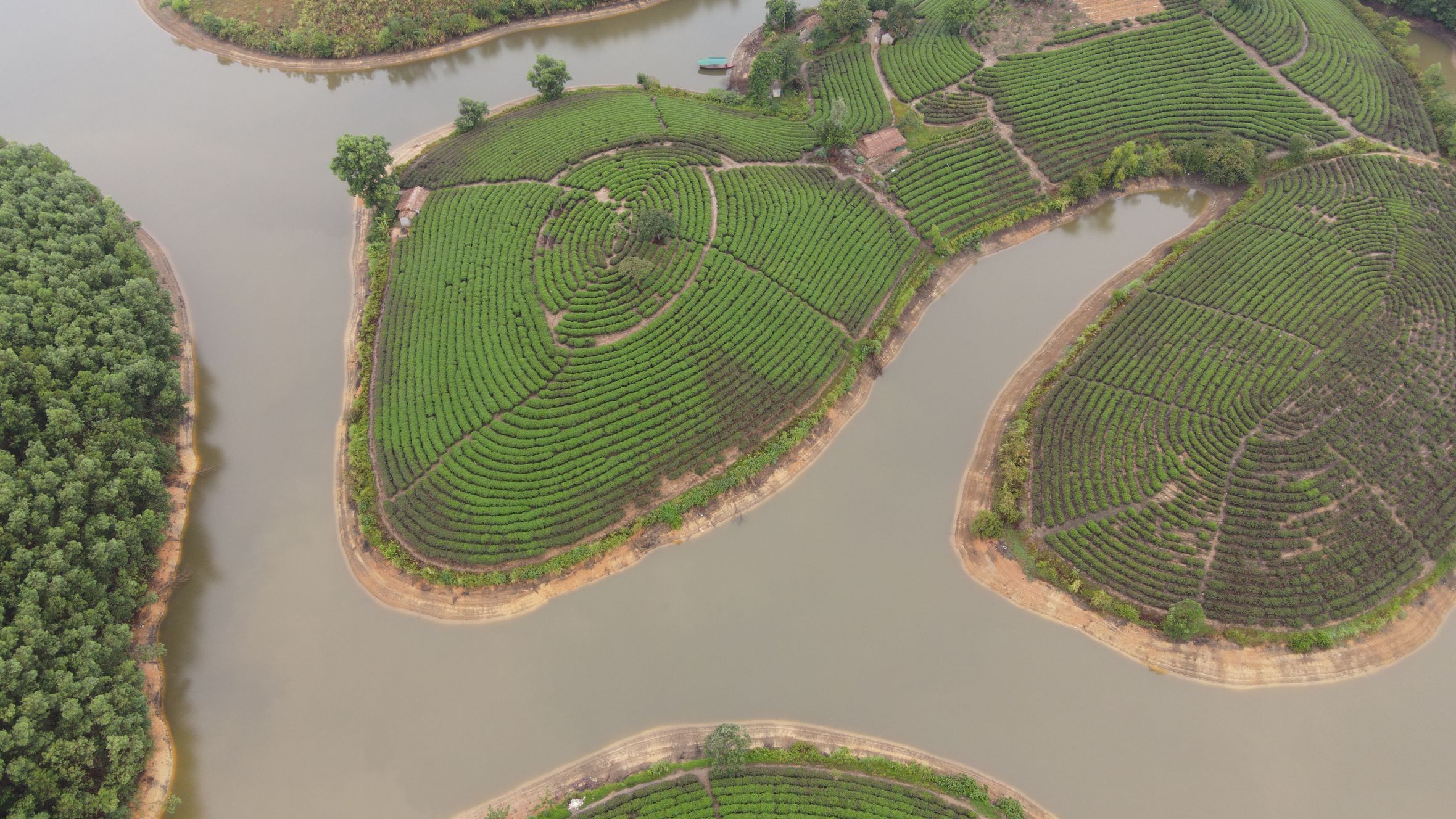
About 80 km west of Vinh city, the Song Lam river bends through Thanh Chuong district and floods a low valley where local farmers have grown tea for generations. The result is a cluster of small islets — some no bigger than a house, others stretching a few hundred meters — covered almost entirely in tea bushes. From above or from the surrounding hillsides, the green mounds rising from flat water look like a miniature Ha Long Bay, except everything is freshwater, landlocked, and smells like wet earth and tea leaves.
Locals call it Dao Che Thanh Chuong — literally "tea island Thanh Chuong." The area started drawing domestic visitors around 2018 when drone footage went viral on Vietnamese social media. It's still overwhelmingly a Vietnamese-tourist destination, which means infrastructure is basic, English signage is nonexistent, and prices haven't inflated. That's part of the appeal.
Why travelers go
This isn't a place you visit for a packed itinerary. People come here for the landscape — the strange geometry of round green islands on still water, the quiet, and the chance to drink tea where it actually grows. If you're traveling between Hanoi and Hue along the inland route, or spending time in Nghe An province for any reason, Dao Che is a worthwhile half-day detour. It photographs well at sunrise, and on weekday mornings you might have the place mostly to yourself.
It also offers a window into rural north-central Vietnam (베트남 / 越南 / ベトナム) that you won't get in Vinh city. Thanh Chuong district is agricultural, unhurried, and largely untouched by tourism money.
Best time to visit
The tea islands look their best from March through May and again in September through November. During these months the tea bushes are dense and bright green, rainfall is moderate, and the water level sits high enough to define the islands clearly without flooding them.
Avoid June through August if you can. Nghe An gets hit by the Lao wind ("gio Lao") — a dry, scorching wind off the Truong Son mountains that pushes temperatures above 40°C. The landscape dries out and the experience becomes punishing. December through February is cooler (15–20°C) and occasionally foggy, which some photographers prefer, but tea plants look duller in winter.
How to get there from Vinh
Vinh is the nearest city with an airport and train station. From Vinh, you have two realistic options:
Motorbike or car
The drive from Vinh to Dao Che Thanh Chuong takes about 1.5–2 hours via National Road 46 heading west. The road is paved and in decent condition, passing through small towns and rice paddies. If you rent a motorbike in Vinh (150,000–200,000 VND/day for a semi-auto), this is the most flexible option. Fuel for the round trip runs about 50,000–70,000 VND.
If you prefer a car, book a private driver through your hotel. Expect to pay 800,000–1,200,000 VND for a round trip with 3–4 hours of waiting time.
Local bus
Buses from Vinh's Cho Vinh bus station run to Thanh Chuong town (about 30,000–40,000 VND, 1.5 hours). From Thanh Chuong town center, you'll need a "xe om" (motorbike taxi) for the remaining 10 km to the tea island area — around 40,000–60,000 VND. This works but requires patience and basic Vietnamese or a translation app.
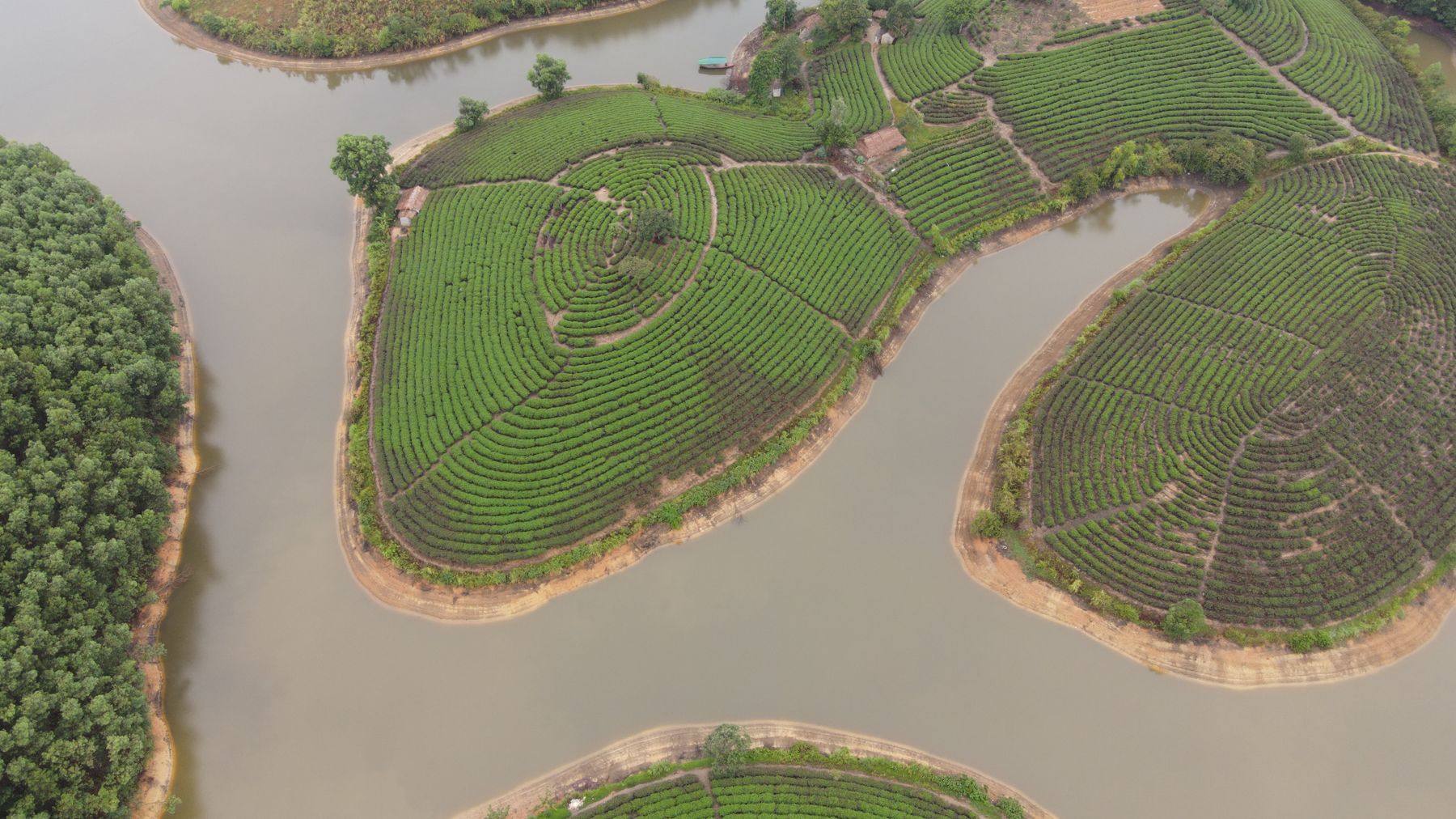
Photo by Quang Nguyen Vinh on Pexels
What to do
Take a boat through the islands. Local operators run small wooden boats (often just a farmer with a rowboat) through the channels between the tea islands. A 30–45 minute loop costs 50,000–100,000 VND per person. This is the main activity and it's genuinely pleasant — the water is calm, the tea bushes are close enough to touch, and the boatman will usually stop so you can climb onto one of the larger islands.
Walk through the tea fields. On the mainland slopes surrounding the water, tea plantations stretch in neat rows up the hillsides. You can walk through them freely. Early morning, when mist sits low over the rows, is the best time. If workers are harvesting, they'll generally let you watch — tea picking here is still done by hand.
Climb to the viewpoint. A hillside on the eastern edge of the area has been cleared as an informal lookout. The climb takes about 15 minutes on a dirt path. From the top you get the overhead perspective that makes Dao Che famous — the full spread of green islands on water. Bring water; there's no shade.
Try fresh tea at a farmhouse. Several families near the islands sell tea directly — both dried leaves and freshly brewed cups. A bag of local green tea costs 50,000–100,000 VND depending on grade. The tea here is unpretentious and earthy, nothing like the refined stuff you'd find in a Hanoi (하노이 / 河内 / ハノイ) tea house, but it's honest and fresh. If you appreciate lotus tea or Vietnamese coffee, this is a different side of Vietnamese drink culture worth tasting.
Photograph the fishing nets. Scattered around the water are traditional square dip nets ("vong") mounted on bamboo frames. They're photogenic, especially at golden hour, and still actively used.
Where to eat nearby
Thanh Chuong district isn't known for restaurants, but roadside "quan com" (rice shops) along National Road 46 serve solid, cheap meals for 30,000–50,000 VND.
Two things worth seeking out: "banh muong" — a local rice cake steamed in banana leaves, thicker and chewier than "banh cuon," topped with fried shallots and dipped in fish sauce. It's a Nghe An specialty you won't easily find elsewhere. Also look for "nhut" — a fermented side dish made from papaya and fish sauce that Nghe An people eat with rice. It's pungent and not for everyone, but it's the real local flavor.
If you want something more familiar, drive back toward Thanh Chuong town where a couple of "pho" and "bun bo Hue" shops operate in the morning.
Where to stay
There are no hotels at Dao Che itself. Your options:
- Homestays near the tea islands have popped up in the last few years. Basic rooms with fans, shared bathrooms, mosquito nets. Expect 200,000–350,000 VND per night. Booking is usually done by phone (Vietnamese language), so ask your hotel in Vinh to call ahead.
- Thanh Chuong town has a few guesthouses ("nha nghi") in the 150,000–300,000 VND range. Functional, not charming.
- Vinh city is the comfortable base — hotels from 300,000 VND (budget) to 1,200,000 VND (mid-range with pool). Day-trip from Vinh and return for the night.

Photo by Pragyan Bezbaruah on Pexels
Practical tips locals would tell you
- Bring sunscreen and a hat. There is almost no tree shade around the water.
- Carry cash. No ATMs near the tea islands, and nobody takes cards.
- Download Google Maps offline or Maps.me before going — phone signal gets patchy west of Thanh Chuong town.
- If you're on a motorbike, fill up in Thanh Chuong town. The next fuel station west is far.
- Learn the phrase "cho toi di thuyen" (I want to take a boat) — it'll save you ten minutes of gesturing.
Common mistakes to avoid
Don't come expecting a developed tourist site. There are no ticket counters, no visitor center, no English-speaking guides. That's the charm, but it also means you need to be self-sufficient.
Don't arrive midday. The light is flat, the heat is brutal (especially April onward), and the boatmen often take lunch breaks from 11:00 to 13:00. Come at 6:00–9:00 in the morning or 15:00–17:00 in the afternoon.
Don't skip the hilltop viewpoint. The boat ride is nice, but Dao Che's real visual impact comes from elevation. If you only see it from water level, you'll miss what makes it distinctive.
Practical notes
Dao Che Thanh Chuong works best as a half-day trip from Vinh, combined with a longer route through Nghe An or a journey between Hanoi and Hue. It's not a destination you'd fly to Vietnam for — but if you're already in the region and want something quiet, green, and genuinely off the standard circuit, it delivers.
Last updated · May 29, 2026 · independently researched, never sponsored.