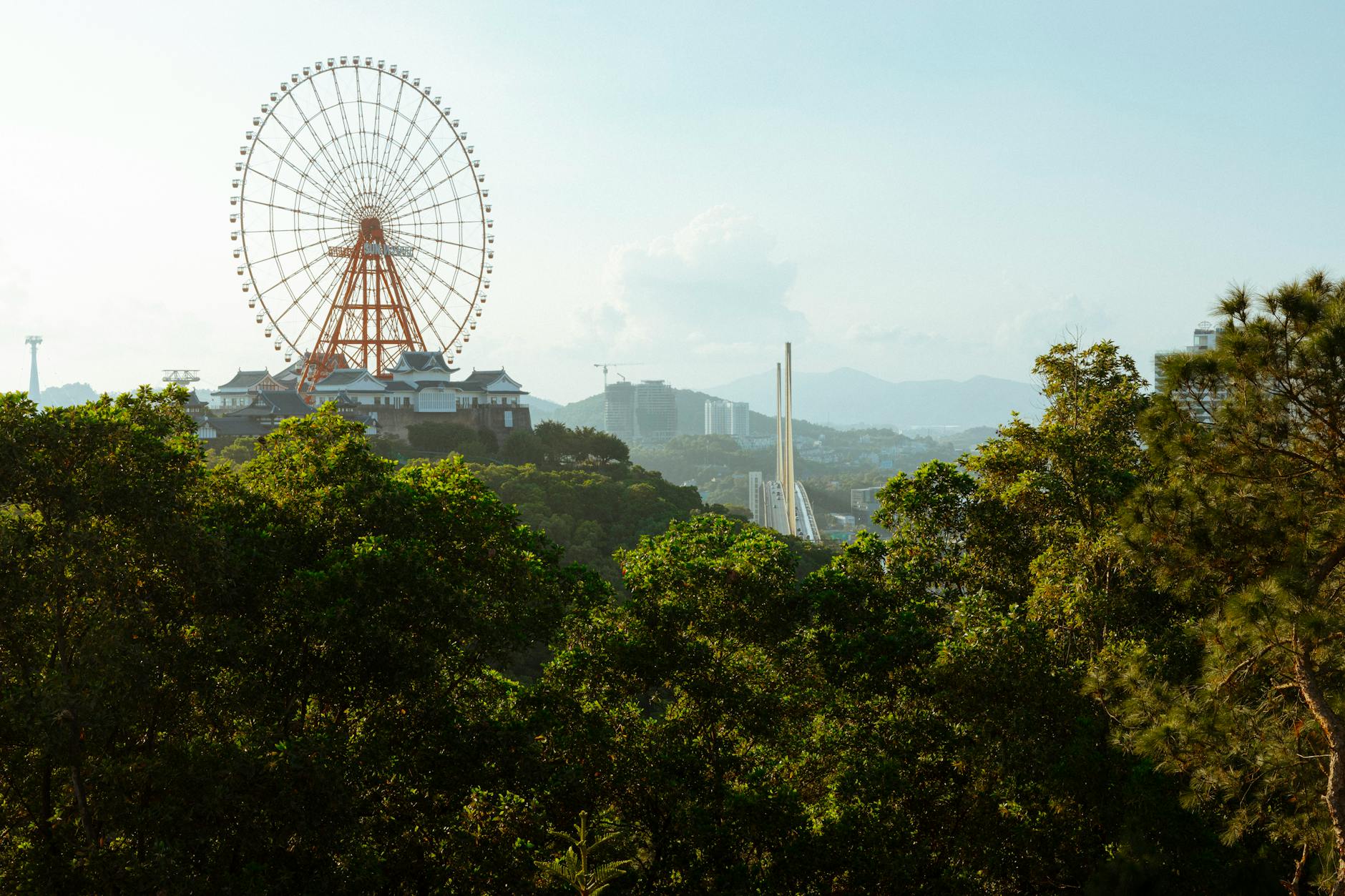
Den Cua Ong sits on a hillside in Cam Pha, Quang Ninh province, overlooking the sea. It's one of the most significant temple complexes in northern Vietnam (베트남 / 越南 / ベトナム) — a place where coal miners, fisherfolk, and business owners from across the region come to pray, especially during the first lunar months. If you're already heading to Ha Long Bay, this is a worthwhile detour that most foreign travelers skip entirely.
What it is and why it matters
Den Cua Ong is dedicated to Tran Quoc Tang, a general of the Tran Dynasty who played a key role in the 13th-century resistance against Mongol invasions. The temple has been rebuilt and expanded several times over the centuries, but the current complex dates largely from restorations in the early 2000s. It sprawls across a forested hillside in three main tiers — the lower courtyard, the middle halls, and the upper sanctuaries — connected by stone staircases.
The complex was recognized as a National Historical and Cultural Relic, and it draws serious crowds during festival season. But outside of peak periods, it's a genuinely peaceful place with good views over Bai Tu Long Bay and the industrial port of Cam Pha below.
Why travelers go
Most Vietnamese visitors come for spiritual reasons — to pray for prosperity, health, or safe passage at sea. For travelers, the draw is different. The architecture is impressive without being overwrought, the hilltop setting gives you wide views of the coastline, and the atmosphere on a quiet weekday feels worlds apart from the tourist circuit at Ha Long Bay (하롱베이 / 下龙湾 / ハロン湾), just 30 km to the southwest.
It's also a window into a part of Vietnamese religious life that tourist-oriented pagodas don't always show you. The rituals here are active and genuine — incense, offerings of fruit and paper money, and long prayers recited by devotees who've traveled hours to be here.
Best time to visit
The temple festival runs from the 2nd to the 4th of the first lunar month (usually late January or February). If you want the full spectacle — processions, traditional music, dense crowds — that's the window. Expect shoulder-to-shoulder foot traffic and limited parking.
For a calmer visit, go between March and May or September to November. The weather is cooler, humidity is lower, and you'll have the courtyards mostly to yourself on weekdays. Avoid July and August if you dislike heat — Cam Pha gets sticky, and the stone stairs in full sun are no joke.
How to get there
Cam Pha is roughly 180 km east of Hanoi and about 30 km northeast of Ha Long City.
From Hanoi
Take a bus from My Dinh or Gia Lam bus station to Cam Pha. The ride takes around 3.5 to 4 hours and costs 150,000–200,000 VND. From Cam Pha bus station, the temple is about 3 km — a 30,000 VND xe om (motorbike taxi) ride or a short cab trip.
From Ha Long City
If you're already visiting Ha Long Bay, grab a local bus or taxi heading northeast along National Road 18A. It's about 40 minutes by car, and a taxi will run you 250,000–350,000 VND one way. Some Ha Long Bay tour operators offer half-day add-ons that include Den Cua Ong, though the quality varies.

Photo by Hugo Heimendinger on Pexels
What to do
Walk the full three-tier complex
Don't stop at the lower courtyard. The real character of Den Cua Ong is in the climb — through the middle halls where devotees burn offerings, up to the upper sanctuaries where the main altars sit. The whole loop takes 45 minutes to an hour at a relaxed pace.
Watch the rituals
If you visit on the 1st or 15th of the lunar month, you'll see more elaborate prayer ceremonies. Even on ordinary days, there's usually someone making offerings. Be respectful — don't walk between a person praying and the altar, and keep your camera use discreet.
Take in the view from the top terrace
The upper level offers a wide panorama of Bai Tu Long Bay's islands and the industrial coastline of Cam Pha. It's a strange and honest contrast — fishing boats, coal barges, and karst limestone all in the same frame.
Explore the surrounding grounds
The forested paths around the complex are worth a wander. Old banyan trees, small shrines tucked into the hillside, and stone carvings that predate the recent restorations. It's quieter here than inside the main halls.
Visit Cua Ong Market
Just downhill from the temple, this local market sells dried seafood, regional fruit, and "banh chung" during festival season. It's small but worth a 20-minute browse, especially for cheap dried squid and shrimp paste.
Where to eat nearby
Cam Pha isn't a food destination in the way Hanoi or Hue is, but there are a couple of things worth tracking down.
"Cha muc" (squid cake) is the local specialty — bouncy, fried patties of pounded squid served with dipping sauce and herbs. Vendors near the temple entrance sell them for 15,000–25,000 VND per portion. For a sit-down version, try the seafood restaurants along the waterfront road in central Cam Pha.
For a proper meal, look for "bun rieu" at the small stalls near Cua Ong Market. The crab-and-tomato broth here leans heavier on seafood than the Hanoi version — a regional twist worth trying. A bowl runs about 30,000–40,000 VND.
Where to stay
Most travelers base themselves in Ha Long City and visit Den Cua Ong as a day trip, which makes logistical sense. But if you want to stay closer:
- Budget: Guesthouses ("nha nghi") in Cam Pha town center go for 200,000–350,000 VND per night. Basic but clean enough for a night.
- Mid-range: A handful of hotels near the Cam Pha waterfront offer rooms with air conditioning and breakfast for 500,000–800,000 VND.
- Ha Long City: If you'd rather have more options, the hotel strip along Bai Chay in Ha Long City has everything from 300,000 VND hostels to 2,000,000 VND resort rooms.

Photo by Quang Nguyen Vinh on Pexels
Practical tips locals would tell you
- Dress modestly. Shoulders and knees covered. This is an active place of worship, not a museum. You'll see Vietnamese visitors dressed respectfully and you should do the same.
- Bring cash. There's nowhere to use a card at the temple or the surrounding stalls. Small bills are useful for offerings and donations.
- Wear proper shoes. The stone stairs get slippery after rain, and there are a lot of them. Leave the flip-flops for the beach.
- Buy incense at the temple entrance. It's cheap (5,000–10,000 VND) and participating in the offering ritual — even as a non-Buddhist visitor — is welcomed.
Common mistakes to avoid
- Visiting only during festival season and expecting a contemplative experience. The lunar new year festival is vibrant but chaotic. If you want quiet, come on a weekday outside of January–February.
- Treating it as a quick photo stop. Budget at least 90 minutes. Rushing through the lower courtyard and leaving means you miss the best parts of the complex.
- Skipping it because you've already seen temples in Hanoi. Den Cua Ong has a different energy than the Temple of Literature or Tran Quoc Pagoda. The coastal setting and the working-class devotion here feel distinct from Hanoi's more tourist-polished pagodas.
Practical notes
Den Cua Ong is free to enter, though donation boxes are placed throughout the complex. The temple is open daily from around 6:00 to 18:00. If you're combining it with Ha Long Bay, slot it in on your arrival or departure day — the detour adds about an hour to the drive from Hanoi, and it pairs well with the journey.
Last updated · May 29, 2026 · independently researched, never sponsored.