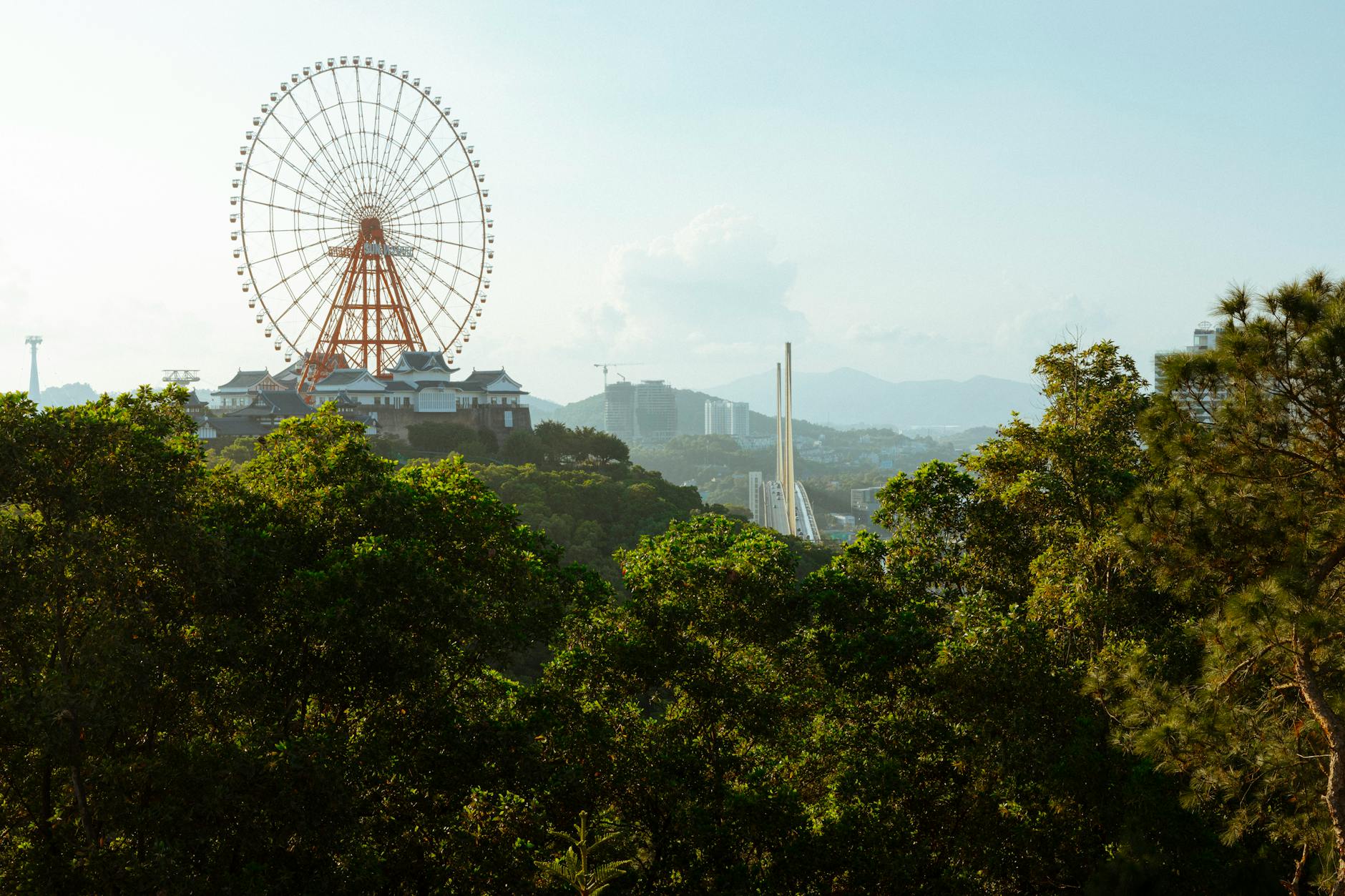
What it is
Cung Quy Hoach Quang Ninh — sometimes called the Quang Ninh Exhibition and Planning Center — is a massive glass-and-steel building sitting right on the Ha Long Bay waterfront in Ha Long city. Designed by Spanish architect Salvador Pérez Arroyo, the building opened in 2015 and functions as part museum, part urban planning exhibition, part cultural center. Think of it as Quang Ninh province's attempt to tell its own story in one building: coal mining heritage, ethnic minority cultures, geological history, and a forward-looking vision for the region's development.
The architecture alone is the draw. The exterior is wrapped in dark tinted glass panels that reflect the bay and sky, giving it a monolithic, almost alien quality against the coastline. At roughly 20,000 square meters spread across multiple floors, it's genuinely one of the more ambitious public buildings in northern Vietnam (베트남 / 越南 / ベトナム).
Why travelers go
Most visitors to Quang Ninh province are heading straight for Ha Long Bay (하롱베이 / 下龙湾 / ハロン湾), and fairly so. But if you've got a half-day gap — waiting for an afternoon cruise departure, arriving early from Hanoi, or just need a break from the limestone karst photos — Cung Quy Hoach is a solid use of two to three hours.
The building is air-conditioned, which matters more than you think between May and September. The exhibitions are well-curated by Vietnamese standards, with English signage throughout. And the top-floor observation deck gives you a panoramic view across the bay that costs nothing beyond your entry ticket.
It's also genuinely interesting if you're curious about the region beyond the tourist circuit — the coal mining displays, the ethnic minority textiles, and the geological exhibits add context to what you're seeing out on the water.
Best time to visit
The building is open year-round, but your experience varies by season.
October through December is ideal. Skies are clearer, humidity drops, and the glass exterior photographs well against blue sky. The observation deck views are sharpest in this window.
May through August is hot and humid, but the fully air-conditioned interior makes it a genuine refuge. If you're doing a summer Ha Long Bay trip and need to escape the midday heat, this is your move.
January through March can be foggy and drizzly in Quang Ninh. The exterior loses its visual punch, but the indoor exhibitions are unaffected.
The center is closed on Mondays. Hours are typically 8:00–11:30 and 13:30–17:00 (they close for lunch). Don't show up at noon expecting to walk in.
How to get there
From Hanoi, the most common route is by car or bus along the Ha Long–Hai Phong Expressway. The drive takes about 2.5 hours from central Hanoi.
- Bus: Grab a seat on a limousine van from My Dinh or Gia Lam bus station. Tickets run 150,000–250,000 VND one way depending on the operator. You'll be dropped at Bai Chay bus station in Ha Long city, from which the exhibition center is a 10-minute taxi ride (around 40,000–60,000 VND).
- Private car/taxi: A one-way transfer from Hanoi runs roughly 1,200,000–1,500,000 VND. Worth it if you're splitting between a group.
- If you're already in Ha Long city: The building sits on Tran Quoc Nghien street along the waterfront in Hon Gai ward. A Grab from the Bai Chay tourist strip takes about 15 minutes and costs 50,000–80,000 VND.
Entry to the exhibition center is free or very cheap — typically 30,000 VND for adults, though pricing has varied. Check at the door.

Photo by skydesign on Pexels
What to do inside
Walk the geological and natural history floor
The ground-level exhibitions cover the formation of Ha Long Bay's karst landscape, with fossil specimens, geological cross-sections, and scale models. It's the kind of context that makes your bay cruise more interesting afterward. If you've ever wondered why those limestone pillars look the way they do, this floor explains it clearly.
Explore the ethnic minority cultural displays
Quang Ninh province is home to several ethnic groups, including the Dao, Tay, and San Diu. The second floor has traditional clothing, tools, and ritual objects. The textile work is particularly good — if you're interested in Vietnamese craft traditions like "ao dai" tailoring or Dong Ho painting, this gives you a different regional lens on material culture.
Hit the observation deck
The top floor has a wide viewing area that looks out over Ha Long Bay. On a clear day, you can see the karst formations stretching to the horizon. It's a different perspective from being on the water — you get the full scale of the bay's geography. Bring your camera.
Check the temporary exhibition hall
The center rotates temporary shows — sometimes contemporary art, sometimes photography, sometimes provincial development projects. Quality varies, but it's free and occasionally surprising.
Browse the library
There's a public library wing with a decent collection. Not a major activity for most travelers, but if you're a reader stuck in Ha Long for a day, it exists.
Where to eat nearby
The area around Cung Quy Hoach isn't a major food district, but you're in Quang Ninh — seafood is the play.
Head to the Cai Dam night market, about 2 km from the exhibition center, for grilled squid, steamed clams, and "cha muc" (squid cake), which is Quang Ninh's signature dish. A plate of cha muc with dipping sauce runs 60,000–100,000 VND. Pair it with a cold beer — "bia hoi" is everywhere — and grilled scallops with peanuts and spring onion.
For something more substantial, look for "bun cha" or a bowl of "pho" at any of the small restaurants along Tran Quoc Nghien street. Nothing fancy, but filling and cheap — 35,000–50,000 VND a bowl.
Where to stay
Most travelers base themselves in the Bai Chay area of Ha Long city, which has the densest concentration of hotels.
- Budget: Guesthouses and mini-hotels around Bai Chay run 250,000–500,000 VND per night. Basic but functional.
- Mid-range: Newer 3-star hotels along the waterfront go for 600,000–1,200,000 VND. Many include breakfast and bay views.
- High-end: A few international-brand hotels operate in the area, with rates from 1,500,000 VND upward.
Hon Gai ward — the side of the bay where Cung Quy Hoach sits — has fewer tourist hotels but is quieter and closer to the exhibition center.

Photo by Tuan Minh on Pexels
Practical tips locals would tell you
- Go in the morning. The building faces east, and morning light on the glass facade is when it looks best. By afternoon, you're shooting into glare.
- Combine it with Bai Tho Mountain. The mountain is walkable from the exhibition center and gives you an elevated view of the entire bay area. Budget an extra hour.
- Bring your passport or ID. You may be asked for it at the ticket desk.
- Don't skip the basement level. Some visitors miss the lower exhibition halls — they're accessible by escalator near the main entrance and often have the most detailed displays.
Common mistakes to avoid
- Showing up on Monday or during lunch break. The center is closed Mondays entirely and shuts 11:30–13:30 for lunch. Plan around this.
- Treating it as a five-minute photo stop. The building photographs well from outside, but the interior exhibitions genuinely reward an hour or two. Don't just snap the facade and leave.
- Confusing Ha Long city sides. Ha Long city is split by the bay into Bai Chay (tourist side) and Hon Gai (local side). Cung Quy Hoach is on the Hon Gai side. If your hotel is in Bai Chay, factor in the bridge crossing.
Practical notes
Cung Quy Hoach Quang Ninh works best as a complement to a Ha Long Bay trip, not a standalone destination. Give it a morning before an afternoon cruise, or use it to fill a transit day. It's one of the rare provincial museums in Vietnam that feels like it was built with actual ambition — and it delivers on most of it.
Last updated · May 29, 2026 · independently researched, never sponsored.