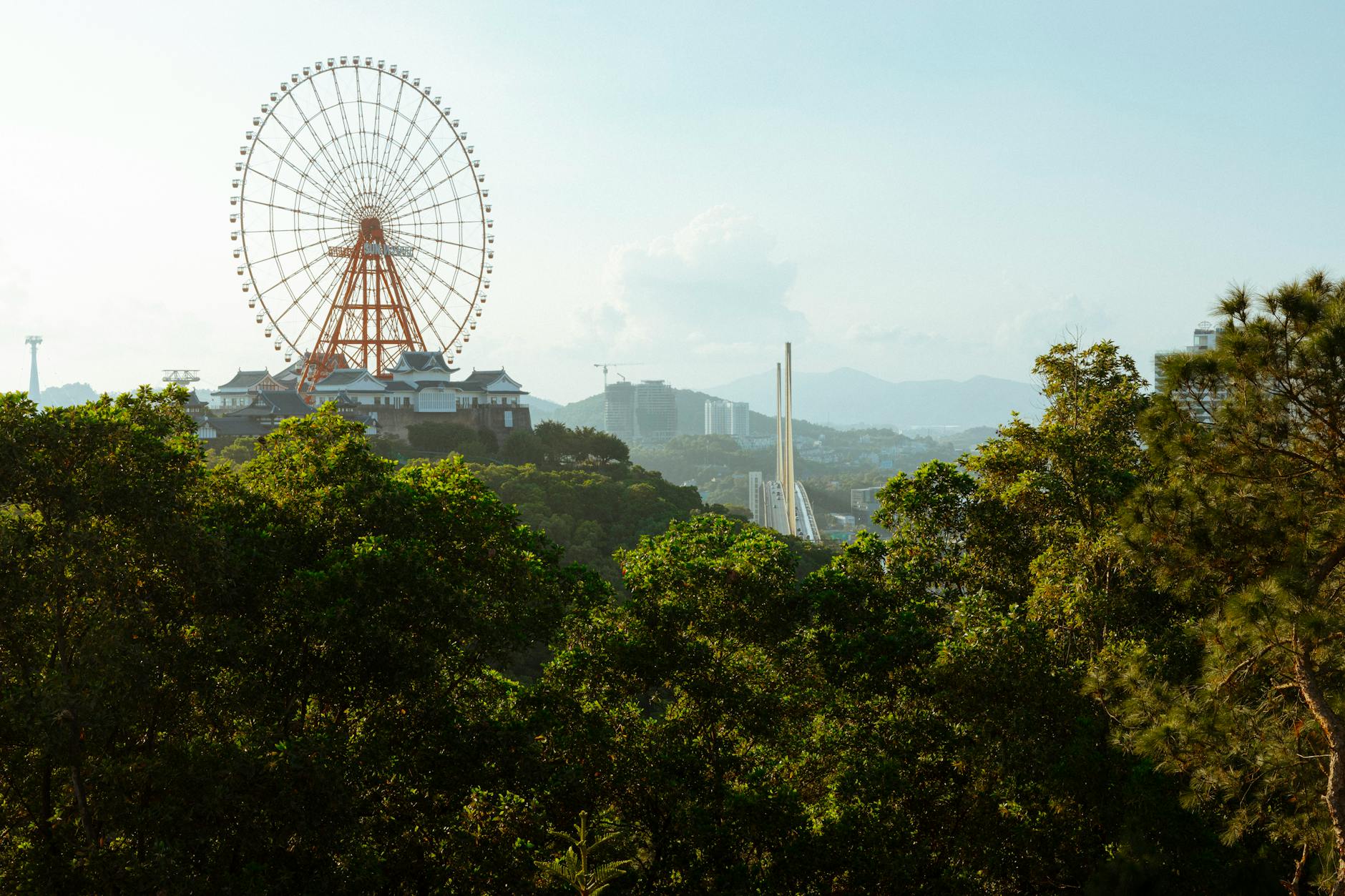
Mong Cai sits at the northeastern tip of Quang Ninh province, where Vietnam (베트남 / 越南 / ベトナム) meets China across the Ka Long River. It's the busiest land border crossing in the north, and whether you're heading to or from Dongxing on the Chinese side, or just curious about a Vietnamese border town that runs on trade, this is what you need to know.
What Mong Cai Actually Is
Mong Cai Border Gate (Cua Khau Quoc Te Mong Cai) is an international crossing point connecting Mong Cai city in Quang Ninh with Dongxing city in Guangxi, China. The current border gate complex was upgraded and expanded in the 2010s, and today it handles both pedestrian and vehicle crossings. The area around it is a free-trade zone, which means the town is essentially one giant market — Vietnamese buyers hauling goods from China, Chinese tourists coming over for seafood, and a steady stream of cross-border traders who do this run daily.
It's not a place most Western tourists end up, which is part of what makes it interesting. The vibe is raw commerce, not curated tourism.
Why Travelers Go
Three main reasons. First, it's a practical overland route between northern Vietnam and southern China — useful if you're doing a bigger Southeast Asia-to-China loop. Second, the Mong Cai free-trade zone has some of the cheapest electronics, fabrics, and household goods in Vietnam, and browsing the markets is genuinely entertaining even if you're not buying. Third, the surrounding coastline — particularly Tra Co Beach, about 8 km southeast of town — is one of the longest continuous stretches of sand in Vietnam at roughly 17 km, and it sees almost zero foreign visitors.
Some travelers also use Mong Cai as a stop on a road trip from Ha Long Bay up the coast, which is a solid route if you like the idea of watching the scenery shift from limestone karsts to border-town energy.
Best Time to Visit
October through March is the sweet spot. Summers (June–August) are brutally hot and humid, with heavy rain that can make the coastal roads unpleasant. Winter months are cooler — temperatures hover around 15–20°C — and the skies are clearer. Avoid the weeks right around Tet if you want the markets open; most traders shut down for at least a week, and the border crossing gets chaotic with returning workers.
How to Get There
From Hanoi, you have two realistic options.
Bus: Several operators run daily services from My Dinh or Gia Lam bus stations to Mong Cai. The ride takes around 7–8 hours on a sleeper bus and costs between 250,000–350,000 VND depending on the company. Kumho Viet Thanh and Phuc Xuyen are reliable names. Buses usually depart early morning or late evening.
From Ha Long Bay (하롱베이 / 下龙湾 / ハロン湾): If you're already in Ha Long or Cam Pha, you can grab a local bus or minivan to Mong Cai. The distance is about 180 km along the QL18 highway, and it takes around 3.5–4 hours. Expect to pay 120,000–180,000 VND.
There's also a small airport in Van Don (about 120 km south), but as of now it mostly serves domestic routes to Saigon and Da Nang, not Hanoi. It's a backup option, not a primary one.

Photo by Hải Băng on Pexels
What to Do
Walk the Border Gate Complex
Even if you're not crossing into China, it's worth walking up to the gate area to see the Ka Long River and the Bac Luan Bridge connecting the two countries. The pedestrian area around the gate is busy with traders, money changers, and vendors selling everything from dried squid to phone cases. Go in the morning when the energy peaks.
Browse the Markets
Mong Cai's central market and the surrounding trade streets are the main draw. Vinhtien Market (Cho Mong Cai) is the anchor — a multi-story building packed with Chinese-imported goods. Electronics, clothing, kitchenware, fabric by the bolt. Bargaining is expected and aggressive. Even if you buy nothing, the scale of it is something.
Hit Tra Co Beach
Tra Co is a long, flat beach that stretches southeast from town. It's not glamorous — think fishing boats, a few basic seafood shacks, and wide brown sand — but it's quiet on weekdays and the seafood is fresh. The Tra Co Church, a French-colonial era building near the beach, is worth a quick stop.
Visit Chua Xuan Lan
A small pagoda on a hill overlooking the Ka Long River. It's nothing compared to Bai Dinh or Tran Quoc Pagoda in terms of scale, but the river views are good and you'll likely have the place to yourself.
Day Trip to Tuan Chau or Co To Island
If you have extra time, the islands off Quang Ninh's coast — particularly Co To, about 4 hours by boat from Mong Cai — offer a completely different pace. Co To is small, quiet, and has some of the clearest water in the north. Boats run seasonally, so check schedules locally.
Where to Eat
Mong Cai's food scene revolves around seafood and border-town specialties.
"Bun cha" doesn't really apply here — this is not Hanoi food territory. Instead, look for "gat gu" noodles, a Quang Ninh specialty where flat rice noodles are served with a soy-based broth and pork. Simple, cheap (25,000–35,000 VND a bowl), and oddly addictive. Stalls near the central market serve it from early morning.
For seafood, head to the restaurants along the road to Tra Co Beach. Grilled "sam" (horseshoe crab), steamed clams, and stir-fried mantis shrimp are the local moves. A big seafood spread for two runs around 300,000–500,000 VND depending on what's in season. Don't skip the "cha muc" — squid cake — which Quang Ninh claims as its signature dish, and honestly, it's better here than in Ha Long because the squid is fresher.
Where to Stay
Mong Cai has plenty of hotels but nothing luxurious. Budget guesthouses near the market go for 200,000–350,000 VND per night. Mid-range hotels (Hai Yen, Nha Nghi Thanh Binh) with air conditioning, hot water, and Wi-Fi run 400,000–700,000 VND. If you want something slightly nicer, the hotels along Tra Co Beach offer sea-facing rooms for 600,000–1,000,000 VND, though "sea-facing" sometimes means "you can see the water if you lean off the balcony."

Photo by Quang Nguyen Vinh on Pexels
Practical Tips
- Money: Bring VND cash. While some market vendors accept Chinese yuan, ATMs are available in town and VND is what you want for everything else. Don't change money with the street changers at the border — the rates are bad and short-changing is common.
- Border crossing hours: The gate is open from 7:00 AM to 7:00 PM daily. Arrive before 9 AM or after 2 PM to avoid the worst queues. You'll need a valid visa or e-visa for whichever side you're entering.
- Language: Very little English spoken here. Basic Vietnamese phrases help. Some vendors speak Mandarin.
- Phone signal: Vietnamese SIM cards work fine in town. If you're crossing into China, pick up a Chinese SIM in Dongxing — don't rely on roaming.
Common Mistakes
Assuming it's a quick stop. The crossing itself can eat 1–2 hours during peak times, and if you want to explore the markets and Tra Co, you need at least one full day.
Overpaying at the market. Start your counter-offer at 40% of the first quoted price and work from there. Vendors expect it.
Skipping Tra Co. Most people come for the border and markets and leave. The beach is worth the 15-minute motorbike ride, especially for the seafood shacks.
Practical Notes
Mong Cai is rough around the edges and entirely unconcerned with impressing tourists — which is exactly why it's worth the detour if you're exploring Quang Ninh beyond Ha Long Bay. Come for the border-town chaos, stay for the squid cake, and bring cash.
Last updated · May 29, 2026 · independently researched, never sponsored.