What it is
Doi Che Trai Tim — the heart-shaped tea hill — is a section of Moc Chau's tea plantation where a cluster of trees was left uncut in the middle of a sloped field, forming a rough heart shape when viewed from above. It sits in the Moc Chau plateau of Son La province, about 200 km west of Hanoi. The "heart" isn't some grand landscaping project. Locals say the trees were simply spared during clearing decades ago, and the shape caught on with photographers around 2015. Since then it's become one of the plateau's most-photographed spots, though calling it famous might be generous — most foreign travelers still drive right past it.
The surrounding area is working farmland. Moc Chau is one of Vietnam (베트남 / 越南 / ベトナム)'s major tea-growing regions, and the rows of bright green Shan Tuyet and Oolong tea bushes that carpet the hills are the real draw. The heart is a nice focal point, but the landscape around it is what makes the trip worth your time.
Why travelers go
Moc Chau sits at about 1,050 meters elevation, which means it's noticeably cooler than Hanoi (하노이 / 河内 / ハノイ) — a relief if you're traveling in summer. The plateau is genuinely rural in a way that Sapa or Da Lat no longer are. You won't find a strip of hotels lining the main road or tour buses idling in parking lots.
People come for the green. The tea fields here roll across hills in tight, manicured rows that look almost artificial. In plum blossom season (January–February), the white flowers against the green tea creates a contrast you don't get elsewhere in the north. The heart-shaped hill is the photo op, but the plateau itself — dairy farms, wildflower fields, pine forests — is the real product.
Best time to visit
Two windows stand out:
- Late January to mid-February — Plum and peach blossoms are in bloom across the plateau. If Tet falls in this window, expect more domestic visitors, but the scenery peaks here.
- Late October to November — The tea is bright green after the rainy season, wildflowers (especially wild sunflowers) cover the roadsides, and the weather is dry and cool. Mornings often bring low clouds that sit in the valleys.
Avoid June through August if you dislike rain. The plateau gets heavy afternoon downpours, and fog can obscure the hills entirely. March through May is fine but dry and a bit hazy.
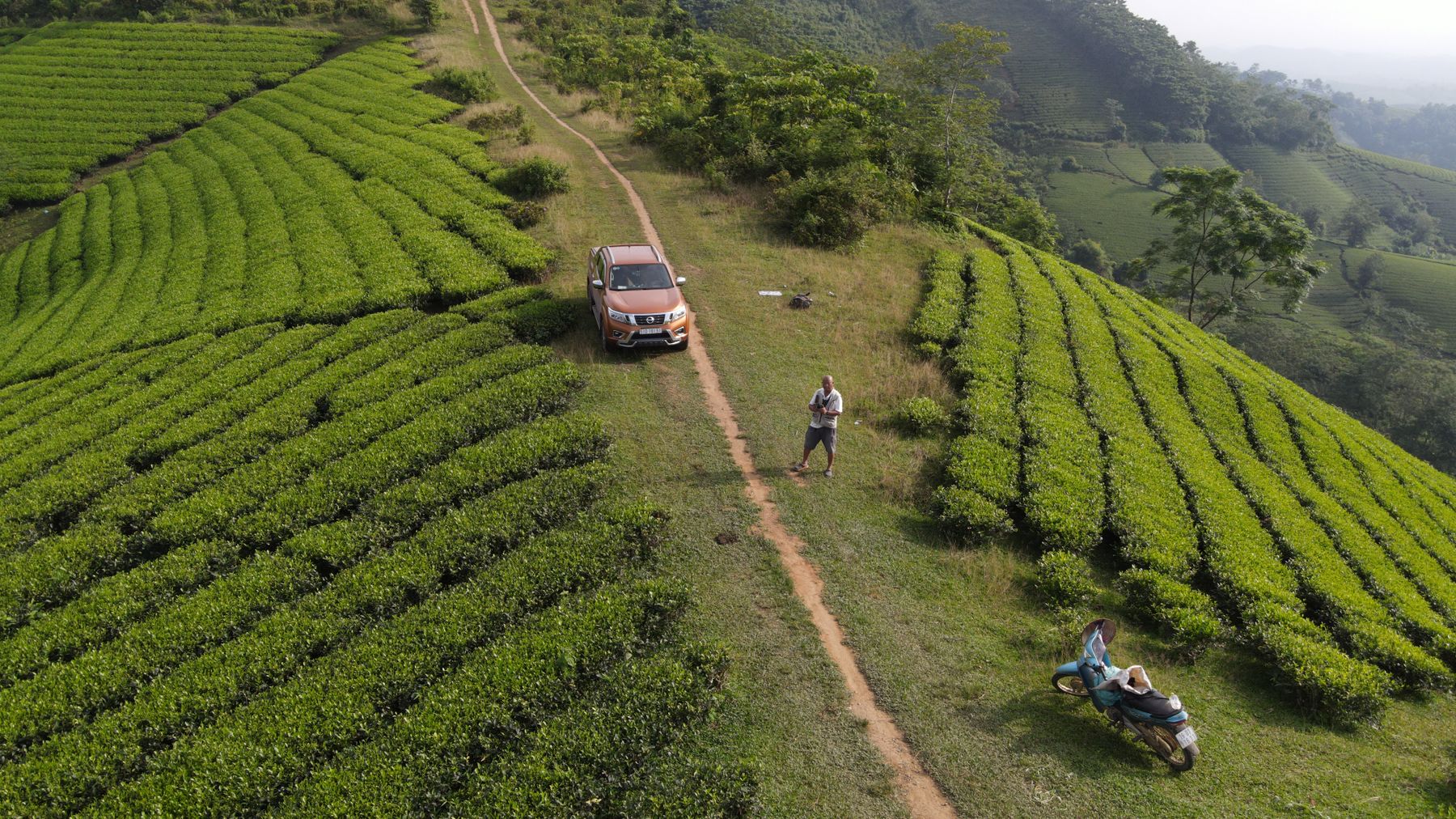
Photo by Quang Nguyen Vinh on Pexels
How to get there from Hanoi
By motorbike: The most common way for independent travelers. Take QL6 (National Highway 6) west from Hanoi through Hoa Binh. The ride is about 200 km and takes 4.5–5 hours without long stops. The road climbs through Thung Khe Pass — a solid stretch of mountain riding with good pavement. Fuel up in Hoa Binh city; stations thin out after that.
By bus: Buses to Moc Chau leave from My Dinh bus station in Hanoi. Tickets run 120,000–180,000 VND depending on the operator. The ride takes about 5–6 hours. Ask to be dropped at Moc Chau town (thi tran Moc Chau). From there, Doi Che Trai Tim is about 6 km south — you'll need a local xe om (motorbike taxi) or a rental.
By car: A private car or hired driver from Hanoi costs around 2,500,000–3,000,000 VND round trip. Worth considering if you're splitting with a group.
The heart-shaped tea hill is on a secondary road near the Moc Chau town center, off QL43. Look for signs reading "Doi Che Trai Tim" — there's a small parking area and a 10,000 VND entry fee.
What to do
Walk the tea rows
The hill is open for walking. You can climb up between the tea bushes to reach the cluster of trees that forms the heart. The best perspective is actually from the opposite hill — there's a viewing platform that gives you the overhead angle. Early morning, before 8 AM, the light is soft and the crowds are thin.
Visit a working tea factory
Several small tea processing workshops operate within a few kilometers of the hill. Moc Chau Tea Company has a facility on QL43 where you can watch leaves being dried and rolled. They sell fresh Shan Tuyet and Oolong tea at farm-gate prices — 80,000–200,000 VND per 100 grams depending on grade. If you drink Vietnamese coffee regularly, switching to Moc Chau Shan Tuyet for a week is a worthwhile reset.
Drive to Dai Yem Waterfall
About 15 km from the tea hill, Dai Yem (also called Nang waterfall) drops in two tiers through forest. It's not a massive cascade, but the pool at the base is swimmable in dry season. Entry is 40,000 VND. The glass-bottom bridge over the falls costs extra (60,000 VND) and is skippable unless you enjoy that sort of thing.
Ride the plateau loop
Rent a motorbike in town (150,000–200,000 VND/day for a semi-auto) and ride the loop through Tan Lap, On Oc, and the dairy farms south of town. The roads are paved and mostly flat. You'll pass strawberry farms (pick your own for about 100,000 VND per kilo), pine forests, and — in November — stretches of wild sunflowers taller than your handlebars.
Catch sunrise from the hills
If you stay overnight, set an alarm. The valleys below Moc Chau fill with clouds before dawn, and the hills poke through like islands. It's a common sight for anyone who lives up here, but for a first-time visitor it lands hard.
Where to eat nearby
Moc Chau town has a strip of local restaurants along QL6. Two things to seek out:
- "Com lam" — sticky rice cooked in bamboo tubes over charcoal. It's a Thai ethnic minority specialty common across Son La. Pair it with grilled pork or wild boar.
- Moc Chau yogurt and fresh milk — The plateau has dairy farms dating back to a 1970s development program. The yogurt here is tangy and sold everywhere for 5,000–8,000 VND per jar. Not a meal, but you'll end up eating six of them.
For something more substantial, look for restaurants serving "lau ca hoi" (salmon hotpot) — Moc Chau's cold streams support trout and salmon farming. A pot for two runs about 250,000–350,000 VND.

Photo by Hồng Quang Official on Pexels
Where to stay
Moc Chau town has guesthouses from 200,000–400,000 VND per night. They're basic but clean. For something with more character, several homestays in the surrounding villages offer rooms in traditional Thai stilt houses — expect 300,000–500,000 VND including dinner and breakfast.
A few mid-range resorts have opened in recent years, with rooms in the 800,000–1,500,000 VND range. They're fine, but honestly, the homestays are a better experience. You eat with the family, the food is better, and you're waking up in the hills instead of by a highway.
Practical tips
- Bring layers. Even in summer, mornings on the plateau drop to 15–18°C. In winter it can hit 5°C at night.
- Cash only. Most places in Moc Chau don't take cards. ATMs exist in town but can run dry on weekends.
- Don't pick the tea. It looks tempting. The farmers won't appreciate it, and raw leaves aren't useful to you anyway.
- Weekend traffic. Hanoi residents drive to Moc Chau in droves on Saturday mornings. If you can, go midweek.
- The heart shape is subtle. From ground level, it just looks like a patch of trees. Don't skip the viewing platform on the opposite slope — that's where the shape reveals itself.
Common mistakes
Treating Doi Che Trai Tim as a day trip from Hanoi. You can do it, but 10 hours of driving for a 30-minute photo stop isn't a great trade. Stay at least one night and explore the plateau properly. The tea hill is a good starting point, not the whole trip.
Another one: coming only for the heart and leaving disappointed because it's smaller than Instagram suggested. The hill is modest. The plateau is the destination. Calibrate accordingly.
Last updated · Aug 21, 2026 · independently researched, never sponsored.