What it is
Cay Da Ban Heo is a massive old banyan tree rooted in Ban Heo, a small Thai ethnic village in Thuan Chau district, Son La province. The tree has been growing here for over 300 years, its aerial roots fanning out across roughly 600 square meters of ground — wide enough that the canopy covers most of the village's communal gathering area. Locals treat the tree as a kind of spiritual anchor for the village, and it was recognized as a Vietnamese Heritage Tree (Cay Di San Viet Nam) by the Vietnam (베트남 / 越南 / ベトナム) Association for Conservation of Nature and Environment.
This isn't a tourist attraction in the conventional sense. There's no ticket booth, no gift shop, no designated parking lot with tour buses. It's a living part of a village that happens to draw visitors who are already traveling the northwest loop or passing through Son La on their way to Dien Bien Phu.
Why travelers go
Most people end up at Cay Da Ban Heo because they're road-tripping the northwest highlands and want something more grounded than another mountain pass lookout. The tree itself is genuinely impressive — not in a manicured botanical-garden way, but in the way that very old living things tend to stop you in your tracks. The root system alone is worth the detour: thick tendrils descend from branches and re-enter the earth, creating what looks like a small wooden cathedral.
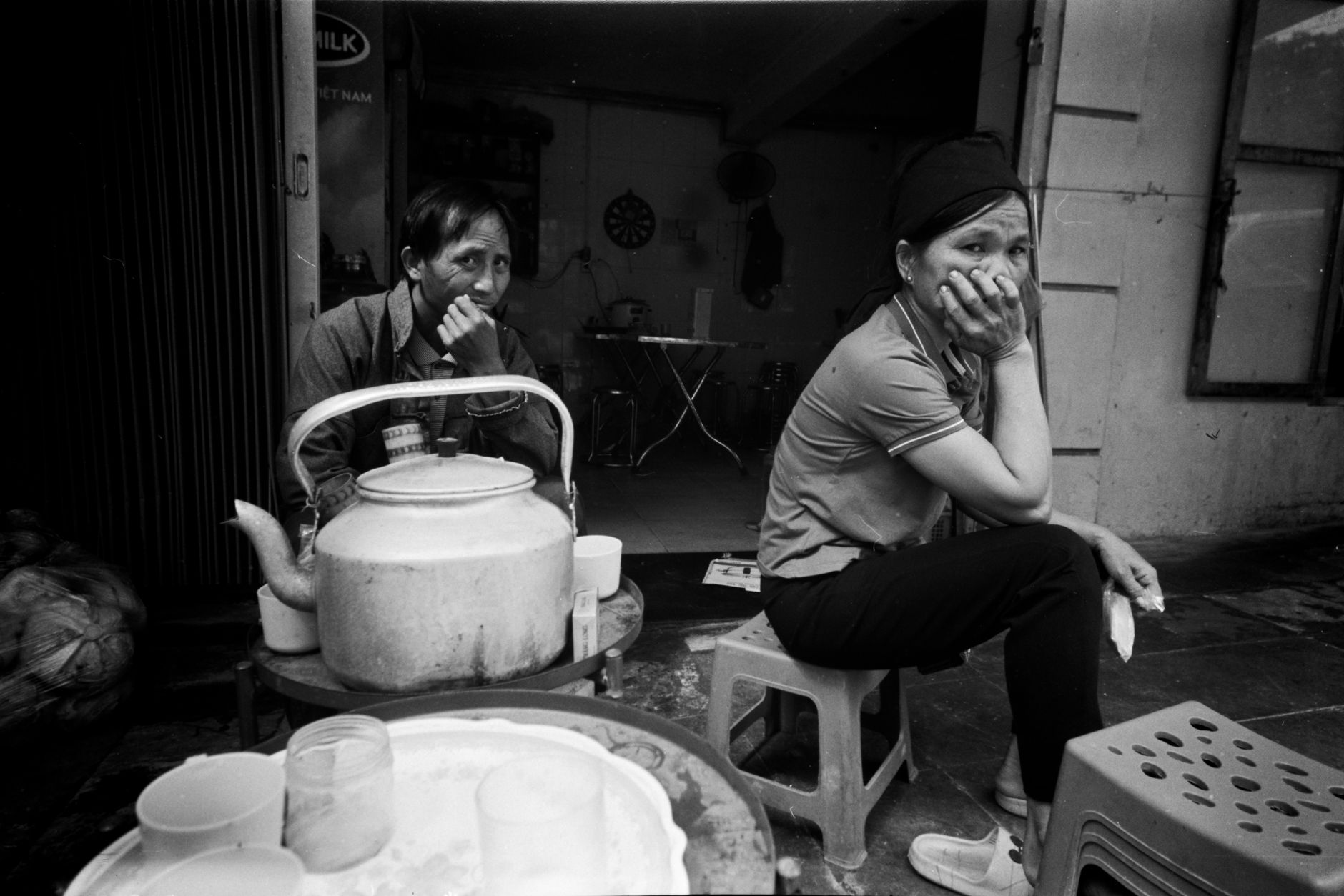
Beyond the tree, Ban Heo village gives you a window into Black Thai daily life that feels unperformed. People are farming, weaving, going about their routines. If you're respectful and don't shove a camera in anyone's face, the interaction is usually warm.
Best time to visit
The sweet spot is October through December, when the rains have tapered off, the hills are green, and the roads through Son La are in decent shape. Mornings tend to be cool and slightly misty — good light, comfortable temperatures around 18-22°C.
March to May also works if you want warmer weather, though the landscape is drier and dustier. Avoid July and August if you can. Heavy rains make the mountain roads slippery and the village paths muddy, and the tree canopy drips constantly.
How to get there
From Son La city, Cay Da Ban Heo is about 35 km northwest along National Road 6 toward Thuan Chau, then a short turn off the main road into the village. The whole drive takes around 45 minutes by motorbike or private car.
- Motorbike rental in Son La city runs 120,000-180,000 VND/day for a semi-automatic Honda. This is the best option — you control the pace, and the road is paved the entire way.
- Xe om (motorbike taxi) from Son La city center to Ban Heo costs roughly 150,000-200,000 VND one way. Negotiate before you go and arrange a return pickup time.
- Private car or taxi will set you back around 400,000-500,000 VND round trip if you hire a local driver. Ask your guesthouse to arrange one — they usually know someone.
There's no direct public bus to Ban Heo itself. You could catch a bus from Son La to Thuan Chau town (about 20,000 VND, 30 minutes) and then hire a xe om for the remaining 5 km, but the logistics aren't worth the savings unless you're on a very tight budget.

Photo by Tho Ta on Pexels
What to do
Walk the root system
Spend 20-30 minutes just circling the tree. The aerial roots create natural corridors and arches — some thick as a person's torso, others thin and rope-like. The base of the trunk is where villagers place small offerings. Don't touch or move these.
Sit in on village life
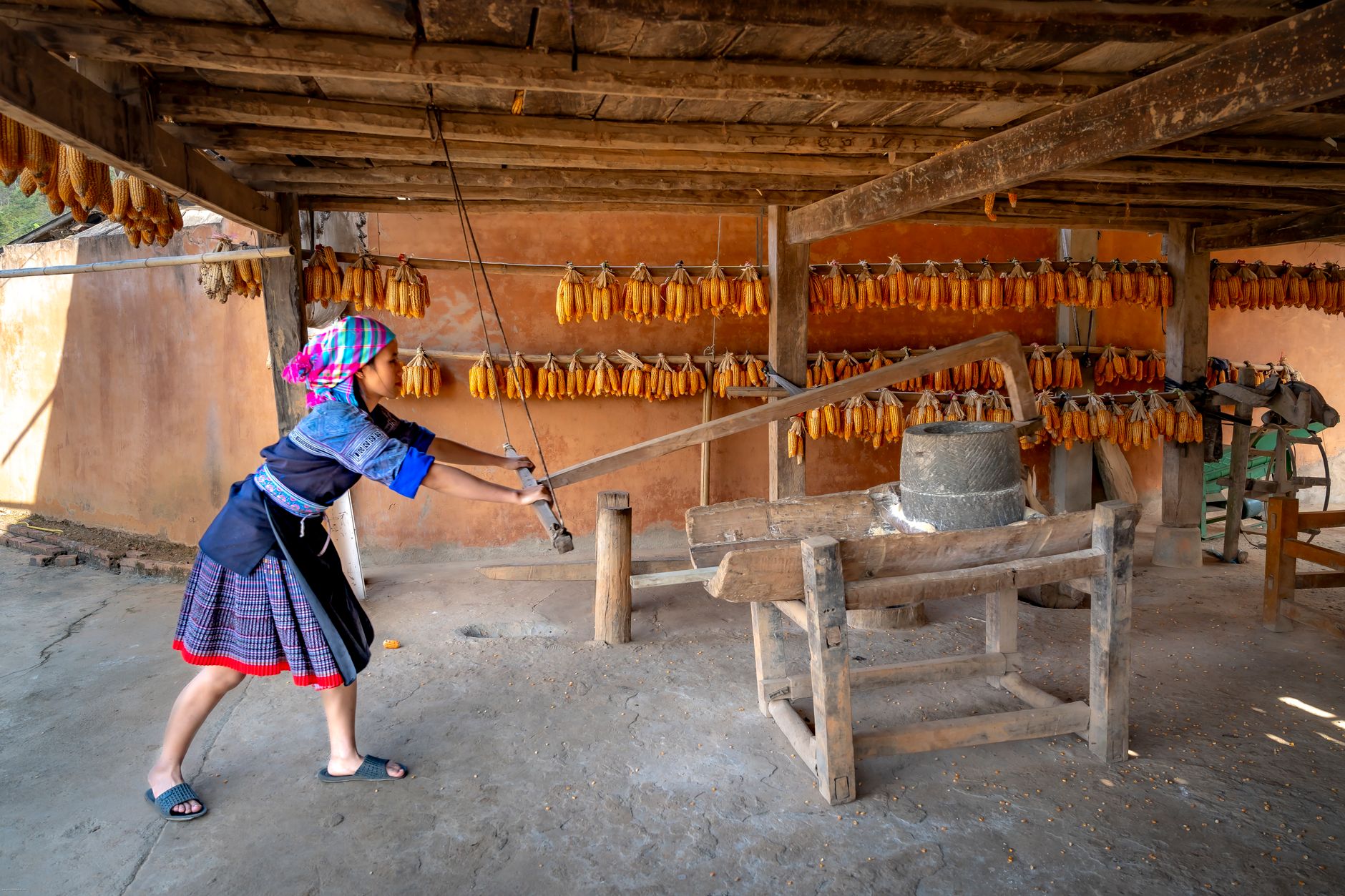
Ban Heo is a working Thai village. If you visit in the morning, you'll see women weaving on looms beneath their stilt houses. Some sell small handwoven textiles — scarves and table runners — for 50,000-150,000 VND. These are handmade and take days to complete, so the prices are fair.
Visit Thuan Chau market
Thuan Chau's morning market, about 5 km from Ban Heo, runs daily but is busiest on weekends. It's a highland market where Thai, Hmong, and Khmu vendors sell produce, forest herbs, and fermented meats. Get there before 8 AM for the full experience.
Combine with Son La Prison
If you're based in Son La city, pair the Ban Heo trip with a visit to the old French colonial prison (Nha Tu Son La) in the city center. Entry is 20,000 VND. It's a sobering historical site, well-maintained, and takes about an hour.
Drive the Son La tea hills
The road between Son La city and Thuan Chau passes through tea-growing areas. Pull over when you see the neat rows of tea bushes on hillsides — this is Shan Tuyet tea country, and some families sell fresh dried tea leaves roadside for 80,000-120,000 VND per kilogram.
Where to eat nearby
Thuan Chau town has a handful of local rice shops ("com binh dan") where a plate of rice with grilled pork and greens costs 30,000-40,000 VND. Nothing fancy, everything fresh.
The dish to look for in this part of Son La is "pa pinh top" — freshwater fish stuffed with lemongrass, galangal, and local herbs, then grilled over charcoal. It's a Black Thai specialty and shows up at most family-run restaurants in Thuan Chau. Expect to pay around 80,000-120,000 VND per fish.
Back in Son La city, the night food stalls along Duong To Hieu serve solid "xoi ngu sac" — five-colored sticky rice steamed with natural plant dyes. It's eaten across the northwest highlands and is worth trying if you haven't had it.
Where to stay
Ban Heo doesn't have formal accommodation. Your options are:
- Homestays in nearby Thai villages: 150,000-250,000 VND per night, usually on a mattress in a stilt house. Meals often included or available for an extra 50,000-80,000 VND. Basic but authentic — expect shared bathrooms.
- Guesthouses in Son La city: 200,000-400,000 VND for a private room with hot water and wifi. Khach San Thanh Dat and Khach San Dang Khoa are both adequate and central.
- Mid-range hotels in Son La city: 500,000-800,000 VND gets you air conditioning, a proper bathroom, and breakfast. Muong Thanh Son La is the most reliable option in this range.

Photo by Quang Nguyen Vinh on Pexels
Practical tips locals would tell you
- Bring small bills. Nobody in Ban Heo or Thuan Chau market will break a 500,000 VND note easily. Carry plenty of 10,000-50,000 VND denominations.
- Ask before photographing people. A smile and a gesture toward your camera goes a long way. Most villagers will say yes, some will wave you off — respect that.
- Wear shoes you can slip on and off. You'll be invited into stilt houses. Shoes come off at the stairs every time.
- Fuel up in Son La city. There are petrol stations in Thuan Chau, but they occasionally run dry. Don't leave Son La with a half tank.
Common mistakes to avoid
- Treating the village like a zoo. Ban Heo is someone's home. Walk slowly, keep your voice down, don't wander into houses uninvited.
- Coming too late in the day. The village is quiet by mid-afternoon, and the light under the canopy gets flat. Arrive before 10 AM for the best visit.
- Skipping the tree for a selfie. People pull up, take a photo in front of the trunk, and leave in five minutes. The actual experience is sitting under the canopy for a while, watching the light filter through. Give it at least 30 minutes.
- Not combining it with other stops. Cay Da Ban Heo alone doesn't justify a full day trip. Pair it with Thuan Chau market and the tea hills to make the drive worthwhile.
Practical notes
Cay Da Ban Heo is a detour, not a destination. It works best folded into a larger northwest itinerary — Son La to Dien Bien Phu, or as a day trip from Son La city if you're spending a couple of nights there. Budget half a day for the tree, the village, and Thuan Chau market combined.
Last updated · May 5, 2026 · independently researched, never sponsored.