Hue quiets down earlier than Hanoi or Saigon, but that doesn't mean the food stops. It just moves — off the main boulevards and into the side streets, where plastic stools appear at 8pm and grills start smoking by 9.
The Tourist Strip vs. Where Locals Eat
Le Loi and Hung Vuong are the obvious choices for first-timers. The stretch near Dong Ba Market has a handful of stalls selling "banh mi" and grilled skewers, and it's perfectly fine — easy to navigate, prices listed in both VND and USD, staff who speak some English. But you're paying a small convenience tax (expect 40,000–60,000 VND for dishes that cost half that two streets away), and the atmosphere is calibrated for tourists rather than for actual hunger.
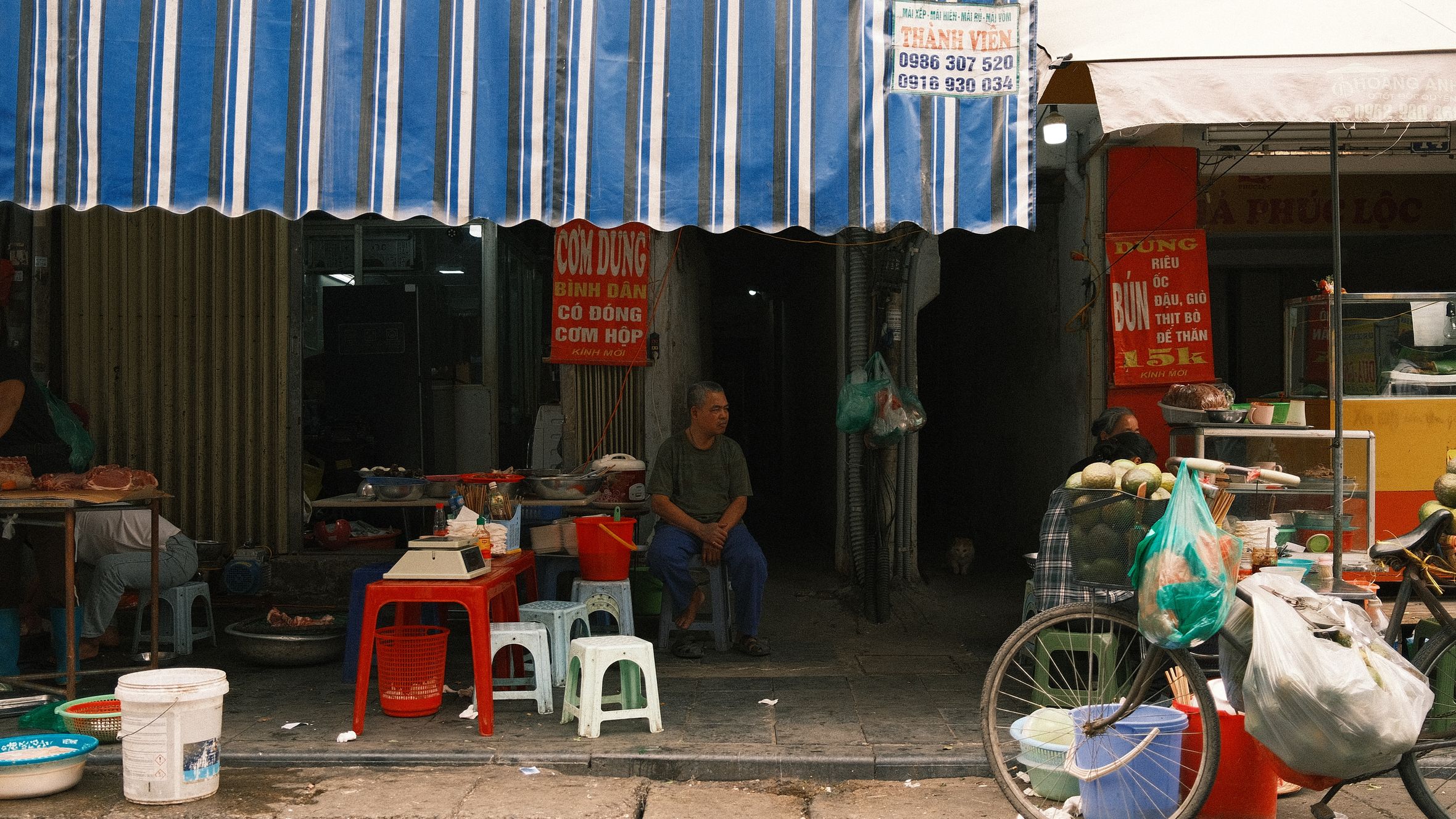
For the local version of the same evening, cross the Phu Cam canal and work your way around the Chi Lang and Nguyen Sinh Cung area in the southern residential quarters. No signs in English, no QR code menus. Just neighbors eating together under fluorescent lights.
Grilling Streets After 9pm
Doi Cung and the Surrounding Lanes
The strip along Doi Cung Street and the connecting laneways off Bui Thi Xuan is where Hue (후에 / 顺化 / フエ) residents come to eat "nem lui" — lemongrass skewers of minced pork grilled over charcoal and wrapped in rice paper with green banana and starfruit. A plate of ten skewers runs around 35,000–45,000 VND. You wrap them yourself, which takes two or three attempts before you stop losing everything out the end.
The same vendors usually have "banh uot thit nuong" alongside — steamed rice sheets topped with grilled pork, a splash of fish sauce, and dried shrimp. It's one of those dishes that doesn't look like much and then you order a second plate.
Most grills are lit by 8pm and run until midnight or later on weekends. On weeknights, arrive before 10:30pm if you want the full selection.
An Cuu Night Market Area
Along and around An Cuu, south of the Truong Tien Bridge, a loose cluster of carts and open-front shops does solid business after dark. This is less of a formal market and more of an organic congregation — snail sellers, corn roasters, a woman with a cart of "banh trang nuong" (grilled rice paper loaded with egg, spring onion, and dried shrimp, sometimes called Vietnamese pizza). A full banh trang nuong costs 15,000–25,000 VND depending on toppings.
The snail joints here deserve their own mention.

Photo by King Ho on Pexels
Snail Joints: Hue's Real Late-Night Specialty
"Oc" — snails and shellfish — is serious business in Hue after dark. Small restaurants, usually with the word "Oc" painted large on a hand-lettered sign, fill up around 8:30pm with groups sharing plates of steamed snails in lemongrass, stir-fried clams with chili and basil, and grilled oysters with spring onion oil.
The area around Nguyen Truong To Street has several reliable spots. Prices are per plate or per kilogram — budget 80,000–150,000 VND per person for a proper spread with a bottle of Huda beer (the local lager, unavoidable and cheap at around 15,000 VND a can). The social format is the same everywhere: order multiple dishes for the table, eat slowly, talk loudly.
If you want a single recommendation without hunting around: look for any spot with condensation on the beer fridge and a full table of people your parents' age. That's the signal.
Dessert Carts and Sweet Drinks
Hue is known for its "che" — sweet soups and dessert drinks, a category that encompasses dozens of variations including mung bean, black-eyed pea, lotus seed, and taro combinations, served warm or cold. Dessert carts appear on most main residential streets from around 6pm, but the best variety comes out later, after dinner.
The stretch of Tran Phu near the Imperial Citadel wall has several che sellers who set up low tables and do brisk trade until 10 or 11pm. A cup runs 10,000–20,000 VND. The "che hat sen" (lotus seed sweet soup) is the one most associated with Hue specifically — delicate, lightly sweet, and nothing like the heavier southern versions.
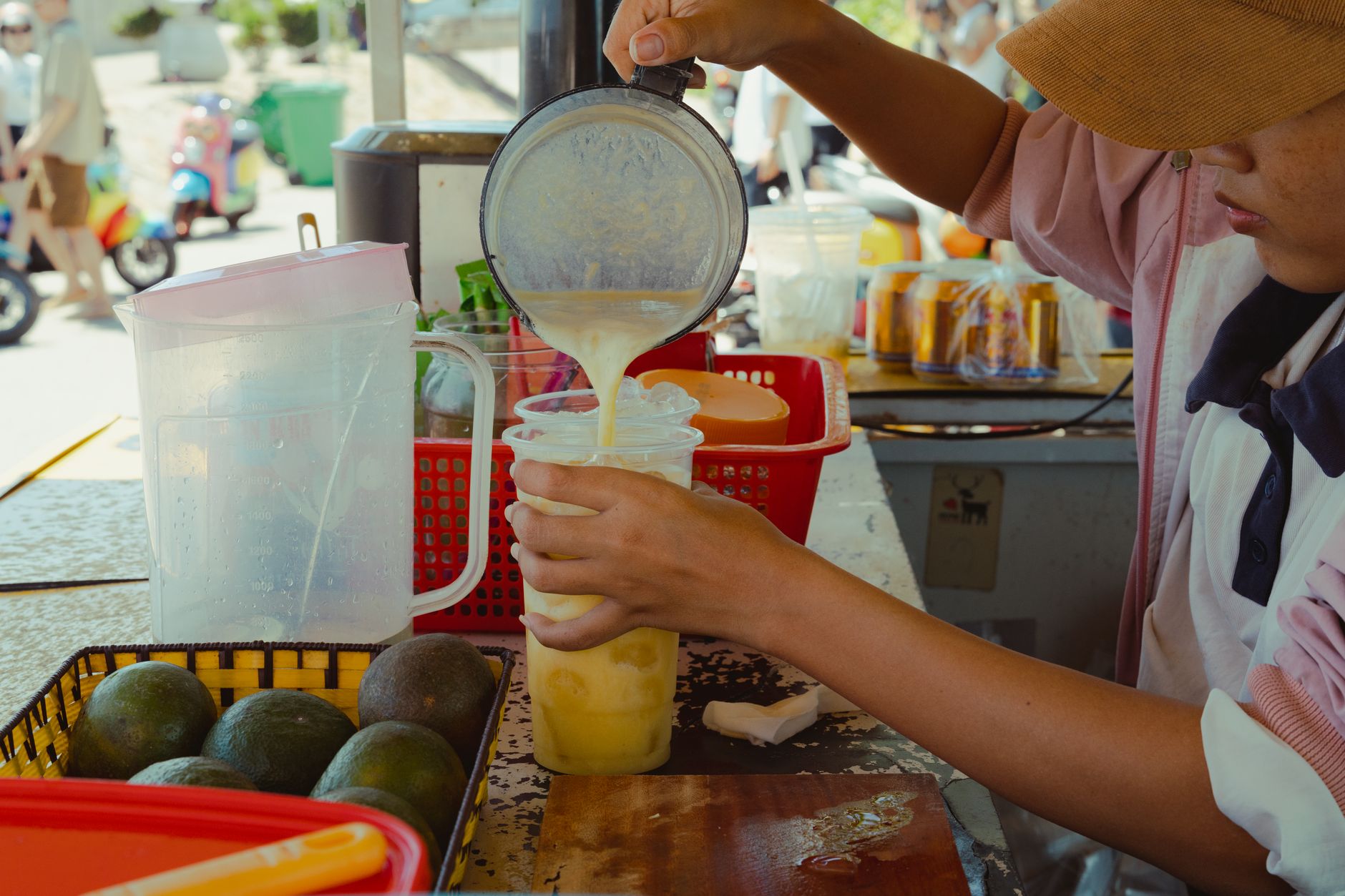
For something cold, "nuoc sam" (a slightly sweet, herbal cooling drink served over ice) is sold from large glass jars on street carts throughout the city. It's mildly medicinal in flavour and exactly what you want in Hue's humidity.

Photo by Nguyễn Hưng on Pexels
Safety and Practical Notes on Eating Late
Hue is a low-risk city for street food eating after dark. Petty theft exists — keep your phone off the table in crowded areas and use a bag that closes — but solo travellers and couples eating at street stalls after 10pm are genuinely unremarkable here. Locals do it every night.
On pricing: if there's no menu, ask before ordering. "Bao nhieu tien?" (how much?) works fine. Most vendors will show you on a phone calculator if there's a language gap. Overcharging of tourists does happen occasionally in the more visited areas, but it's rarely dramatic — 5,000–10,000 VND above local price rather than a scam.
Hue's street food scene also pairs well with a daytime visit to Dong Xuan Market (the local equivalent, not the Hanoi one) for fresh ingredients and an understanding of what's in season. The city's cuisine — from "bun bo Hue (분보후에 / 顺化牛肉粉 / ブンボーフエ)" in the morning to nem lui at night — rewards spending at least two full days eating your way through it.
Practical Notes
Most street stalls are cash only; bring small bills (10,000 and 20,000 VND notes are useful). The grilling streets and snail spots are most active Thursday through Sunday. During heavy rain, which is frequent from October to December, vendors pack up early — aim for a 9pm arrival rather than 11pm if the forecast looks uncertain.
Last updated · May 26, 2026 · independently researched, never sponsored.