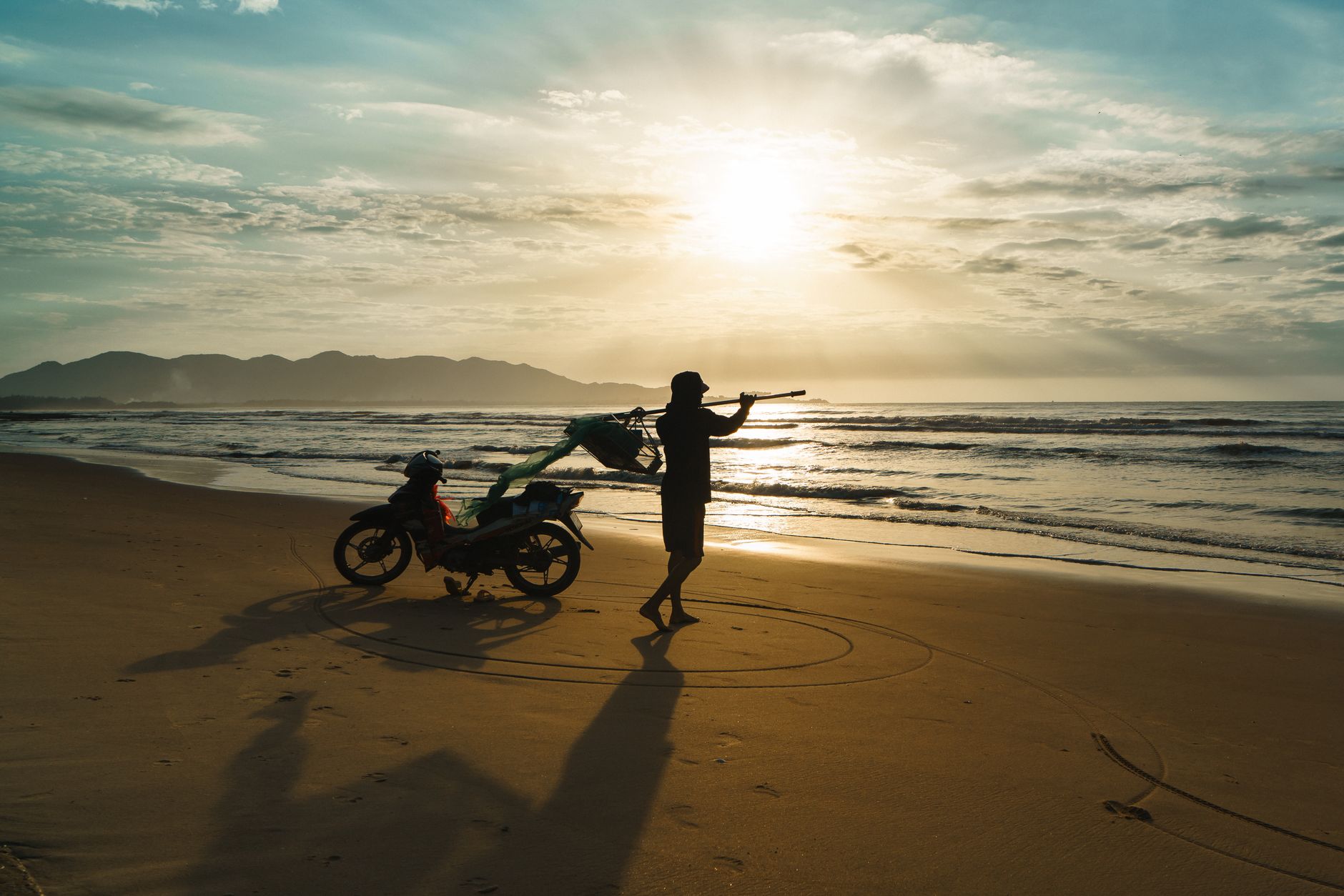
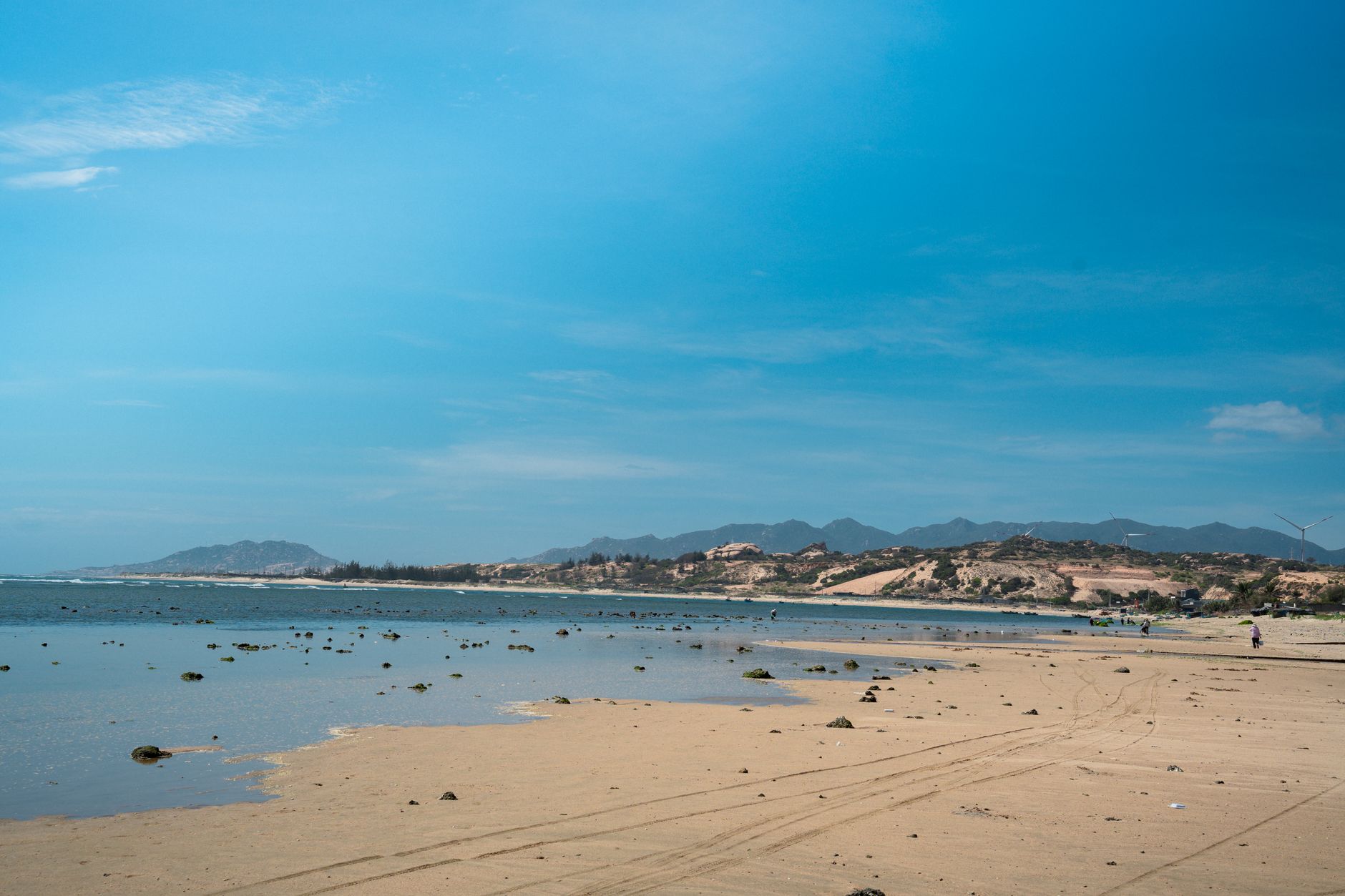
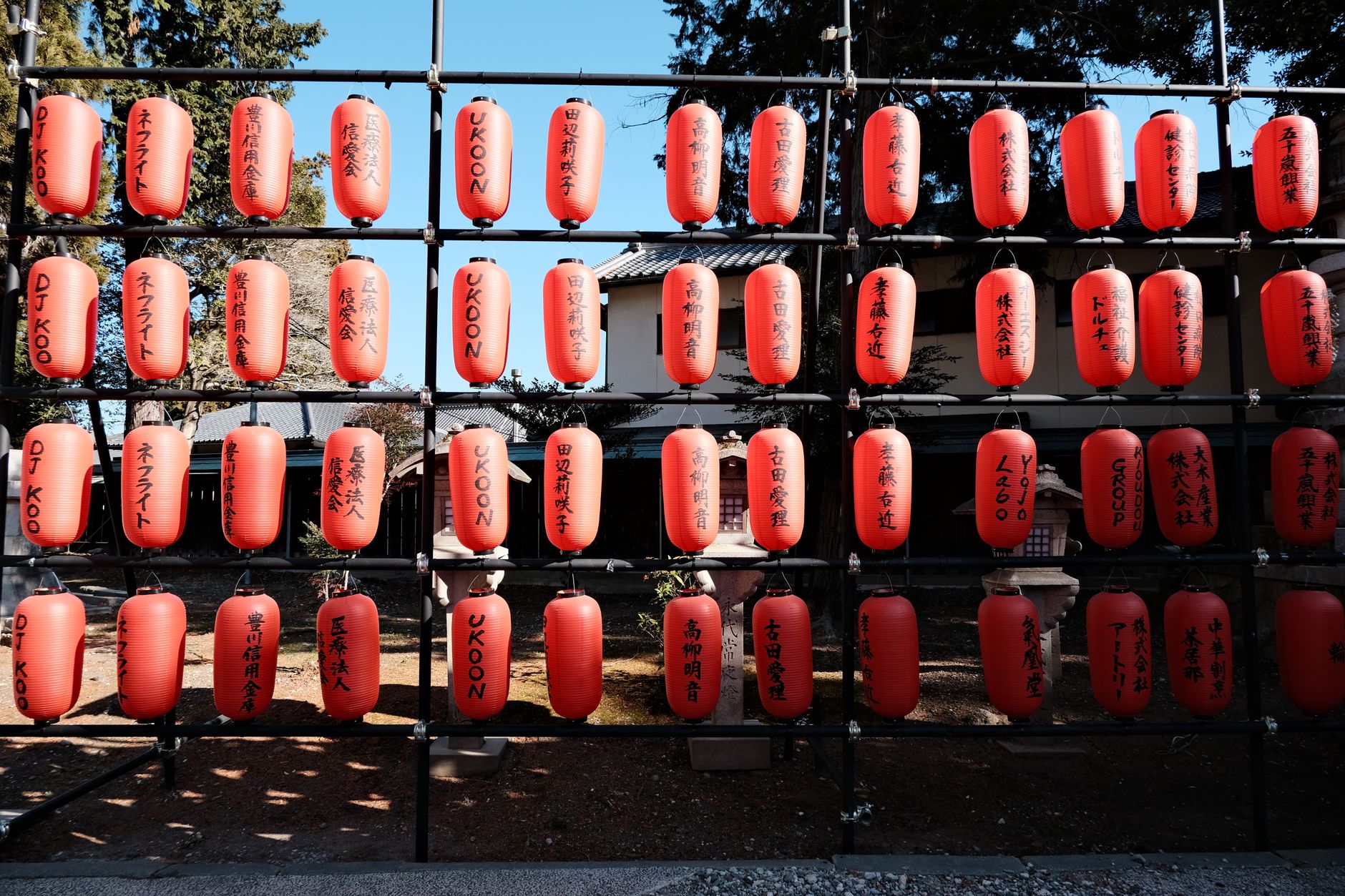
Kim Lien is a quiet rural commune in Nam Dan district, Nghe An province, about 14 km south of Vinh city. It's the childhood home of Ho Chi Minh (호치민 / 胡志明 / ホーチミン), and the site has been preserved as an open-air heritage complex since 1956. If you're passing through central Vietnam and want to see a side of the country that most tourist itineraries skip entirely, this is worth a half-day detour.
What it is
Khu di tich Kim Lien — Kim Lien Historic Site — is a cluster of preserved houses, gardens, and exhibition halls spread across two villages: Hoang Tru (where Ho Chi Minh was born in 1890) and Lang Sen (where he spent his childhood). The site covers roughly 200 hectares in total, though the main visitor areas are compact and walkable.
Hoang Tru has the original three-room thatched house where Ho Chi Minh was born, rebuilt to its late-19th-century state. Lang Sen, about 2 km away, holds the wooden stilt house where his family later lived, along with a museum, a lotus pond, and several communal structures from the era. The whole place feels more like a preserved village than a formal monument — chickens wander around, banana trees shade the paths, and the houses are simple wooden and bamboo constructions with packed-earth floors.
Why travelers go
Most visitors are Vietnamese — school groups, families, veterans. Foreign tourists are rare here, which is part of the appeal. You get an unfiltered look at rural Nghe An architecture and daily life from over a century ago, plus context on how one of Vietnam (베트남 / 越南 / ベトナム)'s most significant historical figures actually grew up. It's not a propaganda exercise so much as a well-maintained open-air museum with genuinely old structures and honest-scale recreations.
For anyone interested in Vietnamese history, traditional village layout, or just getting off the standard Hanoi-to-Hue tourist corridor, Kim Lien offers something you won't find at more polished heritage sites.
Best time to visit
Nghe An has a tropical monsoon climate with two rough seasons. The best window is February to April — warm but not brutal, relatively dry, and the gardens are green. May marks Ho Chi Minh's birthday (May 19), and the site gets packed with commemorative events and large tour groups. If you want a quieter visit, avoid the week around that date.
September to November brings the tail end of the rainy season. Heavy downpours can make the dirt paths muddy and the outdoor exhibits less pleasant. The hottest stretch is June through August, when temperatures push past 38°C with high humidity — manageable if you go early morning, but not ideal for walking around open grounds.
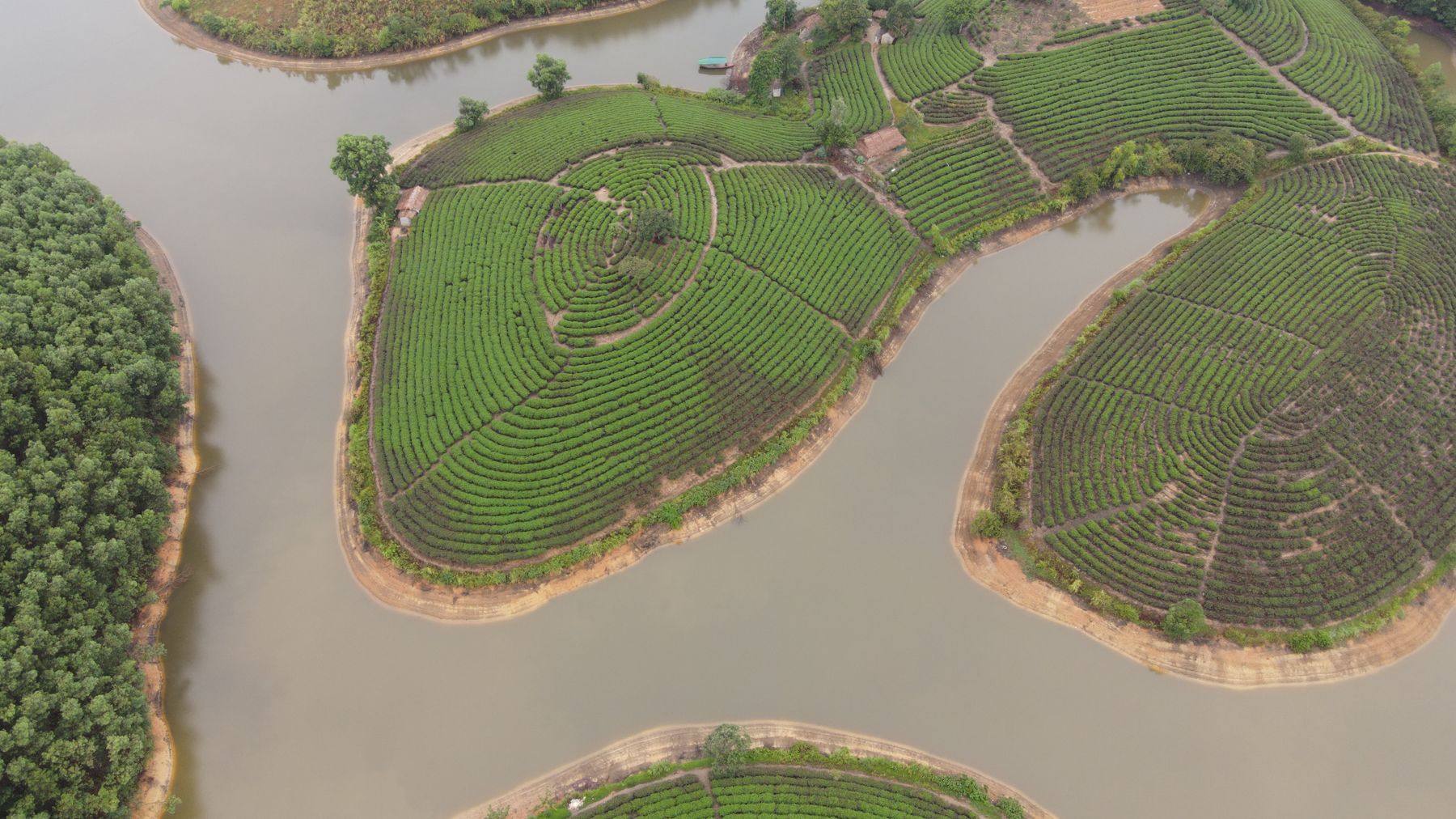
Photo by Quang Nguyen Vinh on Pexels
How to get there
The nearest city is Vinh, which has both an airport (Vinh International, domestic flights from Hanoi and Saigon) and a major railway station on the north-south Reunification Express line.
From Vinh, Kim Lien is about 14 km southwest — roughly 25 minutes by car or motorbike. Options:
- Taxi or Grab car: 120,000–150,000 VND one way. Easiest option. Ask the driver to wait; there's not much ride-hailing availability in Nam Dan itself.
- Motorbike rental: Around 120,000–150,000 VND per day from shops near Vinh train station. The road (QL46) is paved and straightforward.
- Local bus: Bus 04 from Vinh runs toward Nam Dan, but schedules are inconsistent and the stop is about 2 km from the site entrance. Not recommended unless you're comfortable with improvising the last stretch on a "xe om" (motorbike taxi) for 20,000–30,000 VND.
What to do
Walk the Hoang Tru village cluster
Start at Hoang Tru, the birth site. The thatched house is small — three rooms, bamboo walls, a clay stove. What's interesting is the surrounding context: the village well, the communal house ("dinh lang"), and the layout of a traditional Nghe An hamlet. A guide (Vietnamese-language, though some speak basic English) can walk you through in about 30 minutes. Entry is free.
Explore Lang Sen and the stilt house
Lang Sen is the larger of the two clusters. The wooden stilt house here is the one most photographs show — raised on stilts with a tiled roof, surrounded by a fruit garden. Behind it sits a lotus pond that blooms beautifully in June and July. The Sen Vietnam Museum nearby has photographs, documents, and personal items. Budget about 45 minutes to an hour.
Visit the exhibition hall
The modern exhibition building between the two villages houses rotating displays on Nghe An's history and culture. It's air-conditioned — a practical reason to stop in during summer months. Displays are mostly in Vietnamese, but the photographic exhibits are self-explanatory.
Cycle the back roads
If you have a bicycle or motorbike, the lanes connecting Hoang Tru and Lang Sen wind through rice paddies and small hamlets that look much as they did decades ago. It's a 2 km ride with almost no traffic. This is the part that sticks with you — not the museum exhibits, but the landscape.
Try the local market
Nam Dan's morning market ("cho Nam Dan"), about 3 km from the site, runs until around 10 AM. It's a standard rural market — produce, dried fish, fermented shrimp paste — but worth a walk-through if you're there early enough.
Where to eat nearby
Nghe An is famous for "luon" — freshwater eel prepared multiple ways. Look for "luon chao" (eel fried in a clay pot with turmeric and peanuts) or "chao luon" (eel porridge) at small restaurants along the road between Vinh and Nam Dan. A bowl runs 35,000–50,000 VND.
Back in Vinh, try "banh muot" — thin steamed rice rolls similar to "banh cuon" but with a distinctly Nghe An style, served with a fish sauce broth and herbs. Quan Banh Muot Ba Huong near Vinh market is a reliable option, around 25,000 VND per serving.

Photo by Haneul Trac on Pexels
Where to stay
There's no reason to sleep in Nam Dan itself. Vinh has the full range:
- Budget: Guesthouses near the train station, 200,000–350,000 VND/night. Basic but clean.
- Mid-range: Muong Thanh Nghe An or Phuong Dong Hotel in central Vinh, 500,000–800,000 VND/night. Reliable chains with decent rooms.
- Higher-end: Limited options. The best Vinh offers is around 1,000,000–1,200,000 VND/night at the nicer business hotels.
Practical tips
- The site is open daily, typically 7:00–11:30 and 13:30–17:00. Arrive before 9 AM to beat tour groups.
- Dress modestly — this is a memorial site. Shorts are fine, but avoid anything too casual. You'll see Vietnamese visitors dressed respectfully.
- Bring water and sun protection. Shade is limited between the two village clusters.
- Signage is mostly Vietnamese. Download Google Translate's offline Vietnamese pack before you go.
- The whole visit — both villages, museum, and a slow walk — takes about 2 to 2.5 hours.
Common mistakes to avoid
- Not arranging return transport: If you take a taxi, confirm a pickup time or keep the driver's number. Grab cars are scarce in Nam Dan.
- Visiting midday in summer: The grounds are fully exposed. Morning visits are dramatically more comfortable.
- Skipping Hoang Tru: Many visitors only see Lang Sen because it's better known. Hoang Tru is smaller but arguably more atmospheric, and it's where the story begins.
- Expecting English signage: There's very little. Come with some context already in mind, or you'll walk through quickly without absorbing much.
Last updated · May 29, 2026 · independently researched, never sponsored.