Den Ong Hoang Muoi sits on a stretch of low-lying land in Hung Thinh commune, Hung Nguyen district, about 15 km south of Vinh city. It's one of the most significant temples in the Vietnamese folk religion tradition of "Dao Mau" (Mother Goddess worship), and it draws a constant stream of devotees and curious travelers year-round — but especially during festival season. If you're passing through Nghe An or spending time in central Vietnam (베트남 / 越南 / ベトナム), this temple is worth a deliberate stop.
What it is and why it matters
The temple is dedicated to Ong Hoang Muoi, the Tenth Prince in the pantheon of the Four Palaces — a branch of Vietnamese spiritual practice that predates and sits alongside Buddhism in the country's religious landscape. Ong Hoang Muoi is considered a literary and scholarly figure, associated with poetry, justice, and blessings for career success. The site has roots going back several centuries, though the current structure has been rebuilt and expanded over time, most recently with a large new worship hall and ornamental gate.
What makes Den Ong Hoang Muoi different from, say, Tran Quoc Pagoda in Hanoi or Bai Dinh in Ninh Binh (닌빈 / 宁平 / ニンビン) is the atmosphere. This isn't a polished tourist circuit. It's a living, active place of worship where "len dong" (spirit mediumship) ceremonies happen regularly. You'll see ritual performers in elaborate "ao dai" costumes channeling spirits through song and dance while offerings pile high on altars. It's loud, colorful, thick with incense smoke, and completely genuine.
Why travelers go
Most foreign visitors end up here by accident — or by recommendation from a Vietnamese friend. The draw isn't architecture or Instagram angles. It's the chance to witness Dao Mau practice up close, in a setting where nobody's performing for tourists. If you've read about Vietnamese folk religion or "ca tru" singing traditions and want to see where that spiritual energy actually lives, this is a strong candidate. The temple complex is also peaceful on weekday mornings if you just want to walk the grounds and watch incense coils burn down in the courtyard.
Best time to visit
The temple's main festival falls on the 10th day of the 10th lunar month (usually November). During this period, the complex fills with thousands of devotees, "len dong" ceremonies run continuously, and the surrounding roads become a slow-moving river of motorbikes and cars. It's intense and impressive, but not relaxing.
For a calmer visit, go between March and May or September and October. Nghe An's weather is hot and humid most of the year, but these shoulder months avoid the worst of the summer heat (which can push past 40°C in June-July) and the heavy rain of October-November. Weekday mornings are best for fewer crowds.
How to get there
Vinh is the nearest major hub. From Hanoi, you can reach Vinh by:
- Train: 5.5-6 hours on the Reunification Express. Tickets run 200,000-400,000 VND depending on seat class. The Vinh railway station is central.
- Bus: Limousine buses from Nuoc Ngam or Giap Bat stations take about 5 hours. Expect to pay 180,000-250,000 VND.
- Flight: Vietnam Airlines and Vietjet fly Hanoi-Vinh in about an hour. Book ahead and fares can be as low as 500,000 VND one way.
From Vinh city center to the temple, it's roughly 15 km south along National Road 1A, then a short turn east. A Grab car costs around 80,000-120,000 VND one way. If you're on a motorbike, the ride takes about 25 minutes and the temple has free parking. There are signposts along the main road, but plug "Den Ong Hoang Muoi" into Google Maps to avoid overshooting the turnoff.
Photo by Quang Nguyen Vinh on Pexels
What to do
Watch a len dong ceremony
This is the main event. "Len dong" ceremonies involve a medium channeling various spirits from the Four Palaces pantheon. Each spirit arrives with a costume change, specific music, and ritual offerings. Ceremonies can last two to three hours. You don't need an invitation — just enter the main hall quietly, sit to the side, and observe. Don't walk between the medium and the altar. Photography is generally tolerated but ask first, and never use flash.
Walk the full complex
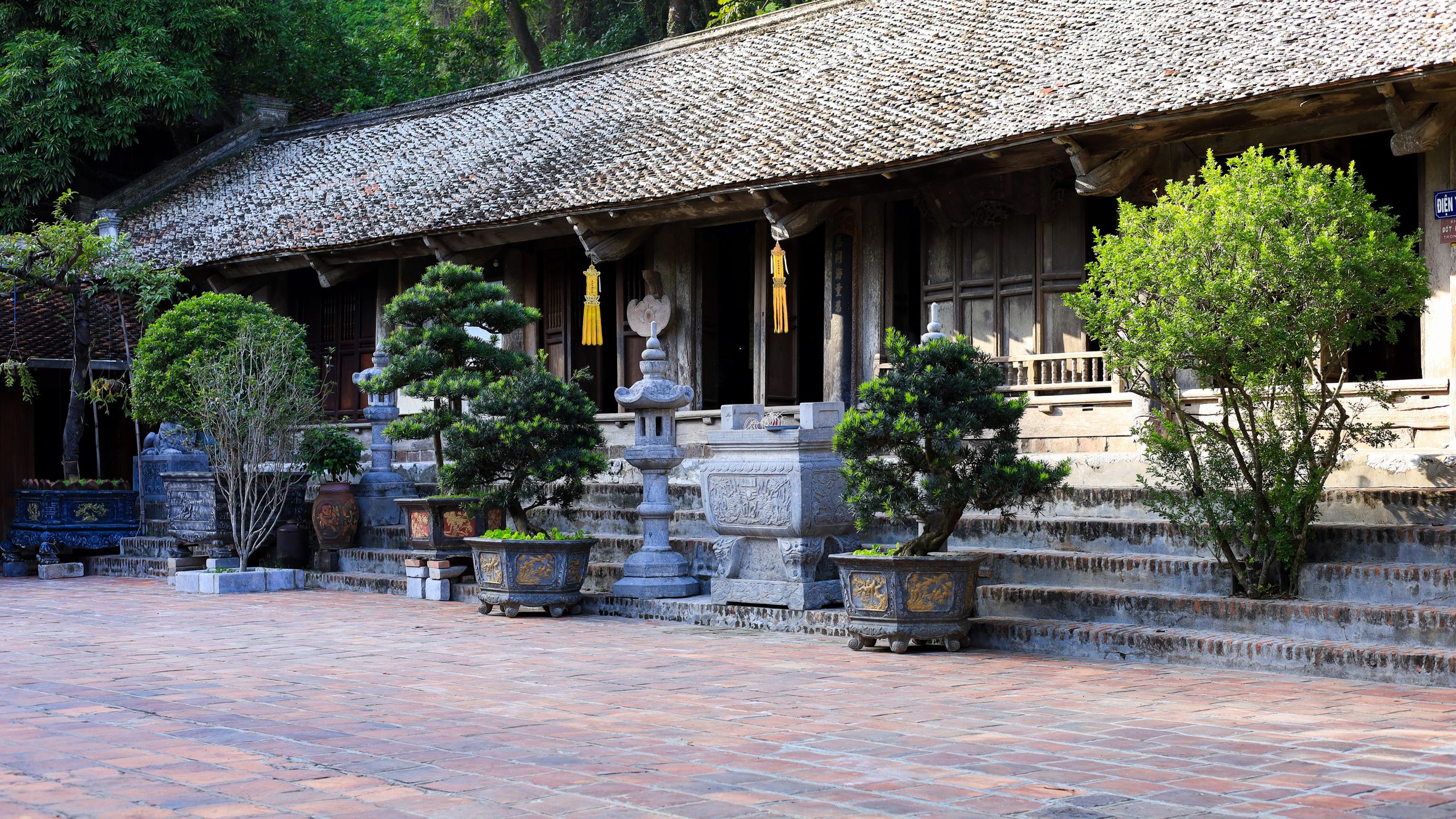
The temple grounds have expanded significantly. Beyond the main worship hall, there's a secondary shrine, a large courtyard with a lotus pond, and a newer ceremonial gate. The details on the roof ridges — dragons, phoenixes, carved wooden panels — are worth a slow look. The whole circuit takes about 30-40 minutes.
Buy offerings at the market stalls
The road leading to the temple is lined with vendors selling incense, votive paper, fruit baskets, and ceremonial items. Even if you're not making offerings, browsing these stalls gives you a sense of the material culture around Dao Mau worship. A basic incense bundle costs 10,000-20,000 VND.
Read the poetry inscriptions
Ong Hoang Muoi is associated with literary culture, and the temple has carved poetry panels and calligraphy throughout. Some are in "chu Nom" (old Vietnamese script), others in modern Vietnamese. Ask a local to translate a few lines — people are usually happy to explain.
Where to eat nearby
Nghe An's signature dish is "banh muot," a thin steamed rice sheet served with shrimp paste and herbs — similar in concept to "banh cuon" but with a distinct local character. Look for small roadside stalls in Hung Nguyen town, about 2 km from the temple. A bowl runs 20,000-30,000 VND.
For something more substantial, head back toward Vinh and find a spot serving "chao luon" — eel porridge. It's a Nghe An staple: rich, peppery, served with fried shallots and herbs. Quan Chao Luon Ba Beo on Nguyen Thi Minh Khai street in Vinh is a reliable option, around 35,000-45,000 VND a bowl.
Where to stay
Most travelers base themselves in Vinh city. Budget guesthouses near the train station start at 200,000-300,000 VND per night. Mid-range hotels like Muong Thanh Grand Nghe An run 500,000-800,000 VND with air-con, breakfast, and decent Wi-Fi. There's no accommodation at the temple itself.

Photo by Quang Nguyen Vinh on Pexels
Practical tips locals would tell you
- Dress modestly. Shoulders and knees covered. This is an active place of worship, not a ruin.
- Bring cash. There are no ATMs at the temple. Vendors and parking attendants don't take cards.
- Remove shoes before entering any worship hall. There are racks at the entrance.
- Don't touch the altars or offerings. During "len dong" ceremonies, blessed items are sometimes distributed to attendees — wait for them to be offered to you.
- If you're visiting during the festival, arrive before 7 AM to get parking and a decent spot inside.
Common mistakes to avoid
The biggest one: treating the temple like a museum. People are here to pray, make offerings, and participate in ceremonies that matter deeply to them. Be respectful, keep your voice low, and don't treat "len dong" like a photo op.
Second: skipping it because you've "already seen temples in Hue or Hanoi." Den Ong Hoang Muoi operates in a completely different spiritual tradition than Buddhist pagodas. The energy, rituals, and atmosphere are nothing alike.
Third: not allocating enough time. If a ceremony is underway, you'll want at least two hours to watch it unfold. Rushing through in 20 minutes means missing the point entirely.
Practical notes
Den Ong Hoang Muoi is open daily, roughly 6 AM to 6 PM, with no entrance fee. The temple is a straightforward day trip from Vinh, easily combined with other Nghe An stops like the Kim Lien village's birthplace) or the coast at Cua Lo beach. If you're on a longer route through central Vietnam between Hanoi and Hue, Nghe An is the kind of province most travelers blow past on a sleeper bus — but pulling off the highway here rewards you with something most visitors never see.
Last updated · May 29, 2026 · independently researched, never sponsored.