Nui Truong Le sits at the southern end of Sam Son beach in Thanh Hoa province, a low granite ridge that drops straight into the sea. It's not a mountain in any serious sense — the highest point barely clears 150 meters — but it packs in enough temples, coastal walks, and local atmosphere to justify a half-day or overnight trip from Hanoi.
What it is and why it matters
Nui Truong Le is a cluster of rocky hills separating Sam Son's main beach from the quieter coves to the south. The name translates roughly to "Mountain of Enduring Tears," tied to a legend about a woman who waited so long for her fisherman husband that she turned to stone. You'll see the statue — Hon Trong Mai, a pair of rocks shaped vaguely like a rooster and hen — on every postcard from the area.
The hills have been a pilgrimage and leisure site for centuries. There are several temples and shrines built into the rock, most dating from the Le and Nguyen dynasties, though rebuilt multiple times. During the French colonial period, Sam Son became a beach resort for officials, and Nui Truong Le was part of that draw. Today it's mostly domestic tourists from Thanh Hoa and Hanoi (하노이 / 河内 / ハノイ), especially on weekends.
Why travelers go
Nui Truong Le isn't on most international itineraries, which is part of the appeal. You come here for the walk along the ridgeline, the views down to the coast, the incense-heavy atmosphere of the hilltop temples, and the excuse to eat a lot of seafood in Sam Son afterward. It's also a useful stop if you're driving the coast between Hanoi and destinations in central Vietnam (베트남 / 越南 / ベトナム) like Phong Nha or Hue.
The terrain is interesting — exposed granite, wind-bent trees, narrow paths cut between boulders. On a clear day you can see up and down the Thanh Hoa coastline, and inland toward the hills of the province's western districts.
Best time to visit
April through June is the sweet spot. The weather is warm, the sea is calm enough for swimming at Sam Son beach, and you avoid the heaviest rains. July and August bring peak domestic tourism season — Sam Son gets packed, hotel prices spike, and Nui Truong Le's paths feel crowded.
September and October mean typhoon risk and grey skies. November through March is cooler and often overcast, which kills the coastal views but makes the hill walk more comfortable if you don't mind drizzle.
How to get there
From Hanoi, Sam Son is about 170 km south — roughly 3 to 3.5 hours by car or bus via the expressway. Buses from Giap Bat or Nuoc Ngam stations run frequently and cost around 120,000–150,000 VND one way. If you're coming from Thanh Hoa city center, Sam Son is only 16 km east, a 25-minute drive or a cheap local bus ride for about 15,000 VND.
Once in Sam Son, Nui Truong Le is at the southern end of the main beach road. You can walk there from most hotels in 15–20 minutes, or grab a "xe om" (motorbike taxi) for 20,000–30,000 VND.

Photo by Dmitry Voronov on Pexels
What to do
Walk the ridgeline path
The main trail runs from the base near the beach up and over the hill, passing through temple courtyards and between rock formations. It takes about 45 minutes to an hour at a relaxed pace. The path is paved in most sections but gets steep and narrow in places — wear shoes with grip, not sandals.
Visit the temples
Den Doc Cuoc, near the northern base, is the most visited — dedicated to a one-legged god from local folklore. Higher up, Den Co Tien has the better views and fewer people. Bring small bills if you want to make offerings; incense is sold at the entrance for a few thousand dong.
See Hon Trong Mai
The rooster-and-hen rock formation is Sam Son's signature landmark, perched on the seaward side of the hill. It's a five-minute detour off the main path. Go early morning if you want photos without a crowd.
Swim at the southern coves
Below the hill's south side, small rocky coves offer calmer water than the main Sam Son beach. These are popular with locals in the early morning. No lifeguards, no facilities — just rocks, water, and quiet.
Watch sunset from the ridge
The west-facing side of Nui Truong Le overlooks the river estuary and the town. It's a good spot to sit and watch the light change, especially if you've had enough of the beach scene.
Where to eat nearby
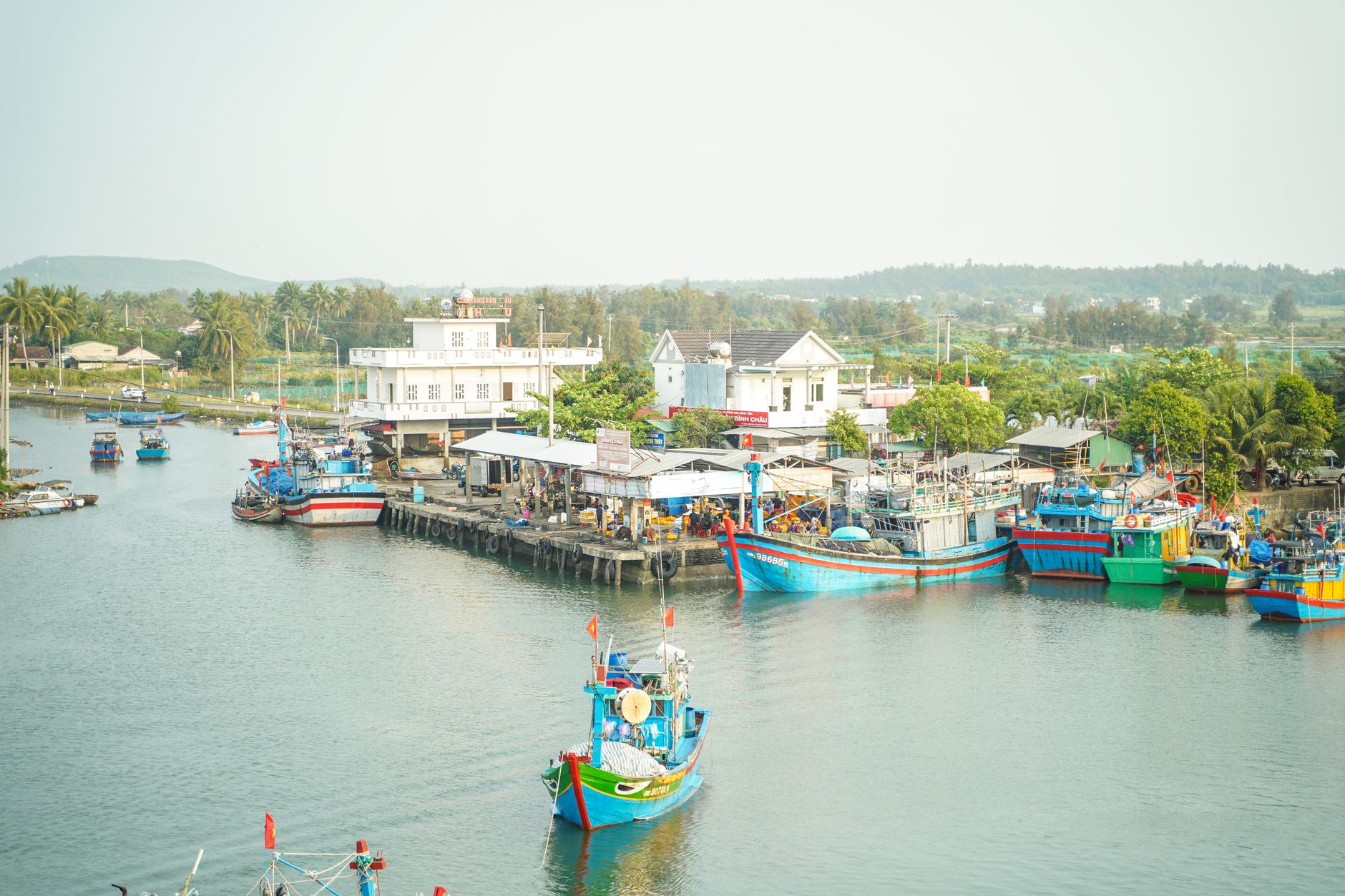
Sam Son is a seafood town. The strip along the beach is lined with restaurants where you pick your fish from tanks out front. Prices vary wildly — always confirm before they cook. Expect to pay 150,000–300,000 VND per person for a solid spread of grilled clams, steamed crab, and morning glory.
For something specific to Thanh Hoa, look for "nem chua" — fermented pork wrapped in banana leaves with garlic and chili. It's sold everywhere as a snack and makes a good side order with beer. The province is also known for a local take on "banh cuon" — thinner and served with a slightly sweeter dipping sauce than the Hanoi version.
Where to stay
Sam Son has hundreds of hotels and guesthouses, mostly along the beachfront. Budget rooms run 300,000–500,000 VND per night midweek, jumping to 600,000–1,000,000 VND on weekends and holidays. The FLC complex at the north end of the beach is the big resort option, with rooms starting around 1,500,000 VND. For better value and quieter surroundings, look for smaller guesthouses on the streets one block back from the beach.
Booking ahead matters on summer weekends (June–August). Midweek in shoulder season, you can walk in and negotiate.

Photo by Karolina on Pexels
Practical tips locals would tell you
- Go early. The hill path is exposed and gets hot by mid-morning in summer. Start by 6:30 or 7:00 AM.
- Bring water. There's one drink vendor near Den Co Tien, but nothing else on the trail.
- Bargain for seafood. Beach restaurants sometimes quote tourist prices 2–3x the local rate. Check a few places before sitting down, and always ask the per-kilo price.
- If you're driving the coast toward Hue or Da Nang, Sam Son is a natural overnight stop — better than pushing through Thanh Hoa city, which has limited appeal for travelers.
Common mistakes to avoid
Visiting on a summer weekend without booking accommodation. Sam Son fills up fast with domestic tourists from Hanoi, and prices double or triple. Coming midweek gives you a completely different experience — quieter paths, cheaper rooms, calmer restaurants.
Wearing flip-flops on the hill trail. The granite gets slippery, especially after rain. Proper shoes save you a twisted ankle.
Skipping the southern coves. Most visitors stick to the main beach and the temple path. The south side of the hill is the quieter, more scenic half — don't turn around at the top.
Practical notes
Nui Truong Le is free to enter, though individual temples may have a small donation box. Sam Son beach has a modest entry fee of around 30,000 VND during peak season. The whole area is manageable as a day trip from Hanoi, but staying one night lets you catch the early-morning light on the hill and eat your way through the seafood strip without rushing.
Last updated · May 29, 2026 · independently researched, never sponsored.