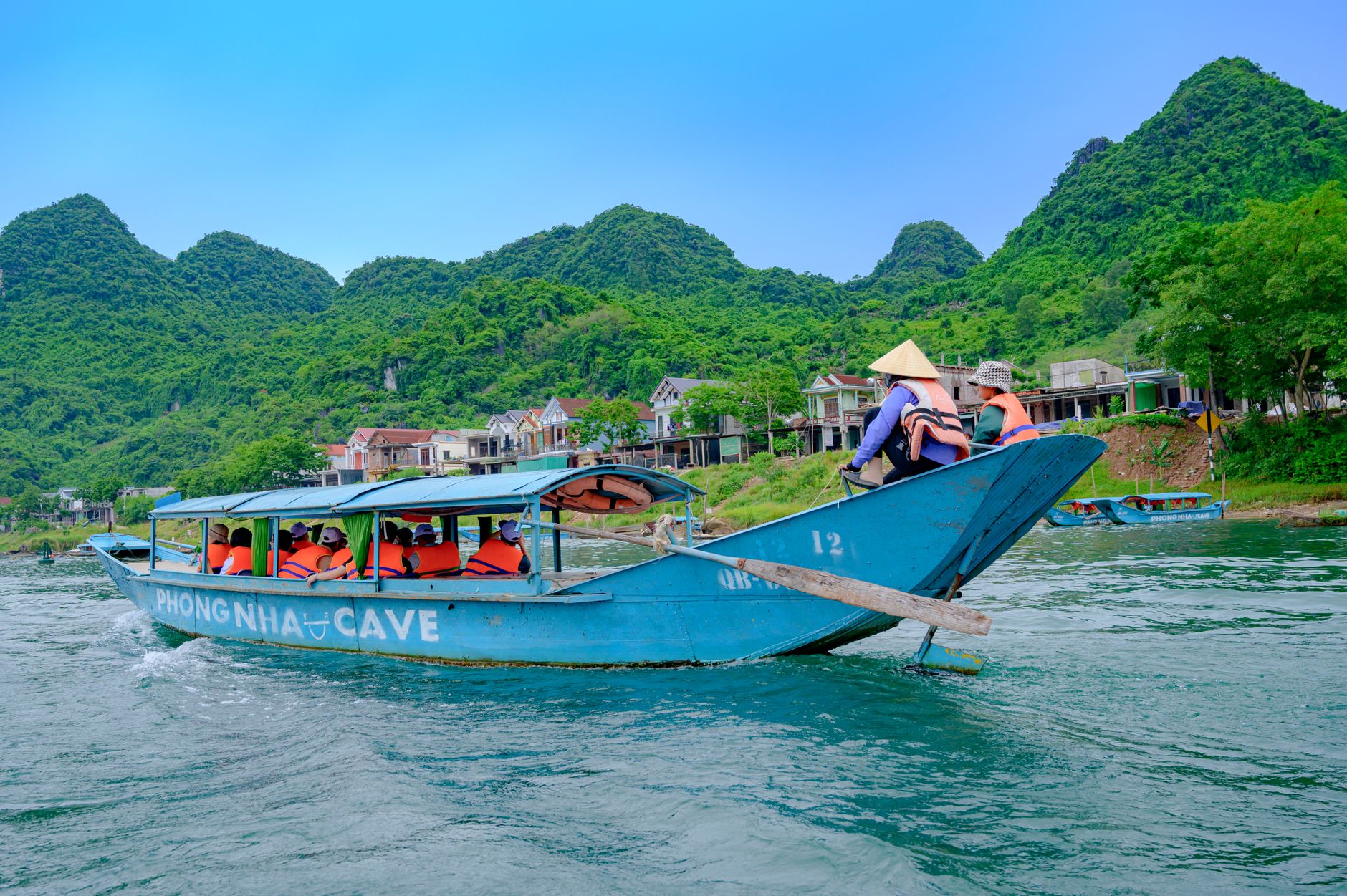
Most visitors to Phong Nha-Ke Bang National Park spend their day on the river boat into Phong Nha Cave — a fine experience, but a passive one. Paradise Cave, 14km further south, rewards the people willing to make the extra effort with something harder to forget: a dry cave the size of a Gothic nave, stretching 31km into the mountain and lit well enough to actually photograph.
Getting There from Phong Nha Town
From Phong Nha (퐁냐 / 峰牙 / フォンニャ) town, Paradise Cave is roughly 25km south via Highway 20. Most guesthouses rent motorbikes for around 100,000–150,000 VND per day — the road is well-signed and straightforward. Hired cars and minibus day tours are also common if you want to combine stops (more on that below). The national park entrance fee is 150,000 VND per adult; the cave itself costs an additional 250,000 VND for the standard ticket.
From the ticket gate, the cave entrance is another 1.6km uphill through forest. You have two options: walk it (20–25 minutes, shaded, not difficult) or take the electric cart (50,000 VND each way). The walk is worth it on the way in — you pass through dense jungle and arrive with a better sense of scale. Take the cart back out if your knees disagree.
The First Kilometre: What Everyone Gets
The standard ticket covers a 1km elevated timber boardwalk through the cave's main chamber. That sounds modest, but the main chamber at Paradise Cave is genuinely enormous — up to 150m wide and 80m tall in sections. The formations here are dense: curtain stalactites, floor-to-ceiling columns, and vast white flowstone terraces that glow amber and cream under the installed lighting.
The boardwalk ends at a natural turnaround point where the cave narrows before opening again into darker, less-lit sections. For a general visitor, the 1km circuit takes 45–60 minutes at a relaxed pace. Go early — by 9:30am tour groups begin arriving and the boardwalk gets congested.
The 7km Extended Permit: Worth It for Serious Photographers
For 1,650,000 VND per person, the park offers a guided extended tour covering roughly 7km into the cave system. This requires advance booking through the Phong Nha-Ke Bang National Park management office (or through most accommodation in town) and runs with a mandatory guide. Groups are capped small.
Beyond the 1km mark, the lighting infrastructure ends. You move by headlamp and guide-carried lights through passages that shift between cathedral halls and tight corridors. The formations here are less polished by tourism — no boardwalk, some sandy sections, the occasional scramble over flowstone. The reward is complete silence, total darkness beyond your beam, and geological formations that haven't been photographed ten thousand times already.
For photographers specifically: bring a tripod and plan for long exposures. The installed lighting in the first kilometre is warm and directional — usable, but you're working with what's there. Beyond the 1km point, you control your own light sources entirely, which means more creative flexibility if you've coordinated with your guide in advance.

Photo by Trinh Tuoi on Pexels
Photography Notes for the Standard Section
A few practical points for the first kilometre:
- The boardwalk has railings but is narrow. A full-size tripod works best at off-peak hours (before 9am or after 3pm).
- The cave sits at around 17–20°C year-round. In Vietnam (베트남 / 越南 / ベトナム)'s humid summer months, your lens will fog immediately on entry. Budget 10–15 minutes for acclimatisation before shooting.
- The installed lights are warm tungsten. Shoot in RAW and correct white balance in post, or set a custom WB on entry. Auto white balance will shift inconsistently as you move through differently-lit sections.
- The cave floor below the boardwalk is visible in many sections — foreground interest is there if you position low.
Why It Edges Out Phong Nha for Photography
Phong Nha Cave is spectacular, but it's experienced from a boat on an underground river, moving at the boatman's pace with a hundred other visitors. The interior lighting is colourful but artificial in a way that reads as garish in photographs. You don't control the exposure time, the angle, or the stop.
Paradise Cave is a static, dry environment. You walk at your own pace, return to a composition, and wait for a gap in foot traffic. The scale is comparable, the formations are arguably denser, and the lighting — while not perfect — is more photographically neutral. It's the better subject.
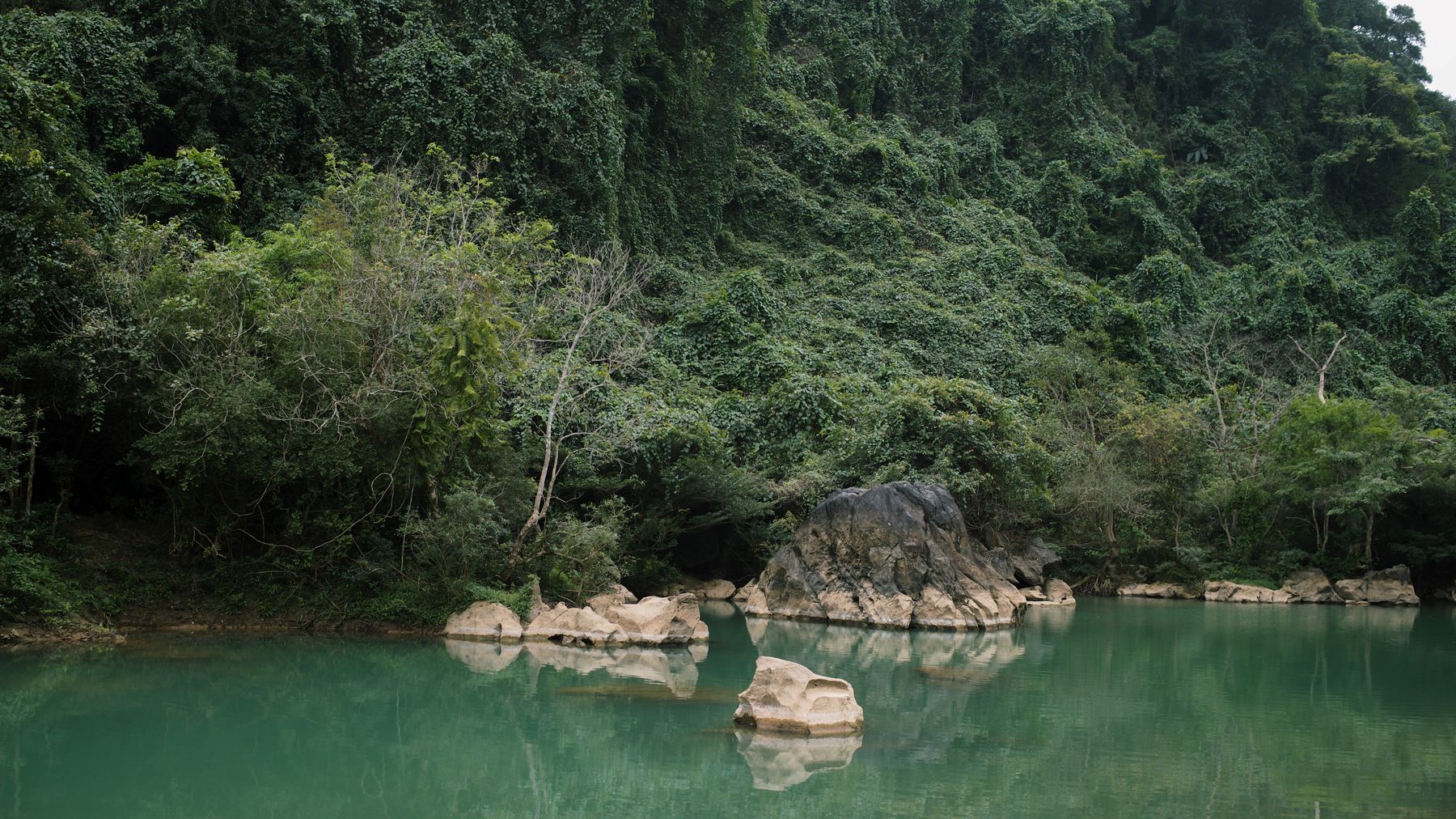
Photo by Lucas Tran on Pexels
Combining Paradise Cave, Phong Nha, and Mooc Spring in One Day
This circuit is doable but full. A suggested order:
Start at Paradise Cave (7:30–8:00am arrival) — beat the tour buses and have the boardwalk largely to yourself for the first hour.
Drive north to Mooc Spring — about 12km from the cave entrance, Mooc Spring ("suoi Mooc") is a clear jungle stream with a 500m walking trail through bamboo forest. Entry is 80,000 VND. It's uncrowded by mid-morning and takes 45–60 minutes. Good light filters through the canopy until around 11am.
Arrive at Phong Nha Cave by midday or early afternoon — the boat tour departs from Phong Nha village pier and takes around 90 minutes return. Combine with lunch at one of the riverside restaurants along the main strip in town (grilled pork rice, fresh river fish).
Total driving distance is under 40km. On a motorbike it's comfortable. By hired car it's easy.
Frequently Asked Questions
How much does it cost to visit Paradise Cave in Quang Binh?
The standard ticket to Paradise Cave costs 250,000 VND per adult, plus a national park entrance fee of 150,000 VND — a total of 400,000 VND. From the ticket gate, an electric cart to the cave entrance costs 50,000 VND each way, or you can walk the 1.6km uphill path in 20–25 minutes at no extra cost. A guided 7km extended tour costs 1,650,000 VND per person and requires advance booking.
What is the difference between Paradise Cave and Phong Nha Cave?
Phong Nha Cave is accessed by river boat — a passive experience. Paradise Cave, 14km further south, is a dry cave stretching 31km into the mountain, with chambers up to 150m wide and 80m tall. The standard 1km boardwalk takes 45–60 minutes and features dense formations including curtain stalactites and flowstone terraces. A 7km extended permit allows access beyond the lit section into untracked passages with no boardwalk.
When should you arrive at Paradise Cave to avoid crowds?
Arrive before 9am. Tour groups begin filling the 1km boardwalk from around 9:30am, making the narrow walkway congested and difficult to photograph. The cave stays at 17–20 degrees Celsius year-round, but visiting during Vietnam's humid summer months means your camera lens will fog on entry — allow 10–15 minutes to acclimatise before shooting regardless of when you arrive.
Practical Notes
Paradise Cave is open daily from 7:00am to 4:30pm; arrive before 9am to avoid group congestion. The extended 7km permit must be arranged at least a day ahead — same-day booking is sometimes possible in low season but not guaranteed. Quang Binh's dry season runs roughly February to August; the cave itself is accessible year-round, but the surrounding roads can flood during heavy rain in October and November.
Last updated · Sep 21, 2026 · independently researched, never sponsored.