Phong Nha-Ke Bang National Park gets a lot of hype, but most day-trippers only see one of the two main accessible caves. Pick the right one — or combine both — and you'll come away with something genuinely worth the detour into Quang Binh province.
Phong Nha Cave — The Wet Cave
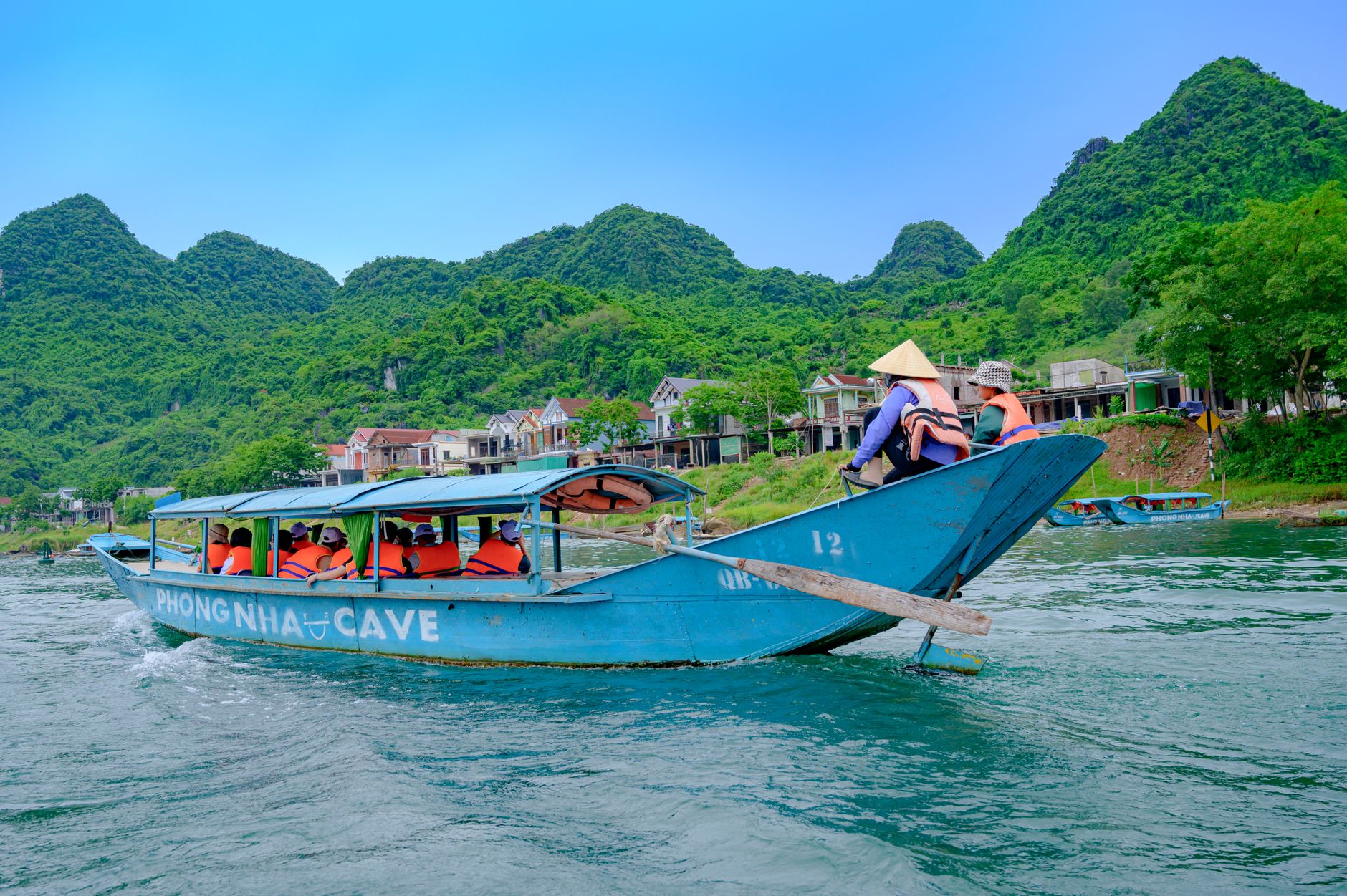
This is the one everyone pictures: a long, low boat ride through a dark river gorge into an illuminated cave chamber. You board a wooden rowboat at the dock in Phong Nha (퐁냐 / 峰牙 / フォンニャ) town (Son Trach village), and a boatwoman paddles you roughly 1.5 km upriver into the cave mouth.
Inside, the river continues. The boat threads through formations — stalactites stained orange and cream, columns that took millions of years to form — while colored LEDs illuminate the chamber in ways that are more dramatic than tasteful. That said, the scale of the cave is real: the main passage runs around 1.5 km into the mountain, and the ceiling in places climbs 30 meters overhead.
At the back of the boat section, you disembark and wade through ankle-to-knee-deep water in a dry section before the passage dead-ends. The wading area is maybe 150 meters. Bring sandals or shoes you don't mind getting wet — the footing is uneven rock.
The full trip takes roughly 90 minutes return.
Ticket and boat process
Tickets for Phong Nha Cave are sold at the dock entrance. As of 2024, the cave admission is 150,000 VND per person; the boat is shared among up to 14 passengers and costs around 360,000 VND per boat total, not per person. If you arrive solo or as a pair, you wait until the boat fills or pay for the remaining seats yourself. Morning arrivals (before 9am) fill boats faster. The boat fee is collected separately from the cave ticket — don't confuse the two queues.
Tien Son Cave — The Dry Cave
Tien Son sits 600 meters up the hill above the Phong Nha boat dock, accessible by a path of around 500 steps. There's no water, no boat — just a well-lit walking trail through an enormous dry chamber.
The formations here are denser and more varied than in the river cave. You'll see stalactite curtains, rimstone pools, and a few chambers where the acoustics are absurdly good — locals call it the "music cave" because of the resonance. The whole route is about 600 meters in and out, and takes 45–60 minutes.
Admission is 80,000 VND per person. It's a separate ticket from Phong Nha Cave; you can buy both at the main ticket booth at the base of the hill.
Which one should you do?
Do Phong Nha if you want the river atmosphere — the entrance by boat through jungle and karst is genuinely unlike most cave experiences. Do Tien Son if you're more interested in formations and can handle the steps. Do both if you have half a day; combined they take under three hours.
Neither of these is Paradise Cave, which is a separate site 14 km further into the park. Paradise is much longer (you walk 2 km inside on boardwalks) and arguably more impressive in scale, but requires a motorbike or car and a second ticket (200,000 VND). If you're spending two days in the area, Phong Nha Cave plus Tien Son on day one and Paradise on day two is a solid plan.

Photo by Trinh Tuoi on Pexels
Best Season — Avoid September to November
Phong Nha sits in a valley that floods reliably during central Vietnam (베트남 / 越南 / ベトナム)'s rainy season, roughly September through November. Phong Nha Cave closes when the river rises — sometimes for weeks at a stretch. The park's dirt roads turn treacherous, and the town itself has flooded badly in high-water years.
The sweet spot is February through August. March and April are dry, cool enough for cave walking, and not yet crowded with domestic summer tourists. July and August are peak Vietnamese holiday season — expect crowds and book accommodation early. December through January is dry but cool and occasionally foggy; the caves are open and less busy.
If you're coming from Hue or Da Nang, the drive or bus to Phong Nha town takes around 3–4 hours depending on route. It's doable as an overnight trip but two nights lets you see the caves and get into the park a bit.
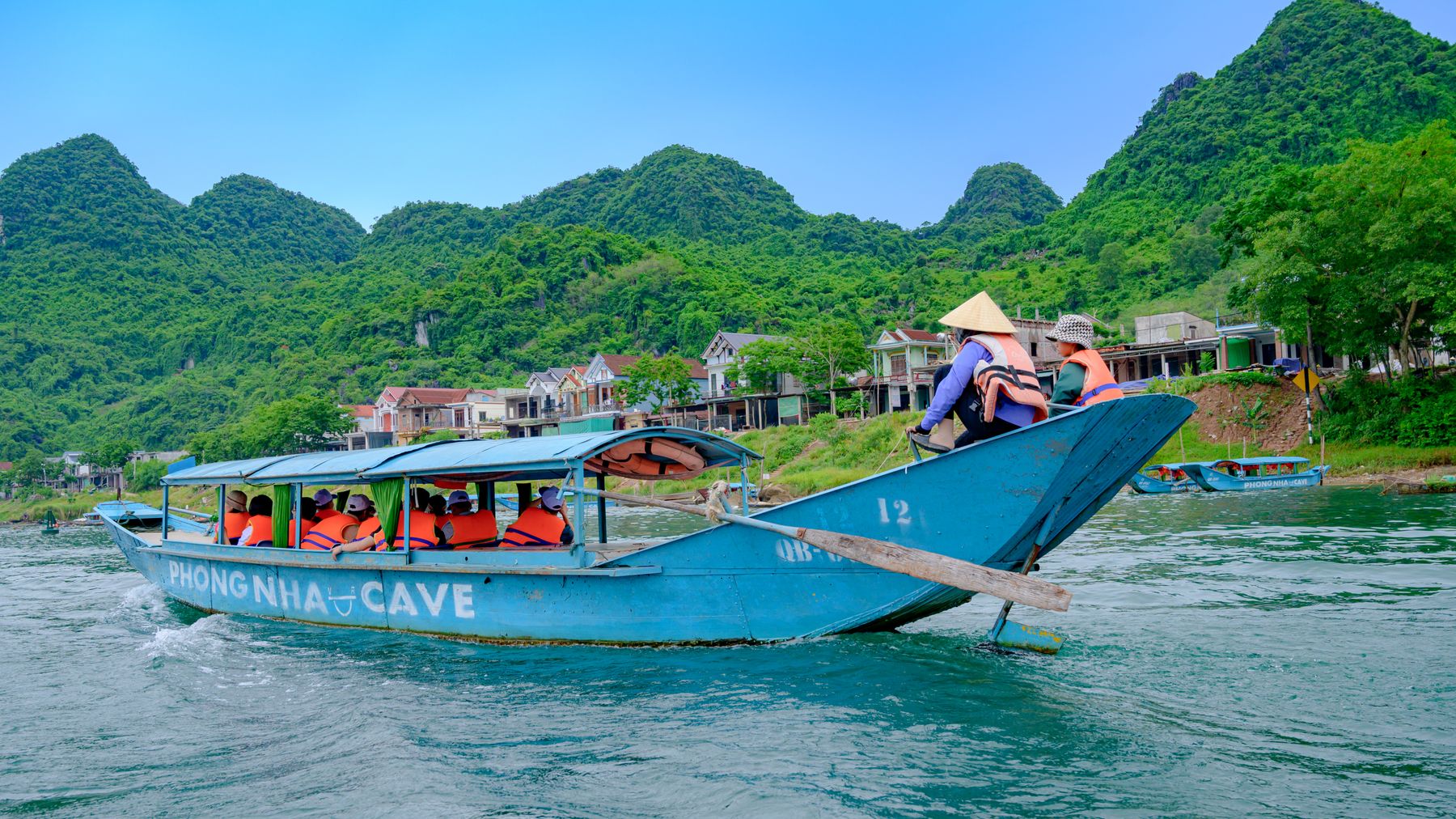
Photo by Manh Pham on Pexels
Staying in Phong Nha Town
Son Trach, the main village, has grown fast. There are now several reliable guesthouses and small hotels within walking distance of the boat dock. Easy Tiger and Phong Nha Farmstay are the two most-referenced places among independent travelers — both offer bike rentals, transfer services, and reasonably priced rooms between 300,000–600,000 VND per night for a double.
Eating in town is cheap and good. The local specialty worth tracking down is "banh canh" (thick rice-noodle soup) from the morning vendors near the market — 30,000–40,000 VND a bowl, and a very different profile from the pho and banh mi you'd eat in the cities. A few restaurants along the main strip serve grilled river fish if you want something more substantial in the evening.
Practical Notes
The boat dock and ticket booth open at 7:30am; the caves close to new visitors around 4pm. Wear clothes you can wade in for Phong Nha Cave, and bring a light layer for Tien Son — dry caves hold a consistent chill regardless of outside temperature. If you're traveling September through November and Phong Nha Cave is closed due to flooding, Tien Son and Paradise Cave often remain accessible since they don't depend on river levels.
Last updated · May 26, 2026 · independently researched, never sponsored.