Forget the broth. "Pho cuon" — rolled pho — is a cold, hand-rolled street dish that shares almost nothing with the soup version except the name and the flat rice noodle. It was invented on Ngu Xa, a small peninsula jutting into West Lake, and the best places to eat it still haven't moved.
What Pho Cuon Actually Is
A sheet of fresh, wide banh pho (쌀국수 / 越南河粉 / フォー) noodle — soft, slippery, slightly translucent — is laid flat, topped with a small pile of stir-fried beef and fresh herbs, then rolled into a tight cylinder about the size of a spring roll. No soup, no broth, no boiling water involved. You dip it in a light nuoc cham-style sauce that leans sweet and garlicky, with a few thin-sliced chillies floating on top.
The beef matters. Good pho cuon uses beef stir-fried fast over high heat with garlic, a little fish sauce, and slivers of onion. The noodle needs to be made the same day — ideally the same morning — or the texture goes rubbery. This is why Ngu Xa still dominates: the noodle workshops on that strip have been supplying fresh sheets since the dish was invented here sometime in the 1980s, and the short supply chain shows in the result.
Texture-wise it is closer to a Vietnamese fresh roll — "goi cuon" — than to anything in the pho family. The comparison to pho is really about the noodle sheet itself and the beef topping. Don't arrive expecting a bowl of anything.
The Ngu Xa Origin
Ngu Xa peninsula sits between West Lake and Truc Bach Lake, accessed off Nguyen Khac Hieu or Pho Vong street. It is a residential sliver that has historically been associated with bronze casting — there is a bronze workshop on the peninsula that has been operating for centuries. The food story is more recent. Local accounts credit a few families on the peninsula who started rolling leftover banh pho sheets with beef as an afternoon snack sometime in the late reform era. It caught on, stalls multiplied, and by the 2000s Ngu Xa was a recognised destination for the dish.
The strip now has somewhere between five and ten dedicated pho cuon shops depending on the season. They are mostly low-ceilinged, plastic-table affairs with open fronts facing the lake. Eat outside when the weather allows — the view across Truc Bach to the Hanoi skyline is decent enough.
Best Addresses
Pho Cuon Hung Ben at 25 Ngu Xa is the most cited address and the one that tends to appear on any local food list. Rolls are tight, the beef is properly seared, the noodle is fresh. A portion of ten rolls runs about 60,000–70,000 VND.
Pho Cuon Co Lan a few doors down at 31 Ngu Xa is slightly smaller, slightly cheaper, and tends to have a more local crowd in the late afternoon. Worth trying both on the same visit since the differences are real — Co Lan's sauce is a touch more acidic.
Pho Cuon 31 (also on Ngu Xa, sometimes listed separately from Co Lan) serves both pho cuon and the fried variant side by side, which makes it the easiest place to do a direct comparison.
All of these open roughly from 09:00 to 21:00. Lunch and late afternoon (around 16:00–18:00) are the busiest windows.
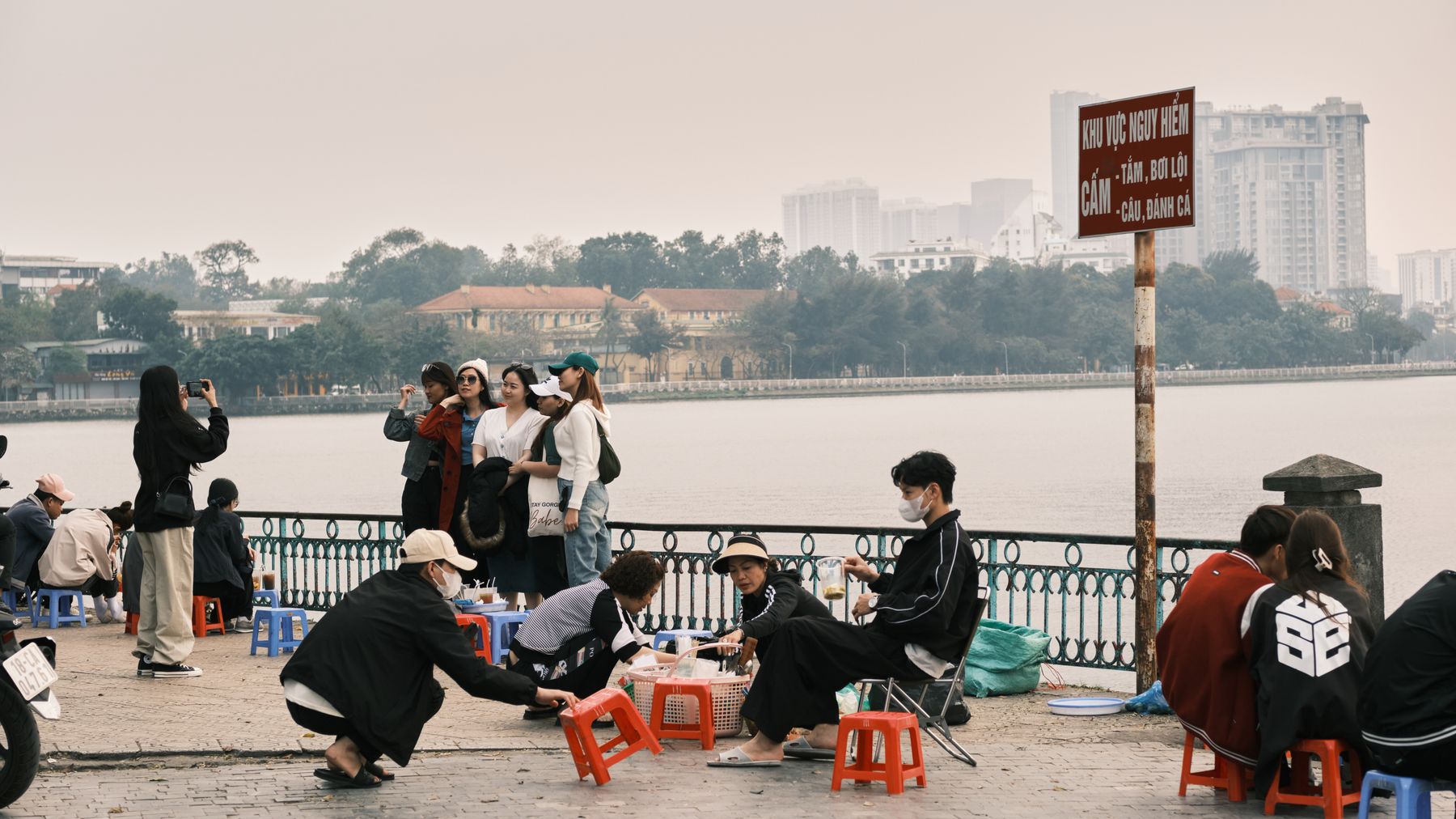
Photo by Thuan Pham on Pexels
Order Pho Chien Phong Alongside It
"Pho chien phong" — puffed fried pho — is the essential companion order. The same banh pho sheet is deep-fried until it balloons and crisps, then topped with stir-fried beef and vegetables. The outside shatters when you bite through it; the inside stays slightly chewy. It is richer and heavier than the rolled version, and the contrast between the two on the same table is the point.
A plate of pho chien phong at Ngu Xa is typically 70,000–90,000 VND. Most shops do both. Order one portion of each for two people and you have a full meal.
For drinks, the stalls themselves usually only stock bottled water and canned drinks. If you want Hanoi (하노이 / 河内 / ハノイ)'s other canonical pairing — an iced "ca phe sua da" — there are several ca phe shops within a two-minute walk toward the lake.
Price and Practicalities
A full meal of pho cuon plus pho chien phong for two people comes to roughly 150,000–180,000 VND, which makes it one of the more affordable sit-down meals in the Tay Ho area. The Ngu Xa strip is about 3 km from Hoan Kiem Lake — a 15-minute ride by xe om or Grab, or a 10-minute cycle if you are already in the Ba Dinh or Tay Ho area.
There is no off-brand equivalent in the Old Quarter or Hoan Kiem that matches the Ngu Xa versions. Pho cuon does appear on menus elsewhere in Hanoi, but the noodle quality drops noticeably once you are buying sheets that have been transported and stored. The dish works on Ngu Xa because the noodle goes from workshop to table the same morning.

Photo by Quang Nguyen Vinh on Pexels
Why Locals Come Back
Hanoi's food culture has a specific fondness for dishes that are seasonal or neighbourhood-bound — things you have to go to a particular street to eat properly. Pho cuon fits that logic exactly. It is light enough to eat as a mid-afternoon snack rather than a full lunch, the price is right, and the lake-side setting gives it a low-key occasion feel. On a cool Hanoi evening in November or December, a plate of rolls and a plate of fried pho at an outdoor table on Ngu Xa is a hard thing to argue with.
Practical Notes
Head to Ngu Xa between 16:00 and 18:30 for the freshest noodles and the best light over the lake. Cash only at most stalls; bring small bills. If you are planning a broader Hanoi food day, pair this with a morning bowl of pho or bun cha in the Old Quarter and save Ngu Xa for the afternoon.
Last updated · May 26, 2026 · independently researched, never sponsored.