What Sam Son is (and isn't)
Sam Son is a 6-km stretch of sand on the coast of Thanh Hoa province, about 170 km south of Hanoi. It's been a seaside escape for northerners since the French colonial period — one of the first beach resorts developed in Vietnam (베트남 / 越南 / ベトナム), actually. The French built villas here in the early 1900s, and after reunification, it became the go-to summer retreat for Hanoians who couldn't afford the time or money to get to farther beaches.
Let's be direct: Sam Son is not a tropical postcard. The water isn't turquoise. The sand isn't powder-white. What it is, though, is a real Vietnamese beach town — one where domestic tourism runs the show and foreign visitors are genuinely rare. If you want to see how Vietnamese families vacation, Sam Son delivers that without any filter.
Why travelers go
Most foreigners skip Sam Son entirely, heading for Da Nang or Phu Quoc instead. That's fair — those beaches are objectively prettier. But Sam Son has its own appeal:
- Proximity to Hanoi (하노이 / 河内 / ハノイ). It's the fastest beach trip from the capital. Weekend warriors from Hanoi pack the highway every Friday evening from May through August.
- Seafood prices. Because this isn't a tourist-markup zone, you eat well for cheap. Grilled squid, steamed clams, and whole fish at prices that would make Phu Quoc blush.
- Local atmosphere. The boardwalk at night is pure chaos — karaoke bars, families on rented tandem bikes, vendors selling dried squid on sticks, kids running around until midnight. It's a window into how ordinary Vietnamese people spend their holidays.
- Truong Le Mountain. The rocky headland at the southern end of the beach is the one legitimately scenic spot. A short climb gives you views over the coastline and a handful of small temples tucked into the rocks.
Best time to visit
The season runs May through September, with June through August being peak. Water temperatures are warm enough for swimming, and the town is fully alive — every hotel open, every seafood restaurant firing on all burners.
Avoid October through March. The northeast monsoon brings grey skies, cool winds, and rough surf. Half the town shuts down. It feels abandoned.
If you want the energy without the worst crowds, late May or early September hits a sweet spot. Weekdays are always calmer than weekends.
How to get there from Hanoi
By car or motorbike: Take the expressway (CT.01 / AH1) south. It's roughly 170 km and takes about 2.5–3 hours depending on traffic. Tolls run around 150,000–200,000 VND each way.
By bus: Frequent buses depart from Giap Bat and Nuoc Ngam bus stations in Hanoi. Tickets cost 100,000–150,000 VND. The ride takes 3–3.5 hours. Buses drop you at Thanh Hoa city, from where it's another 16 km to Sam Son — grab a local bus (15,000 VND) or taxi (around 150,000 VND).
By train: Trains from Hanoi to Thanh Hoa station run multiple times daily. A seat costs 80,000–180,000 VND depending on class. The ride is about 3 hours. From Thanh Hoa station, same deal — taxi or local bus to Sam Son.
There's no airport in Thanh Hoa that handles commercial flights, so ground transport is your only option.

Photo by Theodore Nguyen on Pexels
What to do
Walk the full beach at low tide
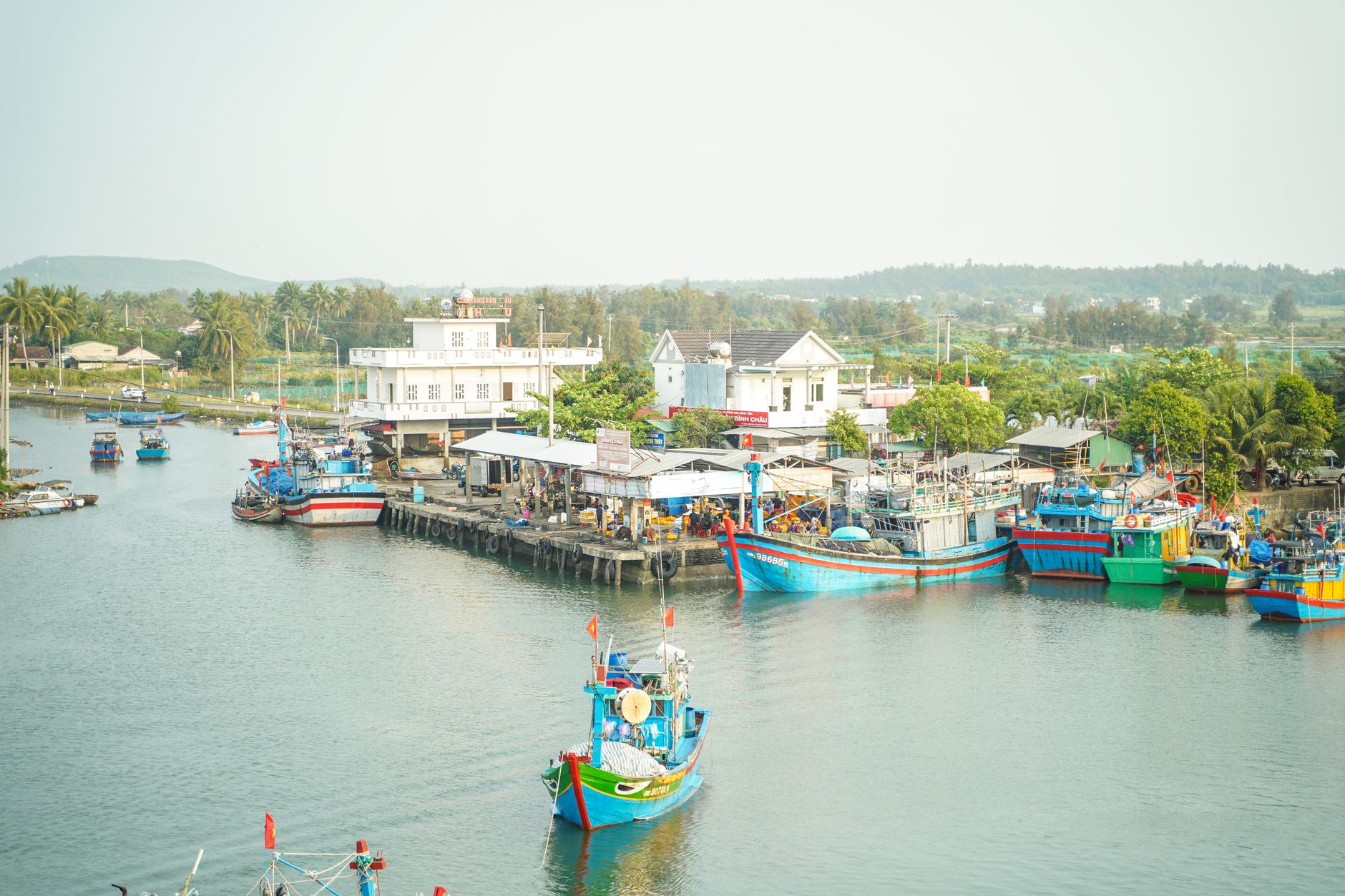
The main beach stretches from Truong Le Mountain in the south to the newer FLC resort complex in the north. At low tide, the sand firms up and you can walk the entire 6 km comfortably. Early morning is best — fishermen pull in nets, and the light is softer before the beach umbrellas go up around 8 a.m.
Climb Truong Le Mountain
The rocky headland at the south end is Sam Son's most interesting feature. It's not a serious hike — maybe 30 minutes to explore the main paths. You'll find the Co Tien (Fairy) Temple and several shrines built into rock formations. The views over the beach and out to sea are the best you'll get in Sam Son. Free to access.
Eat your way through the seafood strip
The streets running parallel to the beach, especially along Nguyen Du and Ho Xuan Huong, are lined with open-air seafood restaurants. The drill: pick your fish or shellfish from the tanks or ice displays out front, agree on a price per kilogram, choose your cooking style. Grilled is usually safest for flavor. Budget 200,000–400,000 VND per person for a proper seafood spread.
Catch the night market atmosphere
Sam Son's boardwalk area comes alive after dark. It's not a curated night market — it's more of a chaotic strip of food carts, game stalls, and souvenir shops. Try "nem chua" (fermented pork) from Thanh Hoa province, which is famous for it across Vietnam. Grab some grilled "banh mi" with pate from a street cart. Watch families pose for photos with the illuminated sculptures along the waterfront.
Day trip to Ho Citadel
About 50 km west of Sam Son, the Ho Dynasty Citadel is a UNESCO World Heritage Site that almost nobody visits. Built in 1397 from massive stone blocks, it's one of the few surviving stone citadels in Southeast Asia. Entry is 40,000 VND. You can combine it with a drive through the surrounding countryside, which is flat, green, and quiet.
Where to eat
Beyond the seafood restaurants, seek out two Thanh Hoa specialties:
- "Nem chua" — Thanh Hoa's fermented pork rolls are the province's signature food, tangy and slightly sour, wrapped in banana leaf. Sold everywhere. A pack of 10 costs about 50,000 VND.
- "Cha tom" — shrimp paste grilled on sugarcane sticks, a regional dish you won't find as easily elsewhere. A few restaurants near the beach serve it properly. Ask for "cha tom Thanh Hoa" and you'll get pointed in the right direction.
Where to stay
Sam Son has hundreds of hotels and guesthouses. Quality varies wildly.
- Budget (300,000–500,000 VND/night): Basic guesthouses a block or two from the beach. Air conditioning, hot water, not much else. Fine for a night or two.
- Mid-range (600,000–1,200,000 VND/night): Newer hotels with sea-view rooms, decent bathrooms, and breakfast included. Look along Thanh Nien or Le Loi streets.
- High-end (1,500,000+ VND/night): The FLC resort complex at the north end has the best facilities — pool, spa, golf course. It's a different universe from the rest of Sam Son.
Book ahead if visiting on a weekend between June and August. The town fills up fast.

Photo by Du Tử Mộng on Pexels
Practical tips locals would tell you
- Negotiate seafood prices before cooking. Always confirm the per-kilogram price and total weight. Disputes happen, and they're avoidable.
- Bring cash. Card acceptance is spotty outside the big hotels. ATMs exist but can run dry on busy weekends.
- Rent a motorbike in town (150,000 VND/day) to reach Truong Le Mountain and explore surrounding areas without relying on taxis.
- Sunscreen and a hat are non-negotiable from May to August. The UV is aggressive, and shade on the beach is limited to rented umbrellas (50,000 VND).
Common mistakes to avoid
- Coming in winter. Sam Son without the summer season is a ghost town. Don't bother between November and April.
- Expecting a resort beach. If you want clear water and quiet sand, head to Da Nang, Phu Quoc, or even Lang Co instead. Sam Son is for the experience, not the aesthetics.
- Eating at the first restaurant that grabs you. Touts are aggressive along the seafood strip. Walk past the first row, compare prices, and pick a place that's busy with Vietnamese families — they know where the value is.
Practical notes
Sam Son works best as a weekend side trip from Hanoi, not a week-long destination. One or two nights is the sweet spot. Pair it with a visit to the Ho Citadel or a stop in Thanh Hoa city for "nem chua" shopping, and you've got a solid 2-3 day loop that most foreign travelers never consider.
Last updated · May 29, 2026 · independently researched, never sponsored.