What Thac Sao Va actually is
Thac Sao Va is a tiered limestone waterfall tucked into the forests of Que Phong district, deep in western Nghe An province. The water drops roughly 30 meters across several cascading steps into a wide natural pool at the base, surrounded by old-growth forest and mossy boulders. It sits within a valley inhabited mostly by Thai ethnic minority communities, which means the surrounding area still feels genuinely rural — no ticket booths, no souvenir shops, no crowds.
The name "Sao Va" comes from the local Thai language. Until recently, the falls were known almost exclusively to people living in the surrounding communes. Domestic Vietnamese travelers started showing up around 2018-2019 after photos circulated on social media, but international visitors remain rare. Infrastructure is minimal, which is both the draw and the challenge.
Why travelers go
People come here specifically because it doesn't feel packaged. If you've spent time in more developed destinations — Sapa, Da Lat, Phong Nha — Thac Sao Va is a sharp contrast. There's no entrance fee (as of early 2025), no guided tour requirement, and nobody selling you anything at the trailhead.
The pool at the base is deep enough to swim in during the wet season. The surrounding forest canopy keeps the temperature noticeably cooler than the lowland heat of Vinh city. And the drive out to Que Phong passes through some of the best road scenery in northern-central Vietnam — terraced rice fields, river valleys, and limestone karst that most travelers only associate with Ninh Binh (닌빈 / 宁平 / ニンビン) or Ha Giang.
Best time to visit
The sweet spot is September through November. The summer rains (June–August) push water volume to its peak, so by September the falls are full and dramatic but the trails are drying out enough to be manageable. October is ideal — warm days, lower humidity, and the rice terraces in the valley are turning gold.
Avoid December through March if you want to swim. Water volume drops significantly in the dry season and the pool shrinks. The falls don't dry up completely, but they lose most of their force. April and May are hot and hazy, with temperatures in the lowlands around Vinh regularly hitting 38-40°C. The highlands around Que Phong are cooler, but the falls are still low.
If you visit during the wet season (June–August), expect muddy trails and possible road flooding on the final stretch. A motorbike with decent tires handles it fine; a sedan might struggle.
How to get there from Vinh
Vinh is the nearest major transport hub. From Vinh, Thac Sao Va is roughly 150 km west, and the drive takes about 3.5 to 4 hours depending on road conditions and your vehicle.
By motorbike: The most practical option and what most travelers do. Rent a semi-automatic (Honda Wave or similar) in Vinh for 120,000–180,000 VND/day. Head west on National Route 48 through Nghia Dan and Con Cuong, then follow provincial roads into Que Phong. The last 15–20 km is on a narrow concrete or dirt road — passable on two wheels year-round, but slow going after rain. Fill up on fuel in Que Phong town; there's nothing after that.
By car/private driver: Hire a car with driver from Vinh for roughly 1,200,000–1,500,000 VND round-trip. Worth it if you don't ride motorbikes, but confirm with the driver that they're willing to take the final unpaved section. Some won't.
By bus + motorbike taxi: You can catch a local bus from Vinh's bus station toward Que Phong (about 80,000–100,000 VND), but you'll still need a "xe om" (motorbike taxi) for the last stretch. Arrange this in Que Phong town — ask at a local cafe or guesthouse. Expect to pay 100,000–150,000 VND each way for the ride.
There's no direct tourist shuttle or organized transport from Vinh to the waterfall.
Photo by Quang Nguyen Vinh on Pexels
What to do
Swim in the base pool
The natural pool beneath the main cascade is the highlight. It's deep enough to jump into from some of the lower rock ledges (check depth first — it changes seasonally). The water is cold, especially in the morning. Bring water shoes; the rocks at the bottom are slippery.
Hike the upper tiers
A rough trail follows the left side of the falls up through the forest to higher cascades. It's not marked or maintained, so wear proper footwear — not flip-flops. The climb takes about 30–40 minutes and gives you a view back down the valley. The upper pools are smaller but usually empty.
Visit a Thai village
The communes near the waterfall are home to Thai ethnic communities. If you stay overnight in the area, you can arrange through your homestay host to visit a village, watch rice wine being made, or join a meal. This isn't a tourism product — it's just how people live here. Be respectful, ask before photographing, and bring a small gift (fruit or snacks from town).
Ride the Que Phong loop
The roads around Que Phong district are worth riding just for the scenery. The loop from Que Phong town through the river valleys and back takes 2–3 hours by motorbike and passes through rice paddies, bamboo forest, and small market towns. Combine this with the waterfall for a full day.
Catch the morning light
If you stay nearby, get to the falls before 8 AM. The sun hits the cascades through the forest canopy and the mist off the water catches the light. By midday the angle is flat and the magic is gone.
Where to eat nearby
Que Phong town has a handful of "com binh dan" (everyday rice) spots along the main road. Expect to pay 30,000–50,000 VND for a plate of rice with grilled pork, greens, and broth.
The local dish worth seeking out is "com lam" — sticky rice cooked inside bamboo tubes over charcoal. Thai families in the area make this regularly, and homestays often serve it at dinner alongside grilled stream fish and forest vegetables stir-fried with garlic. It's simple food, not refined, but it tastes like the place.
If you're heading back through Con Cuong, stop for "banh cuon" at the morning market — thin steamed rice rolls filled with minced pork and mushroom, served with herbs and dipping sauce.
Where to stay
There are no hotels at the waterfall. Your options:
- Homestays near Que Phong town: Basic rooms in Thai stilt houses, 150,000–300,000 VND per night. Meals usually included or available for an extra 50,000–80,000 VND. Expect a mattress on the floor, mosquito net, shared bathroom. Some have Wi-Fi; most don't.
- Guesthouses in Que Phong town: Simple "nha nghi" rooms with private bathroom, fan or AC, 200,000–400,000 VND per night.
- Hotels in Con Cuong: If you want more comfort, Con Cuong (about 60 km east) has a few proper hotels in the 400,000–700,000 VND range with hot water and air conditioning.
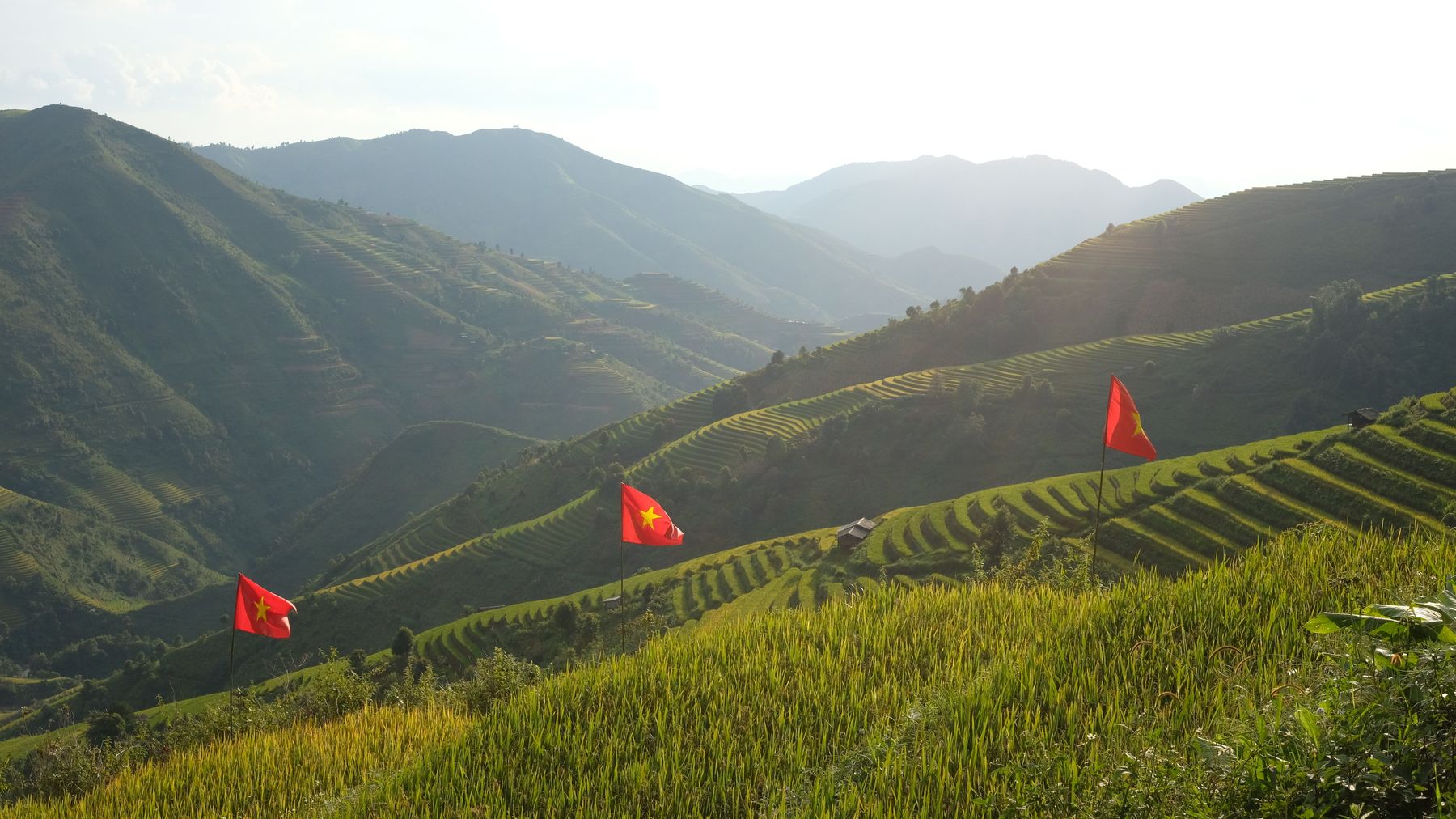
Photo by Sea Man on Pexels
Practical tips locals would tell you
- Bring cash. There's an ATM in Que Phong town but it's unreliable. Withdraw what you need in Vinh before heading out.
- Pack a dry bag for your phone and electronics if you plan to swim or hike the upper tiers. Mist and splash are constant near the falls.
- Carry your trash out. There are no bins at the site. This is someone's backyard — leave it clean.
- Learn three phrases in Thai or Vietnamese — "xin chao" (hello), "cam on" (thank you), and "bao nhieu" (how much). People here don't see many foreigners. A little effort goes a long way.
- Fuel up in Que Phong. The last petrol station is in town. Don't gamble on the return trip.
Common mistakes to avoid
- Coming in flip-flops. The trail to the falls and the rocks around the pool are slippery. Proper sandals with grip or trail shoes make a real difference.
- Day-tripping from Vinh and rushing it. The 3.5-hour drive each way means you'd spend 7+ hours in transit for maybe 2 hours at the waterfall. Stay one night in the area and give yourself time to enjoy the ride.
- Expecting facilities. There are no changing rooms, no food stalls, no toilets at the waterfall. Bring what you need — water, snacks, towel, sunscreen.
- Visiting in the dry season and being disappointed. If you come in February or March, the waterfall is a trickle. Time it right or adjust your expectations.
Practical notes
Thac Sao Va rewards travelers who are comfortable with a bit of roughness — unpaved roads, basic accommodation, and no English signage. It's not for everyone, and that's the point. If you're already exploring Nghe An or passing through on a motorbike trip through central Vietnam, it's an easy two-day detour that most travelers never hear about.
Last updated · May 26, 2026 · independently researched, never sponsored.